

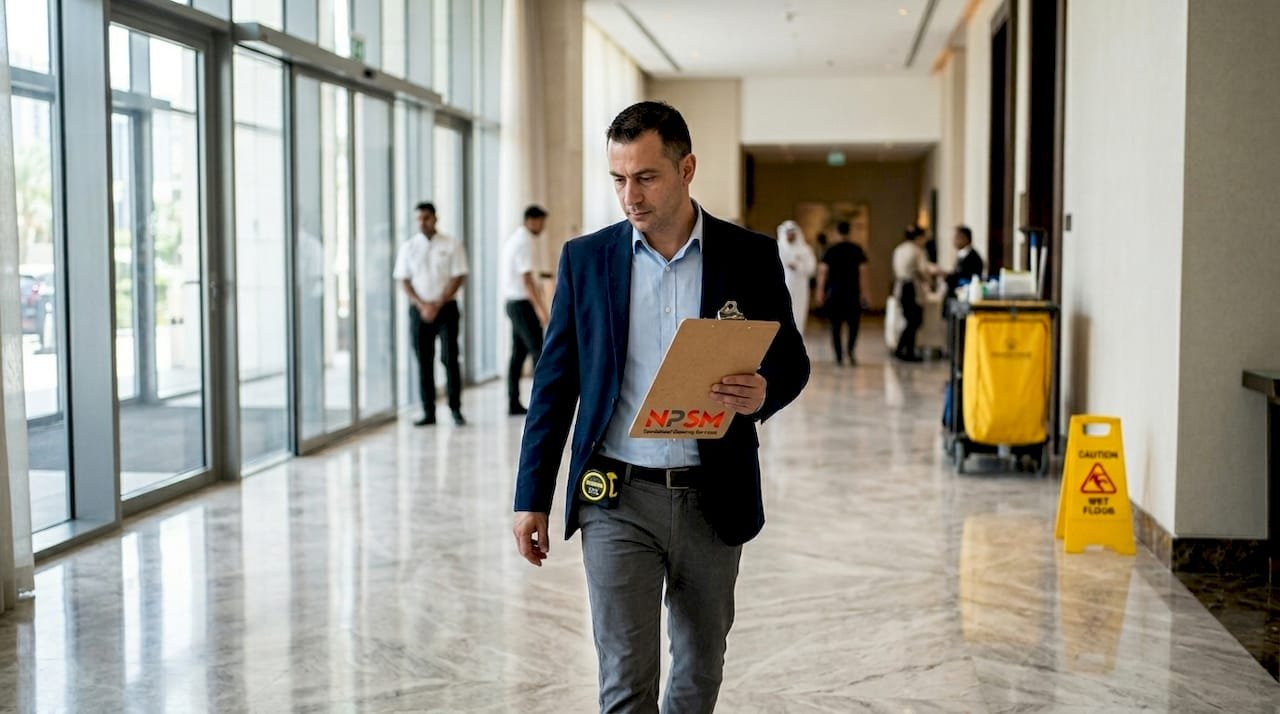

Maintaining pristine floors in Dubai’s luxury hotels is a constant battle against sand, humidity, and relentless foot traffic. Every scuff, crack, and dull patch threatens guest satisfaction and your property’s reputation. This comprehensive guide walks you through a proven floor restoration process designed specifically for Dubai’s challenging environment, showing you how to restore marble, wood, and natural stone surfaces while keeping guests comfortable and operations running smoothly. You’ll learn practical strategies for scheduling, execution, and long-term maintenance that protect your investment and elevate your property’s appeal.
Table of Contents
-
Understanding the challenges of floor restoration in Dubai hotels
-
Step-by-step execution of the hotel floor restoration process
-
Verifying results and maintaining pristine floors post-restoration
-
How often should hotel floors in Dubai be professionally polished?
-
What is the safest cleaning method for marble floors in high-traffic hotels?
-
How can hotel managers minimize guest disruption during floor restoration?
-
What maintenance practices can extend the lifespan of hotel floors?
Key Takeaways
| Point | Details |
|---|---|
| Phased dustless restoration | A staged dust free approach minimizes guest disruption while restoring floors in occupied spaces. |
| Odorless finishes | Use odorless fast drying varnishes that cure within 72 hours to protect air quality and guest comfort. |
| Off peak scheduling | Plan work during off peak hours to maintain operations while addressing problem areas. |
| Periodic polishing cadence | Schedule professional polishing every 12 to 18 months to remove damage and extend floor life. |
Understanding the challenges of floor restoration in Dubai hotels
Dubai’s unique environment creates specific floor restoration challenges that hotel managers must address with tailored solutions. The constant influx of sand particles causes abrasive wear requiring specialized diamond grit sequences during polishing. Unlike standard restoration protocols, Dubai hotels need progressive grit applications that counter the microscopic scratches sand creates on marble and natural stone surfaces.
Humidity fluctuations paired with aggressive air conditioning cycles cause floor materials to expand and contract repeatedly. This thermal stress leads to micro-cracks in marble, separation in wooden planks, and adhesive failures in vinyl installations. The coastal location adds another layer of complexity, as salt-laden air accelerates erosion of natural stone surfaces, particularly in lobby areas and near pool access points.
Here are the primary environmental factors affecting hotel floors in Dubai:
-
Sand abrasion from guest foot traffic creates surface scratches requiring specific restoration grit sequences
-
AC-driven temperature variations cause expansion and contraction leading to cracks and separations
-
Coastal salt air penetrates porous stone surfaces accelerating deterioration
-
High humidity levels promote moisture damage in wooden floors and grout lines
-
Intense UV exposure through glass facades fades and weakens floor finishes
Professional polishing every 12-18 months significantly extends floor life by removing accumulated damage before it becomes structural. This preventive approach costs substantially less than emergency repairs or premature replacement. Hotels that skip regular maintenance face 3-4 times higher restoration costs when damage becomes severe.
The combination of these factors means Dubai hotels experience accelerated wear compared to properties in temperate climates. Understanding how humidity damages marble floors helps you schedule appropriate interventions before minor issues escalate into guest complaints or safety hazards.
Preparing for an effective hotel floor restoration process
Successful floor restoration begins weeks before the first polishing machine arrives. Strategic planning ensures minimal guest disruption while achieving professional results that last. Scheduling work during off-peak hours between 10am and 4pm allows you to maintain full hotel operations while addressing floor issues systematically.
Odorless, fast-drying finishes are non-negotiable in occupied hotels. Traditional varnishes and sealants emit strong fumes that can trigger guest complaints and health concerns. Modern formulations cure within 72 hours while maintaining air quality standards, making them ideal for phased restoration projects where guests occupy adjacent rooms.
Room-by-room restoration maintains operational continuity better than sectioning off entire floors. This approach lets you keep revenue-generating spaces available while systematically addressing problem areas. You can rotate through guest rooms during low occupancy periods and tackle public spaces during seasonal dips in bookings.
Pro Tip: Install heavy-duty entrance mats at all entry points two weeks before restoration begins. This simple step reduces sand infiltration by 60-70%, protecting freshly restored floors and extending the results of your investment.
Here’s your pre-restoration preparation checklist:
-
Conduct a comprehensive floor assessment documenting damage locations, material types, and traffic patterns
-
Schedule restoration during your property’s lowest occupancy periods based on historical booking data
-
Notify all department heads and create clear signage for guests about temporary access restrictions
-
Secure professional floor polishing services with proven hotel experience and Dubai-specific expertise
-
Arrange for backup cleaning equipment and establish alternative guest pathways during each restoration phase
-
Order all materials including pH-neutral cleaners, diamond pads, sealants, and protective barriers in advance
Communication prevents confusion and complaints. Brief your front desk team on restoration schedules so they can proactively inform guests during check-in. Housekeeping staff need clear instructions about which areas are off-limits and when they can resume normal cleaning routines. Maintenance teams should coordinate with restoration contractors to avoid scheduling conflicts with other property work.
Specialized hotel floor cleaning strategies emphasize containment and dust control. Modern dustless grinding systems capture 99% of particles at the source, preventing the fine dust that traditionally plagued hotel restoration projects. This technology lets you work in occupied buildings without compromising air quality or creating housekeeping nightmares.
Step-by-step execution of the hotel floor restoration process
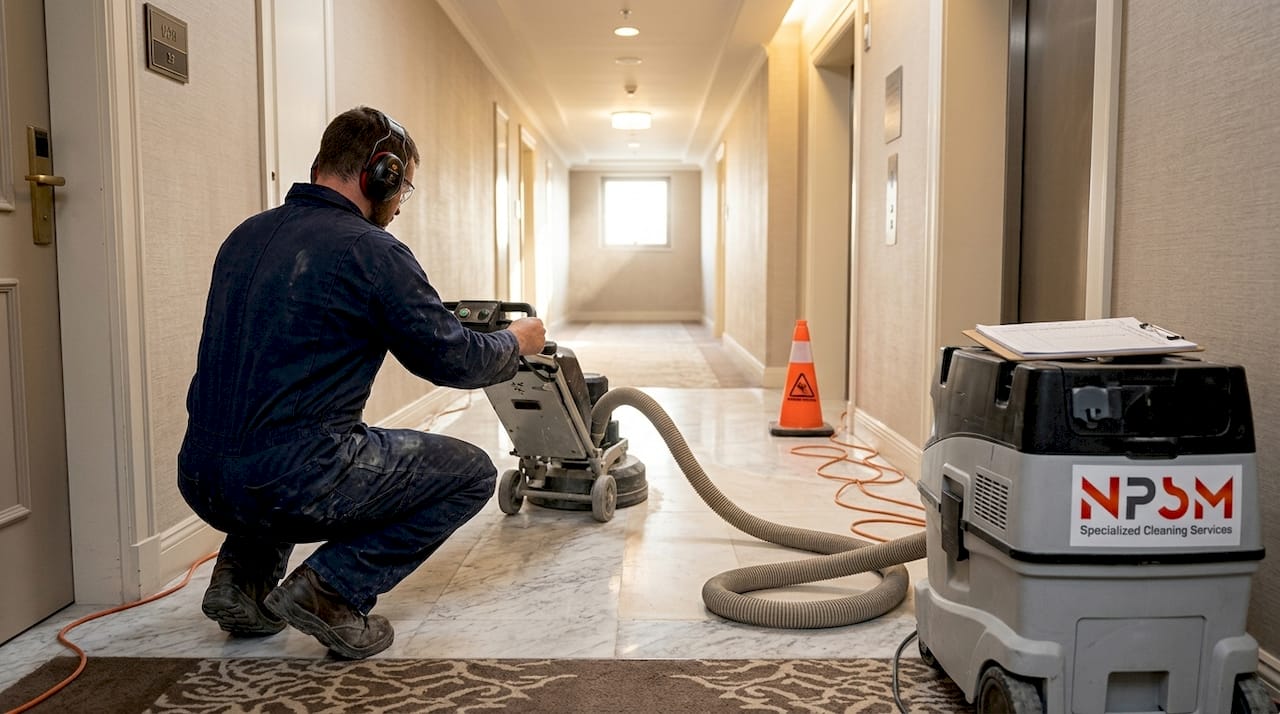
The restoration process follows a systematic sequence that builds quality at each stage. Deep cleaning with pH-neutral cleaners removes sand, residue, and contaminants that would interfere with grinding and polishing. Acidic or alkaline cleaners damage natural stone surfaces, so pH-neutral formulations protect floor integrity while preparing surfaces for mechanical restoration.
Here’s the complete restoration sequence for hotel floors:
-
Deep clean all surfaces using pH-neutral solutions and microfiber mops to eliminate embedded sand and organic residues
-
Grind damaged areas with progressive diamond grit pads starting at 50-grit for heavy damage and advancing through 100, 200, and 400-grit for smoothing
-
Hone the surface to remove scratches and create uniform texture using 800 and 1500-grit diamond pads with water cooling
-
Polish floors with specialized compounds applied via rotary machines to achieve desired gloss levels between 60-90 on the gloss meter
-
Apply penetrating sealant in two coats allowing proper cure time between applications to protect against moisture, abrasion, and salt damage
-
Buff the sealed surface to integrate the protective layer and enhance shine without creating slippery conditions
| Floor Type | Grit Sequence | Polishing Compound | Sealant Type | Cure Time |
|---|---|---|---|---|
| Marble | 50-100-200-400-800-1500 | Crystallization powder | Impregnating sealer | 48-72 hours |
| Granite | 100-200-400-800-1500-3000 | Diamond polishing paste | Topical + impregnating | 24-48 hours |
| Wooden | 36-60-80-100-120 | None (sanding only) | Water-based polyurethane | 72 hours |
| Natural Stone | 100-200-400-800-1500 | Stone-specific compound | Impregnating sealer | 48-72 hours |
Diamond pad progression is critical for achieving professional results. Skipping grit levels leaves visible scratches that become apparent once polishing compounds are applied. Each grit level removes the scratches from the previous stage while creating finer marks that the next level eliminates. This systematic approach builds a flawless surface ready for final polishing.
Pro Tip: Test sealant performance on a small inconspicuous area before treating entire sections. Different stone types absorb sealants at varying rates, and you need to verify cure times and slip resistance before committing to large areas.
Water management during grinding and honing prevents slurry from spreading into adjacent areas. Professional contractors use wet vacuum systems that capture waste immediately, maintaining clean work zones and preventing contamination of carpeted areas or guest spaces. This containment approach is essential in occupied hotels where cleanliness directly impacts guest satisfaction.
The difference between polishing, grinding, and crystallization affects both results and longevity. Grinding removes material to eliminate damage, polishing enhances shine through friction and compounds, while crystallization chemically hardens the surface. Most hotel projects combine all three techniques in sequence for optimal durability and appearance.
Verifying results and maintaining pristine floors post-restoration
Post-restoration inspection confirms quality and identifies any areas requiring additional attention. Walk every restored section under different lighting conditions, as natural daylight reveals imperfections that artificial lighting might hide. Check for uniform polish across the entire surface, complete elimination of cracks and scratches, and proper sealant coverage without streaking or pooling.
Marble restoration achieves 85-90% improvement in appearance and durability when executed properly. This benchmark helps you evaluate contractor performance and justify restoration investments to ownership. Wooden floors should show consistent color and sheen without visible sanding marks or finish irregularities. Natural stone surfaces need even absorption of sealant without dark spots indicating over-saturation.
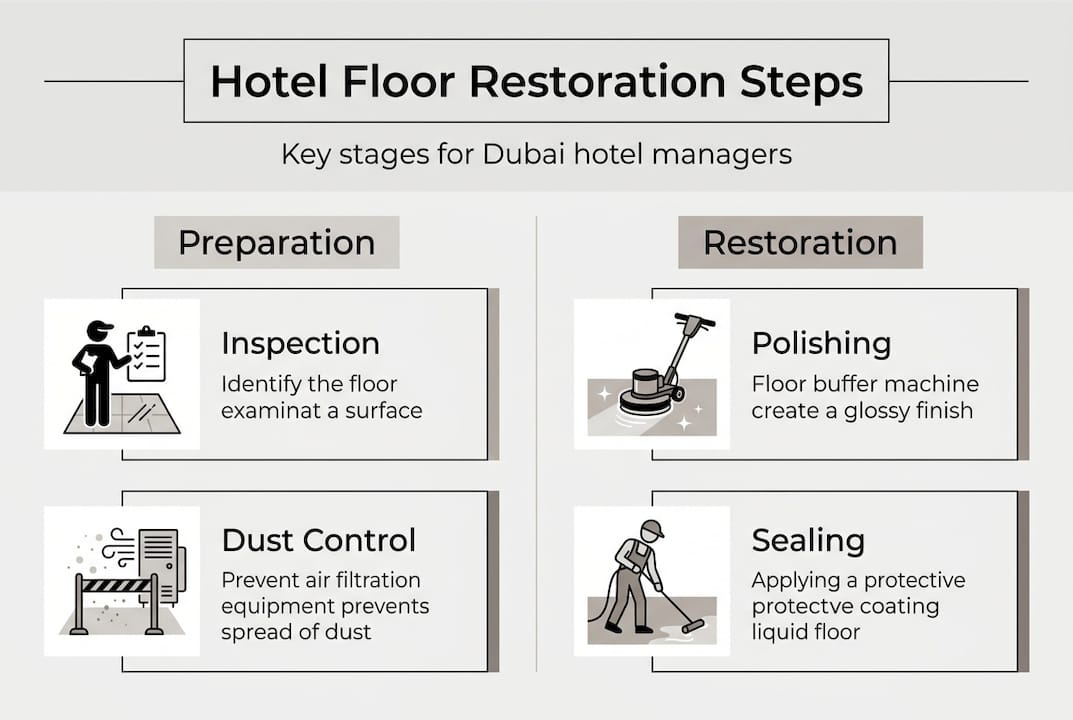
Regular maintenance schedules prevent the accelerated wear that necessitates frequent restoration. Professional polishing every 12-18 months maintains the protective layer and removes minor damage before it becomes structural. This preventive approach costs 60-70% less than reactive restoration addressing severe deterioration.
Here’s your ongoing maintenance framework:
-
Implement daily dustless cleaning using microfiber mops and pH-neutral solutions
-
Install and maintain entrance matting systems that capture sand before it reaches interior floors
-
Schedule quarterly deep cleaning with professional equipment to remove embedded particles
-
Conduct semi-annual inspections identifying early signs of wear or sealant breakdown
-
Arrange annual professional polishing for high-traffic areas like lobbies and corridors
-
Plan comprehensive restoration every 12-18 months for all public spaces
| Maintenance Type | Frequency | Cost per sqft (AED) | Lifespan Extension | Guest Disruption |
|---|---|---|---|---|
| Daily cleaning | Daily | 0.5-1 | 40-60% | None |
| Professional polishing | 12-18 months | 8-15 | 50-70% | Minimal (2-4 hours) |
| Wood refinishing | 7-10 years | 15-27 | Restores to new | Moderate (24-48 hours) |
| Carpet deep clean | Quarterly | 3-6 | 40-60% | Low (4-6 hours) |
| Stone restoration | 18-24 months | 12-22 | 60-80% | Moderate (8-12 hours) |
Dustless cleaning methods protect your restoration investment while improving indoor air quality. Traditional mopping pushes fine particles into grout lines and surface pores, accelerating wear and dulling finishes. Microfiber systems capture particles rather than redistributing them, maintaining the polished appearance longer between professional services.
Eco-friendly marble and granite maintenance reduces chemical exposure for staff and guests while protecting floor surfaces from harsh cleaners. Green-certified products deliver equivalent cleaning power without the pH extremes that etch natural stone or strip protective sealants. This approach aligns with sustainability goals while extending floor lifespan.
Entrance mats serve as your first line of defense against sand abrasion. Position commercial-grade matting at every exterior door with enough length for guests to take 6-8 steps before reaching interior floors. This simple intervention captures 80% of tracked-in particles, dramatically reducing the abrasive wear that necessitates frequent restoration.
The durability of restored wooden floors depends heavily on humidity control and prompt spill cleanup. Wooden surfaces in Dubai hotels require careful moisture management to prevent warping and finish breakdown. Install humidity monitors in areas with wooden floors and maintain levels between 40-60% for optimal stability.
Discover professional floor restoration services in Dubai
Partnering with experienced restoration professionals ensures your hotel floors receive expert care tailored to Dubai’s demanding environment. Comprehensive floor restoration and polishing services address marble, granite, wooden, vinyl, and natural stone surfaces with techniques proven in high-traffic hospitality settings. Specialists understand the unique challenges of working in occupied hotels, using dustless equipment, odorless finishes, and flexible scheduling that protects your guest experience.
Professional teams bring specialized knowledge of material-specific restoration protocols and Dubai’s environmental factors. Natural stone polishing services utilize advanced diamond technology and crystallization methods that achieve superior results compared to general contractors. For wooden surfaces, expert wooden floor polishing delivers smooth, durable finishes that withstand heavy foot traffic while maintaining the warm aesthetic guests expect in luxury properties.
How often should hotel floors in Dubai be professionally polished?
Professional polishing every 12 to 18 months maintains floor integrity and appearance in Dubai’s challenging environment. High-traffic areas like lobbies and corridors may require attention toward the shorter end of this range, while guest rooms and back-of-house spaces can extend to 18 months between services. This schedule prevents minor wear from becoming structural damage requiring expensive restoration.
What is the safest cleaning method for marble floors in high-traffic hotels?
Use pH-neutral, eco-friendly cleaners with microfiber mops to protect marble surfaces from chemical damage. Acidic products like vinegar or lemon-based cleaners etch the stone, while alkaline solutions strip protective sealants. Daily cleaning with proper products removes sand and dirt before they cause abrasive wear, extending the time between professional restoration services.
How can hotel managers minimize guest disruption during floor restoration?
Schedule restoration during off-peak hours between 10am and 4pm when guest traffic is lowest in public spaces. Work room-by-room rather than closing entire sections, and use odorless, fast-drying finishes that cure within 72 hours. Communicate schedules clearly through front desk briefings, in-room notices, and lobby signage so guests can plan their movements accordingly.
What maintenance practices can extend the lifespan of hotel floors?
Regular dustless cleaning with entrance mats and microfiber mops reduces abrasive wear by capturing sand before it damages surfaces. Schedule professional polishing every 12-18 months to maintain protective sealants and remove minor damage before it becomes severe. Implement humidity control in areas with wooden floors and train housekeeping staff on proper cleaning products and techniques for each floor type.
Permalink