
TL;DR:
Regular professional restoration extends tile life and maintains high hotel standards.
Dubai’s hard water requires careful cleaning and sealing to prevent damage.
Overnight restoration minimizes guest disruption and enhances hotel branding and guest satisfaction.
Worn, stained, or cracked bathroom tiles are not just an aesthetic problem in a hotel. They are a direct threat to your guest reviews, your brand audit scores, and your revenue. A single negative comment about a dirty grout line or a dull tile surface can ripple across review platforms and cost you repeat bookings. The good news is that extending tile life by 40-60% through structured restoration is not only achievable but dramatically cheaper than replacement. This guide gives Dubai hotel owners and facility managers a clear, step-by-step workflow to restore bathroom tiles to luxury standards without pulling rooms out of service for weeks.
Table of Contents
-
What most guides miss: Why tile restoration is Dubai’s competitive edge
-
Professional help when it matters: Dubai’s tile restoration experts
Key Takeaways
| Point | Details |
|---|---|
| Regular assessment saves money | Systematic inspections and maintenance benchmarks significantly reduce the risk of costly tile replacements. |
| Use pH-neutral cleaners only | Acidic or bleach-based products can permanently damage tiles, especially marble, so stick with neutral solutions. |
| Annual sealing is essential | Applying sealer once a year provides crucial protection against stains and lowers long-term maintenance costs. |
| Professional restoration boosts guest satisfaction | Well-maintained bathroom tiles positively impact reviews and brand reputation, giving hotels a competitive edge. |
Assessing tile condition and planning your restoration
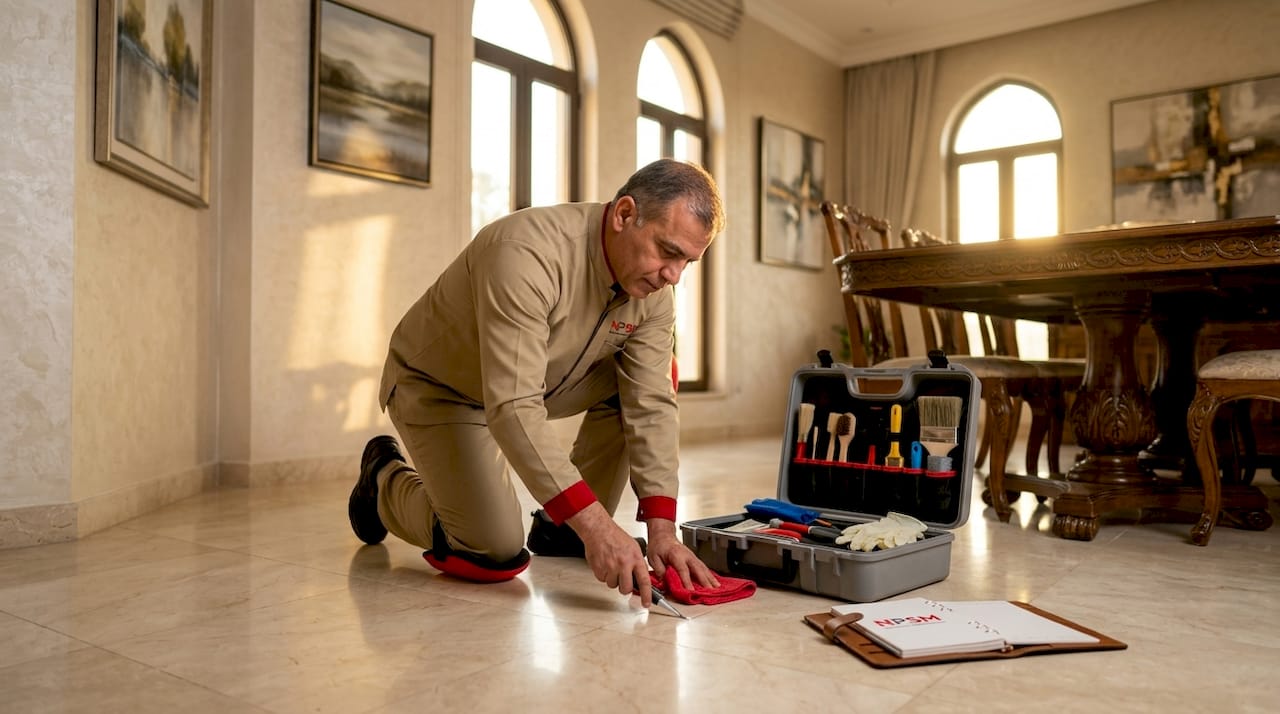
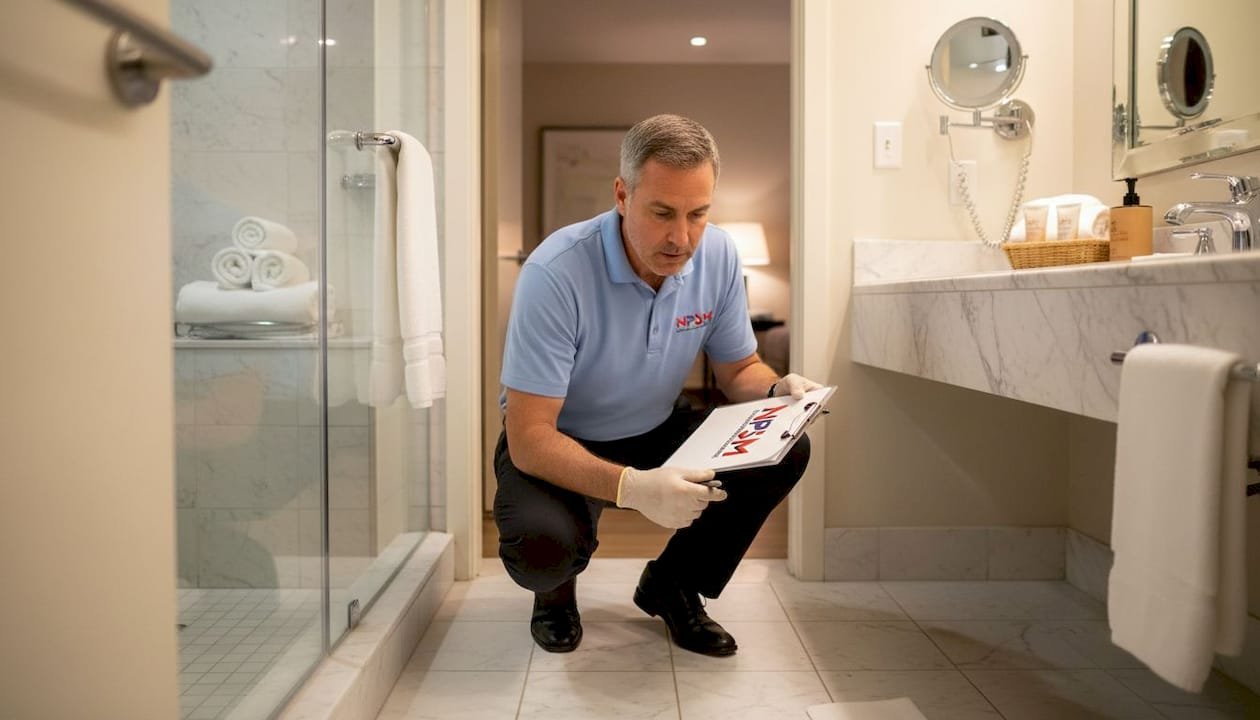
Before any work begins, you need an honest picture of what you are dealing with. Walk every bathroom with fresh eyes, the way a brand auditor or a first-time guest would. Look for grout discoloration, surface etching on marble, chips at tile edges, calcium buildup from Dubai’s notoriously hard water, and any hollow-sounding tiles when tapped. These are your priority flags.
The most effective facility managers use a simple condition scoring system. Rate each area from 1 (like new) to 5 (urgent replacement needed). Record your findings in a structured table so nothing gets missed.
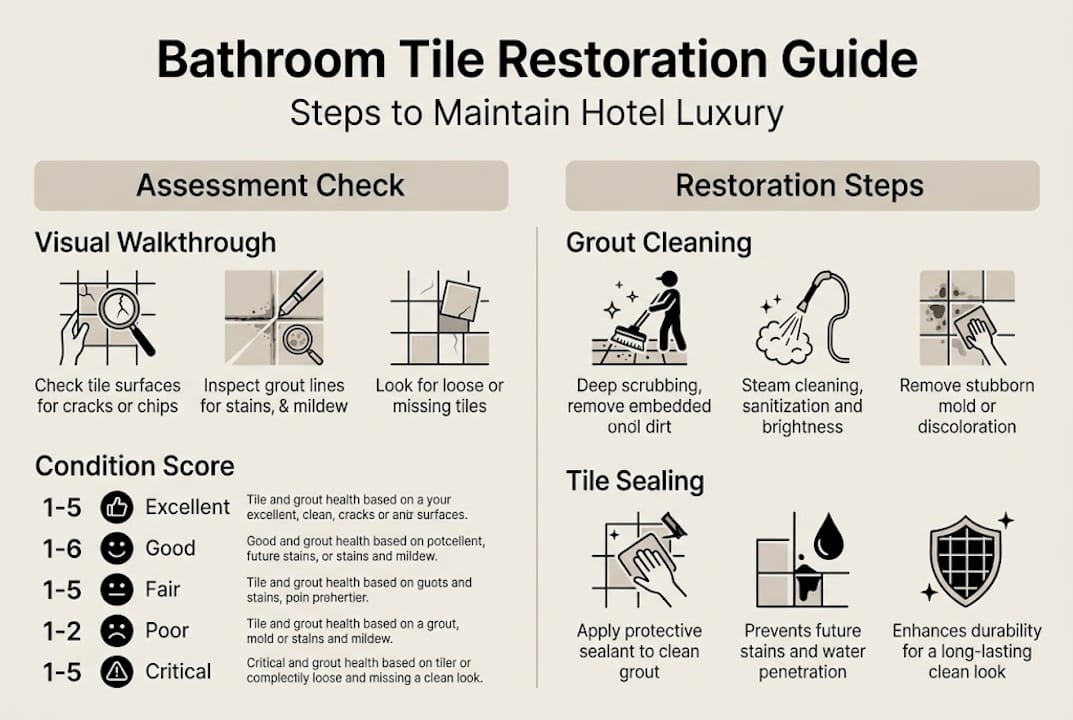
| Area | Condition score (1-5) | Last restoration date | Issues found |
|---|---|---|---|
| Suite 101 bathroom | 3 | Jan 2025 | Grout staining, minor etching |
| Lobby restroom | 4 | Mar 2024 | Calcium deposits, cracked grout |
| Pool changing room | 2 | Nov 2025 | Surface dull, no structural damage |
| Gym bathroom | 5 | Unknown | Chips, heavy staining, grout failure |
This data table is not just an internal tool. Track condition scores for compliance with hotel brand standards, and you will have documented proof ready for any surprise audit. Brands like Marriott, Hilton, and Accor all expect documented maintenance records.
Once you have your scores, build a phased restoration plan. Do not try to restore every bathroom at once. Sequence the work by priority:
-
Urgent (score 4-5): Schedule within 30 days
-
Moderate (score 3): Schedule within 90 days
-
Preventive (score 1-2): Schedule at next annual cycle
For floor restoration for Dubai hotels, overnight scheduling is the standard approach. Most bathroom restorations can be completed in a single night shift, meaning the room is guest-ready by morning check-in. This is how you protect revenue while maintaining standards.
Pro Tip: Prioritize suites and high-traffic guest bathrooms first. A guest paying AED 2,000 per night notices a dull tile faster than anyone, and that experience directly shapes your review score.
“Condition tracking is not optional for luxury properties. It is the backbone of brand compliance and the single best defense against costly emergency replacements.”
Pairing your assessment with a tile floor cleaning workflow designed for luxury properties ensures you are not just guessing at what each area needs.
Gathering tools, materials, and safety requirements
Once the scope is clear, being properly equipped is what separates a professional outcome from a costly mistake. Dubai’s hard water creates unique challenges. Calcium and mineral deposits build up faster here than in most cities, which means your cleaning agents and tools need to be selected carefully.
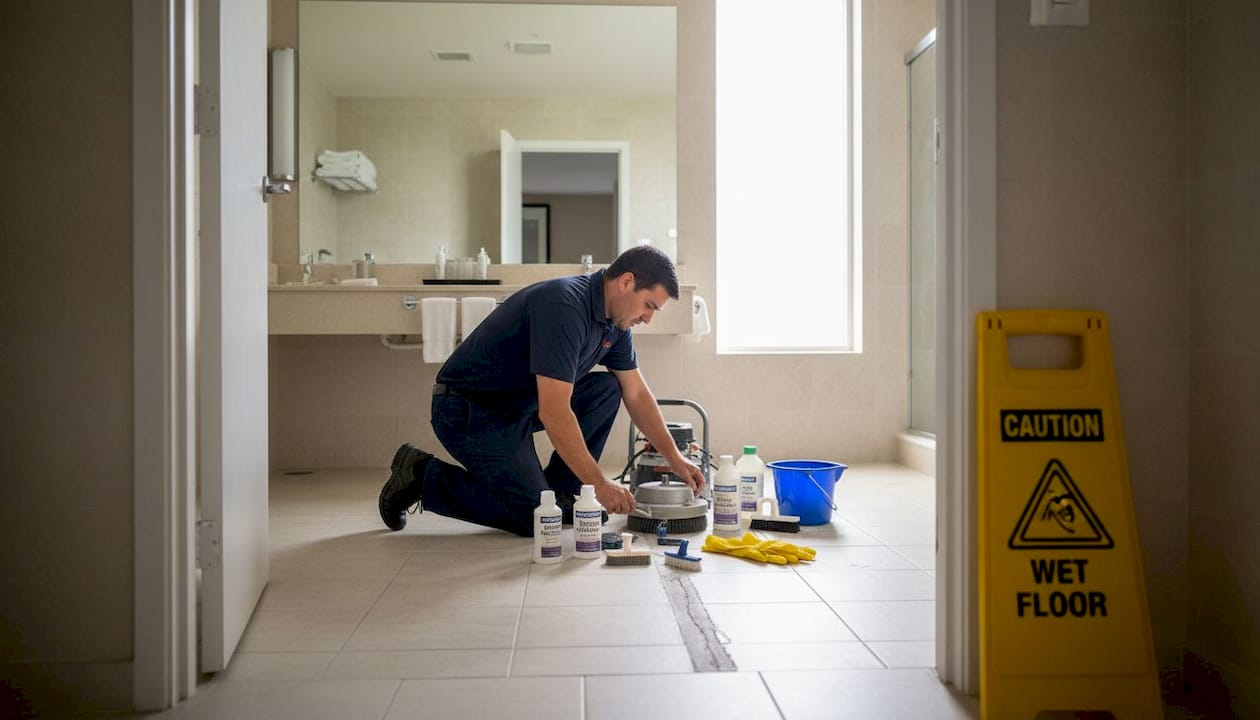
| Category | Machine method | Manual method |
|---|---|---|
| Scrubbing | Rotary floor machine with pad | Stiff-bristle grout brush |
| Cleaning agent | pH-neutral tile cleaner | pH-neutral spray cleaner |
| Polishing | Diamond polishing pads (wet) | Microfiber polishing cloth |
| Grout treatment | Oscillating grout tool | Manual grout pen or brush |
| Drying | Industrial air mover | Clean microfiber towels |
For marble bathroom tiles, which are common across Dubai’s five-star properties, the material choice is critical. Avoid acids and bleach on marble surfaces and use only pH-neutral cleaners. Acid-based products cause permanent etching that no amount of polishing can fully reverse. Our marble-safe cleaning solutions are specifically formulated for this environment.
Here is your safety and supply checklist before any restoration begins:
-
pH-neutral tile and grout cleaner (no bleach, no vinegar, no acid)
-
Grout brush or oscillating tool for targeted grout lines
-
Diamond polishing pads (for machine polishing of marble or porcelain)
-
Penetrating sealer appropriate for the tile type
-
Non-slip drop cloths to protect surrounding surfaces
-
Nitrile gloves, safety glasses, and non-slip footwear for all staff
-
Adequate ventilation: open windows or portable fans running throughout
-
Signage to block guest access to the work area
Pro Tip: Always test your cleaning solution in a hidden corner of the tile, such as behind a toilet base, before applying it to the full surface. Dubai’s tile finishes vary widely, and a 10-minute test saves hours of damage control.
For complex surfaces like natural stone or large-format porcelain, consider marble and tile polishing services from specialists who already have the right equipment calibrated for these materials.
Step-by-step tile and grout restoration workflow
With your equipment gathered, you are ready to execute. This workflow is designed to be completed overnight in a single hotel bathroom, with the room returned to service by morning.
-
Dry sweep and vacuum the entire floor and wall tile area to remove loose debris. (15 minutes)
-
Apply pH-neutral pre-cleaner to all tile surfaces. Let it dwell for 5 to 10 minutes without letting it dry. (20 minutes)
-
Scrub grout lines using an oscillating tool or stiff brush. Work in small sections. Rinse thoroughly with clean water. (45 minutes)
-
Treat stubborn stains with a targeted poultice or enzyme-based stain remover. Allow dwell time per product instructions. (30 minutes)
-
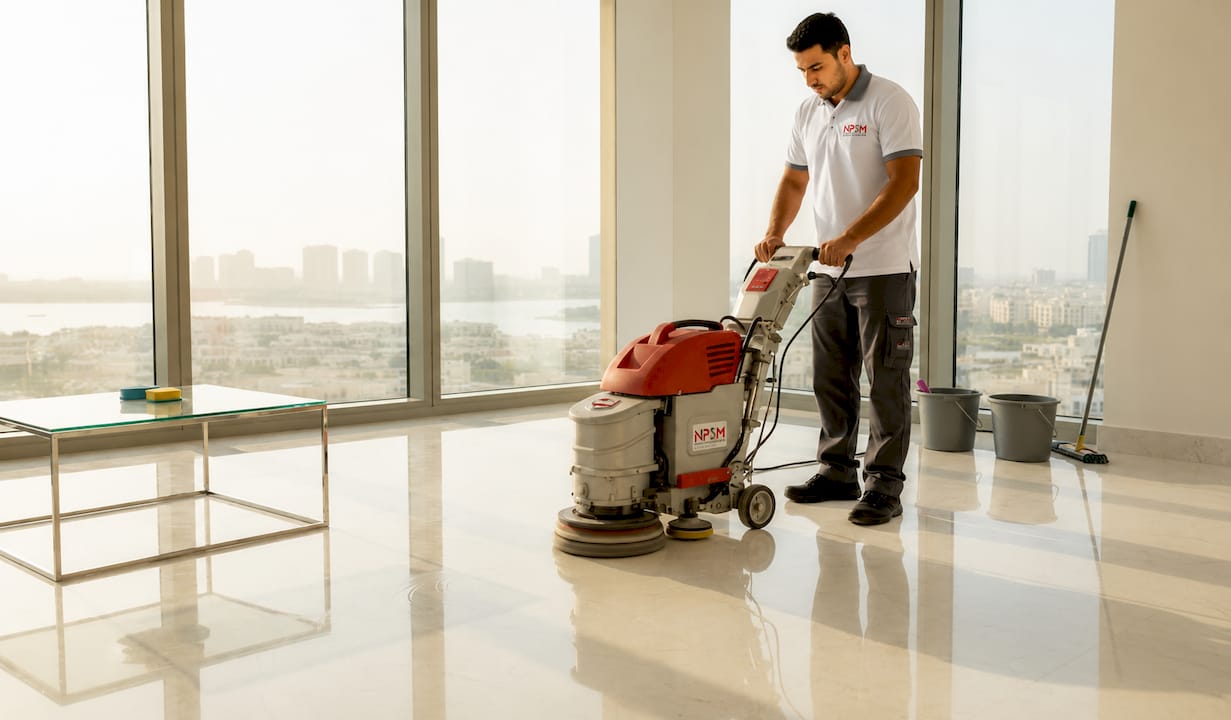
Machine polish the tile surface using a rotary machine with the appropriate pad for your tile type. For marble, use wet diamond pads in sequence from coarse to fine grit. (60 minutes)
-
Final rinse and inspection under bright light. Check for missed grout lines, residue, or dull patches. (15 minutes)
-
Air-dry completely using industrial air movers before applying sealer. (30 to 60 minutes)
| Step | Time required | Risk level | Expected result |
|---|---|---|---|
| Pre-clean | 20 min | Low | Surface ready for treatment |
| Grout scrub | 45 min | Medium | Clean, bright grout lines |
| Stain removal | 30 min | Medium | Stains lifted or minimized |
| Machine polish | 60 min | High (if wrong product) | Restored surface sheen |
| Dry and inspect | 45 min | Low | Guest-ready finish |
Weekly grout scrubbing and quarterly deep extraction extend tile life up to 60%, drastically lowering replacement spend over a hotel’s lifetime. That is not a minor saving. It is the difference between a routine maintenance budget and an emergency capital expense.
Warning: Never use acidic cleaners, bleach, or vinegar on marble tiles. Even diluted acids cause etching that permanently dulls the surface and cannot be reversed without professional re-polishing.
For properties with complex tile layouts or high-value marble, working with tile polishing experts ensures the machine settings and products are matched correctly to your specific surface. You can also review the full grout cleaning process to understand what a thorough treatment involves.
Sealing, post-restoration care, and maintenance benchmarks
Restoration is only the beginning. Preserving those results makes the investment worthwhile, and in Dubai’s high-humidity bathroom environments, sealing is not optional.
Apply a penetrating sealer within 24 hours of completing the restoration, once the surface is fully dry. Use a sealer rated for your specific tile type: natural stone sealers differ from ceramic or porcelain sealers. Apply with a microfiber applicator, allow it to penetrate for the time specified on the product label, then buff off any excess. Do not let sealer dry on the surface before buffing, as it will leave a hazy film.
Here is a maintenance schedule that works for Dubai hotel bathrooms:
-
Daily: Wipe down tile surfaces with a damp microfiber cloth. Remove soap scum before it bonds.
-
Weekly: Scrub grout lines with a pH-neutral cleaner and a stiff brush. Rinse completely.
-
Quarterly: Deep clean using a professional-grade tile extractor or hire specialists for a targeted treatment.
-
Annually: Full restoration and resealing cycle. Inspect for chips, cracked grout, and surface wear.
The financial case for this schedule is clear. Annual sealing costs approximately $3,200 for a 200-room hotel, compared to $45,000 to $90,000 for full tile replacement. That is a decision that pays for itself many times over.
Pro Tip: Log every maintenance action in a simple spreadsheet: date, area, product used, technician name, and next scheduled service. This log is your proof of compliance during brand audits and your warranty documentation if a product claim ever arises.
For broader guidance on keeping luxury surfaces in top condition, professional floor care tips and floor restoration benefits are worth reviewing as part of your annual planning cycle.
What most guides miss: Why tile restoration is Dubai’s competitive edge
Now that you know the full workflow, let’s dig into what most guides miss entirely.
Most facility managers approach tile restoration as a cost-control measure. That framing is too narrow. In Dubai’s hotel market, where international guests routinely compare your property against the best hotels in Singapore, London, and New York, a flawless bathroom is a brand statement. It signals that you care about every detail, not just the lobby chandelier.
Guest review data consistently shows that bathroom cleanliness and condition rank among the top three factors in overall satisfaction scores. A restored tile surface is not just clean. It looks intentional. It communicates luxury. That perception drives repeat bookings and higher average daily rates.
There is also the audit angle. Franchise brands are tightening their inspection standards. A documented restoration program, supported by condition scores and maintenance logs, positions your property as audit-ready at any time. That is a competitive advantage over properties that only react when something breaks.
The contrarian truth is this: in a saturated Dubai hotel market, annual bathroom tile restoration is not maintenance. It is marketing. Explore how floor restoration for guest experience directly connects to your property’s competitive positioning.
Professional help when it matters: Dubai’s tile restoration experts
If your property needs results that impress both guests and brand auditors, the right professional partner makes all the difference. At floorpolishing.ae, we specialize in commercial tile restoration, marble polishing, and grout rehabilitation for Dubai’s hospitality sector. Our teams work overnight to minimize vacancy and deliver a guest-ready finish by morning.
We handle every surface type found in hotel bathrooms, from large-format porcelain to natural stone restoration and high-gloss marble. Our floor polishing in Dubai services are calibrated for the demands of five-star and four-star properties, where standards are non-negotiable and turnaround time is everything.
Frequently asked questions
How often should hotel bathroom tiles be restored or resealed?
Hotel bathroom tiles should be restored and resealed at least once a year. Annual sealing protects tile and grout and prevents the costly replacement cycles that drain capital budgets.
What cleaning agents are safe for marble bathroom tiles?
Only pH-neutral cleaners should be used on marble bathroom tiles. Avoid acids and bleach since even diluted versions cause permanent surface etching that requires professional re-polishing to address.
Can restoration be scheduled to avoid disturbing hotel guests?
Yes, most bathroom tile restorations can be completed in a single overnight shift. Overnight scheduling is ideal for hotels because it keeps rooms in service and eliminates guest disruption entirely.
Is professional restoration better than DIY for hotel bathrooms?
For hotel-grade results, professional restoration is the right choice every time. Proper benchmarks extend tile life 40-60%, saving hundreds of thousands in replacement costs over a decade compared to inconsistent DIY approaches.