

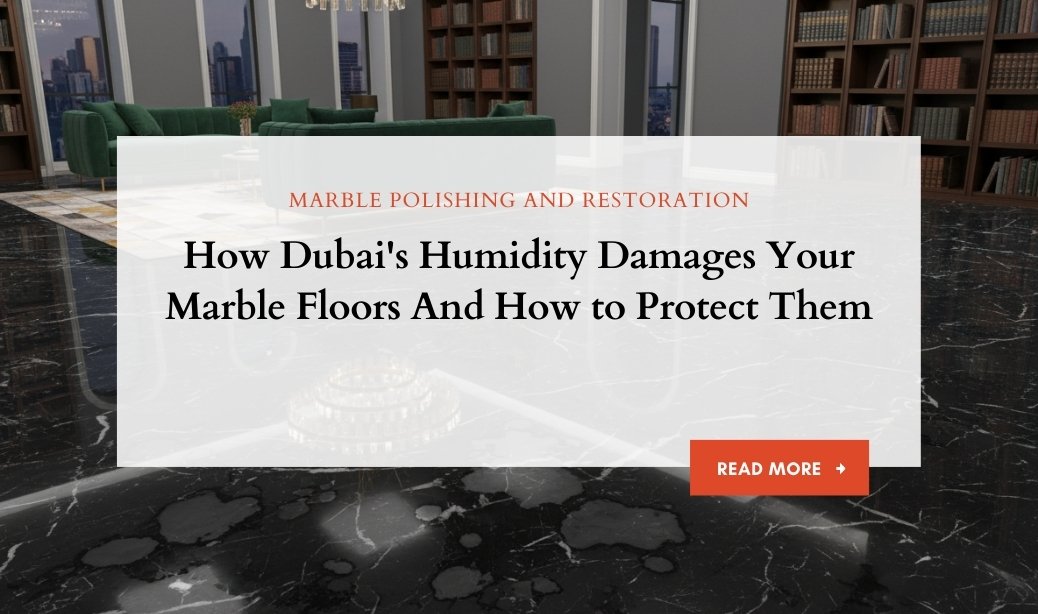
How Dubai’s Humidity Damages Your Marble Floors and How to Protect Them

If you live in Dubai, you know how challenging the summer humidity can be. But did you know it’s also silently damaging your beautiful marble floors? When humidity reaches 60-90% during Dubai’s summer months, your marble absorbs moisture like a sponge, leading to dullness, stains, and permanent damage.
The good news? With the right knowledge and care routine, you can protect your marble floors and keep them looking stunning year-round. This guide explains exactly how humidity harms marble and what you can do about it.
Why Marble Floors Struggle in Dubai's Climate
Marble is a natural stone made mostly of calcium carbonate. Think of it like a hard sponge with tiny holes you can’t see. These microscopic holes absorb water from Dubai’s humid air, and that’s where problems begin.
During Dubai’s scorching summer when humidity stays above 60%, your marble constantly absorbs moisture. This isn’t just surface wetness that you can wipe away—the water soaks deep inside the stone, bringing minerals and chemicals with it.
How Humidity Actually Damages Your Marble
Water Soaks Into the Stone
When marble absorbs water from humid air, several bad things happen. The water carries minerals that leave white or yellow spots on your floor. The moisture stays trapped inside, creating ugly discoloration. Over time, this weakens the stone from the inside out.
In Dubai’s climate, marble can absorb a surprising amount of water. This water doesn’t just evaporate quickly—it sits inside the stone, causing ongoing damage.
Etching: Permanent Dull Spots
Etching is one of the worst problems marble faces in Dubai. When acidic liquids (like lemon juice, coffee, or even some cleaning products) touch your marble, they react with the calcium in the stone. This creates dull, rough patches that won’t come off with regular cleaning.
Dubai’s high humidity makes this worse. The moisture in the air keeps acidic spills “active” longer on your marble surface, giving them more time to eat away at the stone and create permanent marks.
White Powder on Your Floors
Have you noticed a white, chalky powder appearing on your marble during humid months? This is called efflorescence. It happens when water pulls salts from inside the marble to the surface. As the water evaporates, it leaves these white deposits behind.
While this doesn’t destroy your marble, it looks terrible and shows that moisture is moving through your stone. In Dubai, where we go from hot outdoor temperatures to cold air-conditioned rooms, this problem gets worse because water constantly moves in and out of the marble.
Cracks from Temperature Changes
Dubai’s extreme temperature swings—from 45°C outside to 20°C inside—make marble expand and contract like a balloon inflating and deflating. Add humidity to this, and you get even more stress on the stone.
When marble is wet from humidity, it expands more than when it’s dry. This constant expansion and contraction eventually leads to cracks, chips, and other damage.
Warning Signs Your Marble Needs Help
01
Your Floor Lost Its Shine
The easiest sign to spot is dullness. If your marble used to look shiny and reflective but now looks flat and lifeless, humidity has likely damaged the surface. Moisture and etching create tiny scratches that stop light from reflecting properly.
02
Stains That Won't Go Away
Water stains show up as dark patches, yellow streaks, or cloudy areas that don't disappear when you clean. These happen when Dubai's mineral-heavy water soaks into the marble and leaves deposits behind. Light-colored marble shows these stains most clearly.
03
Rough Surface Texture
Run your hand across your marble. Does it feel rough or gritty instead of smooth? This means humidity has started breaking down the surface. Once this happens, the rough surface traps more dirt and the damage gets worse faster.
04
Visible Cracks or Chips
If you see actual cracks, separation along the marble's natural veins, or chips at corners, the damage has reached a serious level. These problems mean moisture has weakened the stone's structure, and you need professional help immediately.
Permalink
Permalink
Permalink