
TL;DR:
Proper staining extends wood floor lifespan and enhances resistance to Dubai’s harsh climate.
Professional staining ensures even application, better durability, and long-term cost savings.
Staining provides UV protection, moisture barriers, and customizable aesthetics in high-traffic environments.
Many Dubai property owners assume a quick polish is all their wooden floors ever need. That assumption is costing them money. Without proper staining, wood is left exposed to intense UV rays, humidity swings, and daily foot traffic that slowly strip away its natural beauty and structural integrity. Staining is not just a cosmetic step. It is a protective investment that extends the life of your floors, reduces long-term maintenance costs, and keeps your property looking its best. This guide breaks down exactly what staining does, why it matters in Dubai’s unique climate, and how to get the most out of the process.
Table of Contents
-
What to expect: The staining process and maintaining results
-
The overlooked value of professional staining: What most homeowners miss
-
Get expert help: Transform and protect your wood floors in Dubai
Key Takeaways
| Point | Details |
|---|---|
| Staining boosts durability | Properly stained floors in Dubai last longer and withstand local conditions better. |
| Enhances appearance | Staining highlights wood grain and allows for customizable color finishes. |
| Protects from humidity | Stained floors offer a layer of defense against Dubai’s humid climate and spills. |
| Professional care matters | Expert staining and ongoing maintenance ensure even results and avoid costly mistakes. |
What does staining wooden floors actually do?
Let’s clear up a common point of confusion first. Many people use the words “staining,” “polishing,” and “sanding” interchangeably, but they are three very different services with distinct outcomes.
Wooden floor staining is a process that changes the wood’s color and provides surface protection. Sanding, on the other hand, removes the top layer of the wood to create a smooth, even surface before any treatment is applied. You can learn more about the full wood floor sanding steps if you want to understand how preparation feeds into a successful stain. Polishing is typically the final buffing stage that adds shine and a protective topcoat.
Staining sits in the middle of this process. It is applied after sanding and before the final seal. A pigmented liquid penetrates the wood grain, changing the color while highlighting the natural patterns that make each floor unique. Think of it like applying a tinted moisturizer to skin. It adds color, evens out the tone, and provides a layer of protection, all without hiding the natural texture underneath.
Here is what staining specifically achieves for your floors:
-
Color transformation: You can go lighter, darker, or match a specific interior design palette.
-
Grain enhancement: Staining makes the natural wood grain pop, adding depth and character.
-
Imperfection concealment: Minor scratches, discoloration, and uneven patches become far less noticeable.
-
Surface preparation: A properly stained floor accepts finishing coats more evenly, which means a better final result.
-
Added protection: The stain itself acts as a first barrier against moisture and surface wear before the sealant goes on.
Knowing how to make wood floors shine starts with understanding that the shine comes from the layers built on top of a well-stained base.
Pro Tip: In Dubai’s climate, water-based stains are a smarter choice than oil-based ones. They dry faster, emit fewer fumes, and are less likely to yellow over time when exposed to intense sunlight.
Top benefits of staining wooden floors in Dubai
Dubai is not a typical environment for wooden floors. You are dealing with temperatures that regularly exceed 40°C, strong UV radiation, air conditioning that creates dry indoor conditions, and occasional humidity spikes. All of these factors accelerate wood degradation. Staining addresses several of these threats at once.
Here are the top reasons Dubai property owners should prioritize staining:
-
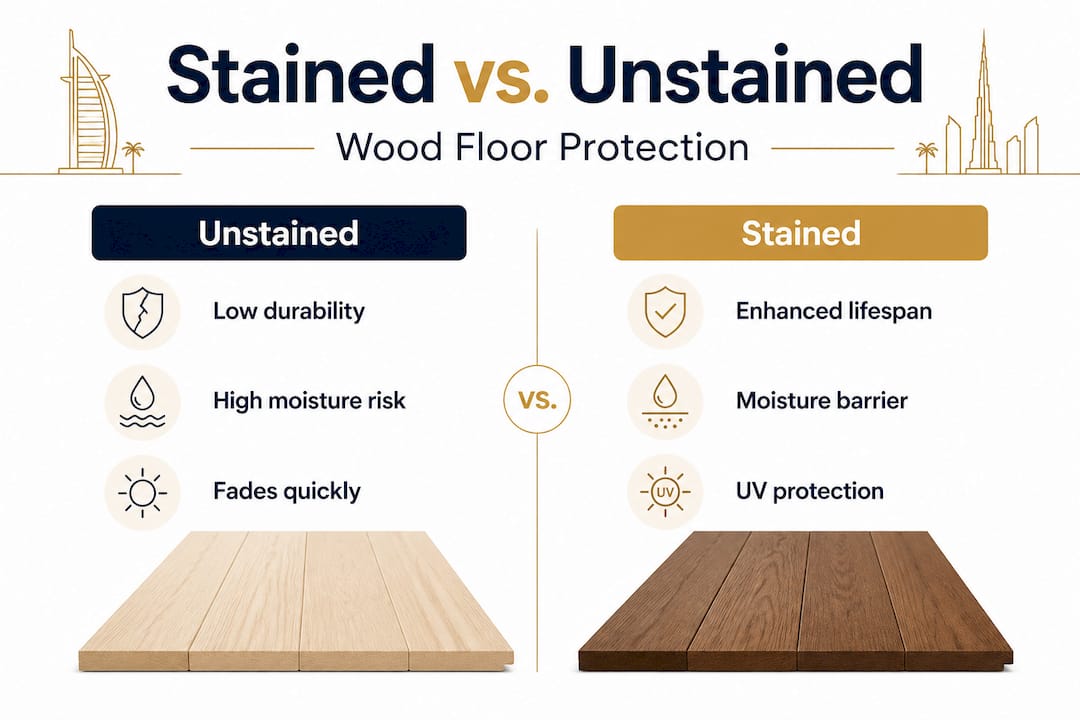
UV protection: Dubai’s sunlight is relentless. Untreated wood fades and grays within a few years of sun exposure. A quality stain with UV-resistant properties slows this process significantly, keeping your floors looking fresh for much longer.
-
Moisture resistance: Even with air conditioning, Dubai experiences seasonal humidity that can cause wood to expand and contract. Staining creates a barrier that reduces how much moisture the wood absorbs, minimizing warping and cracking.
-
Traffic durability: Villas and apartments in Dubai often see high foot traffic, especially in entryways, living rooms, and kitchens. Stained floors are measurably harder-wearing than bare wood.
-
Aesthetic flexibility: Whether your interior style is modern minimalist, traditional Arabic, or contemporary European, there is a stain color to match. You are not locked into the wood’s natural color.
-
Property value: A well-maintained, beautifully stained floor is a selling point. Buyers and tenants notice floors immediately.
According to professional restoration data, staining not only elevates the look of wood floors but also adds up to 40% more durability when part of a complete professional restoration process. That is not a minor improvement. Over the lifetime of a floor, that kind of durability boost translates directly into fewer repairs and replacements.
| Benefit | Unstained floor | Professionally stained floor |
|---|---|---|
| UV fade resistance | Low | High |
| Moisture barrier | Minimal | Strong |
| Color customization | None | Full palette |
| Estimated lifespan | 8-12 years | 15-20+ years |
| Maintenance frequency | Every 2-3 years | Every 5-7 years |
For ongoing care after staining, following wooden floor maintenance tips specific to Dubai’s conditions will help you preserve the results much longer.
Considering renovating wood floors versus replacing them with carpet? Staining a quality wooden floor almost always delivers better long-term value than carpet installation in a Dubai property.
Pro Tip: When booking a staining service, specifically ask your provider whether they use UV-protective finishing coats. Not all products are created equal, and in Dubai’s sun-heavy environment, this one detail can add years to your floor’s appearance.
Comparing stained vs. unstained floors: What lasts longer?
The numbers tell a clear story, but it helps to understand why stained floors outperform untreated ones over time, not just by how much.
Untreated wood is porous. Every drop of water, every spill, every humid day pushes moisture into the grain. Over time, this causes the wood fibers to swell, contract, and eventually crack or warp. In Dubai, where air conditioning runs constantly and outdoor humidity spikes seasonally, this cycle happens faster than in more temperate climates.
Staining closes those pores. The pigment penetrates the wood and, when sealed properly, creates a surface that repels rather than absorbs. The result is a floor that stays dimensionally stable for much longer.
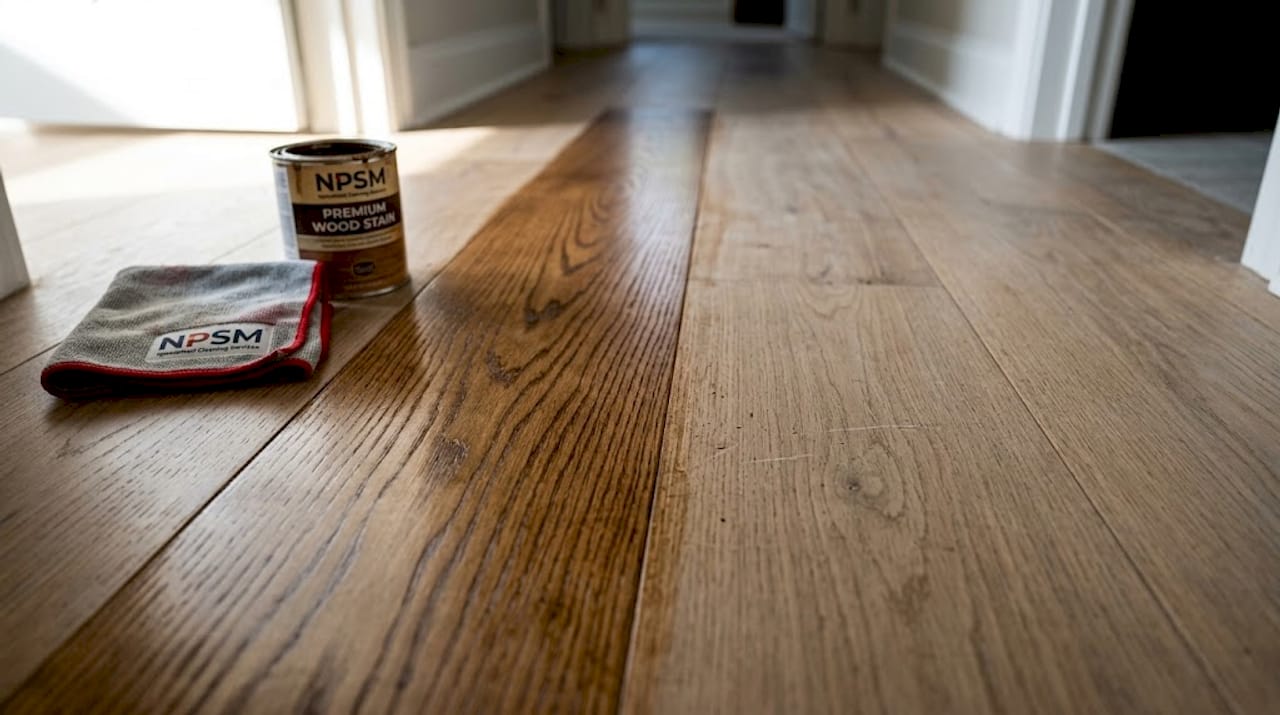
Here is a direct side-by-side look at how the two options compare:
| Factor | Unstained wood floor | Professionally stained floor |
|---|---|---|
| Scratch resistance | Low to moderate | Moderate to high |
| Moisture absorption | High | Low |
| Fading from sunlight | Fast (2-4 years) | Slow (7-10+ years) |
| Refinishing frequency | Every 2-3 years | Every 5-7 years |
| Typical lifespan in Dubai | 8-12 years | 15-20+ years |
| Long-term maintenance cost | Higher | Lower |
Beyond the numbers, the visual difference is striking. Dull wooden floors that have never been stained often look flat and lifeless, especially after a few years of Dubai sun exposure. Stained floors retain depth, warmth, and that rich, polished appearance that makes a room feel complete.
Professionally stained and restored floors can endure Dubai’s climate better and maintain their beauty longer than untreated wood, with professional services reducing visible floor damage by up to 60% compared to untreated surfaces.
The maintenance cost difference is worth emphasizing. An unstained floor that needs refinishing every two years will cost significantly more over a decade than a stained floor that only needs attention every five to seven years. When you factor in the disruption of having workers in your home more frequently, the case for professional staining becomes even stronger.
For a deeper look at the restoration process itself, the wood floor restoration guide walks through what a full treatment involves and what outcomes you can realistically expect.
What to expect: The staining process and maintaining results
Understanding the process helps you set realistic expectations and ask the right questions when hiring a professional. Here is what a proper staining job looks like from start to finish:
-
Assessment: A professional examines the floor for damage, existing finishes, and wood type. This determines which stain products are appropriate.
-
Sanding: The floor is sanded down to bare wood, removing old finish, scratches, and surface discoloration. This step is critical. A poorly sanded floor will show every flaw through the stain.
-
Cleaning: All dust and debris from sanding are removed completely. Even a small amount of residue can ruin the stain’s adhesion.
-
Stain application: The chosen stain is applied evenly, usually in the direction of the wood grain, using professional-grade applicators. Multiple coats may be needed for deeper colors.
-
Drying: The stain needs adequate drying time between coats. Rushing this step causes uneven color and poor adhesion.
-
Sealing: A protective topcoat, often polyurethane or a water-based equivalent, is applied over the dried stain. This is what gives the floor its durability and sheen.
-
Buffing: The final step smooths out any minor imperfections in the topcoat and brings up the finished look.
Following best-practice floor care after staining extends the beauty and life of stained wood surfaces considerably. Here is what good maintenance looks like day to day:
-
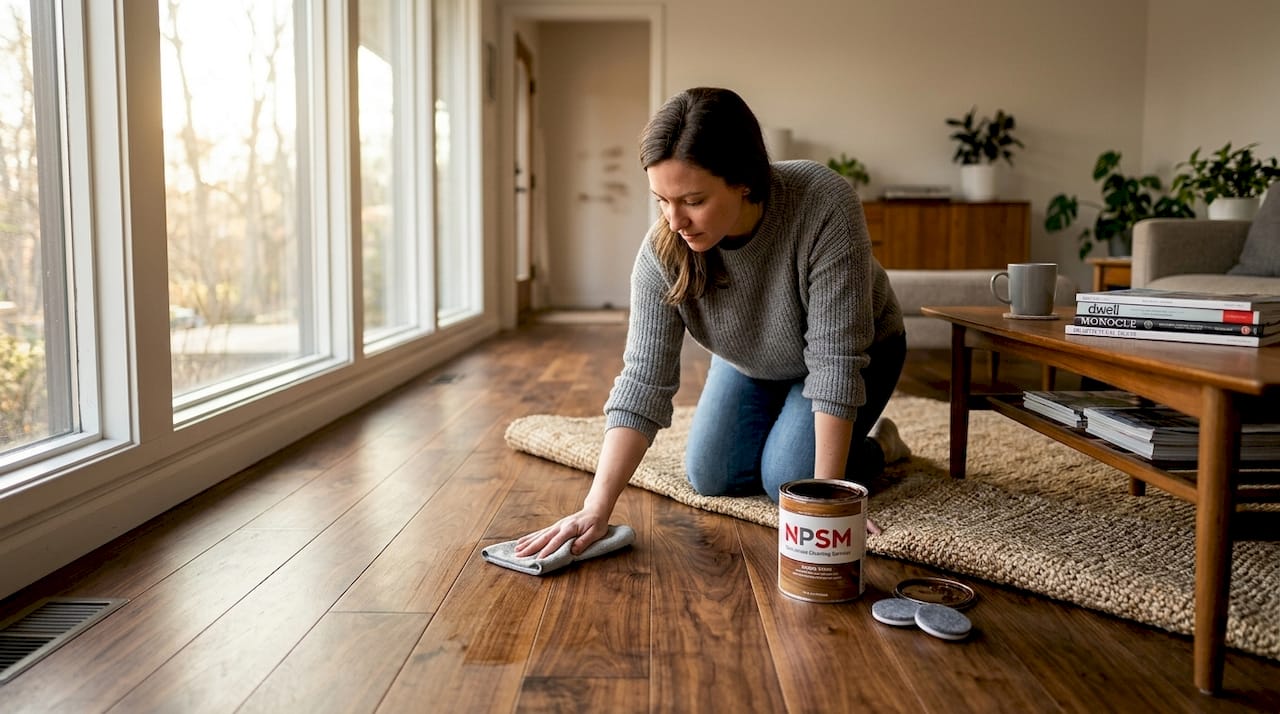
Use a soft microfiber mop for regular cleaning. Avoid wet mopping, which pushes moisture into the wood.
-
Clean up spills immediately. Even sealed floors are not completely waterproof.
-
Place felt pads under furniture legs to prevent scratching.
-
Use rugs in high-traffic areas like hallways and entryways.
-
Avoid harsh chemical cleaners. They strip the finish over time.
-
Keep indoor humidity levels consistent. Extreme fluctuations cause wood movement.
Common mistakes to avoid include using steam mops (they force moisture into the wood), dragging furniture across the floor, and using abrasive cleaning pads that scratch the sealant.
For professional floor care tailored to luxury properties in Dubai, the standard recommendation is a full professional service every two to three years to inspect, clean, and touch up the finish before problems develop.
Knowing how to keep shining wood floors between professional visits is what separates floors that look great for decades from those that need full replacement after ten years.
Pro Tip: Schedule your professional maintenance visit before the summer months. Dubai’s peak heat and humidity season puts extra stress on wooden floors, and going into it with a freshly sealed surface gives you the best protection.
The overlooked value of professional staining: What most homeowners miss
Here is something we see constantly in our work across Dubai villas and apartments. A property owner watches a few online tutorials, buys a stain kit from a hardware store, and spends a weekend trying to transform their floors. The result is almost always uneven color, visible lap marks where the stain overlapped, and a finish that starts peeling within six months.
It is not a skill problem. It is a preparation problem. Proper staining requires sanding equipment that most homeowners do not own, knowledge of how different wood species absorb pigment differently, and experience reading the floor’s condition before any product is applied. Dubai’s wood floors present specific challenges that generic tutorials simply do not address.
The humidity and temperature swings here mean that stain drying times vary significantly from what product labels suggest. A professional who works in Dubai every day knows this. They adjust their process accordingly. They also know which products hold up against the UV intensity specific to this region, something that matters enormously when you are choosing between a finish that lasts three years and one that lasts ten.
The real value of professional staining is not just the beautiful result on day one. It is the lower lifetime cost, the fewer disruptions to your home, and the confidence that the job was done correctly. Luxury floor refinishing done right adds measurable value to a property. Done wrong, it creates a floor that looks worse than before and costs more to fix.
Our honest advice: treat professional staining the same way you would treat any significant home investment. Research your provider, ask about the specific products they use, and make sure they have experience with Dubai’s climate conditions specifically.
Get expert help: Transform and protect your wood floors in Dubai
If you are ready to revitalize your wooden floors, working with experienced professionals makes the difference between a floor that looks good for a season and one that holds its beauty for a decade or more. At floorpolishing.ae, we specialize in best floors restoration across Dubai, covering wooden floors, marble, granite, vinyl, tiles, and natural stone. Our team understands the specific demands of Dubai’s climate and uses products designed to perform in this environment. From initial sanding to final buffing, we handle every step with precision. Explore our wooden floor polishing services to see the full range of treatments available, or learn more about how we restore wooden floors to their original beauty and beyond. Contact us today to book an assessment and get a tailored recommendation for your property.
Frequently asked questions
How often should wooden floors be stained in Dubai?
Staining every 5-7 years is the general recommendation, though floors in high-traffic areas or with significant sun exposure may need attention sooner. Best-practice floor care between professional visits helps extend that interval.
Does staining protect wooden floors from Dubai’s humidity?
Yes. Staining creates a protective coating that significantly reduces moisture penetration and the swelling or warping that follows. Professional restoration adds up to 40% more durability, which includes better resistance to humidity-related damage.
Can I stain wooden floors myself, or should I hire a professional?
DIY staining is possible but rarely delivers results that match professional work. Hiring a professional ensures even application, the right stain for your specific wood type, and a finish that lasts. Professionally stained floors endure Dubai’s climate far better than DIY attempts.
Will staining change the wood texture or only the color?
Staining primarily changes the color and highlights the natural grain. After sealing, the floor surface often feels smoother than before. Wooden floor staining changes color and provides surface protection without altering the fundamental texture of the wood.
Is staining suitable for all types of wooden floors?
Most wood species respond well to staining, but dense exotic woods like teak or merbau may require specialized products to achieve even penetration. Always consult your service provider before selecting a stain to ensure compatibility with your specific floor type.