
TL;DR:
High foot traffic in Dubai hotels accelerates floor wear, necessitating proactive restoration.
Scheduled restoration saves costs, reduces downtime, and maintains brand standards over full replacement.
Regular professional maintenance improves guest perception, legal compliance, and asset valuation.
Your hotel floors are working around the clock, and surface cleaning is not saving them. In Dubai’s luxury hospitality market, where high foot traffic causes rapid wear including matting, staining, scratches, and dullness, the gap between a clean floor and a restored floor is the gap between a five-star impression and a one-star review. This article walks you through the real financial risks of floor neglect, how professional restoration stacks up against costly replacement, which methodologies work best in Dubai’s climate, and how a proactive strategy protects your brand, your asset, and your bottom line.
Table of Contents
Key Takeaways
| Point | Details |
|---|---|
| High-traffic risks | Constant foot traffic causes rapid floor wear, requiring regular restoration in Dubai hotels. |
| Major cost savings | Restoration can save up to $400,000 over ten years compared to frequent replacement. |
| Standards and audits | Good restoration practices help hotels pass brand audits and avoid hefty franchise penalties. |
| Expert-driven results | Specialized methods tailored to each floor type ensure top appearance and durability. |
The true impact of hotel floor deterioration
Now that you understand the urgency, let’s clarify what neglecting floor restoration really costs your hotel.
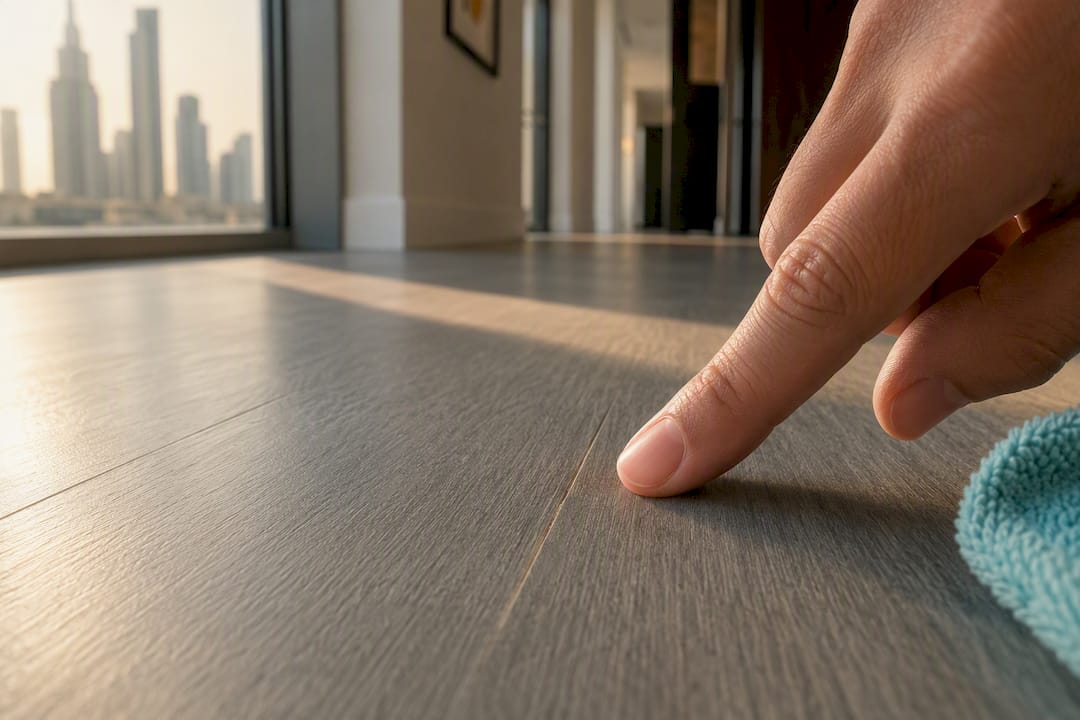
Floor wear in a busy Dubai hotel is not a slow, gradual decline you can manage later. It is fast, compounding, and visible to every single guest who walks through your lobby. Marble loses its reflectivity. Carpet develops permanent matting in high-traffic pathways. Wooden floors collect micro-scratches that catch light and look tired. Grout lines darken with embedded soil that no standard mop will lift. These are not cosmetic nuisances. They are signals to your guests that standards are slipping.
Dubai’s climate accelerates the damage. The fine desert dust that filters through entrances acts as an abrasive agent underfoot, creating what specialists call microscopic abrasion. Every footstep grinds those particles against your floor surface. In a hotel lobby handling 2,000 to 5,000 daily visitors, that adds up to serious surface degradation within just two to three years, not ten. Restoration for Dubai hotels must account for this environmental reality, which is why generic maintenance schedules designed for cooler, less dusty climates fall short here.
| Floor type | Visible wear timeline | Risk if ignored |
|---|---|---|
| Marble | 12 to 18 months | Etching, deep scratches, dullness |
| Carpet | 6 to 12 months | Matting, staining, odor |
| Hardwood | 18 to 24 months | Surface cracks, discoloration |
| Tiles/grout | 12 to 24 months | Grout erosion, mold, cracking |
| Vinyl | 12 to 18 months | Peeling, yellowing, slip hazards |
“Heavy traffic in Dubai hotels and malls leads to microscopic abrasion daily, making proactive restoration a business necessity rather than a maintenance preference.”
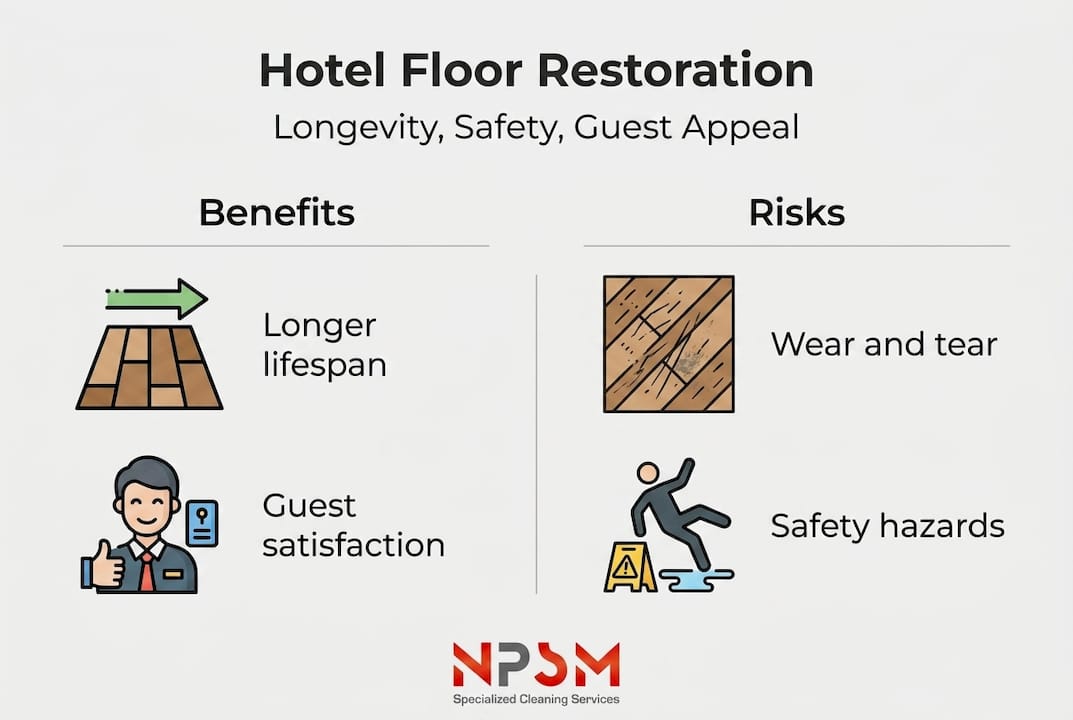
Guest satisfaction scores on platforms like TripAdvisor and Booking.com show a clear pattern: cleanliness and appearance ratings consistently mention floors. A worn lobby floor, stained corridor carpet, or dull restaurant marble signals poor upkeep to guests who paid premium rates for a premium experience. For five-star and four-star hotels in Dubai, where online reviews directly influence booking decisions, a drop of even 0.3 points in a cleanliness rating can cost meaningful occupancy. Managing high-traffic floor maintenance proactively protects your reputation before guests ever have reason to complain.
Restoration vs. replacement: Cost, downtime, and ROI
Understanding the financial wins, the next question is how does floor restoration actually work for busy hotels in Dubai?
Let’s talk real numbers. Full floor replacement in a 200-room hotel lobby, corridors, and F&B areas is an enormous capital project. You are looking at material procurement, contractor mobilization, disposal of existing flooring, extended area closures, and temporary operational disruptions that ripple through room revenue, restaurant covers, and event bookings. Conservative estimates put the savings of choosing proactive maintenance and restoration over replacement at $200,000 to $400,000 over ten years for a property of that scale. That is not a small line-item. That is a capital project you avoid entirely.
| Approach | Estimated 10-year cost | Downtime | Disruption level |
|---|---|---|---|
| Proactive restoration | $150,000 to $250,000 | Hours per session | Minimal |
| Reactive restoration | $300,000 to $450,000 | Days per area | Moderate |
| Full replacement | $500,000 to $800,000 | Weeks per zone | Severe |
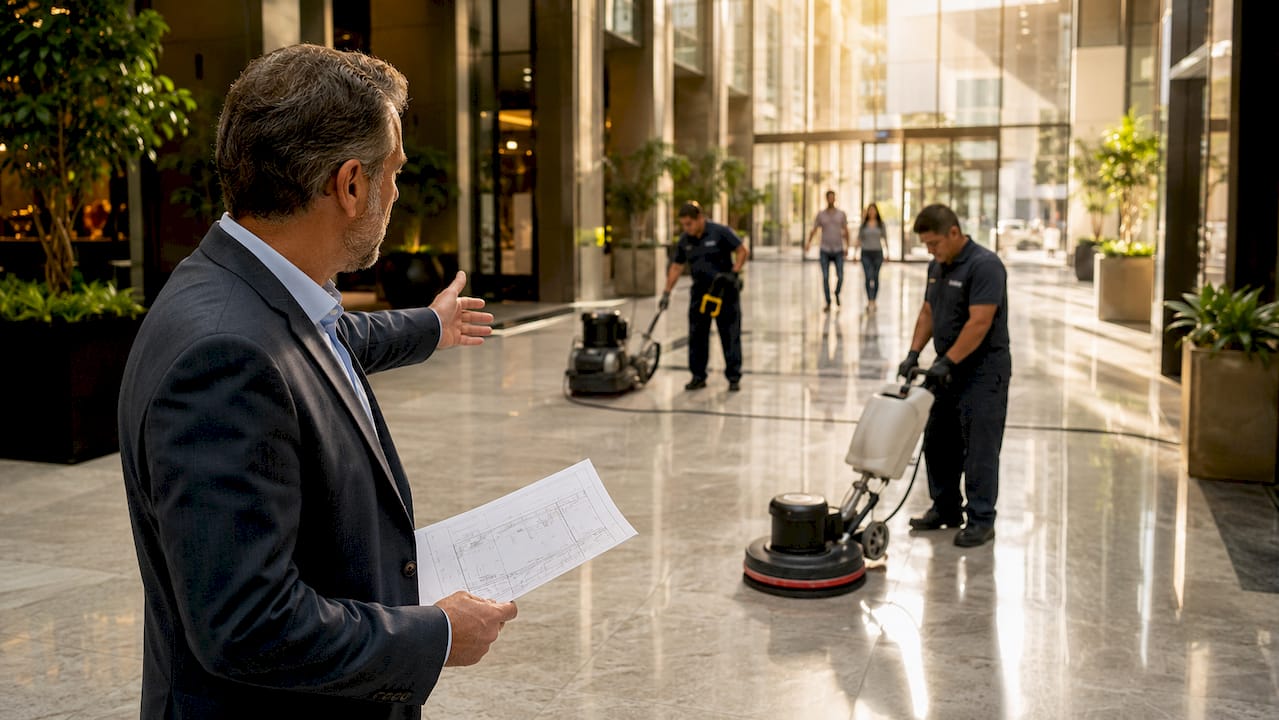
The downtime calculation matters just as much as the direct cost. When a hotel corridor or restaurant floor goes out of service for full replacement, you lose room inventory, reroute guests through awkward alternate paths, and create operational strain on staff. A skilled restoration team works in scheduled windows, often overnight or during low-occupancy periods, to keep your operation running normally. That flexibility is worth significant money to a hotel running high occupancy rates through Dubai’s peak season.
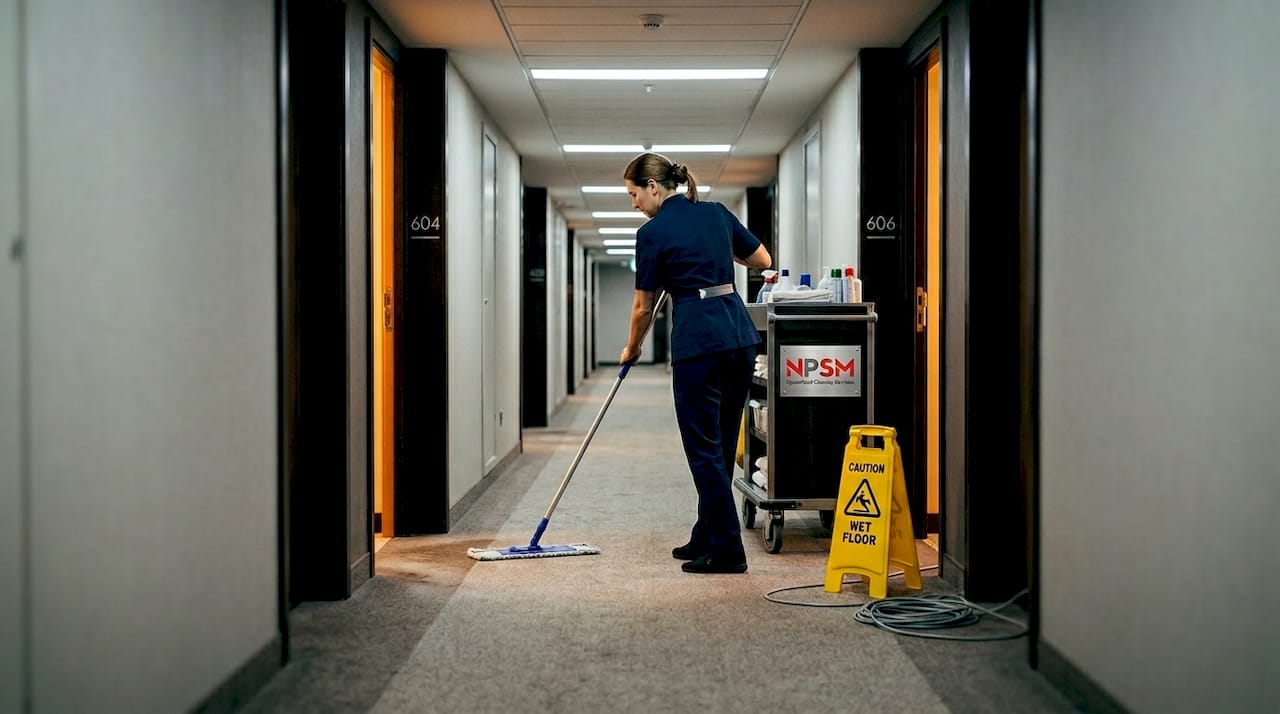
Franchise and branded hotels feel additional pressure here. Major hotel groups conduct brand quality assurance inspections multiple times per year. A worn or visibly degraded floor in a public area can trigger mandatory remediation requirements with tight deadlines. Restoration completed on your schedule costs far less and causes far less disruption than emergency work forced by a brand audit failure. Understanding the floor restoration ROI is critical when presenting this investment to ownership or asset managers who are focused on capital allocation.
Key advantages of scheduled restoration over reactive replacement:
-
Preserves original design intent and material quality
-
Maintains consistent brand aesthetics across all areas
-
Avoids procurement delays on specialty materials like imported marble
-
Keeps insurance and liability exposure lower by eliminating slip hazards early
-
Protects long-term asset valuation for hotel owners and investors
Pro Tip: Schedule restoration work in rolling phases across different hotel zones rather than attempting large-scale projects at once. This keeps at least 80 to 90 percent of your revenue-generating areas fully operational at all times, which is particularly valuable during Dubai’s October to April peak tourism season.
Key restoration methodologies for Dubai hotel floors
Equipped with method options, let’s address why restoration is non-negotiable for hotels that want to protect their reputation, avoid penalties, and maintain operational excellence.
Not every floor type responds to the same treatment, and applying the wrong method can cause more damage than the wear itself. Here is how the leading marble restoration methods and other floor-specific approaches break down for hotel environments:
-
Hot water extraction for carpet: Endorsed by the Carpet and Rug Institute, this method uses pressurized hot water and extraction to remove embedded soil, bacteria, and allergens from carpet fibers. It is the gold standard for hotel carpet care because it does not leave detergent residue that re-attracts soil, and properly executed it dries within two to four hours. For hotel corridors and guest rooms, this keeps carpets looking and smelling fresh without the risk of mildew from excess moisture.
-
Diamond honing and polishing for marble and natural stone: This is a multi-stage mechanical process using progressively finer diamond abrasives to remove surface scratches and etch marks before finishing with a polishing compound that restores reflectivity. For Dubai hotels, this is the most critical methodology because marble is the dominant flooring material in lobbies, restaurants, and corridors. The Burj Al Arab’s 24,000 square meter marble restoration after 25 years of operation is the benchmark example in the region. Dubai hotels in high-traffic zones polish marble every 2 to 3 months to maintain that iconic mirror finish.
-
Buffing and recoating for hardwood: Hardwood floors in hotel restaurants, bars, and specialty venues respond well to periodic machine buffing and a fresh topcoat of finish. This method refreshes surface appearance, fills minor scratches, and extends the life of the floor without the cost and disruption of full sanding. When damage is more extensive, full sanding is required and should be performed by specialists who understand the wood species and existing finish system.
-
Epoxy systems for utility and back-of-house areas: Kitchen prep areas, loading docks, laundry facilities, and service corridors take punishment that front-of-house floors never experience. Epoxy flake and seamless epoxy systems create a durable, chemical-resistant surface that is also easy to clean and hygienically sound. This is non-negotiable in F&B environments where floor condition is directly linked to food safety compliance.
“The key methodologies of hot water extraction, honing and polishing, buffing and recoating, and epoxy systems are the proven framework for complete hotel floor care across all material types.”
For spot treatment, speed is everything. Stains addressed within 30 minutes achieve 85 to 90 percent removal rates. The same stain left for 24 hours may require aggressive mechanical intervention or may become permanent. Staff training on immediate response protocols is part of any serious floor care program. When it comes to professional floor care at the luxury level, understanding how to specify luxury marble finishes and match existing surface characteristics is what separates skilled professionals from general contractors.
Pro Tip: Ask your restoration provider for a material specification sheet for every floor type in your property. This document should list the finish type, recommended maintenance frequency, and approved cleaning products. It protects you from accidental damage by housekeeping staff using incompatible chemicals, which is one of the most common causes of premature floor deterioration in Dubai hotels.
Brand standards, compliance, and asset value protection
Knowing what is at stake, Dubai hotel leaders need a disciplined strategy and the right partners to make restoration seamless and results-driven.
Brand inspections are not optional, and the consequences of failing them are not minor. Major hotel franchise agreements include provisions for maintenance standards that cover floor condition, grout cleanliness, and overall material integrity in public areas. Failing a brand quality assurance inspection can trigger mandatory corrective action plans with hard deadlines, and persistent non-compliance can result in franchise fees in the range of $15,000 to $40,000 per incident. In severe cases, it puts franchise agreements at risk entirely.
Beyond the brand audit risk, floor condition is directly tied to your property’s asset valuation. When a hotel asset changes hands or is refinanced, independent asset assessors evaluate the condition and remaining useful life of major capital components including flooring. A property with documented preventive maintenance records and well-maintained floors commands a higher valuation than one requiring near-term capital expenditure on replacement. This matters enormously to hotel owners and investors who think beyond the current operating year.
Key compliance and asset protection benefits of structured restoration:
-
Documented maintenance logs satisfy brand auditor requirements for preventive maintenance programs
-
Regular restoration prevents the sudden failure scenarios that trigger emergency spend at peak rates
-
Well-maintained floors reduce slip-and-fall liability, which affects insurance premiums and potential legal exposure
-
Consistent aesthetics across all property areas protect the integrity of capital invested in design and fit-out
-
Asset condition reports reflect positively on property valuations during refinancing or sale
Floor condition is also a staff pride issue. Housekeeping and front-of-house staff work with greater confidence and care in an environment that is visibly well-maintained. A worn, dull lobby does not inspire pride. A polished, gleaming entrance floor does. That pride translates into service quality, which translates into guest satisfaction scores that drive repeat bookings.
Pro Tip: Integrate floor restoration scheduling into your annual capital planning cycle, not just your maintenance budget. Presenting it as a capital preservation strategy rather than a maintenance expense changes how ownership and finance teams perceive the investment and makes approval significantly easier.
Working with specialized floor care for compliance partners who understand brand standards specific to major hotel groups operating in Dubai gives you a meaningful advantage when inspection cycles come around.
Why proactive floor restoration outperforms reactive fixes
Here is a perspective that most hotel engineering and operations teams do not hear enough: floor restoration is not a maintenance activity. It is a competitive strategy.
Hotels that treat floor care as a budget line to be cut during slow periods consistently find themselves spending two to three times more money catching up than they would have spent staying ahead. The math is straightforward, but the discipline is harder. Reactive hotel management is easier to justify quarter by quarter because the spend feels discretionary right up until the moment it becomes urgent and expensive.
The real cost of reactive floor management is not the emergency restoration bill. It is the reviews posted by guests who encountered worn carpets and dull marble during the months before the emergency was acknowledged. It is the brand audit failure that required rushed, overpriced contractor work during peak season because the problem was deferred too long. It is the asset valuation discount applied because documented preventive maintenance records do not exist.
Proactive restoration builds something reactive maintenance never can: consistency. Guests who stay at your property twice a year notice when standards hold. When a returning guest sees the same luminous marble finish they remember from their last visit, that consistency is a brand promise kept. It builds loyalty in a market where guests have no shortage of exceptional alternatives.
The benefits of restoration extend beyond the floor surface itself. They shape the entire guest perception of quality from the moment they enter your property. No amount of exceptional service recovers the first impression lost to a tired, worn floor. Proactive restoration ensures that first impression never becomes a liability.
Partner with Dubai’s restoration experts to protect your asset
Your hotel’s floors are one of the first things every guest sees and one of the last things your maintenance budget should compromise on. At floorpolishing.ae, we work directly with hotel engineering and operations teams across Dubai to deliver scheduled, professional restoration across marble, granite, hardwood, vinyl, tiles, and natural stone. Our programs are designed around your operational calendar so that work happens in the windows that protect your revenue, not disrupt it.
If you are ready to stop reacting and start protecting, explore our best floors restoration and polishing in Dubai services or review the full range of floor restoration benefits we deliver to hospitality clients. From grout restoration and broken tile repair to marble diamond polishing and epoxy utility floors, our full-service approach covers every surface in your property. Visit floorpolishing.ae to request a consultation or site assessment and take the first step toward protecting your hotel’s most visible asset.
Frequently asked questions
How often should hotel floors be restored in Dubai?
In high-traffic areas, hotel floors such as marble should be polished or restored every 2 to 3 months to maintain optimal appearance, safety, and brand standards.
Does floor restoration disrupt hotel operations?
Professional restoration is scheduled during low-traffic windows to minimize operational disruption, unlike full replacement which can close areas for days or weeks and significantly impacts revenue.
What is the financial impact of delaying floor restoration?
Delaying restoration drives up long-term costs and increases brand risk. A 200-room hotel can avoid up to $400,000 in unnecessary replacement spend over ten years through proactive maintenance alone.
How does floor restoration affect hotel brand inspections?
Regular professional restoration supports brand audit compliance and helps hotels avoid $15,000 to $40,000 in franchise penalties that result from failed inspections due to visible floor wear and non-compliance.