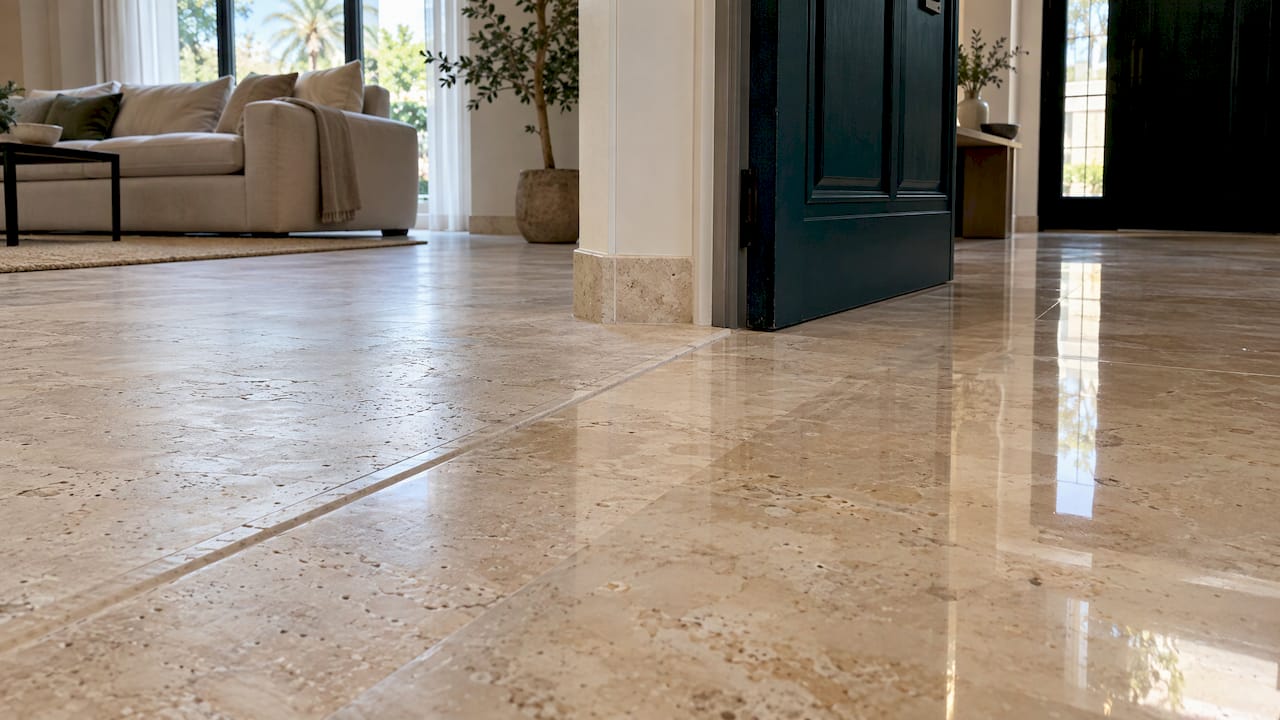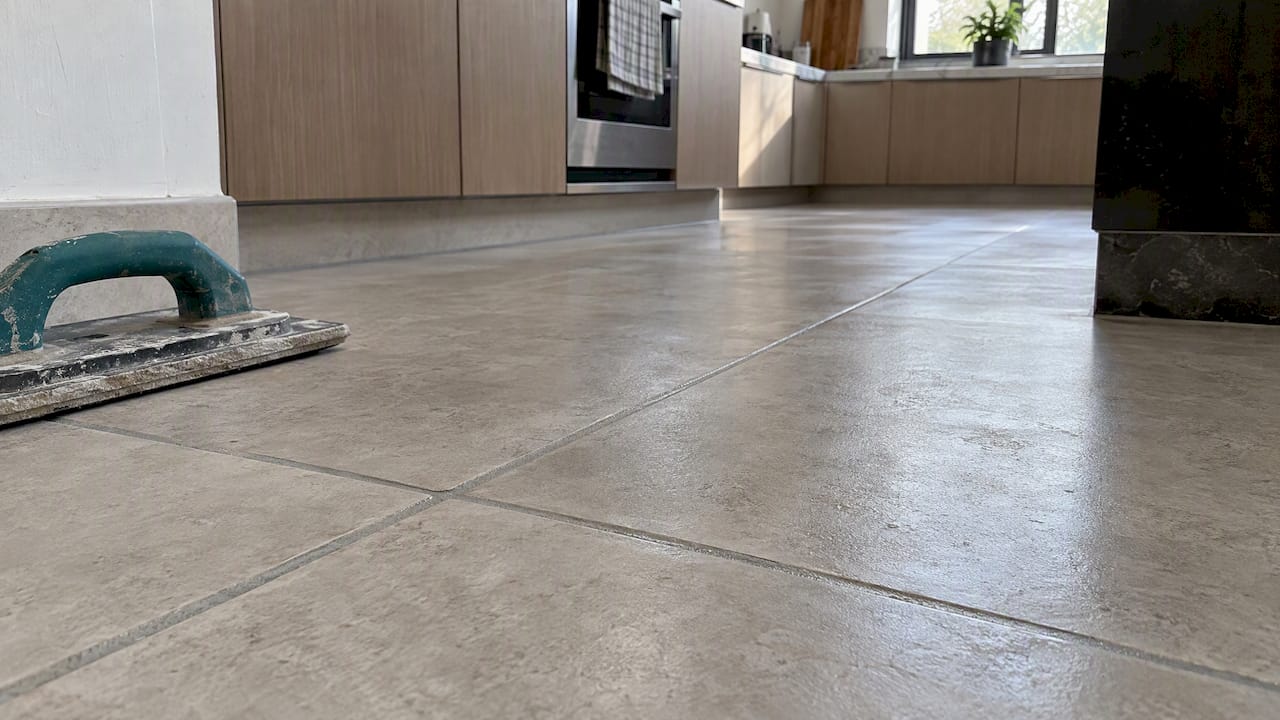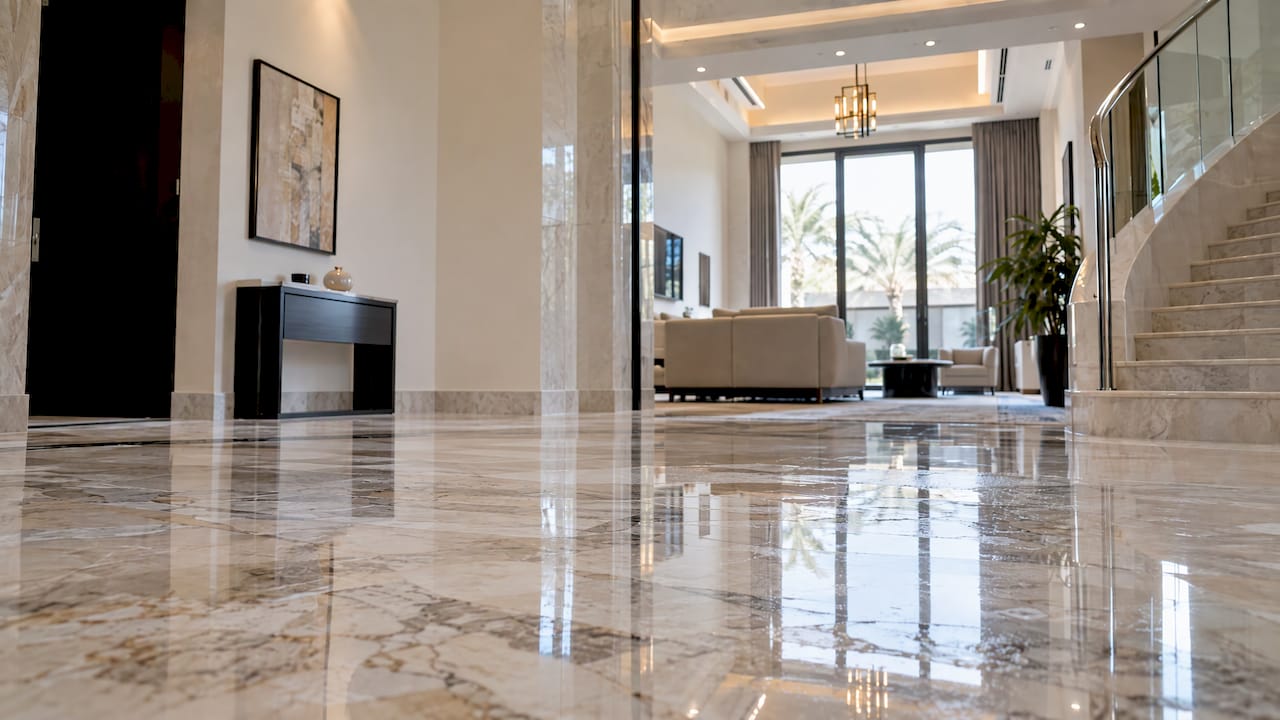

Diamond polishing is a mechanical process. Machines fitted with diamond-impregnated abrasive pads work through progressively finer grits and remove a hair-thin layer of marble. That leaves a flat, uniform surface that reflects light again. It removes etch marks, light scratches and dullness from the stone itself, and it does not coat the floor. Done in the right order, it is the most reliable way to bring back the shine on a worn marble floor in a Dubai villa, apartment, hotel lobby or office.
The rest of this guide covers what happens on site, which grits do what, how the method compares with powder polishing, and how to keep the result.
TL;DR
-
Diamond polishing uses resin or metal-bonded diamond pads, coarse to fine, to level and refine the marble surface. It is not a chemical shine.
-
The usual sequence is inspection, repair of chips and cracks, grinding or honing, progressive polishing, then sealing and a final buff.
-
Powder polishing relies on a compound and friction to build gloss on a surface that is already fairly flat. Diamond polishing is the choice when the stone is etched, scratched or uneven.
-
Marble is soft and acid-sensitive, so aftercare matters as much as the polish itself.
-
Our marble polishing starts from AED 30 per sqm. The final quote depends on the floor’s condition and area.
Table of Contents
What diamond polishing actually does to marble
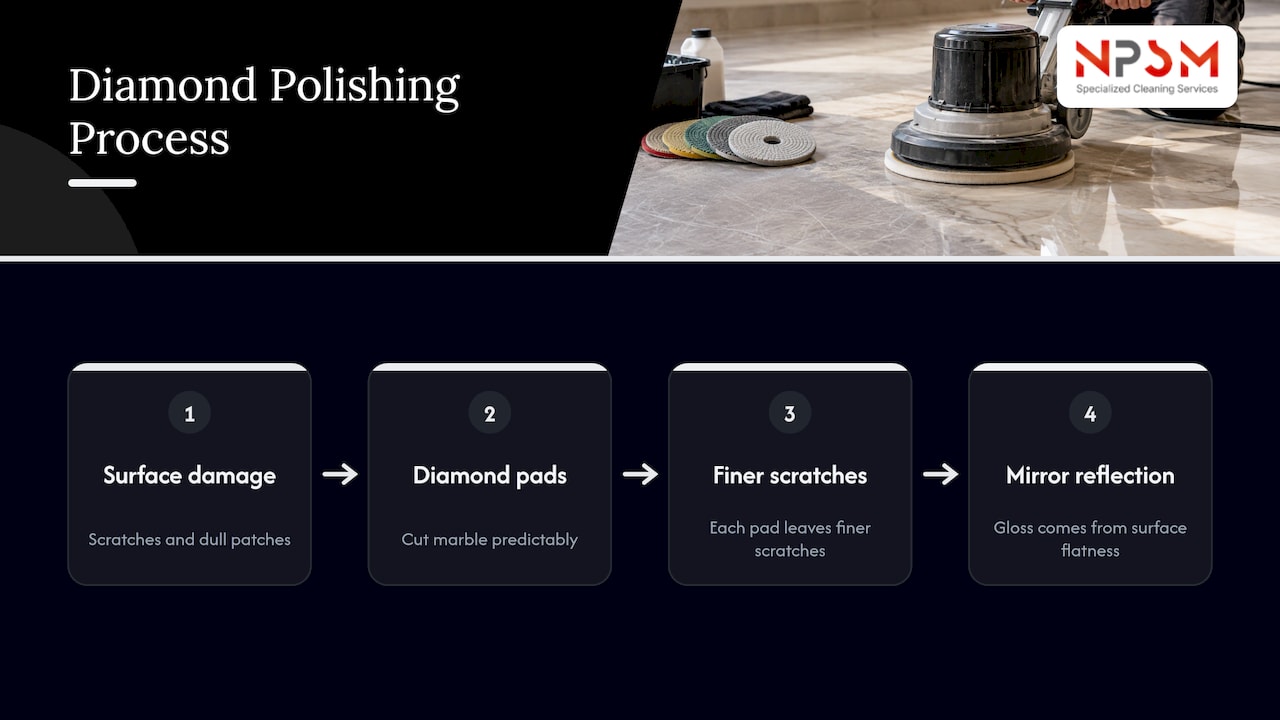
Marble is a calcium carbonate stone. It is much softer than the quartz in household dust and sand, and it reacts with acids. Over time the surface collects fine scratches from foot traffic, dull patches where acidic liquids have touched it, and a general loss of reflection. These are all damage to the top fraction of a millimeter.
Diamond is the hardest abrasive commonly used in stone work, so diamond pads can cut marble cleanly and predictably. Each pad leaves finer scratches than the one before it. The scratches shrink until they are too small to see, and the stone reflects light like a mirror. The gloss comes from the flatness of the surface, not from something added on top.
This is why a properly diamond-polished floor can last for years between treatments, while a floor that only has a topical shine product tends to look good for a short time and then cloud.
The diamond polishing process, step by step
The details change with the stone and its condition, but a professional job follows this order.
1. Inspection and testing
Before any machine runs, the technician walks the floor. They look at:
-
The type of stone (marble, limestone, travertine and granite all need different handling).
-
Etching, water stains, deep scratches, lippage between tiles, chips and cracks.
-
Previous treatments, such as old coatings, waxes or crystallization layers.
-
Joints and grout lines.
This determines the starting grit. A floor that is only dull needs a gentler start than one with deep scratches or uneven tile edges.
2. Protection and cleaning
Skirting boards, doors, built-in furniture and adjacent surfaces are masked. Furniture is moved or lifted. The floor is cleaned so that loose grit does not get dragged under the pads and cause new scratches. Polishing is usually done with water, which controls dust and cools the pads.
3. Repairs
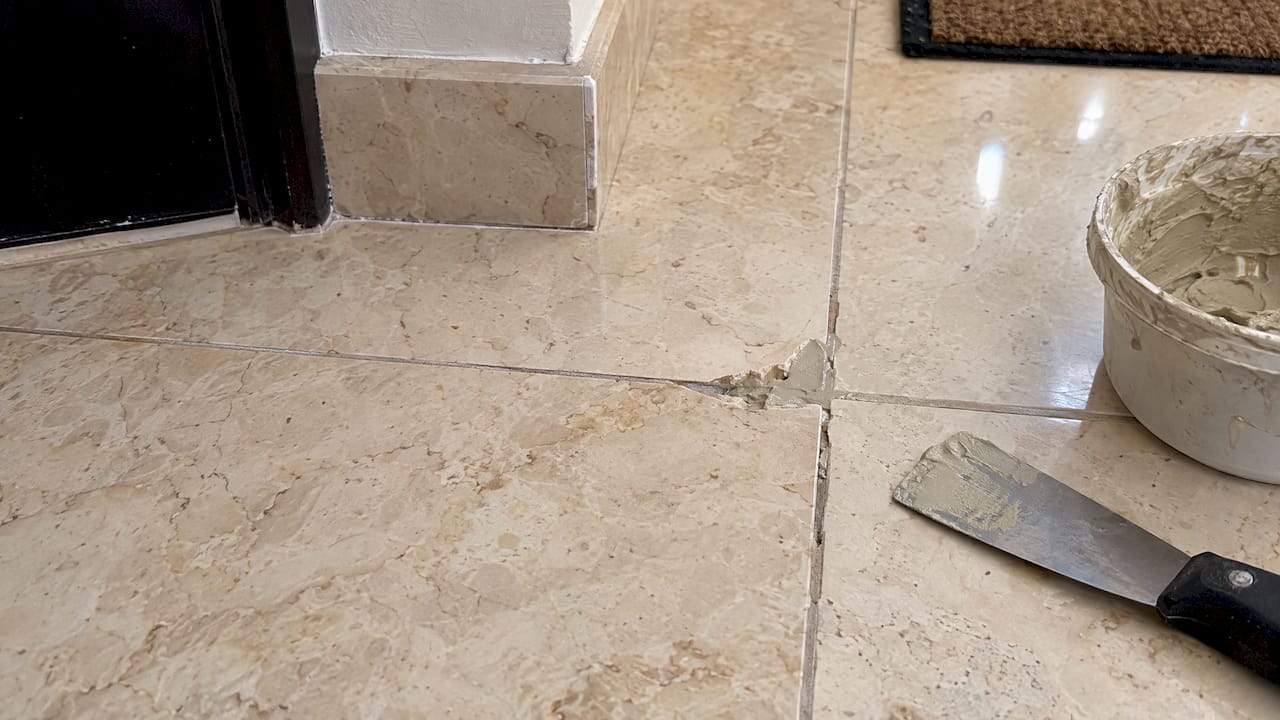
Chips, cracks and open joints are filled before polishing, usually with a color-matched stone filler or epoxy. Filling first means the repair is leveled together with the surrounding marble and becomes hard to see afterward.
4. Grinding or honing (the heavy lifting)
This stage uses coarse metal-bonded diamond tooling, followed by finer honing pads, to remove etching, deep scratches and uneven tile edges. It is the only stage that changes the floor’s flatness significantly. A floor in decent condition can skip the most aggressive grits. A neglected floor may need several passes. If you are weighing the two approaches, our guide on marble polishing vs marble grinding explains where one ends and the other begins.
5. Progressive polishing
Once the surface is level and evenly honed, the technician moves up through finer resin-bonded diamond pads. Every grit must fully remove the scratch pattern of the previous one. Skipping a grit is the most common cause of a streaky or hazy finish, because deeper scratches are left behind and show up in raking light.
6. Cleaning, drying and checking
Slurry is removed between stages and again at the end. The floor is dried and checked under angled light, where defects show up most clearly. Any missed spots are redone.
7. Sealing and final buffing
An impregnating sealer goes into the pores to help the stone resist staining from liquids. The floor is then buffed for the final gloss. Sealing is the step many owners overlook, and it makes a real difference in a kitchen, dining area or bathroom.
Grit sequence at a glance
The numbers below are typical working ranges used across the trade. Exact sequences vary with the machine, the pad brand and the condition of the floor, so treat them as a guide.
| Stage | Typical grit range | What it does |
|---|---|---|
| Grinding | 30 to 100 | Levels the floor, removes deep scratches, etching and lippage |
| Honing | 200 to 400 | Removes grinding marks, produces a smooth matte to satin look |
| Pre-polish | 800 to 1500 | Builds clarity and begins to bring up reflection |
| Polish | 3000 and above | Gives a high-gloss, mirror-like finish |
A honed finish (stopping around the middle of the range) suits owners who prefer a soft, low-sheen look and better slip resistance. Our comparison of polished vs honed marble helps you choose before work begins.
Diamond polishing vs powder polishing
People often ask which of the two is better. They solve different problems, so the better question is which one your floor needs.
Diamond polishing removes material. It levels the stone, so it can correct etching, light to moderate scratches and uneven surfaces. The gloss it produces comes from the stone’s own refined surface.
Powder polishing uses a polishing compound, worked into the stone with a buffing machine and water. The compound and friction help produce shine on a surface that is already smooth. It improves gloss but cannot level or repair real damage. On a badly etched or scratched floor, it will brighten the surface for a time and leave the defects underneath.
| Diamond polishing | Powder polishing | |
|---|---|---|
| How it works | Abrasive diamond pads remove a thin layer | Compound and friction build surface gloss |
| Fixes etching and scratches | Yes | Limited |
| Fixes uneven tiles | Yes, at the grinding stage | No |
| Best for | Worn, dull, scratched or etched floors | Floors already flat and in good condition |
| Lifespan of result | Longer, as it works on the stone itself | Shorter on a damaged floor |
In practice, many professional jobs combine both: diamond pads do the correction and refinement, and a final buffing step adds depth. For a wider look at the options, including crystallization, see our comparison of marble polishing, grinding and crystallization.
When diamond polishing suits your marble floor
Diamond polishing is a good fit when:
-
The floor looks dull even after a thorough clean.
-
You see etch marks (dull rings or patches) from acidic spills such as lemon juice, vinegar or some cleaning products. Marble reacts chemically with acids, so the damage is in the stone and a mop will not remove it.
-
There are fine scratches from foot traffic, furniture or sand tracked in from outdoors.
-
Tile edges are uneven and catch the light unevenly.
-
The floor has gone through years of foot traffic in a villa, hotel corridor or retail space and has lost its uniform look.
It is also the sensible alternative to replacement. Marble is expensive to buy and install, and in most cases the thickness lost during restoration is small compared with what the slab has available.
What to know before you start
A few points help set realistic expectations:
-
Deep damage takes more stages. Severe etching or deep scratches need more grinding time, and the quote reflects it.
-
Marble stays soft. Polishing restores the surface. It does not make marble resistant to acids or scratches, so everyday care still counts.
-
Preparation matters. Rooms need to be cleared and access arranged, especially in occupied buildings and hotels, where work is often scheduled in sections.
-
Water stains and deep marks. Some stains sit below the surface and need dedicated treatment first. Our guide to removing marble water stains covers the safe approach.
-
Different stones, different pads. Granite, travertine, terrazzo and limestone each need an adjusted sequence. For those surfaces, see our natural stone restoration work, and for terrazzo, our terrazzo restoration guide.
Why Dubai floors need a considered approach
Marble is common in Dubai villas, penthouses, hotel lobbies and office reception areas. The setting adds a few pressures:
-
Fine desert sand is carried indoors on shoes and acts like sandpaper on soft stone.
-
Large open-plan spaces with glossy floors show every uneven patch and every swirl mark.
-
High-traffic commercial spaces wear down the polish along walking paths long before the rest of the floor.
-
Holiday homes and rentals see frequent turnover, so floors can lose their finish faster than the owner expects.
These are the reasons we plan each job around the individual floor rather than a fixed package. A villa foyer, a hotel corridor and a shop floor need different starting grits and different maintenance plans.
Keeping the finish after diamond polishing
The polish is only as long-lasting as the care that follows it. A practical routine:
-
Use entrance mats at every door to the outside. Sand is the biggest everyday threat.
-
Dust-mop or vacuum with a soft head regularly, before sand has time to be ground into the floor.
-
Clean with a pH-neutral stone cleaner. Avoid vinegar, lemon-based products, bathroom descalers and general-purpose cleaners with acids, which can etch marble straight away.
-
Wipe spills quickly, particularly juice, wine, coffee, cosmetics and cleaning fluids.
-
Use felt pads under furniture legs and lift furniture rather than dragging it.
-
Keep the sealer up to date. A good impregnating sealer helps protect marble from staining, but it does not stop acid etching, so spill discipline still applies. How often to reseal depends on the traffic and the product used.
Where you have hard water marks in bathrooms or kitchens, avoid reaching for strong descaling products on marble. Water-related stains need a stone-safe method.
For commercial sites, a scheduled maintenance plan with periodic light re-polishing in the busiest zones is more cost-effective than waiting until the whole floor needs full restoration. This is where property managers and facility teams get the best return.
Our perspective
Most marble floors we are called to are not beyond saving. They are dull, etched or scratched, and owners assume replacement is the only answer. In most cases the stone underneath is sound, and a correctly sequenced diamond process brings it back.
The most important thing we can tell an owner is that the result is decided by the steps you cannot see: how thoroughly each grit is worked before moving to the next, how repairs are leveled in, and how the floor is sealed. That is why we tailor the process to each floor type and property rather than apply one routine everywhere.
We work with professional-grade equipment and diamond polishing systems, and we treat restoration as the cost-effective route: you keep the marble you already paid for, and you extend its life while keeping a premium look. If your floor is dull and you are unsure whether it needs honing, polishing or something more, we would rather assess it on site and say exactly what it needs.
Qadir
Marble polishing with us in Dubai
We restore marble in villas, apartments, hotels, offices and retail spaces across Dubai and the UAE. Our marble polishing and restoration service starts from AED 30 per sqm, covering polishing and buffing, stain removal, full restoration and repair, staircases and marble tables and countertops. Our wider floor polishing and restoration work is listed on our services page, published at AED 25 to AED 200 per sq ft depending on the service. The exact figure for your floor depends on its condition and the finish you choose, so request a quote with your floor size and a few photos.
FAQ
How long does the diamond polishing process take?
It depends on floor area, condition and how many grit stages are needed. A lightly worn floor moves faster than one with deep etching or uneven tiles that needs heavy grinding first. After inspection we can give you a realistic schedule for your space.
Is diamond polishing the same as crystallization?
No. Diamond polishing works mechanically with abrasive pads and removes a thin layer of stone. Crystallization applies a chemical treatment with a buffing machine to harden and brighten the surface. They can be used on different floors for different goals, and our comparison article sets out the differences.
Will diamond polishing remove all stains and scratches?
It removes etching and scratches that sit in the surface layer, and it levels the floor, so most everyday damage disappears. Stains that have soaked deeper into the stone may need a separate treatment first. We check this during the inspection.
Can I polish marble myself with a rented machine?
This is rarely a good idea. Marble is soft, and the wrong pad, pressure or skipped grit leaves swirls, haze or uneven patches that cost more to correct. A trained technician with the right equipment is the safer choice for a floor you want to keep.
How often does a marble floor need polishing?
There is no fixed interval. It depends on foot traffic, how well the floor is protected from sand and acids, and how you care for it. Homes with good habits can go much longer than busy commercial spaces, which benefit from a scheduled maintenance plan.