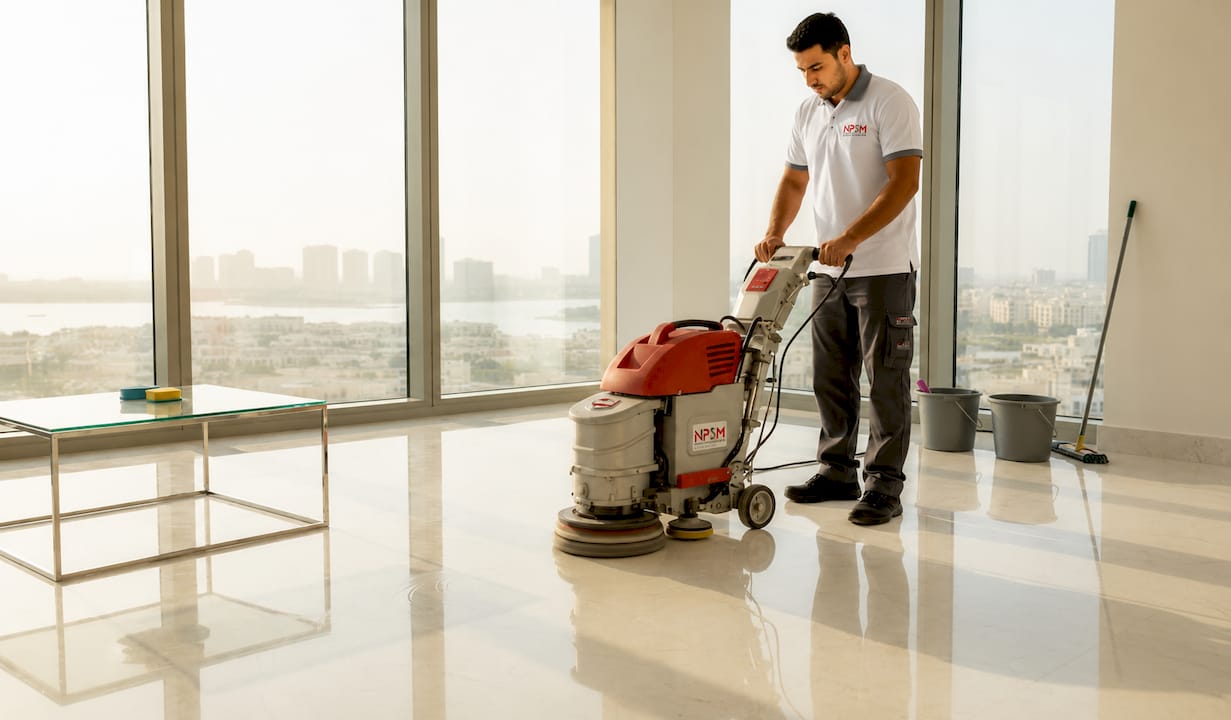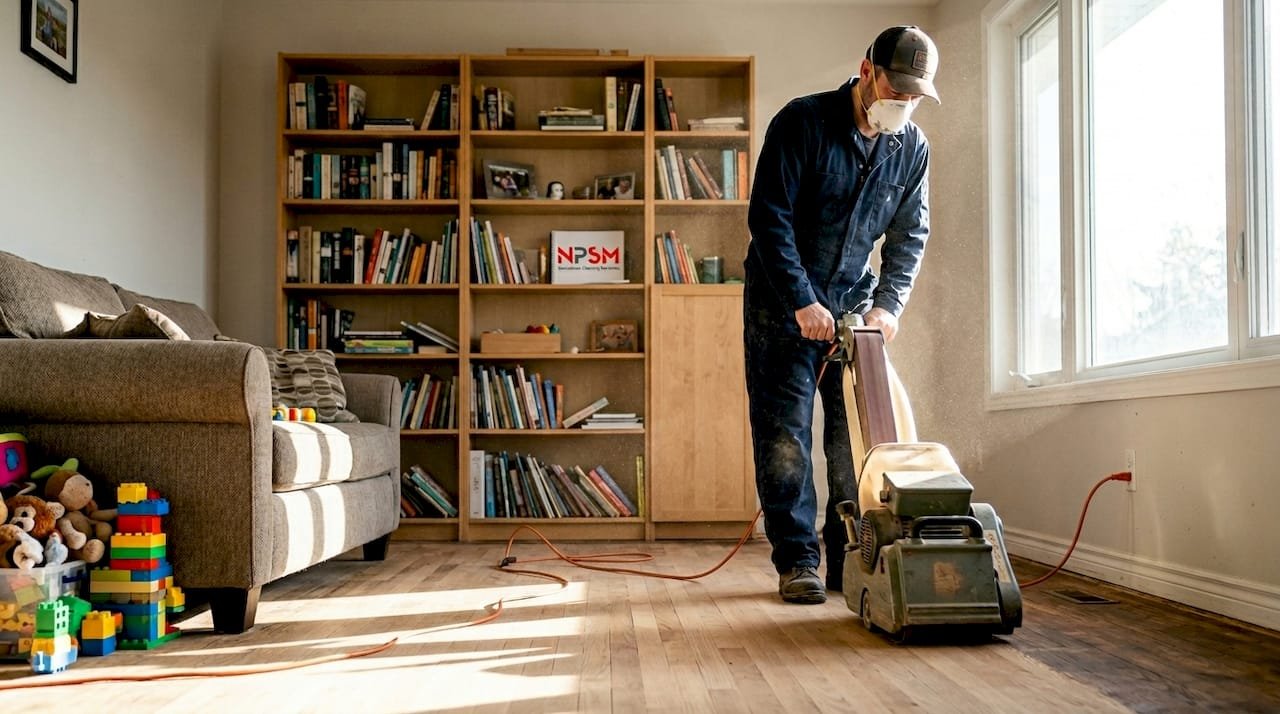

Most villa and apartment owners in Dubai assume a scratched, dull, or uneven wood floor is a sign they need to rip everything out and start fresh. That assumption costs thousands of dirhams every year. Professional wood floor sanding is one of the most powerful restoration tools available, and it is widely misunderstood. This guide walks you through exactly what sanding does, how the process unfolds step by step, when it makes sense for your home, and why it almost always beats full replacement on cost, sustainability, and final appearance.
Table of Contents
Key Takeaways
| Point | Details |
|---|---|
| Sanding restores beauty | Sanding removes wear and damage, revealing a flawless wood floor surface. |
| Cost-effective and sustainable | Refinishing saves far more energy and resources than complete floor replacement. |
| Professional technique matters | Expert sanding ensures even results and maximizes both durability and aesthetics. |
| Assess flooring type first | Always check if your floors are thick enough for safe sanding, especially with engineered wood. |
Why sanding is the foundation of beautiful wood floors
Sanding is not just about making a floor look smooth. It physically removes the top layer of wood, stripping away old finish, surface scratches, stains, and unevenness so the floor can start fresh. Think of it like resurfacing a road: you are not rebuilding the foundation, you are restoring the surface so everything above it performs properly. Without proper sanding, any new finish or polish you apply will bond to a compromised surface and fail faster.
A common misconception is that sanding is only necessary when floors are severely damaged. In reality, even moderately worn floors benefit from sanding before refinishing. The results are dramatically better because the finish bonds to clean, open wood grain rather than a degraded surface. If you are weighing your options, understanding the difference between sanding vs polishing in Dubai helps you choose the right approach for your specific floor condition.
Here is what sanding actually addresses:
-
Surface scratches and scuff marks from daily foot traffic
-
Old, peeling, or yellowed finish layers
-
Cupping, crowning, or minor unevenness between boards
-
Stains that have penetrated the finish but not the wood itself
-
Dull, lifeless appearance caused by finish breakdown
One critical factor every Dubai homeowner should know is how many times a floor can actually be sanded. Solid hardwood can be sanded 6 to 8 times over its lifetime, removing roughly 1/32 to 1/16 of an inch per session. Engineered wood floors can be sanded fewer times, and you should never sand an engineered floor if the top wear layer is thinner than 3/32 of an inch.
Key fact: Solid hardwood floors can be sanded 6 to 8 times before the wear layer is exhausted. Engineered floors have a much thinner usable layer, so always check thickness before proceeding.
Professional wooden floor polishing services in Dubai pair sanding with the right finish to maximize both beauty and durability. Learning to master sanding techniques is what separates a floor that looks great for two years from one that holds up for a decade.
The complete sanding process: what really happens to your floors
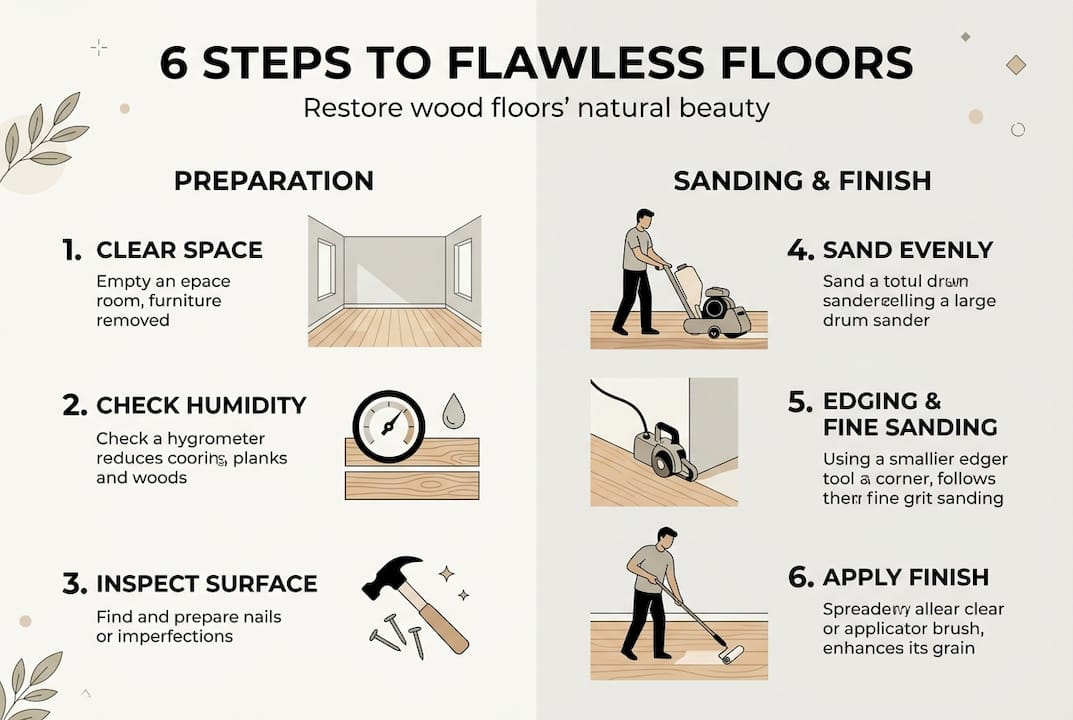
Professional sanding is not a single pass with a machine. It is a carefully sequenced process that transforms your floor at every stage. Here is exactly what happens when a skilled team works on your Dubai villa or apartment:
-
Inspection and preparation. The team checks for protruding nails, loose boards, moisture levels, and existing finish type. Any structural issues are addressed before sanding begins.
-
Coarse sanding. A drum or belt sander with a low grit (typically 36 to 60 grit) removes the old finish, deep scratches, and surface irregularities. This is the most aggressive stage.
-
Progressive grit sanding. The team moves through medium grits (80 grit) and then fine grits (100 to 120 grit), each pass smoothing out the marks left by the previous one.
-
Edge and corner sanding. An edge sander handles the perimeter of the room where the drum sander cannot reach. Matching the grit sequence to the field sanding is essential for a seamless result.
-
Gap filling and final buffing. Any gaps between boards are filled with a wood filler matched to the floor color. A final buff with a fine screen prepares the surface for finishing.
-
Debris removal and cleaning. All dust is vacuumed and wiped before any finish is applied. Dust contamination ruins a finish coat.
Pro Tip: Use a raking light (a single light source held low and at an angle) after each sanding pass to spot swirl marks, chatter, or missed areas. This technique, emphasized in NWFA sanding guidelines, catches problems before they get sealed under finish.
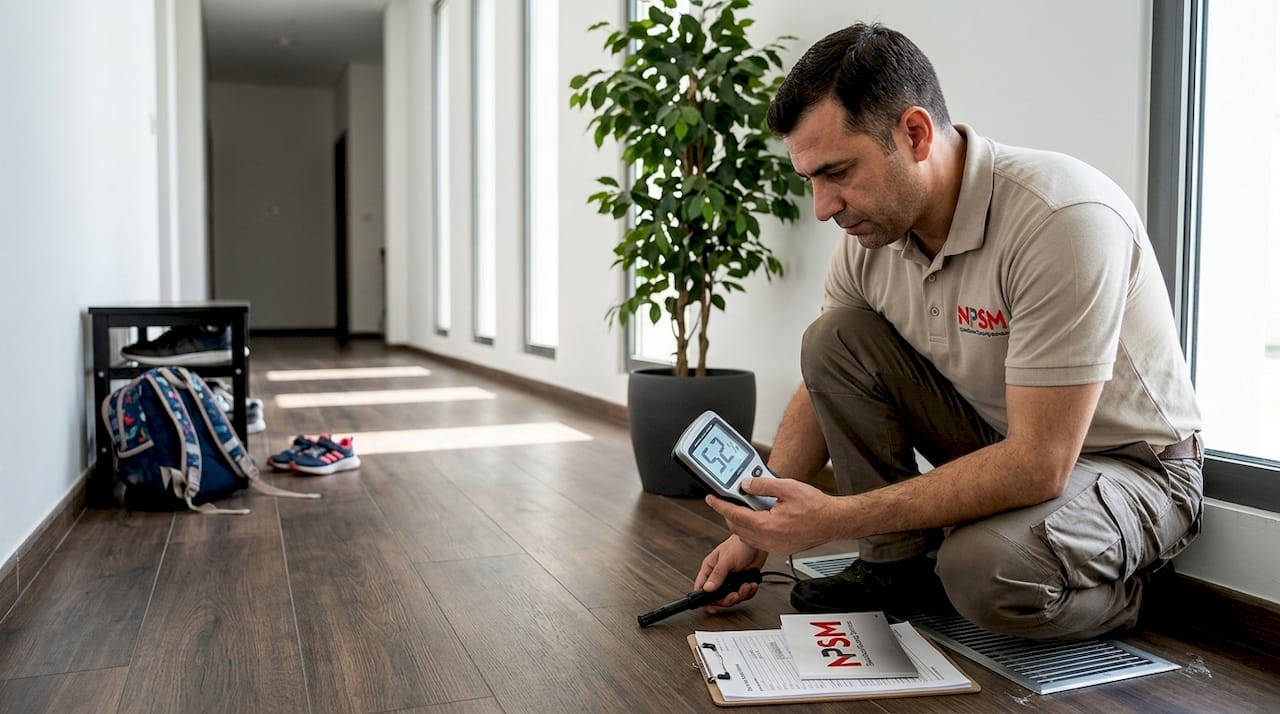
Humidity control is especially important in Dubai. The NWFA recommends maintaining relative humidity between 35% and 55% during sanding for best stability. Dubai’s dry climate and air conditioning can push indoor humidity well below that range, so running a humidifier during the process protects the wood from shrinking or cracking. Reviewing the restoration steps for Dubai floors gives you a clear picture of how professionals manage these local conditions. Proper post-renovation care after sanding also extends the life of your new finish significantly. Following a structured project workflow for sanding ensures nothing gets skipped. Professionals also know how to make wood floors shine after sanding by selecting the right finish sheen for your space.
Sanding vs replacing: cost, sustainability, and performance
When a floor looks bad, replacement feels like the obvious fix. It is not. Sanding and refinishing almost always wins on every metric that matters to a Dubai villa or apartment owner.
The environmental case is striking. Refinishing saves 97% energy compared to installing new flooring, reduces the global warming potential by 5 to 12 times, and cuts carbon emissions by 89%. That is not a marginal improvement. That is a completely different environmental footprint.
| Factor | Sanding and refinishing | Full replacement |
|---|---|---|
| Average cost (Dubai villa) | AED 3,000 to 8,000 | AED 20,000 to 60,000+ |
| Project timeline | 2 to 4 days | 1 to 3 weeks |
| Disruption level | Low to moderate | High (furniture removal, demolition) |
| Environmental impact | Very low | Very high |
| Aesthetic result | Like new | Like new |
| Repeat potential | 6 to 8 times (solid wood) | Starts the cycle over |
Replacement also means demolition noise, dust, disposal of old materials, and weeks of disruption in your home. For occupied villas and apartments in Dubai, that is a serious quality-of-life cost. Understanding the refinishing impact for Dubai floors helps you see why most luxury property owners choose restoration over replacement. Comparing the polishing cost in Dubai against replacement quotes makes the financial case even clearer. For those who want to understand the craft side, exploring finishing wood techniques reveals why the finish applied after sanding is just as important as the sanding itself.
When is sanding the right choice for your Dubai home?
Not every floor is a good candidate for sanding, and knowing the difference saves you from a costly mistake. Here is a practical checklist to assess your floor:
-
Visible scratches and scuffs that have not penetrated deep into the wood
-
Dull or uneven finish that no longer responds to cleaning or polishing
-
Minor cupping or crowning caused by past moisture exposure
-
Stains that sit in the finish layer rather than deep in the wood grain
-
Solid hardwood with sufficient wear layer remaining (check with a professional)
-
Engineered wood with a top layer confirmed to be at least 3/32 of an inch thick
Solid hardwood is the most forgiving. As noted earlier, solid floors can be sanded up to 8 times over their lifespan. Engineered wood is more limited because the decorative top layer is thinner. Sanding through it exposes the core material underneath, which cannot be finished the same way.
Pro Tip: If you are unsure how thick your floor’s wear layer is, do not guess. A professional can measure it with a simple tool in minutes. Sanding a floor that is too thin causes irreversible damage that forces the replacement you were trying to avoid.
Dubai’s climate adds another layer of consideration. High outdoor humidity in summer and very dry air-conditioned interiors in winter cause wood to expand and contract. Floors that show seasonal movement or minor gapping are still sandable, but the timing of the project matters. Following solid floor maintenance tips year-round reduces how often sanding is needed. Understanding wood selection also helps if you are planning a new installation and want a species that handles Dubai’s climate well.
How professional sanding elevates beauty and lifespan
The visual transformation after professional sanding is immediate and dramatic. Stains disappear. Scratches vanish. The natural grain of the wood comes alive in a way that no amount of cleaning or surface polishing can replicate. But the benefits go well beyond appearance.
Proper sanding opens the wood grain so the finish penetrates and bonds at a molecular level. That means the protective coat lasts longer, resists wear better, and is far easier to maintain. A floor that was sanded and finished correctly will outperform a poorly prepared floor every time, even if the same finish product is used.
| Metric | Before sanding | After professional sanding |
|---|---|---|
| Surface appearance | Dull, scratched, uneven | Smooth, vibrant, uniform |
| Finish adhesion | Poor (bonding to old finish) | Excellent (bonding to clean wood) |
| Expected finish lifespan | 1 to 3 years | 5 to 10 years |
| Resale value impact | Negative (worn floors lower value) | Positive (buyers notice quality floors) |
| Maintenance effort | High (frequent touch-ups needed) | Low (easy to clean and maintain) |
In Dubai’s competitive real estate market, floor condition is one of the first things buyers and tenants notice. A professionally sanded and finished floor signals quality and care throughout the property. The NWFA’s professional standards exist precisely because the difference between a professional result and an amateur one is visible to anyone who walks into the room. Exploring the full range of floor polishing service benefits shows how sanding fits into a broader restoration strategy. Understanding why finishing wood matters reinforces why the steps after sanding are just as critical as the sanding itself.
Ready to revive your villa’s wood floors?
If your wood floors are looking tired, scratched, or dull, sanding is almost certainly the most cost-effective and impactful solution available to you. At floorpolishing.ae, we specialize in expert wooden floor polishing and full restoration for Dubai villas and apartments. Our team handles everything from initial assessment to final finish, using professional-grade equipment and humidity-controlled processes suited to Dubai’s climate. As floor restoration specialists, we also cover marble, granite, vinyl, tiles, and natural stone, so your entire home can be restored in one coordinated project. Contact us through Dubai floor restoration services for a free personalized assessment and find out exactly what your floors need to look their best again.
Frequently asked questions
How often can wood floors be sanded before needing replacement?
Solid wood floors can be sanded 6 to 8 times over their lifetime, but engineered wood floors have a much thinner wear layer and should never be sanded if that layer is below 3/32 of an inch.
What’s the environmental benefit of sanding floors instead of replacing?
Refinishing saves 97% energy and reduces carbon emissions by 89% compared to full floor replacement, making it the far more sustainable choice for Dubai homeowners.
Should I sand my wood floors myself or hire a professional in Dubai?
Hiring a Dubai specialist delivers seamless, even results that protect your floor’s value. DIY sanding risks uneven passes, swirl marks, and damage that can force a full replacement, especially on engineered wood.
What humidity is ideal when sanding wood floors in Dubai?
The NWFA recommends 35% to 55% relative humidity during sanding for optimal wood stability, which often requires a humidifier in Dubai’s air-conditioned interiors.