
TL;DR:
- Vinyl flooring offers Dubai properties durability, moisture resistance, and cost-effective maintenance suitable for high traffic and humid conditions. Its realistic designs mimic luxury materials, and thick wear layers ensure long-lasting performance in sandy, temperature-variable environments. Proper installation and care make vinyl a practical, low-cost alternative to traditional flooring options like marble and hardwood.
Choosing the right flooring for a Dubai property means balancing a short list of non-negotiable demands: it must survive intense foot traffic, resist the gritty sand that finds its way into every corner, handle humidity that spikes without warning, and still look sharp enough to impress guests or tenants. Hardwood warps, marble cracks under budget pressure, and tiles grout lines turn into maintenance nightmares. Vinyl flooring has quietly moved to the top of the list for homeowners, landlords, and property managers across the UAE, and the reasons go well beyond price alone.
Table of Contents
- Cost-effectiveness and local pricing advantages
- Durability and suitability for Dubai climate
- Waterproof and moisture-resistant properties
- Aesthetic versatility and luxury design options
- Low maintenance and ease of cleaning
- Our perspective: vinyl is not the “budget option” anymore
- Let us help you protect your floors
- Frequently asked questions
Key Takeaways
| Point | Details |
|---|---|
| Cost-effective choice | Vinyl flooring offers significant savings compared to wood and marble. |
| Durable in Dubai climate | Vinyl withstands humidity, sand, and heavy use for up to 25 years. |
| Waterproof advantage | Moisture resistance makes vinyl ideal for kitchens and bathrooms. |
| Luxury look for less | Vinyl mimics wood, stone, and tile giving properties upscale design. |
| Low-maintenance flooring | Cleaning vinyl is easy, saving time and effort for busy owners. |
Cost-effectiveness and local pricing advantages
Cost is almost always the first question on the table, and vinyl flooring answers it convincingly. SPC vs LVT pricing shows that luxury vinyl tile (LVT) runs between AED 25 and AED 60 per square meter, while stone plastic composite (SPC) falls between AED 35 and AED 150, making both options dramatically cheaper than hardwood at AED 95 to AED 135 per square foot or polished marble at comparable rates.
The table below puts the numbers side by side so you can see where the savings stack up.
| Flooring type | Approximate cost (AED) | Typical lifespan | Maintenance frequency |
|---|---|---|---|
| LVT vinyl | 25–60 per sqm | 10–15 years | Low |
| SPC vinyl | 35–150 per sqm | 15–25+ years | Low |
| Engineered hardwood | 95–135 per sqft | 10–20 years | Medium to high |
| Marble | 80–200 per sqm | 20+ years | High |
| Ceramic tile | 30–80 per sqm | 15–25 years | Medium |
Beyond installation day, the real savings show up in upkeep. Wood floors need periodic sanding and polishing, marble requires sealing and honing every year or two, and tile grout demands scrubbing or replacement over time. Vinyl sidesteps almost all of that. Following a basic set of vinyl floor care tips keeps the surface in top condition without professional intervention every few months.
Key cost advantages at a glance:
- Lower material cost compared to hardwood and natural stone
- Faster installation that reduces labor charges significantly
- No sanding or honing required after installation
- Minimal consumables needed for cleaning
- Easy spot replacement of damaged planks without redoing the whole floor
Pro Tip: If you are managing a rental apartment in Dubai, SPC vinyl offers the best balance between upfront cost and durability. It handles tenant turnover far better than LVT because of its rigid core, meaning you spend less between tenancies.
For property owners who want to understand the full picture of floor maintenance expenses, comparing vinyl polishing in Dubai costs against the recurring bills for resurfacing wooden floors quickly reveals how much money vinyl saves over a five to ten year period.
Durability and suitability for Dubai climate
Dubai does not go easy on floors. Sand tracked in from outside acts like fine sandpaper underfoot every single day. High foot traffic in villas with large families or commercial spaces with constant visitors adds mechanical stress. Then there are the temperature swings between heavily air-conditioned interiors and the scorching outdoor heat that materials must flex through repeatedly.
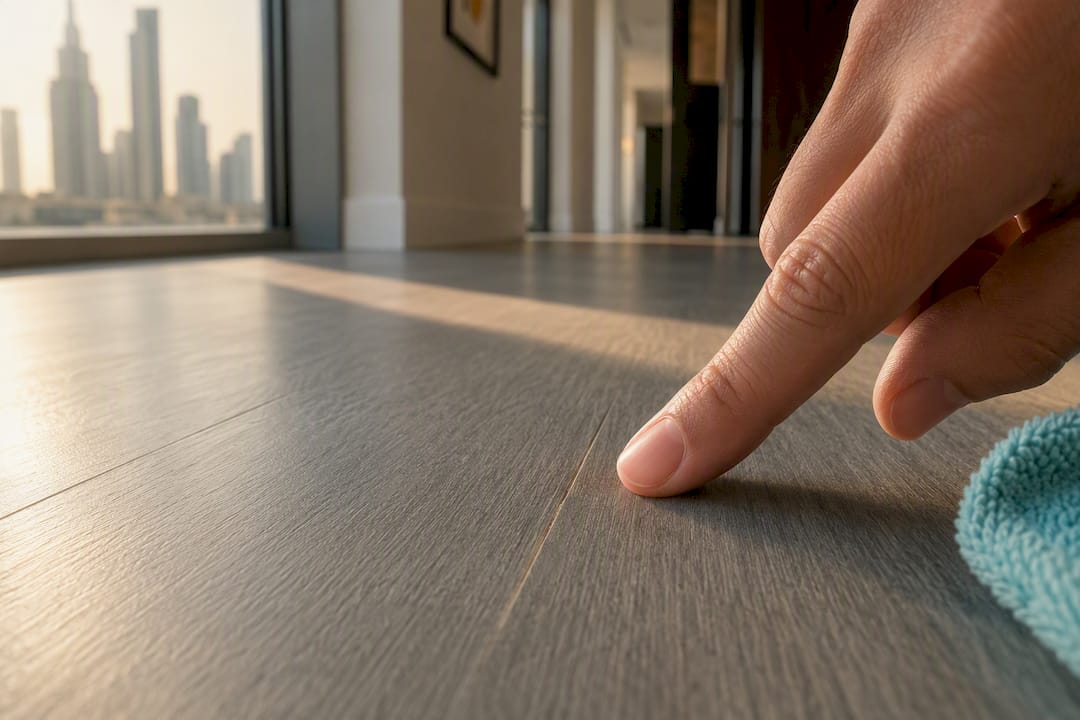
Vinyl holds up well under all of it. Wear layers of 0.3 to 1.0mm resist scratches, stains, impacts, and sand abrasion in both residential and commercial environments. That wear layer is the thin but tough coating on top of the decorative film. Thicker is always better: a 0.5mm wear layer suits busy family homes, while a 0.7 to 1.0mm layer is worth the small extra cost in retail spaces or hotel lobbies.
“Vinyl flooring delivers exceptional durability in high-traffic areas, with wear layers engineered to resist the scratches, stains, and abrasive sand that are facts of life in Dubai.”
Compare that to the alternatives under Dubai conditions:
| Feature | Vinyl (SPC) | Hardwood | Marble | Ceramic tile |
|---|---|---|---|---|
| Sand scratch resistance | Excellent | Poor | Good | Good |
| Humidity resistance | Excellent | Poor | Moderate | Good |
| Temperature stability | Excellent | Poor | Good | Good |
| Impact resistance | Good | Moderate | Poor | Moderate |
| Lifespan in Dubai | 15–25+ years | 8–15 years | 20+ with care | 15–20 years |
Proper vinyl lasts between 10 and 25-plus years depending on the product grade and how much traffic it sees. Residential spaces typically land toward the longer end of that range, while high-volume commercial floors may need replacement sooner. SPC consistently outlasts LVT because its rigid stone-plastic core does not flex or compress under heavy furniture or rolling equipment.
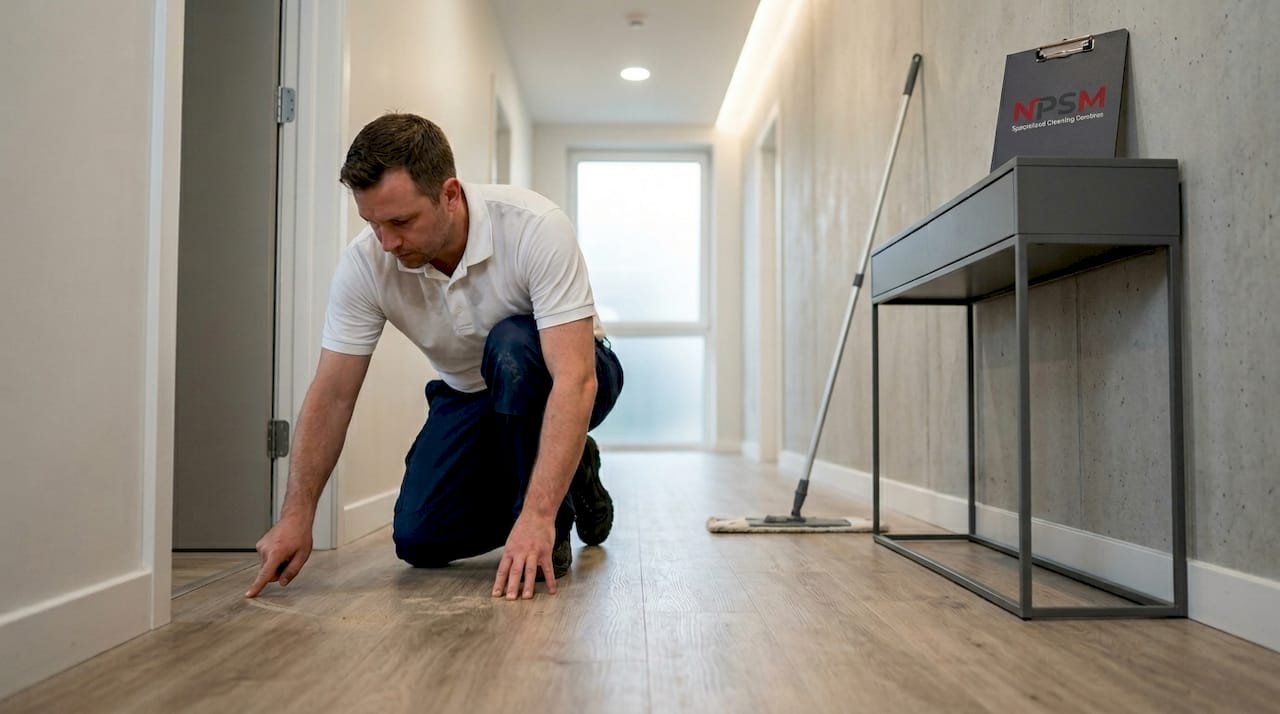
For property managers comparing flooring options across multiple units, understanding how wood floor protection requirements contrast with vinyl maintenance needs makes the decision straightforward. You can also review a detailed commercial guide to vinyl durability if you are outfitting office or retail space.
The durability benefits compound over time in ways that raw cost comparisons do not capture. When a hardwood floor shows deep scratches or dull patches after two or three years in a Dubai rental unit, you are facing a significant bill. Vinyl does not typically reach that state on the same timeline, which matters a lot when you are managing occupied properties.
- Wear layers specifically engineered to handle sandy foot traffic
- Rigid SPC core prevents denting from heavy furniture
- Color and design layers sealed beneath the wear surface, so scratches do not expose bare wood grain or raw stone
- UV-stabilized finishes maintain color under indirect sunlight from large windows
Waterproof and moisture-resistant properties
Dubai’s humidity climbs significantly from late summer through early fall, and indoor spaces that are not well-ventilated can trap moisture at floor level. Bathrooms, kitchens, laundry areas, and ground-floor apartments near landscaped areas face consistent moisture exposure. This is where vinyl’s advantage over wood and laminate becomes almost impossible to argue against.
Vinyl is 100% waterproof and moisture-resistant, preventing the swelling and warping that wood and laminate experience in humid conditions. The core material in SPC and LVT is PVC-based, which means water cannot penetrate it. Spill a glass of water, track in wet feet from the pool, or run a steam mop and the floor simply does not react.
Here is how to take full advantage of that waterproof capability in your property:
- Install vinyl in wet zones first. Kitchens, bathrooms, entryways, and utility rooms benefit most from the waterproof core.
- Use waterproof adhesive or click-lock systems to ensure joints between planks do not let moisture seep underneath.
- Seal the perimeter at baseboards with a flexible sealant to close any gap between the floor edge and the wall.
- Check the subfloor for moisture before installation, because vinyl keeps moisture in as effectively as it keeps it out.
- Clean up spills quickly even though the floor itself is waterproof, standing water can eventually affect baseboards or subflooring if left for days.
Pro Tip: In Dubai apartment bathrooms, many owners still default to tile because it “feels right” for wet areas. But modern SPC vinyl with a textured surface provides comparable grip, installs much faster, and eliminates the grout lines that collect mildew. The switch saves both installation time and years of cleaning effort.
Understanding how moisture affects other flooring materials helps put vinyl’s advantage in context. The humidity damage solutions required for marble floors illustrate exactly what vinyl owners avoid. For broader home care advice, the cleaning tips for humid climates on our blog cover strategies that apply across all flooring types.
Mold and mildew growth on flooring surfaces is a real issue in poorly ventilated Dubai apartments, particularly in buildings near the coastline or in older developments where HVAC systems cannot always keep up. Because vinyl has no organic material and its surface does not absorb moisture, it does not give mold anything to feed on at floor level. That is a genuine health and maintenance benefit that rarely gets mentioned in flooring discussions.
Aesthetic versatility and luxury design options
Here is the part that surprises a lot of property owners: modern vinyl looks genuinely good. Not “acceptable for the price” good. Actually good. The printing and embossing technology behind today’s vinyl planks and tiles produces surfaces that convincingly replicate wood grain, marble veining, slate texture, and parquet patterns in ways that require a second look to tell apart from the real thing.
Vinyl’s aesthetic versatility mimics wood, stone, and tile with realistic designs that deliver a luxury appearance at a fraction of natural material costs. For Dubai property developers and villa owners who want a premium finish without the premium price tag, that gap is extremely valuable.
Popular vinyl design options in Dubai homes and commercial spaces include:
- Wide-plank herringbone patterns that mimic premium engineered oak
- Polished concrete gray tones for modern apartment aesthetics
- Warm walnut and teak finishes for villas and hospitality spaces
- Marble-look large format tiles for entrance halls and corridors
- Natural stone textures including travertine and slate for commercial lobbies
The design flexibility also means you can customize a look for different zones within the same property. A villa owner might choose a warm wood finish for living areas, a marble-look tile for bathrooms, and a durable stone texture for the kitchen. All from the same product category, all installed at comparable cost.
According to recent market research, realistic vinyl designs are now among the top three requested finishes by Dubai interior designers working on mid-range residential projects, reflecting how far the product has evolved in both quality and perception. Comparing the best wood flooring types for Dubai homes against vinyl alternatives reveals that the gap in appearance has narrowed considerably.
Low maintenance and ease of cleaning
Ask any Dubai property manager what they dislike most about their current flooring and the answer is usually maintenance. Marble needs annual polishing and sealing. Wood needs periodic resurfacing and careful mopping to avoid moisture damage. Tile grout lines discolor within months in high-traffic areas and require chemical scrubbing or full replacement over time.
Vinyl needs almost none of that. Regular sweeping and mopping with water is all that standard vinyl maintenance requires, with labor requirements far below what wood polishing or tile sealing demands. That simplicity is not just convenient, it is financially significant for landlords managing multiple units or facility managers running commercial buildings.
Practical vinyl cleaning and maintenance habits:
- Sweep or vacuum daily in high-traffic areas to remove sand and grit before they scratch
- Damp mop weekly with warm water and a small amount of pH-neutral cleaner
- Wipe spills immediately to prevent any residue from drying on the surface
- Use felt pads under furniture legs to prevent compression marks
- Avoid harsh solvents or abrasive tools that can dull the wear layer finish
The ongoing vinyl floor care tips needed to keep the surface looking its best are genuinely simple, and following the vinyl floor polishing guide can help you decide when professional attention adds value versus when a basic clean is enough.
Our perspective: vinyl is not the “budget option” anymore
There is still a bias in some circles that vinyl is what you choose when you cannot afford something better. We have been restoring, polishing, and maintaining all types of floors in Dubai for years, and that view is outdated in ways that cost property owners real money.
We see floors across the full range: freshly laid marble in a brand-new villa, hardwood that has warped after one humid summer, dull wooden floors in apartments that have been poorly maintained, and vinyl installations from five years ago that still look nearly new. The pattern is consistent. Wood and marble require ongoing professional intervention to stay in good condition in Dubai’s climate. Vinyl simply does not, and that changes the total cost calculation completely.
The uncomfortable truth is that a mid-grade SPC vinyl floor installed properly in a Dubai apartment will outperform a budget marble installation in terms of appearance, maintenance cost, and lifespan, in most real-world tenant scenarios. Marble is beautiful when it is polished and sealed on schedule. When it is not, it looks worse than vinyl ever does.
We are not saying vinyl is right for every space. A five-bedroom villa with a generous renovation budget and an owner who appreciates natural stone is a different conversation. But for rental apartments, commercial spaces, hotel rooms, and any property where durability and low maintenance matter more than prestige materials, vinyl deserves to be evaluated seriously, not dismissed as the cheap choice.
Let us help you protect your floors
Whether you have just installed vinyl flooring or you are managing a mix of surfaces across a Dubai property portfolio, keeping every floor in peak condition requires the right expertise. At floorpolishing.ae, we specialize in vinyl cleaning and polishing, wooden floor sanding and restoration, marble and granite treatment, tile grout restoration, and full interior painting for villas and apartments. Our team understands Dubai’s specific climate challenges and works with both residential homeowners and commercial property managers to deliver results that extend floor life and protect your investment. Contact us today for a consultation and a transparent quote.
Frequently asked questions
How long does vinyl flooring typically last in Dubai homes?
Vinyl flooring lasts 10 to 25-plus years with proper care, with SPC outlasting LVT in high-traffic residential and commercial environments.
Is vinyl flooring suitable for hotel kitchens and bathrooms?
Yes, vinyl flooring is 100% waterproof and resists humidity, making it one of the most practical choices for kitchens, bathrooms, and other wet zones in Dubai hotels and apartments.
Can vinyl flooring mimic luxury materials like marble or wood?
Modern vinyl mimics wood, stone, and tile with highly realistic designs, delivering a luxury look at significantly lower material and maintenance costs.
Does Dubai’s sandy climate affect vinyl flooring?
Vinyl’s wear layers of 0.3 to 1.0mm are specifically designed to resist the scratches and abrasion caused by sand tracked in from Dubai’s outdoor environment.
Are special cleaning products required for vinyl flooring?
No. Standard sweeping and mopping with water handles routine vinyl maintenance without any special chemicals or coatings needed.