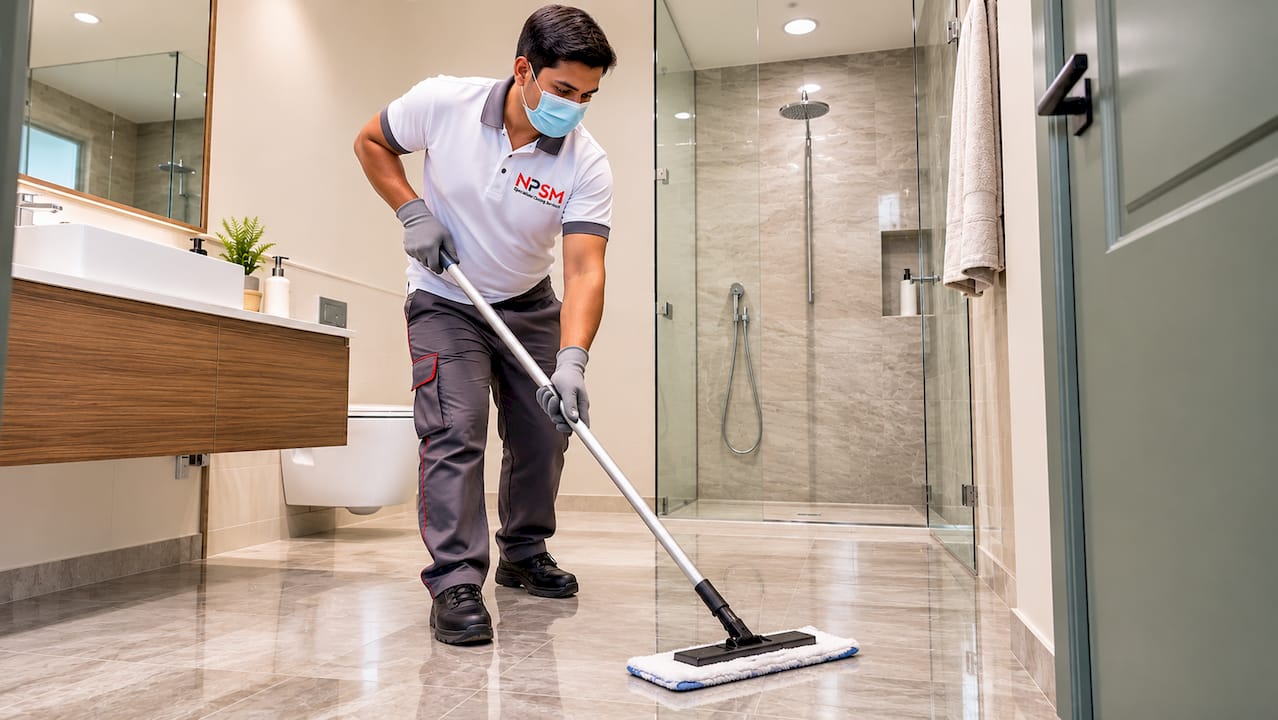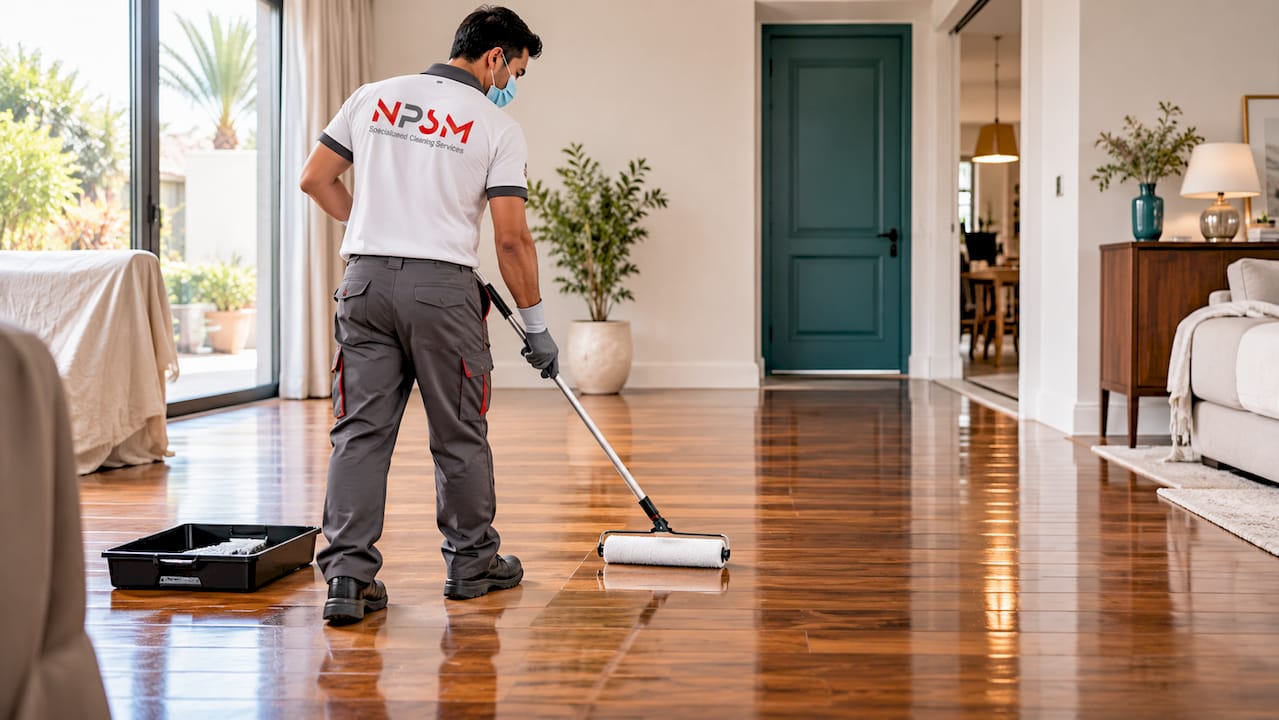

A full sand and refinish of a wood floor usually takes three to five working days for a single level of an apartment or a modest villa floor. Add roughly one to two weeks of careful use while the finish hardens. A buff and coat is much shorter: usually one to two days, with the room back in use within a day. Large villas, staircases, parquet and color changes add days, not weeks, when the work is planned properly.
This guide walks through each stage in the order it happens, shows what stretches or shortens the schedule in Dubai’s climate and building rules, and helps you decide between a light recoat and a full refinish before you book.
TL;DR
-
Full sand and refinish: plan on about 3 to 5 working days of work for a typical apartment or one villa level, plus extra days if you change the stain color or have stairs and repairs.
-
Buff and coat (screen and re-coat): usually 1 to 2 days, and suitable only when the wood itself is intact and the damage is in the finish.
-
Curing is separate from working time: you can usually walk in socks within a day, move furniture back after about two days, and keep rugs off for about two weeks or longer, depending on the finish.
-
In Dubai: air conditioning, humidity near the coast, building access rules and dust control all shape the real schedule.
-
Selling or letting: book the work one to two weeks before the handover date, not the week before.
Table of Contents
The short answer by project type
Before the detail, here is what most property owners in Dubai need to know. These are planning ranges based on how a professional crew normally sequences the work. Your own floor, finish choice and access conditions decide the final figures, and a site visit is what turns a range into a firm schedule.
| Project | Working time on site | Back to normal use |
|---|---|---|
| Buff and coat, one room or an apartment | 1 to 2 days | Light use after the coat has dried, heavy furniture after about 48 hours |
| Full sand and refinish, standard apartment floor | 3 to 5 days | Socks-only walking after about a day, furniture after about 2 days |
| Full refinish with a stain color change | 4 to 6 days | Same as above, with longer drying between stages |
| Villa with staircase, several rooms or parquet | 1 to 2 weeks | Staged by area, rugs after the finish has hardened |
The two numbers owners most often mix up are working days and cure time. The crew can finish in four days and the finish still keeps hardening for weeks. Both matter, but they affect your life differently.
What happens on each day of a full refinish
A proper refinish is a sequence. Each stage has to be finished and dry before the next one starts, which is why rushing one step shows up later as peeling, ridges or blotchy color.
Day 0: inspection and preparation
Before any machine is switched on, the floor is assessed. The crew checks the wood species, whether it is solid or engineered, how much wear layer is left, and whether there are gaps, loose boards, water stains or old coatings of different types. This step decides whether you need a full sand or only a re-coat.
The thickness check matters most for engineered wood and parquet, because a thin top layer can only take a limited amount of sanding. We explain how we judge this in our guides on the 3/32 inch test for engineered versus solid wood and the 2.8mm test before sanding parquet.
Preparation on the day itself takes several hours up to a day:
-
Moving furniture out or to a protected corner of the room.
-
Removing skirting trim or protecting it with masking.
-
Sealing off doorways, vents and AC returns to limit dust spreading.
-
Setting the machines and dust extraction.
Days 1 and 2: sanding
Sanding is the loudest and dustiest stage and normally takes one to two days for a standard apartment. A full job uses several passes with progressively finer abrasives, working from a coarse grit that removes the old finish and surface damage to a fine grit that leaves the wood smooth and ready for stain or sealer. Edges and corners are done separately with an edger, and hand-scraping or detail sanding handles tight spots.
A dustless system with extraction reduces the clean-up and keeps fine dust out of the rest of your home. See how dustless sanding changes restoration results. For a wider look at the technique and the stages, our wood floor sanding guide covers the process in six steps.
Day 2 or 3: repairs and detail work
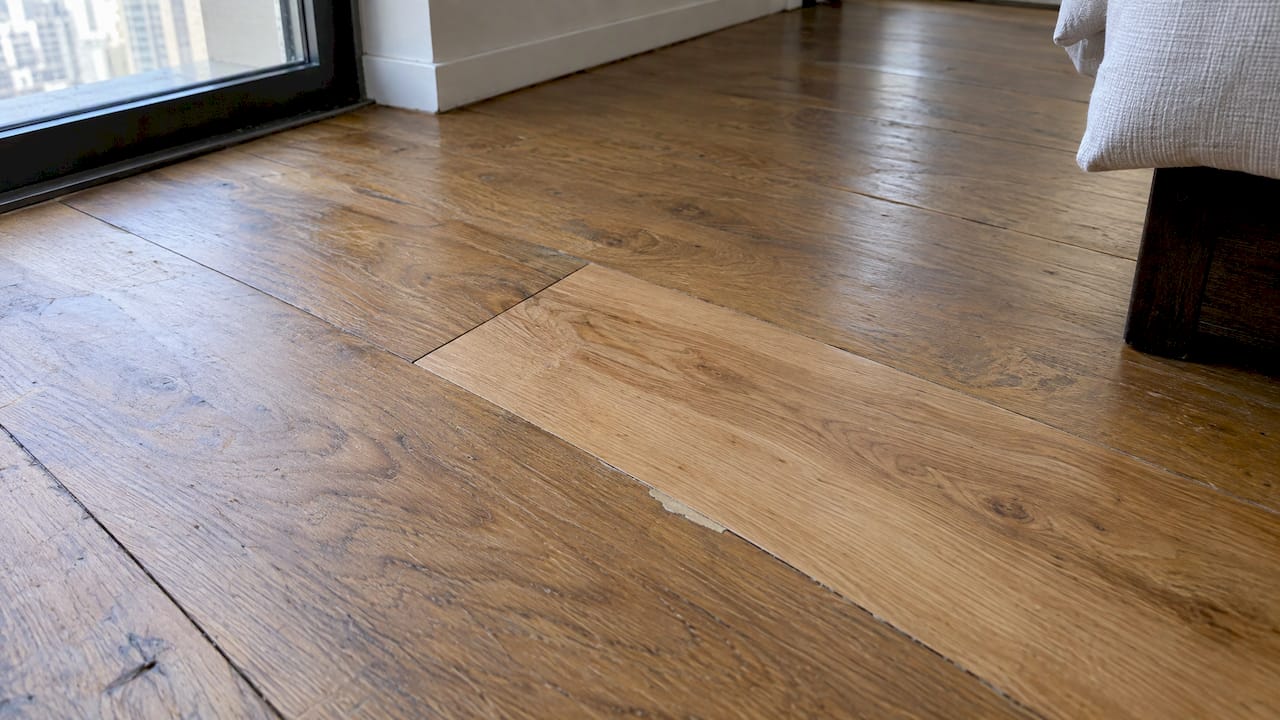
Gap filling, replacing damaged boards, fixing squeaks and treating water stains happen after the main sanding. This can take a few hours or run to multiple days when many boards need attention, which is why we like to see the floor before quoting. Hidden damage under rugs and furniture is the most common reason a schedule grows.
Day 3: final sanding, cleaning and stain
After repairs, a last fine pass blends the filled areas into the surrounding wood. The floor is then vacuumed and wiped so no dust remains. If you are keeping the natural tone, the crew goes straight to sealer or finish. If you are changing the color, stain goes on first and needs time to dry, often a day or more depending on the product and the room conditions. This is why a color change typically adds one to two days to the plan.
Days 3 to 5: finish coats
Most projects use a sealer or first coat and then two or more finish coats, with a light abrasion between coats for adhesion. Water-based polyurethane dries between coats faster, often within a few hours. Oil-based finishes need longer between coats, commonly overnight or more. The product’s technical data sheet gives the exact intervals, and a careful crew follows it rather than the clock.
That means finish choice changes your schedule. A water-based system lets a crew apply multiple coats in a day. An oil-based finish can add a day or two for the same area but gives a different look, often a warmer amber tone.
Curing: the part nobody sees
Drying is when the surface is no longer wet. Curing is when the finish reaches its full hardness. A floor can feel dry and still scratch or mark easily during its first days.
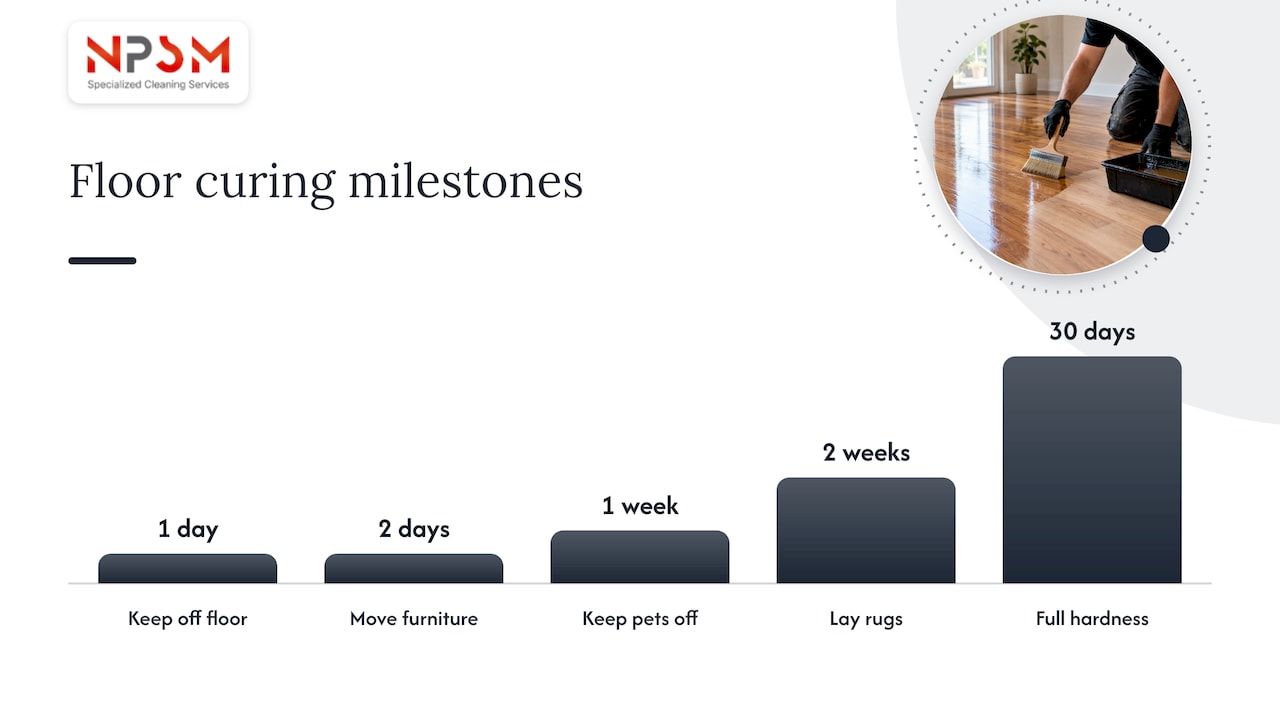
A practical guide to returning to normal life, which assumes a typical modern polyurethane and which your finisher will adjust for the product used:
-
First 24 hours: keep everyone off the floor, then allow light walking in socks if the product allows it.
-
About 48 hours: move furniture back carefully, lifting rather than dragging, and fit felt pads under every leg.
-
Around 2 weeks: lay rugs. Water-based finishes tend to be ready sooner, and oil-based finishes need longer, often a month to be fully hard.
-
Up to 30 days: the finish reaches full hardness. Avoid heavy dragging, harsh cleaners and wet mopping until then.
Rugs are covered later than furniture because a rug blocks air from the floor and can trap solvents or moisture in a finish that has not fully hardened. Pets with claws and heels are best kept off a fresh floor for the first week.
What affects the timeline in Dubai
A schedule written for a cool, damp climate does not quite fit Dubai. These are the factors we plan around.
Air conditioning and humidity
Finishes dry best in stable conditions, moderate temperature and moderate humidity. In Dubai, your AC is the main control. Running it steadily during the job keeps the room temperature stable and removes humidity, which helps coats dry predictably. Switching it off in an empty villa, especially in the humid months near the coast, can stretch drying times. Fans should circulate air without blowing directly onto the wet floor, because that can leave marks and dust in the finish.
If the property is vacant, tell us early. We will ask for the power and AC to stay on for the duration of the project.
Building access and approvals
Apartment towers and managed communities often have their own rules for contractors: approved working hours, lift booking, protection of common areas and sometimes a permit for noisy work. These rules do not change the sanding time, but they can change when the work can begin and how many hours per day the crew can run machines. Ask your building management what they require before you fix a start date. Villas in gated communities may have similar contractor registration steps.
Floor size, stairs and layout
A staircase takes disproportionate time because every tread and riser is handled separately, and the stairs must be left until the final coat is dry. A villa with a staircase, majlis and several bedrooms is a staged project: the crew often finishes one zone, lets it dry, then moves to the next so you can still use part of the house.
Type of wood
Solid hardwood, engineered wood and parquet each take sanding differently. Parquet needs care with grain direction in each block. Engineered boards with a thin wear layer need fewer, gentler passes. Our wooden floor polishing and restoration service covers all of these formats.
Condition of the existing finish
One coat of worn varnish comes off quickly. Several layers of mixed products, wax residue or sun-bleached boards near large windows take longer and may need a different approach. Strong sunlight through glazing is a real factor in many Dubai homes, and the faded strips often show through a new finish if they are not sanded back evenly.
Buff and coat versus a full refinish
This is the decision that changes your timeline the most. The top layer of polyurethane on a wood floor is there to take the wear. It is designed to be the sacrificial part, so a dull, hazy or lightly scratched finish does not always mean the wood beneath is damaged.
Buff and coat (screen and re-coat)
The crew cleans the floor, lightly abrades the existing finish with a buffing machine and screen so a new coat will bond, then applies one fresh coat of finish. It does not remove the old finish and does not change the color.
It suits a floor where:
-
The wood is intact, without deep scratches, dents or gray, bare patches.
-
The existing finish is still sound and not peeling.
-
The aim is to bring back an even sheen and renew protection.
-
You want to be back in the room fast.
Time: usually one to two days, with light use after the coat has dried. It also costs less than a full sand because there is far less labor and no dust cloud.
Full sand and refinish
The whole finish is removed, the wood is sanded back to a clean surface, repairs are made and a new finish system is applied. You can change color, remove deep scratches, erase water marks and fix uneven wear.
It is the right choice where:
-
Scratches go through the finish into the wood.
-
Finish is peeling or has failed in patches.
-
There are dark stains, pet marks or sun fading.
-
You want a different color or sheen.
-
A previous recoat was skipped for years and the floor looks worn in the walking paths.
Side by side
| Buff and coat | Full sand and refinish | |
|---|---|---|
| What it fixes | Dull, hazy, lightly worn finish | Deep scratches, stains, failed finish, color change |
| Wood removed | None | A thin layer of surface wood |
| Time on site | 1 to 2 days | 3 to 5 days or more |
| Dust | Minimal | Significant, reduced with extraction |
| Color change | No | Yes |
| Best timing | Before wear reaches the wood | When wear has reached the wood |
A useful rule: if you can feel scratches with your fingernail or see bare, gray wood, a re-coat will not hide it. If the floor just looks tired but is smooth and the finish is intact, a re-coat often restores it in a day or two. Doing re-coats on schedule also delays the day you need a full sand, which matters for engineered wood and parquet that only have so many sanding cycles in them.
Planning around a sale, a letting or a handover
Property owners and investors often ask us to fit a refinish inside a short window. The honest planning rule is to treat the job as a week of work plus a buffer. Our guide on wood floor refinishing before listing a Dubai property explains why one to two weeks of lead time is sensible, and the article on refinishing luxury interiors covers what premium finishes require.
Practical points for managers and developers:
-
Sequence the trades. Sand and finish wood floors after painting and any other dusty work, and before furniture delivery and final cleaning.
-
Book the cure, not just the days. If photographers or tenants arrive on day six, the floor should be walkable, but rugs and heavy staging wait.
-
Stage large buildings. For hotels, offices and retail, work by zone or by night so the property keeps trading.
-
Keep access simple. Parking, lift booking and a clear route for machines save hours.
How to prepare so the job runs on time
A short checklist that saves days:
-
Remove furniture, curtains and fragile items, or tell us which pieces need handling.
-
Confirm building management approval, working hours and lift or loading access.
-
Keep power and AC available for the whole project.
-
Decide on the color and sheen in advance. Changing your mind after the first coat costs a day or more.
-
Plan where people and pets will be for the first 48 hours.
-
Ask about the finish system, its drying and cure times, and the care instructions.
Our perspective
Most delays we see in Dubai are not about sanding. They come from late decisions, closed building access or an AC that was switched off in an empty unit. Settle those three things and a standard floor goes to plan.
We tailor each project to the floor and the property. Before we quote a timeline, we look at the species, the wear layer and the existing finish, because the right answer might be a one-day re-coat or a full restoration, and we would rather recommend the one your floor needs. Our crews use professional-grade equipment and dust extraction, and we protect the areas around the work.
Refinishing is also the cost-effective route. Restoring a good wood floor extends its life and keeps the premium look without the cost and disruption of replacing it. For parquet and engineered boards, doing a re-coat at the right moment preserves the wear layer for future restorations.
Qadir
Get a firm schedule for your floor
If you own a villa, apartment, hotel or commercial space in Dubai, the quickest way to a reliable timeline is to have the floor assessed. We handle sanding, refinishing, restoration and maintenance for solid wood, engineered wood and parquet. See our wooden floor polishing and restoration services, or browse all floor services. For a process overview, read our step-by-step restoration guide for Dubai homes.
FAQ
How long does it take to refinish wood floors in Dubai?
A typical full sand and refinish takes about three to five working days for one level of an apartment or a modest villa floor. Larger villas, stairs, repairs and color changes extend it. Allow additional time afterward for the finish to cure before rugs go down.
How long before I can walk on a refinished floor?
With most modern finishes, light walking in socks is usually possible after about a day, and furniture can go back after about 48 hours with felt pads. The exact times depend on the product, so follow the instructions your finisher gives for the specific finish used.
What is the difference between buff and coat and a full refinish?
A buff and coat lightly abrades the existing finish and adds a fresh coat, so it takes one to two days and cannot change color or remove deep scratches. A full refinish sands the wood back to a clean surface, which fixes deeper damage and allows a new color, and takes several days.
How much does wood floor sanding cost in Dubai?
The price depends on the area, wood type, condition, number of repairs, stairs, the finish system and building access. Because every floor differs, we assess the floor first and give a quote for the actual job rather than a flat rate per square meter.
Can I refinish engineered wood or parquet?
Often yes, but the thickness of the top wear layer decides how much sanding the floor can take. We measure it before work starts and recommend a re-coat or a gentler approach where the layer is thin.