
Seal cement-based grout. Tile makers do not require it, but they recommend it, because cement grout is porous and soaks up water, dirt and oils. Epoxy grout is a different material and generally does not need a sealer. The right answer for your floor depends on which grout you have, where it sits, and what condition it is in today.
This guide is for villa, apartment and penthouse owners, property managers and facility teams in Dubai who want a clear decision, not a debate. You will see which grout types need sealing, what a sealer does and does not do, the one situation where you should not seal, how to test existing grout, and how to plan resealing across a property.
TL;DR
- Cement-based grout: seal it. It is porous, and sealing helps it resist water- and oil-based stains and makes it easier to keep clean.
- Epoxy grout: usually no sealer needed. Check which grout was installed before you buy anything.
- Do not seal grout that is discolored, patchy, chalky or uneven. Fix the grout first, because sealer can lock in the problem.
- Sealer is not a force field. It does not make grout waterproof or stain-proof, and it does not stop acid etching.
- Sealer wears down. Reapply it on a schedule that matches traffic, cleaning habits and location.
Table of Contents
- So, are you supposed to seal grout?
- Which grout types need sealing
- What sealer does, and what it does not do
- The one time you should not seal
- Why builders often leave grout unsealed
- How to tell whether your grout needs sealing
- How to seal grout correctly
- How often to reseal, and how to maintain sealed grout
- A practical plan for Dubai properties
- Our perspective
- Get the whole floor handled in one visit
- FAQ
So, are you supposed to seal grout?
The tile industry does not make sealing mandatory. Manufacturers such as Mapei say sealing is not required, yet they recommend it, especially in wet or high-traffic areas. That gap explains why you hear two opposite opinions: “you must” and “never.”
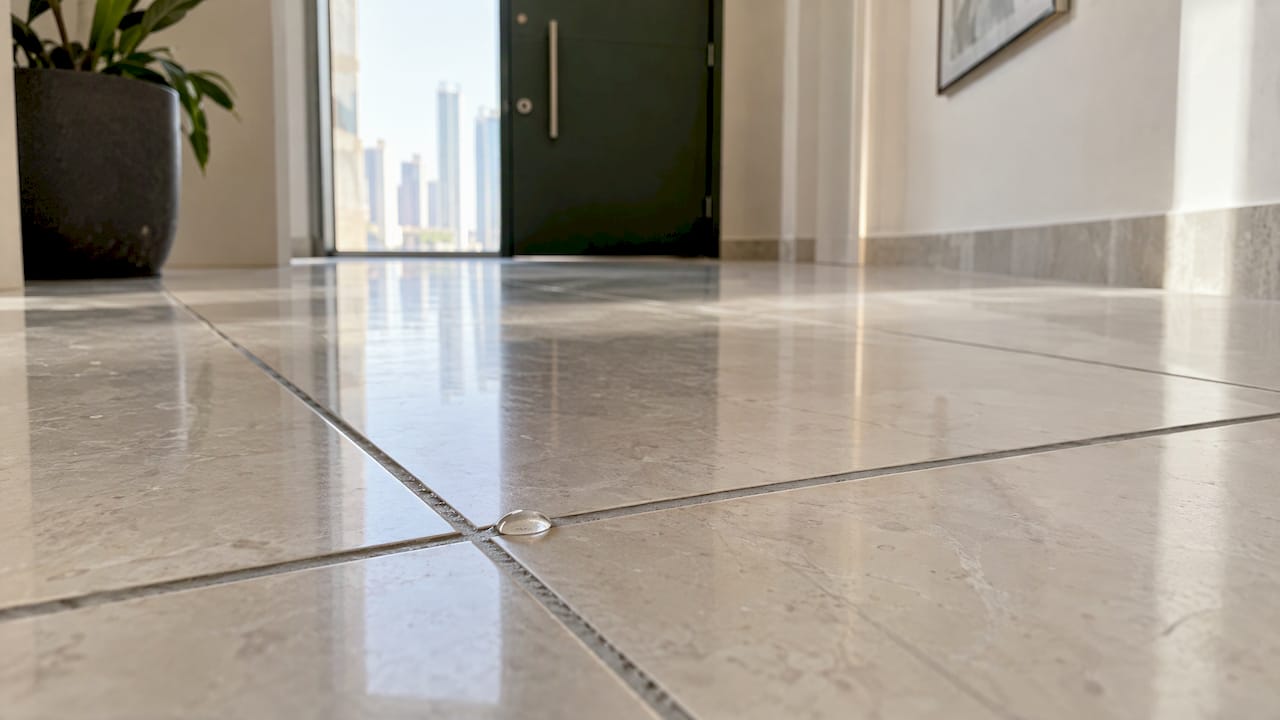
Both camps are partly right. Cement-based grout is a mix of cement and sand with tiny pores running through it. Those pores pull in moisture, soap film, cooking oil and dirt. A penetrating sealer fills and lines those pores so liquids bead up instead of soaking in. The grout still works as grout. It just stains less and wipes clean faster.
The “never seal” advice usually comes from people thinking of grout that needs to breathe, or of film-forming coatings that sit on top and peel. A modern penetrating sealer is not a paint-like coating. It soaks in and does its work below the surface. Still, the point behind the warning is real: the wrong product or a careless application causes problems, which we cover below.
Which grout types need sealing
The type of grout decides the answer more than any opinion does.
| Grout type | Porous? | Sealing advice |
|---|---|---|
| Cement-based (sanded or unsanded) | Yes | Recommended, after full cure |
| Epoxy | Very low | Generally not needed |
| Cement grout with colour sealing already applied | Depends on the system | Ask the applicator what was used before adding anything |
Most villas and apartments in Dubai were tiled with cement-based grout, because it is the standard, economical choice. If you are not sure what you have, look at the installation paperwork from the developer or tiler, or ask us to look at it. Epoxy grout has a smooth, slightly glossy, dense look and feels harder. If you are weighing the two for a new fit-out, our comparison of epoxy grout vs cement grout walks through the trade-offs for local conditions.
Where sealing matters most
Some areas ask more of grout than others:
- Bathrooms and shower floors: constant water, soap residue and humidity.
- Kitchens: oil splashes, juice, coffee, tomato-based sauces.
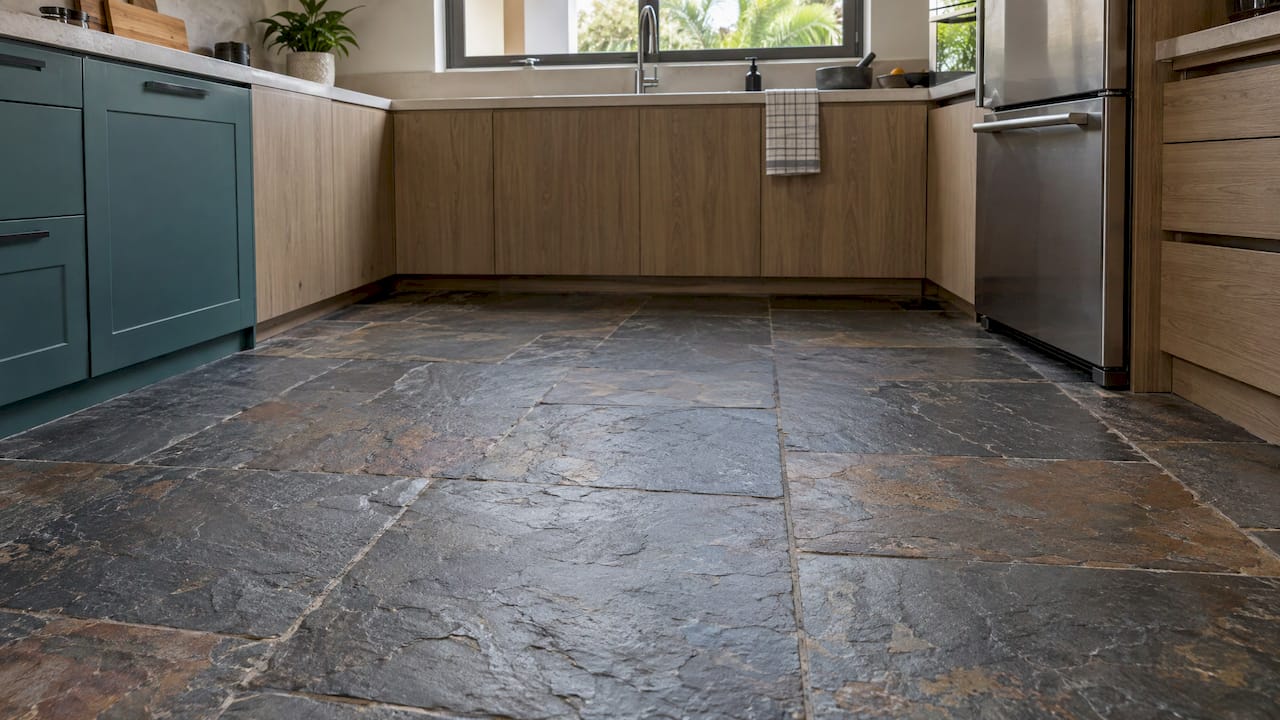
- Entrances and terraces: sand, dust and foot traffic carried in from outside.
- Hotel bathrooms and commercial restrooms: heavy daily use, where appearance is part of the guest experience. Our hotel bathroom tile restoration guide covers how those standards are maintained.
- Light-colored grout anywhere: it shows every mark.
A seldom-used guest bathroom with dark grout is the lowest-risk place to delay. A busy family kitchen with white grout is the highest.
What sealer does, and what it does not do
Owners often buy sealer expecting a miracle, then feel let down. Set the expectations correctly and the product does exactly what it should.
What a penetrating sealer does
- Gives the grout strong resistance to water, chemicals and stains.
- Slows how fast liquids and oils are absorbed, which gives you time to wipe a spill before it marks.
- Makes routine cleaning easier because dirt has less to grip.
What it does not do
- It does not make grout stain-proof or waterproof. Manufacturers say so plainly.
- It does not prevent cracking. Cracks come from movement, poor installation or weak substrate, not from missing sealer.
- It does not stop etching from acids. Sealers protect against water- and oil-based stains, but acidic substances such as vinegar or wine can still attack the surface.
- It does not replace cleaning. Sealed grout still needs regular maintenance.
One practical note from tile care guidance: grout is best protected with a fluorochemical-based sealer, according to industry professionals. When you choose a product, look for a penetrating, impregnating type designed for grout and read the technical data sheet.
The one time you should not seal
This is the point most online answers skip. If the grout looks wrong, sealing it can make things worse.
Custom Building Products’ technical bulletin on efflorescence, the white chalky deposit that can appear on grout, explains that it can arise from cement minerals, water, the grout mix, environmental conditions and installation technique. The same bulletin says never to seal grout whose color, hardness or appearance is unsatisfactory. Sealer can enhance the problem and block simpler corrective measures.
In practice, hold off sealing when you see:
- White powdery or crusty deposits on the joints.
- Patchy color, where some joints are darker or lighter than others.
- Soft, crumbling or sandy grout.
- Joints that are still damp or freshly cleaned with acid.
In those cases, the order is: diagnose, correct, let the surface dry fully, and only then seal. Depending on the condition, correction might mean deep cleaning, grout restoration, or regrouting the worst joints. Cleaning first also matters: our guide to what grout cleaning involves explains why sealing over embedded dirt locks the dirt in.
Why builders often leave grout unsealed
If sealing is so useful, why do handover units often arrive with unsealed grout? The usual explanation is that sealing adds labor and time to a build, and many contractors treat it as maintenance that belongs to the owner, not as part of the installation. It is a scope question, not a verdict that sealing is pointless.
For you, that means a newly handed-over apartment or villa is often a good moment to seal, once the grout has cured and the unit has been properly cleaned. It also means a unit that has been lived in or rented for years may have had no protection at all.
How to tell whether your grout needs sealing
Use the simple water test. It takes five minutes and costs nothing.
- Pick a clean, dry section of grout, ideally in a high-use area.
- Sprinkle or drip a little water on it.
- Wait several minutes.
- Look at what happened.
If the water beads and sits on the surface, the sealer is still working. If it soaks in quickly and the grout darkens, the sealer is worn or was never applied. Mapei’s guidance is that quick absorption and darkening mean it is probably time to reapply.
Test a few spots, not one. Wear is uneven: the grout beside the shower door or the kitchen sink usually fails before the grout under the sofa.
How to seal grout correctly
Sealing is simple, but the details decide whether it works. Follow this order.
- Let new grout cure. Cure times vary by product. One Mapei penetrating sealer data sheet calls for at least 48 hours, while LATICRETE recommends at least 72 hours at 70°F (21°C) for its cement grouts before using its sealer. Always follow the grout and sealer manufacturers’ instructions, and use the longer time if they differ.
- Clean thoroughly. Remove soap scum, oil and dirt. Sealer trapped over grime looks blotchy.
- Dry completely. Apply to a clean, dry surface.
- Apply evenly. A paint pad, sponge, brush or roller all work. Keep the sealer on the grout lines where you can.
- Let it soak in. Around 5 to 10 minutes is typical for the Mapei product above.
- Buff off the excess. Do not leave residue on the tile face. Surplus sealer dries as a haze.
- Respect the final cure. Keep the area dry and out of use for as long as the label says before wet cleaning.
Mistakes that cause call-outs
- Sealing too early, before the grout has cured.
- Sealing damp grout after a heavy clean.
- Using a coating-type product where a penetrating one is needed.
- Leaving excess on polished porcelain or natural stone, where it leaves marks.
- Sealing over efflorescence or uneven color, as covered above.
Natural stone needs extra thought, because the stone and the grout have different needs. Marble and limestone are acid-sensitive, and a product choice that suits the grout may not suit the stone. For marble floors with tiled joints, the approach should be planned for both surfaces together.
How often to reseal, and how to maintain sealed grout
Sealer wears out. How fast depends on foot traffic, how often you clean, which products you clean with, and where the floor is. A shower floor scrubbed daily will lose protection sooner than a hallway used lightly.
Manufacturer data gives a useful reference point. LATICRETE’s STONETECH Heavy Duty Grout Sealer is expected to wear for up to five years on interior surfaces and up to three years on exterior ones. Treat that as a ceiling under good conditions, not a promise for every bathroom. The water test tells you the real answer for your floor.
A simple routine:
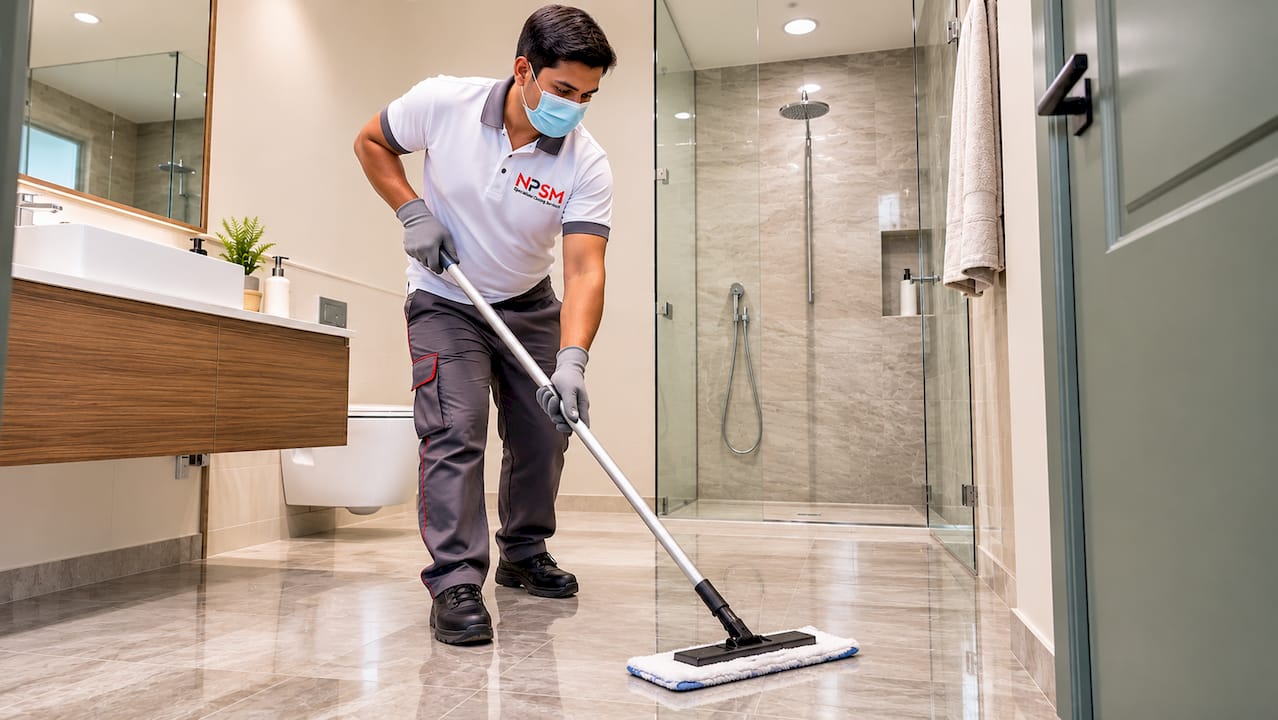
- Daily or weekly: clean with a mild, pH-neutral cleaner.
- Avoid: bleach, abrasive powders and harsh household cleaners. Tile-care guidance warns that they can degrade grout sealer.
- Wipe up spills promptly, especially acidic ones like juice, vinegar and wine.
- Every few months: run the water test on your busiest areas.
- When the test fails: clean and reseal.
For a wider picture of keeping tiled floors in good shape, see our tile floor cleaning workflow.
A practical plan for Dubai properties
Dubai floors work hard. Villas have large tiled areas that run from entrance to terrace. Apartments have humid bathrooms. Hotels and offices have constant traffic. A few ways to think about it by property type:
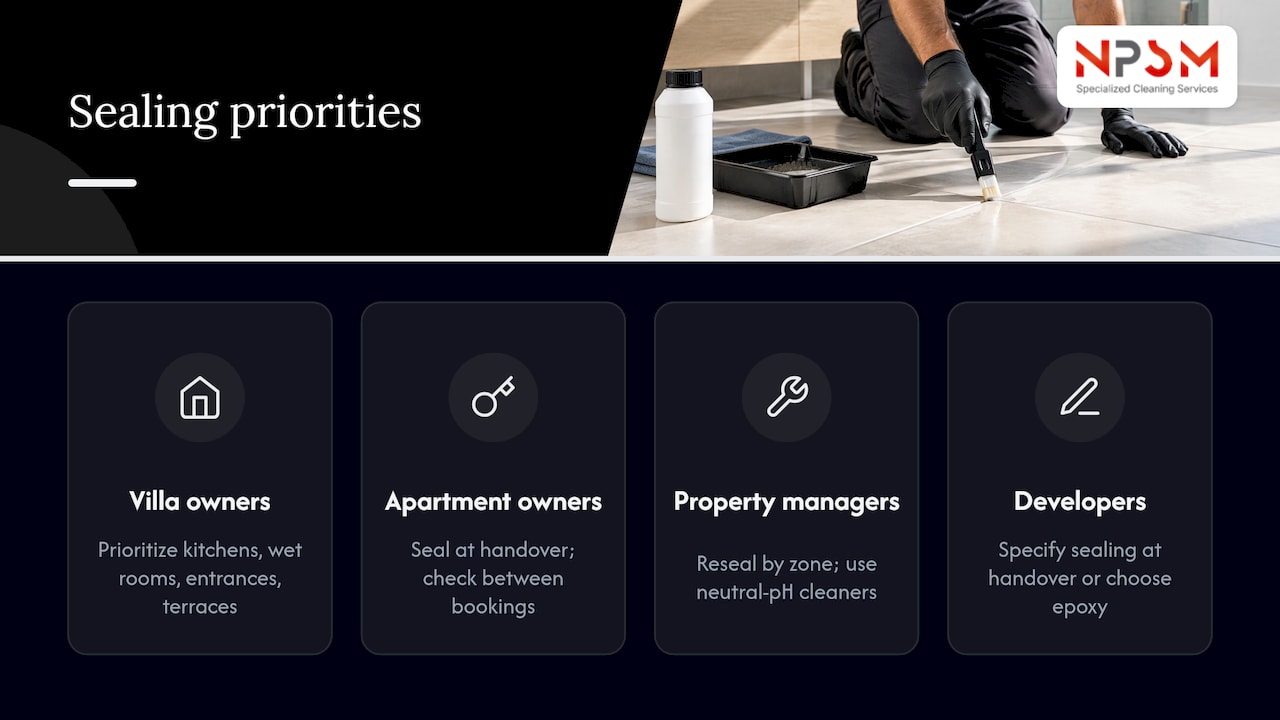
Villa and penthouse owners. Prioritize kitchens, wet rooms, entrance halls and covered terraces. Check light grout first. If you plan any tile polishing or regrouting, seal at the end of that work so the protection goes onto fresh, clean joints.
Apartment owners and investors. Seal at handover once the unit is clean and the grout has cured. For holiday homes with frequent guest turnover, plan a periodic check between bookings, since cleaning intensity is high.
Property and facility managers. Map your areas by wear: restrooms, lobbies, kitchens, pantries, entrances. Build the water test into your planned preventive maintenance rounds and reseal by zone, not all at once. Standardize on neutral-pH cleaning chemicals across your cleaning contractors, since harsh products shorten sealer life.
Developers, contractors and interior designers. Decide at specification stage: cement grout with a sealing step written into the scope, or epoxy where the use case justifies it. Putting sealing in the handover scope avoids the gap between “installation” and “maintenance” that leaves owners with unprotected joints.
If the real issue is color rather than protection, for example grout that has yellowed or mismatched over time, read about grout color sealing, which explains when it works and how it is done.
Our perspective
We see the same pattern across Dubai villas, apartments and commercial sites. Grout is the first part of a tiled floor to look tired, long before the tile itself. It sits low, takes every spill and every mop pass, and in most properties it was never sealed.
Our view is that sealing is worth doing on cement-based grout, but only as the last step of a proper sequence: assess, clean, correct, dry, seal. Skipping to the sealer is where owners get disappointed, because sealer on dirty or defective grout simply preserves the problem.
That is why our approach is tailored to the floor in front of us. We look at the grout type, the tile or stone it sits between, and how the space is used, then recommend deep cleaning, restoration, regrouting or sealing as the situation calls for. Our team works with professional-grade equipment and eco-friendly products, and we aim for results that last in Dubai’s climate and in high-traffic buildings.
For owners and managers, the real saving is not the sealer. It is avoiding a premature regrout or tile replacement by protecting joints while they are still sound.
Qadir
Get the whole floor handled in one visit
If you would rather not manage cleaning, correction and sealing as separate jobs, our team handles tile floors from assessment through to finish. See our tile cleaning, polishing and re-grouting services for what is covered, or look at the full range of floor polishing and restoration services if your property also has marble, stone, wood or vinyl. Contact us with your property type, floor area and a few photos of the grout, and we will tell you what the floor needs.
FAQ
Should you seal grout?
If it is cement-based, yes, in most cases. Sealing is not required by the tile industry, but it is recommended, particularly in wet and high-traffic areas, because cement grout is porous. Epoxy grout generally does not need sealing.
Does sealed grout still stain?
It can, though less easily. Sealer gives strong resistance to water, chemicals and stains, but it does not make grout stain-proof or waterproof. Acidic spills such as vinegar or wine can still etch the surface, so wipe spills quickly.
How long should new grout cure before sealing?
It depends on the products. One Mapei sealer sheet calls for at least 48 hours, and LATICRETE recommends at least 72 hours for its cement grouts at 21°C before its sealer. Follow the instructions for your specific grout and sealer, and use the longer time if they differ.
How do I know if my grout needs resealing?
Drip water on clean, dry grout and wait a few minutes. If it soaks in and the grout darkens, the sealer has worn off or was never applied. If the water beads, the protection is still working.
Is it ever a bad idea to seal grout?
Yes, when the grout has defects. Do not seal grout with efflorescence, uneven color, or soft, crumbling joints, because sealer can lock the problem in. Correct the grout first, let it dry, then seal.