
TL;DR:
Modern dustless sanding captures most airborne dust, improving finish quality and reducing cleaning time.
Proper equipment matching and workflow discipline are essential for effective dust control and optimal results.
Dustless sanding reduces dust-related issues but does not eliminate the need for thorough cleaning and proper process steps.
Many Dubai property owners assume that any floor sanding project will leave their villa or apartment coated in a thick layer of fine dust for days. That assumption shapes decisions, causes unnecessary delays, and sometimes pushes homeowners toward inferior finishing methods just to avoid the mess. The truth is more nuanced. Modern dustless sanding technology has changed what floor restoration looks like in practice, and understanding how it works, what it genuinely delivers, and where its limits lie will help you make smarter choices for your floors and your household environment.
Table of Contents
-
Key benefits of dustless sanding for finish quality and home environment
-
What dustless sanding doesn’t do: Common misconceptions and limitations
-
For best results: Integrating dustless sanding into a full restoration workflow
-
Perspective: Why ‘dustless’ is only part of a flawless floor restoration
-
Get expert floor restoration with advanced dustless solutions
Key Takeaways
| Point | Details |
|---|---|
| Reduces airborne dust | Dustless sanding keeps dust levels lower during floor restoration than traditional methods. |
| Improves finish quality | Cleaner surfaces mean fewer flaws and smoother, more attractive floor finishes. |
| Not 100% dust-free | Even with advanced systems, some dust remains—so final cleanup matters. |
| Workflow integration is key | Best results come from combining dustless sanding with proper cleaning and finishing steps. |
Understanding dustless sanding: What it is and how it works
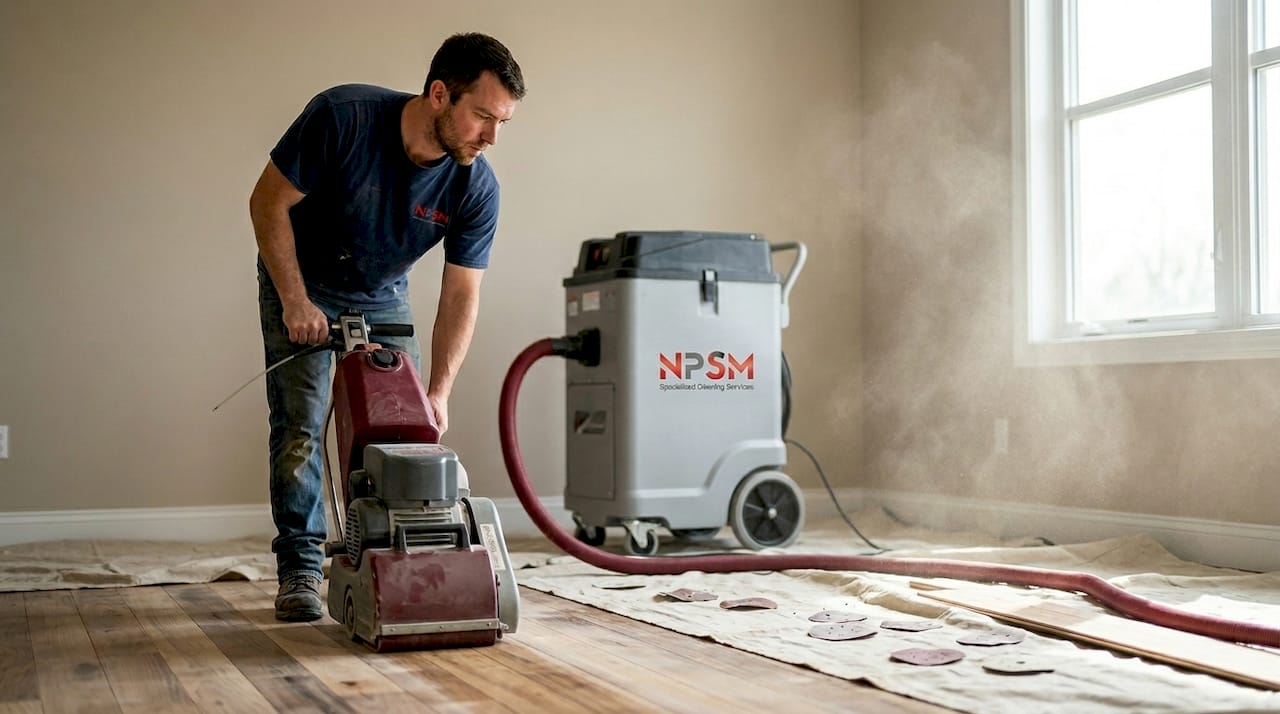
Dustless sanding is a floor preparation method that pairs sanding machines with high-powered vacuum extraction systems to capture the majority of airborne and surface dust at the source, before it can spread through your home. Instead of sanding freely and cleaning up later, the system pulls dust through a hose directly into a sealed collection unit the moment the abrasive contacts the floor surface.
This is fundamentally different from conventional sanding, which relies on open machines that release fine particles into the air. With traditional sanding, those particles settle on furniture, get into HVAC systems, and contaminate fresh finish coats, creating blemishes that are frustrating and sometimes expensive to correct. In Dubai’s climate, where residents frequently run air conditioning year-round, fine sanding dust circulates rapidly and lands everywhere.
The core components of a dustless sanding setup include:
-
High-torque belt or drum sanders fitted with dust shrouds
-
Sealed HEPA-rated vacuum units connected via flexible hose to the sanding head
-
Edge sanders and detail tools with matching extraction attachments
-
Pre-filter and HEPA filter stages that capture particles down to 0.3 microns
There is also an important difference in floor sanding vs polishing approaches. Sanding removes material to level and clean the surface, while polishing works on the surface layer. Dustless systems are most critical during the sanding phase because that is when the highest volume of fine particles is generated.
A dustless sanding process is described as keeping airborne debris lower and reducing the likelihood of particles landing in wet finish, which directly affects the smoothness and clarity of the final coat. This is a practical advantage, not just a marketing talking point.
Pro Tip: Always confirm that your contractor’s extraction unit matches the airflow capacity of the sanding machine being used. Mismatched equipment creates suction gaps and allows dust to escape, defeating the purpose of the system entirely. Proper matching of tools is one of the most overlooked aspects of effective dust management techniques on professional sites.
| Feature | Conventional sanding | Dustless sanding |
|---|---|---|
| Dust dispersal | High | Significantly reduced |
| Post-sanding cleanup | Extensive | Minimal |
| Risk to fresh coatings | High | Low |
| Health impact on residents | High particle exposure | Reduced exposure |
| Equipment cost | Lower | Higher upfront |
Investing in professional dustless sanding equipment is one clear signal that a restoration team takes finish quality seriously.
Key benefits of dustless sanding for finish quality and home environment
Now that you know how dustless sanding works, let’s examine the real benefits for your home’s appearance and health.
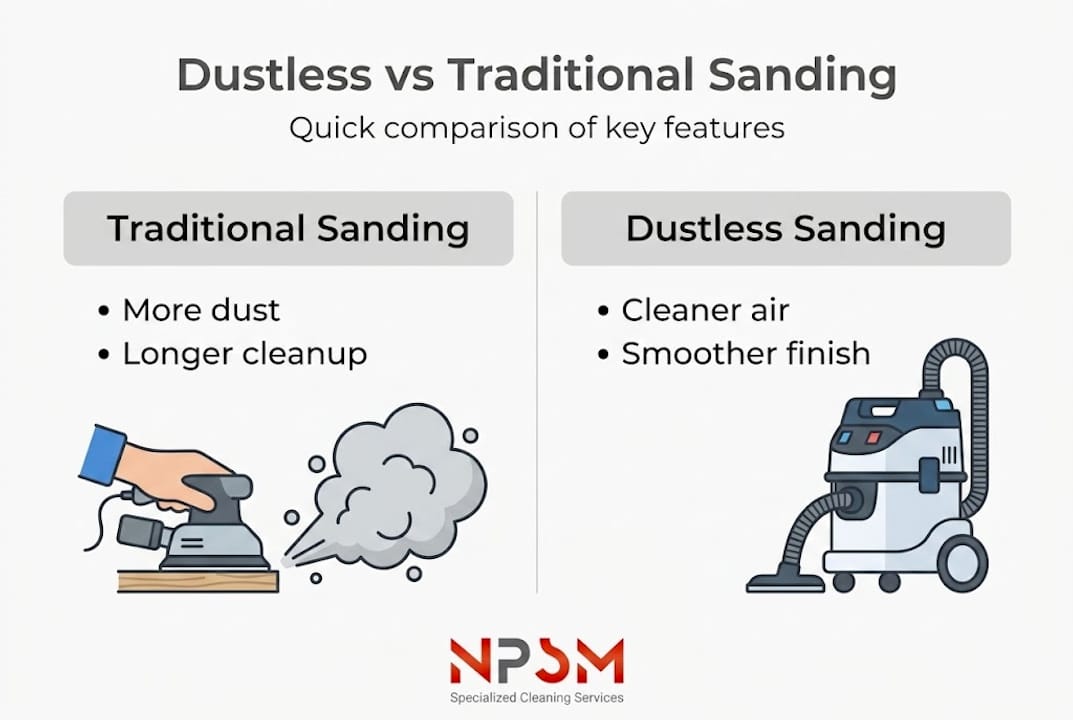
The most tangible benefit is finish quality. When dust lands in a wet coat of lacquer, oil, or polyurethane, it creates what professionals call “dust nibs,” which are tiny raised bumps embedded in the dried finish. These nibs make the surface feel rough to the touch and look dull under raking light. Dustless sanding improves finish quality indirectly by reducing dust contamination during the critical prep and coat stages. Less airborne dust during application means fewer nibs and a smoother result from the very first coat.
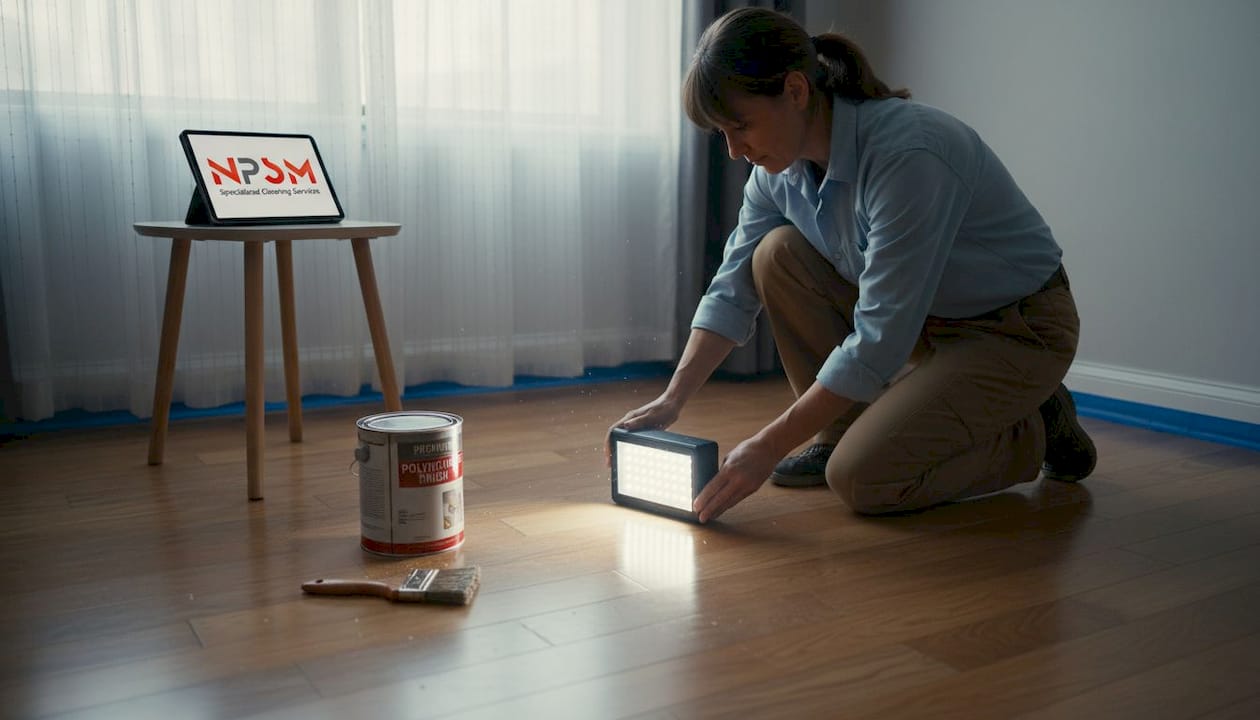
The process also emphasizes controlling dust nibs between clear coat layers using light de-nibbing and vacuuming, a step that becomes much easier when the overall dust load in the room is already low. Think of it like cooking in a clean kitchen versus a messy one. The food may be the same, but the outcome is far more reliable when the environment is controlled.
For homeowners in Dubai, particularly those living in dustless sanding for luxury interiors environments with custom woodwork, marble inlays, or high-specification cabinetry nearby, airborne dust is a genuine threat to costly finishes beyond just the floor itself. A conventional sanding job can settle fine particles onto polished stone countertops, decorative mirrors, and upholstered furniture, requiring extensive cleaning that adds cost and time.
Key benefits for residents and workers include:
-
Cleaner air during and after the project, meaning fewer respiratory irritants for family members, especially children and elderly residents
-
Faster reoccupation of sanded rooms because settling time is dramatically reduced
-
Lower contamination risk for adjacent rooms when doors are not perfectly sealed
-
Less disruption to furniture and soft furnishings that cannot easily be moved
-
Reduced HVAC filter clogging, which matters in Dubai where air conditioning runs constantly
“Controlling airborne dust is not just a comfort issue. It directly determines the quality of every coat applied after sanding, from the first sealer to the final topcoat.”
The benefit of systematic cleaning after sanding is amplified when dustless systems are used, because the baseline dust level is already so much lower. Professionals working with dustless equipment spend less time on post-sanding prep and more time on the application itself, which shows in the finished product.
What dustless sanding doesn’t do: Common misconceptions and limitations
Although dustless sanding delivers compelling benefits, it is vital to separate fact from marketing hype.
The word “dustless” is genuinely misleading if taken literally. No sanding system eliminates all airborne particles. Some dustless marketing claims overstate dust elimination, and real exposure depends on particle sizes, setup quality, and the tool-to-surface interface. A poorly maintained extraction unit, a worn filter, or an incorrectly sized shroud can reduce effectiveness to nearly nothing while still carrying the “dustless” label.
What does this mean practically? It means you should evaluate the system in use, not just the promise on the invoice.
Here is a numbered checklist to work through before assuming a job will be truly low-dust:
-
Ask about filter ratings. A HEPA-rated filter captures particles down to 0.3 microns. Anything less leaves fine dust in circulation.
-
Check the hose connections. Loose connections between the sander and the vacuum unit are one of the most common points of failure.
-
Confirm filter maintenance intervals. A clogged filter reduces suction significantly and allows particles to escape.
-
Ask about edge sanding. Corner and edge work is the hardest area to control with extraction systems and often produces the most uncontrolled dust.
-
Inspect the room seal. Professional teams should close vents, seal doorways with plastic sheeting, and shut down HVAC during sanding.
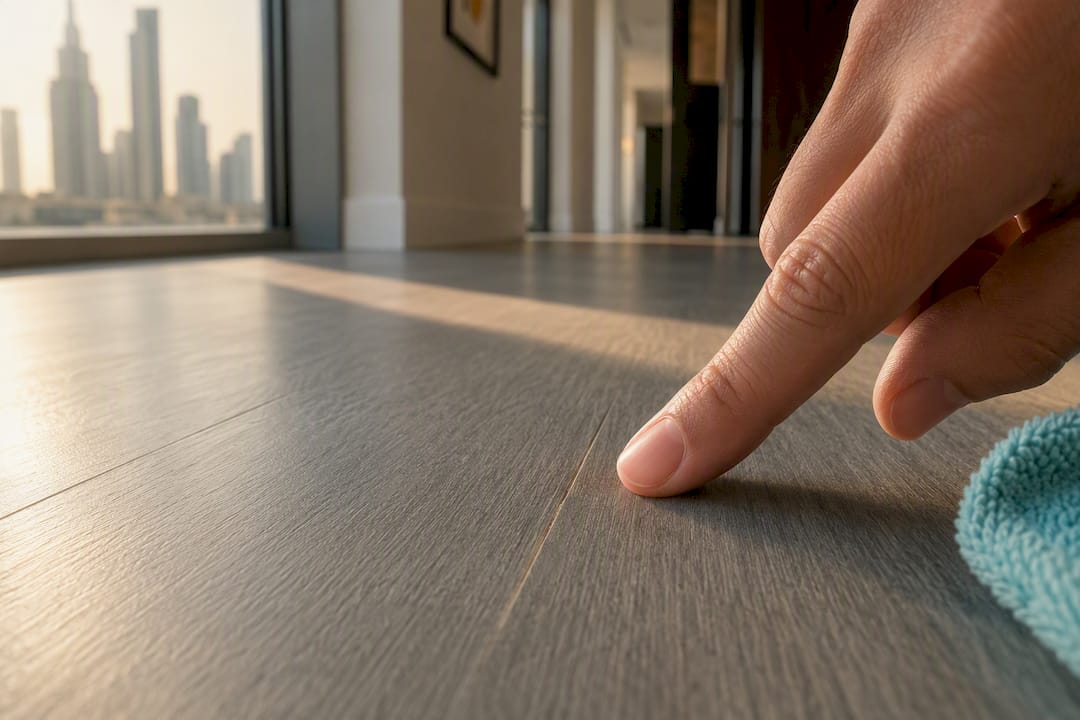
Pro Tip: After sanding, run your finger along a windowsill or door frame that was not covered. If you find fine dust deposits, the extraction system underperformed and the floor may need additional cleaning before coatings begin. This quick test helps you hold contractors to account before any finish is applied.
Pairing extraction systems with sanding tools correctly is not optional. It is the foundation of whether a dustless job actually performs as described. Property owners should ask contractors to explain their specific equipment combination, not just claim dustless capability.
Another important limitation is that dustless sanding does not replace de-nibbing or inter-coat cleaning. Even with excellent dust control, fine particles from the ambient environment can settle between coats, particularly in older Dubai villas where HVAC systems draw in outdoor air. The sanding phase may be clean, but coat application is a separate vulnerability window that requires its own attention.
For best results: Integrating dustless sanding into a full restoration workflow
Understanding where dustless sanding fits in the larger picture ensures you maximize both the aesthetic and practical impact of your restoration project.
Dustless sanding is the foundation, but it is not the whole building. A complete wooden floor restoration in a Dubai property typically moves through several distinct stages, and dust management is a thread that runs through all of them, not just the sanding phase.
A best-practice restoration workflow looks like this:
-
Pre-project assessment: Identify floor species, existing finish type, level of wear, and any structural issues like squeaky boards or lifted sections
-
Surface preparation: Secure loose boards, fill gaps, and remove any old coatings that will not bond with the new finish
-
Coarse sanding: Remove the bulk of the old finish and level the surface using the dustless drum sander
-
Fine sanding: Progress through grits to achieve the desired surface texture, with extraction running at every stage
-
Edge and detail work: Complete corners and borders with edge sanders and hand tools, maintaining extraction where possible
-
Tack and clean: Wipe the entire surface with a tack cloth or microfiber pad to capture any remaining particles before the first coat
-
First coat application: Apply sealer or base coat in a clean, still environment with HVAC off
-
De-nibbing between coats: Use fine abrasive pads or ultra-fine sandpaper lightly between each layer, then vacuum and tack again
-
Final coat and cure time: Allow adequate cure time before returning furniture
It’s worth emphasizing that planning dust control as part of the full coating workflow is essential because reduced dust helps significantly, but you still need systematic cleanup, de-nibbing, and adherence to inter-coat timing. Skipping any of these steps, even with excellent dustless equipment, will compromise the final result.
“The best sanding equipment in the world cannot compensate for rushing the inter-coat drying time or skipping the tack step before application. Discipline in every stage is what separates an average result from an exceptional one.”
The post-renovation polishing workflow deserves equal attention to the sanding phase. And once the project is complete, following a plan for ongoing wooden floor maintenance in Dubai’s humidity-controlled environment keeps your floors looking their best for years, not just months.
For Dubai property owners specifically, one often-overlooked factor is timing. Scheduling floor restoration during cooler months or using climate control to stabilize humidity inside the property reduces the risk of finish lifting or clouding, which is a real concern in this region’s climate.
Perspective: Why ‘dustless’ is only part of a flawless floor restoration
Here’s something we’ve learned from years of working on floors across Dubai villas, apartments, and commercial spaces: property owners are often more impressed by the technology than the process, and that focus can actually work against them.
Dustless sanding equipment is genuinely impressive. It performs better than conventional methods in almost every measurable way. But we’ve seen floors finished with outstanding dustless systems still come out looking mediocre, because the team rushed the inter-coat timing, skipped proper de-nibbing, or used an incompatible finish over a poorly matched sealer. The machine got the credit it did not earn.
The real predictor of a flawless result is workflow discipline. It’s knowing when to stop sanding and when to move on. It’s understanding that a five-minute tack-cloth pass between coats is not optional. It’s recognizing that in Dubai’s apartments, where air conditioning returns are often close to the work area, ambient particle control matters even after the sander stops.
Our contrarian take is this: if a contractor leads with the dustless system as their primary selling point, ask more questions. Ask about their inter-coat process. Ask how they handle edge work. Ask what they do when humidity spikes mid-project. The answers reveal more about finish quality than any equipment list.
Dustless technology makes great work easier. It does not make average workers great. The discipline to boost wooden floor durability over the long term comes from process knowledge, not hardware alone.
Get expert floor restoration with advanced dustless solutions
Ready to put these principles into practice for your Dubai property? Our team at Floor Polishing AE combines advanced dustless sanding equipment with a disciplined, step-by-step restoration process that covers everything from coarse preparation to final coat application. We work on all floor types, including hardwood, marble, granite, vinyl, and natural stone, across villas and apartments throughout Dubai. Whether you need a full restoration or targeted repairs, our comprehensive floor polishing services are built around getting results that last. Explore our detailed Dubai floor polishing guide to understand what to expect, or go straight to our wooden floor polishing in Dubai page to book a consultation.
Frequently asked questions
Does dustless sanding remove all dust from floor restoration projects?
No, dustless sanding significantly reduces airborne dust but cannot remove it completely, so some cleanup is still necessary. Real exposure depends on particle sizes, setup quality, and the tool interface used during the job.
Why is dust control important for the finish of polished floors?
Minimizing airborne dust keeps the floor finish smoother and clearer with fewer blemishes. Dustless sanding improves finish quality by reducing dust contamination during key preparation and coating stages, which directly limits the formation of surface nibs.
Do I still need to clean after dustless sanding?
Yes, systematic cleaning and careful inspection are recommended for a flawless finish, even when dustless systems are in use. You should plan dust control as part of the full coating workflow, including cleanup and de-nibbing between every coat.