
TL;DR:
- Dubai homeowners face rapid floor deterioration from desert dust, humidity, and heavy traffic, requiring tailored maintenance routines. Proper cleaning, sealing, and professional restoration extend floor lifespan, prevent costly damage, and preserve luxury properties’ aesthetics. Regular, material-specific care guided by experts is essential for long-term floor health in Dubai’s challenging environment.
Your floors take a beating in Dubai. Between the relentless fine dust that sweeps in from the desert, the humidity spikes near the coast, and the heavy foot traffic from active households, even premium marble and hardwood can look dull, scratched, or stained within months. This guide gives you the exact, practical steps to maintain marble, wood, and tile floors in Dubai properties, whether you manage a single apartment or a sprawling villa. Follow these routines and you’ll protect your investment, extend the life of your floors, and avoid the high cost of emergency restoration.
Table of Contents
-
Tile and grout maintenance: Step-by-step cleaning and protection
-
When maintenance isn’t enough: Restoration, tradeoffs, and expert help
-
Your next step: Professional Dubai floor care and restoration
Key Takeaways
| Point | Details |
|---|---|
| Choose the right cleaners | Use pH-neutral products for marble and tiles, and wood-appropriate cleaners for wooden floors to avoid damage. |
| Follow Dubai-specific schedules | Maintain cleaning and sealing routines based on Dubai’s climate and home traffic for all major floor types. |
| Early intervention saves money | Consistent maintenance reduces the need for costly restoration and keeps floors looking their best year-round. |
| Professional help delivers results | Expert restoration can greatly improve floors, especially for deep stains or etching, achieving up to 90% improvement. |
| Avoid common mistakes | Don’t use harsh cleaners or excess water—these can permanently damage marble, tile, or wood surfaces. |
What you need: Tools, products, and basic requirements
Before you touch a single floor surface, you need the right tools and products. Using the wrong cleaner or the wrong mop on marble or wood is one of the most common and costly mistakes Dubai homeowners make.
Tools for each floor type:
-
Marble: Soft microfiber mop, dry dust mop, soft-bristle broom, non-scratch mop bucket, absorbent dry cloths
-
Wood: Soft-bristle broom, hardwood-rated vacuum (with felt pads, not rotating beaters), barely damp microfiber mop, soft dry cloth
-
Tile and grout: Stiff-bristle grout brush, microfiber mop, bucket with wringer, soft cloth for drying
Products that are safe versus those that damage floors:
Marble floor care tips always begin with one rule: only pH-neutral cleaners. Established guidance for marble emphasizes sweeping first to remove grit, then damp-mopping with warm water and a pH-neutral cleaner, avoiding acidic cleaners entirely. Lemon juice, vinegar, and most multipurpose sprays will etch marble permanently.
For wooden floors, avoid wet mopping and never use harsh cleaners. Only wood-appropriate products designed for finished hardwood should touch your floors. For tile and grout, pH-neutral tile cleaners are the standard, and bleach should always be avoided because it degrades grout over time.
Dubai-specific consideration: The city’s desert dust contains fine silica particles that act like sandpaper underfoot. Investing in a quality HEPA vacuum and good doorway mats at every entrance can dramatically reduce the grit that reaches your floors daily.
| Floor type | Safe products | Never use |
|---|---|---|
| Marble | pH-neutral stone cleaner, warm water | Vinegar, lemon, acidic sprays |
| Wood | Wood-specific floor cleaner | Vinegar, ammonia, bleach, steam |
| Tile/Grout | pH-neutral tile cleaner | Bleach, abrasive powders |
Pro Tip: Always use a nearly dry mop for marble and never wet mop wood. Excess water is the single most preventable cause of damage to both surfaces in Dubai homes.
Once you know what you’ll need, it’s time to follow the right maintenance routine for each floor type.
Marble floor care: Daily, weekly, and annual routines
Marble is the signature material in Dubai villas and luxury apartments, but it is also one of the most sensitive surfaces you can own. The good news is that a consistent routine keeps it looking showroom-fresh for years.
Step-by-step marble care routine:
-
Daily: Dry-sweep or dust-mop the entire surface to remove sand, grit, and dust. Dubai’s airborne particles are abrasive and will scratch marble if left underfoot.
-
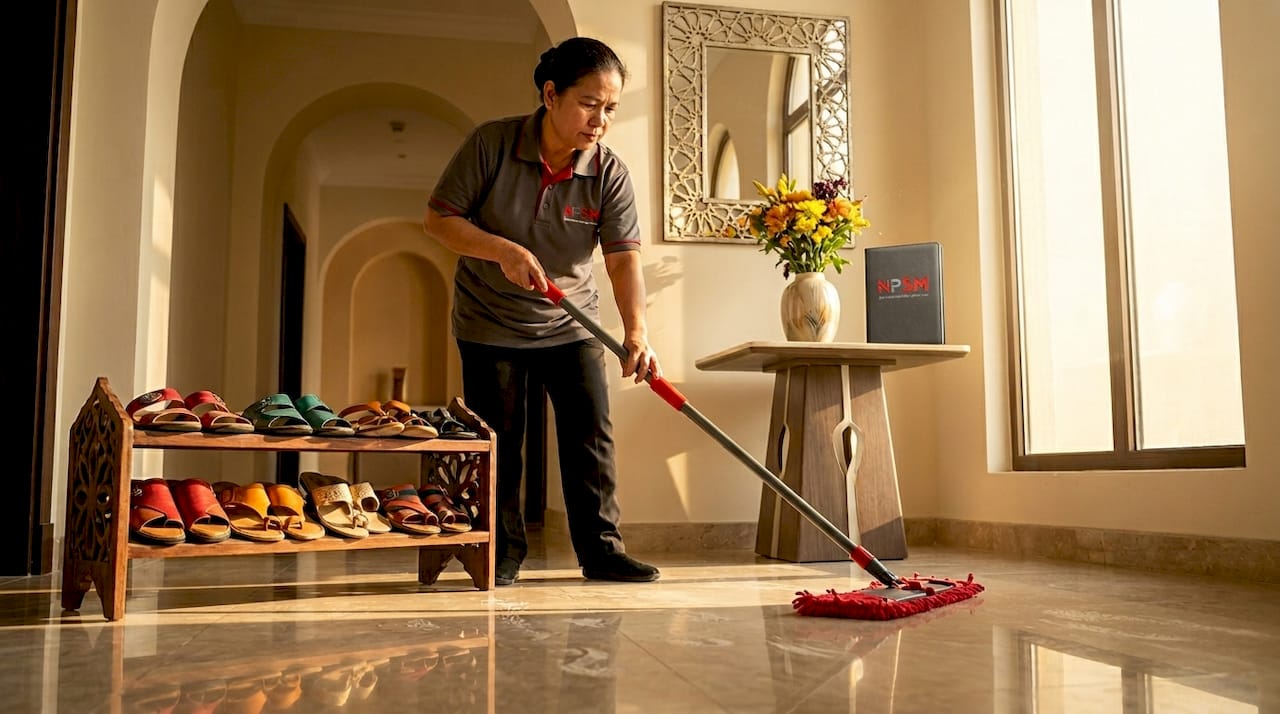
Weekly: Damp-mop using a well-wrung microfiber mop and warm water mixed with a pH-neutral stone cleaner. Wring the mop until it is nearly dry before it contacts the marble.
-
Immediately after spills: Blot, never wipe, any liquid spills right away. Coffee, wine, juice, and citrus are all acidic and will etch the surface if left sitting even briefly.
-
Dry after mopping: Use a dry microfiber cloth or towel to remove any standing moisture after mopping. This is critical in Dubai, where air conditioning creates temperature differentials that turn water droplets into persistent cloudy spots.
-
Annually: Schedule professional sealing every 12 to 18 months. Professional polishing timelines are typically 12 to 18 months for optimal appearance and protection, though high-traffic areas may need attention sooner.
What to expect from professional care:
“Professional restoration may achieve 85 to 90% improvement in most etched or stained marble. Curing depends on humidity and temperature, with best results in cooler months.”
That is a significant recovery. Homeowners who think their marble is beyond saving are often pleasantly surprised. However, the key is to act before etching becomes deep scoring. The longer surface damage is left untreated, the harder it becomes to restore fully.
| Maintenance frequency | Task | Estimated benefit |
|---|---|---|
| Daily | Dry dust-mopping | Prevents 90% of surface scratches |
| Weekly | Damp-mop with pH-neutral cleaner | Removes staining build-up |
| Every 12-18 months | Professional sealing and polishing | Restores gloss, extends surface life |
Pro Tip: Always dry marble floors after mopping to avoid water spotting. In Dubai’s air-conditioned interiors, moisture left on marble can evaporate unevenly and leave behind mineral deposits that are difficult to remove without professional help.
For a deeper breakdown of what professional marble care in Dubai involves, including crystallization and deep polishing, it is worth reviewing the full service checklist before booking any restoration work.
Next, let’s address the unique care needs of tile and grout, which are common in Dubai apartments and bathrooms.
Tile and grout maintenance: Step-by-step cleaning and protection
Tiles are practically everywhere in Dubai properties, from kitchen floors and bathrooms to outdoor terraces. They are durable, but grout is porous and will absorb grime, mold, and mineral deposits if neglected. Once grout goes dark, it is very difficult to reverse without professional help.
Step-by-step tile and grout cleaning:
-
Weekly sweep or vacuum: Remove loose dust and grit before any wet cleaning. This prevents abrasive particles from scratching the tile surface during mopping.
-
Weekly mop: Use a pH-neutral tile cleaner mixed with warm water. Apply with a microfiber mop and wring it well before use. Rinse the mop frequently.
-
Grout brush work: Every two to three weeks, scrub grout lines with a stiff-bristle grout brush and your chosen tile-safe cleaner. Focus on bathroom floors and kitchen areas where moisture and food residue accumulate.
-
Deep clean every 2 to 3 months: Dubai’s dusty climate means grout accumulates grime faster than in other cities. A deeper clean using a specialist tile-and-grout product, applied and agitated with a brush, then rinsed thoroughly, is recommended every few months.
-
Seal grout every 6 to 12 months: Sealing is the most important protective step most Dubai homeowners skip. A proper tile cleaning workflow in Dubai always includes resealing grout at least once a year to keep moisture and staining agents out.
Key behaviors to avoid:
-
Never pour bleach directly onto grout, it breaks down the grout material over time and leads to crumbling
-
Do not use steel wool or abrasive pads on glazed tiles
-
Avoid letting bathroom floors stay wet after showers; improve ventilation by opening windows or running exhaust fans
-
Do not mix cleaning products, especially those containing bleach and ammonia
Dubai stat callout: Guides specific to Dubai recommend sealing grout every 6 to 12 months, which is more frequent than typical international advice because of the combination of hard water, high humidity in bathrooms, and heavy dust exposure.
Pro Tip: Avoid bleach and harsh chemicals to prevent grout damage. Even diluted bleach will slowly strip the binding agents in grout, causing it to become porous and fragile. A pH-neutral cleaner does the job safely without accelerating wear.
With tiles covered, now turn to wooden flooring, which requires special care to avoid warping and dullness.
Wooden floor maintenance: Keeping wood beautiful and safe
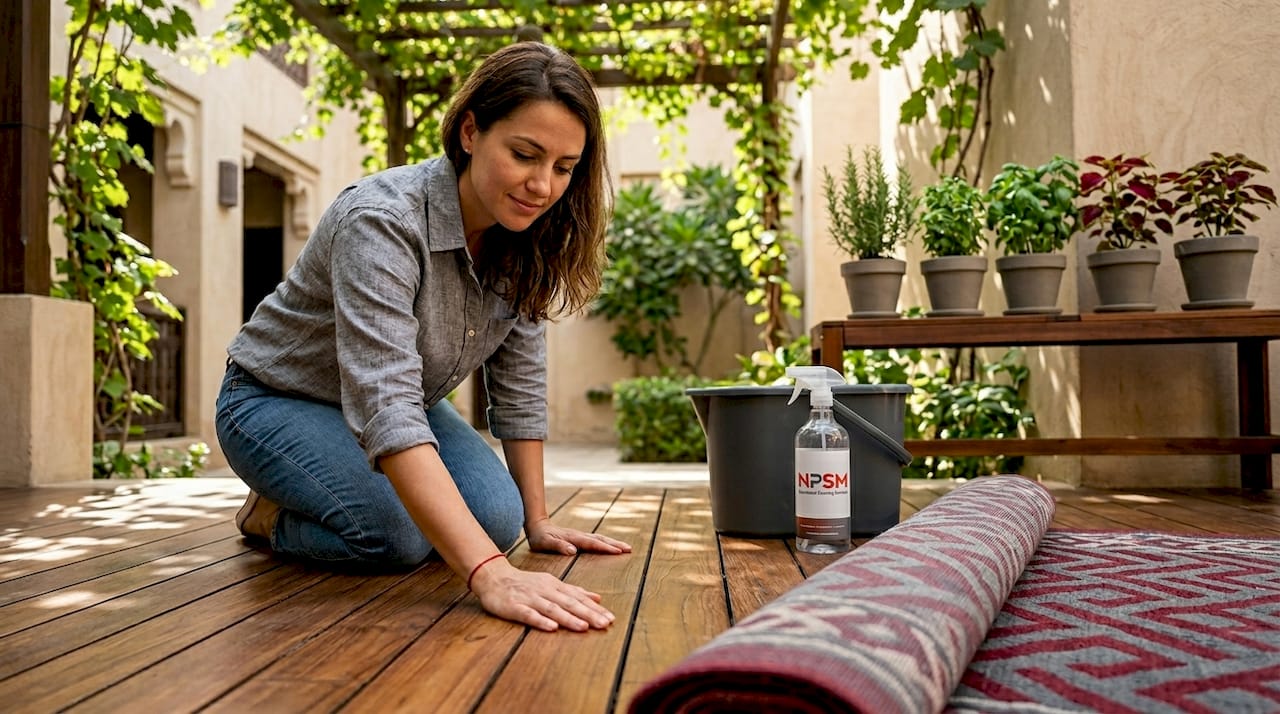
Wood floors add warmth and prestige to Dubai villas and upscale apartments, but they are also the most sensitive to environmental conditions. The combination of sand, humidity, and aggressive cleaning products can ruin a wood floor faster than almost any other surface.
Step-by-step wood floor care:
-
Daily sweep or vacuum: This is non-negotiable in Dubai. Desert sand and fine grit are the biggest enemies of wood. Use a soft-bristle broom or a vacuum with a hardwood floor attachment, never a rotating beater brush.
-
Damp-mop weekly with wood-safe cleaner: Use only a wood-appropriate floor cleaner and wring the mop until it is almost completely dry. Any standing water left on wood will cause swelling, warping, and finish damage.
-
Polish every 6 to 8 months: Professional cleaning and polishing should happen every 6 to 8 months for maintained wood floors in active Dubai homes. This refreshes the finish and fills in minor surface scratches.
-
Call a professional for sanding: When the surface is visibly scratched, dull, or the finish is peeling in patches, sanding is required. This is not a DIY task in Dubai because the humidity must be carefully managed during the sanding and refinishing process.
What not to do with wood floors:
-
Never use vinegar, it strips the finish and dulls the surface permanently
-
Avoid ammonia-based cleaners, they can break down the wood’s protective coating
-
Never steam clean wood floors, the heat and moisture penetrate the finish
-
Avoid dragging furniture across wood without felt pads
For full guidance on when to polish versus when to sand, the comparison between wood sanding vs polishing is a useful reference before you spend money on a service that may not be appropriate for your floor’s condition. If your floors are looking flat and lifeless, the resource on dull wood floor solutions walks through the likely causes and fixes clearly.
Pro Tip: Never use vinegar, ammonia, or bleach on wood surfaces. These are common household staples that many people assume are safe, but each one attacks the protective finish on hardwood and will eventually expose the raw wood to moisture and staining.
Having reviewed care for all major floor types, let’s explore how routine maintenance can minimize the need for expensive restoration and when it might be necessary.
When maintenance isn’t enough: Restoration, tradeoffs, and expert help
Even the most diligent homeowner will eventually face a floor that routine cleaning cannot fix. Deep etching on marble, blackened grout, or worn-through wood finish all require professional restoration rather than cleaning.
Maintenance versus restoration: Key differences:
| Approach | What it addresses | Typical cost range | Frequency |
|---|---|---|---|
| Routine maintenance | Dirt, surface haze, minor build-up | Low | Weekly/monthly |
| Crystallization | Surface-level dullness, light scratches | Medium | Every 1-2 years |
| Deep restoration | Etching, deep scratches, staining | Higher | As needed |
When DIY simply will not work:
-
Marble with visible etching or acid burns from spills
-
Grout that has turned black or crumbled in sections
-
Wood with deep gouges, peeling finish, or significant water damage
-
Any floor where the surface sealant has failed
Professional restoration in Dubai can recover most damaged marble to within 85 to 90% of its original appearance. However, restoration results depend heavily on temperature and humidity conditions, which is why Dubai professionals often recommend scheduling heavy restoration work during the cooler months from November through March, when curing times are more predictable and results are better.
The most important principle from consistent cleaning and sealing is that early intervention dramatically reduces how often heavier restoration steps are needed. A floor sealed regularly rarely needs grinding or deep polishing. One that has been neglected for three years almost always does.
How to choose a restoration service in Dubai:
-
Verify they have experience with your specific floor material
-
Ask whether they use diamond grinding, crystallization, or resin polishing and why
-
Request a test area before committing to the full floor
-
Ask about the wood floor polishing process specifically if you have hardwood
The step-by-step framework is now clear. Let’s look at what actually works and address common misconceptions among Dubai property owners.
Why Dubai floor care is more science than guesswork
Here is something most floor care articles won’t tell you: the biggest source of floor damage in Dubai is not neglect. It is well-meaning but uninformed cleaning. Homeowners who diligently mop their marble with lemon-scented multipurpose spray every week are actually etching the surface faster than if they had left it alone. Homeowners who steam clean their wood floors because steam “sanitizes” are accelerating finish failure.
Dubai’s environment demands a calendar-based, material-specific approach. The city’s hard tap water leaves calcium deposits on every surface it touches. The fine desert dust contains silica that scratches even granite. The humidity swing between outdoor temperatures in summer and heavily air-conditioned interiors creates expansion and contraction cycles in wood that standard cleaning schedules elsewhere simply don’t account for.
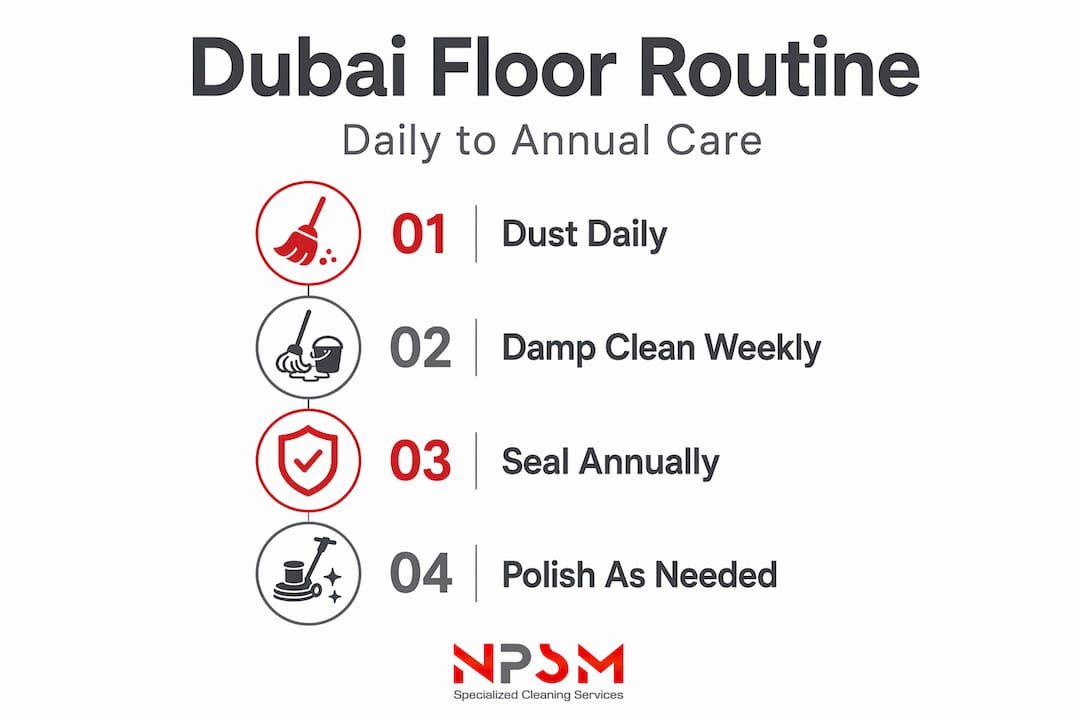
The evidence-based schedule is not complicated, but it requires commitment. Dust daily. Damp-clean weekly with the right product. Seal on schedule. Call professionals for polishing before visible damage appears, not after. That ladder of prevention is exactly what luxury property floor care in Dubai is built around.
The uncomfortable truth is that many homeowners underestimate how affordable preventive maintenance is compared to restoration. A proper seal and polish every 12 to 18 months on marble costs a fraction of what it takes to grind down etched stone. Following the science is not just better for your floors. It is significantly better for your budget.
Your next step: Professional Dubai floor care and restoration
If this guide has shown you where your current routine might be falling short, the next step is connecting with a specialist who understands Dubai’s specific conditions and your floor type. Whether you need a full restoration and polishing service for damaged marble, a scheduled maintenance program for tile and grout, or expert wood floor polishing in Dubai, working with professionals ensures the right products, the right equipment, and results that hold up over time. If you want a clear picture of what the full process involves for any floor type, the floor polishing guide for Dubai homes breaks down all five key steps so you know exactly what to expect before any work begins. Reach out to get a professional assessment and protect your investment the right way.
Frequently asked questions
How often should marble floors be polished in Dubai?
Marble floors should be professionally polished every 12 to 18 months for best results and protection, with high-traffic areas potentially needing more frequent attention.
Is it safe to use vinegar or ammonia cleaners on wooden floors?
No. Vinegar and ammonia damage the protective finish on wood floors over time; always use wood-specific cleaners designed for finished hardwood.
How can I prevent water spots when cleaning marble floors?
Wring your mop nearly dry before it touches the marble and use a dry microfiber cloth immediately after mopping to remove any residual moisture.
How frequently should grout be sealed in Dubai bathrooms?
Grout should be sealed every 6 to 12 months in Dubai due to the combination of hard water, dusty climate, and frequent bathroom use.
What results can I expect from professional marble restoration?
Professional marble restoration may achieve 85 to 90% improvement in most etched or stained cases, though severe deep damage may not be fully reversible.