
TL;DR:
Proper protection involves daily cleaning, entry mats, and applying high-quality finishes suited for Dubai’s climate.
Polyurethane offers durability for high-traffic areas, while oil-based finishes are better for low-traffic luxury spaces.
Consistent maintenance and correct installation practices significantly extend the lifespan of luxury wooden floors in Dubai.
Luxury wooden floors in Dubai face a battle on multiple fronts every single day. Fine desert sand acts like sandpaper underfoot, seasonal humidity swings cause wood to expand and contract, and high foot traffic in villas and apartments accelerates wear faster than most homeowners expect. The good news is that protecting these floors is not as complicated or as expensive as many people fear. With the right strategies in place, your wooden floors can stay stunning for decades without requiring constant intervention or costly emergency repairs.
Table of Contents
-
Understanding wood floor protection: Definition and Dubai’s unique challenges
-
Choosing the right floor finish: Polyurethane vs. oils for Dubai conditions
-
Long-term maintenance and restoration: Preventing damage before it starts
-
Polished results: Protect your wood floors with Dubai experts
Key Takeaways
| Point | Details |
|---|---|
| Protective cleaning routine | Daily sweeping and pH-neutral damp mopping minimize sand abrasion and extend floor life. |
| Entry mat systems | Scraper and absorbent mats at entrances are vital for preventing grit and moisture damage. |
| Smart finish selection | Choose finishes like polyurethane or oil based on Dubai’s humidity and repair needs. |
| Proactive maintenance | Routine inspection and early intervention prevent costly restoration and safeguard investment. |
| Local expert support | Professional care in Dubai maximizes durability and preserves luxury wood floor aesthetics. |
Understanding wood floor protection: Definition and Dubai’s unique challenges
Wood floor protection is not just about keeping surfaces clean. It covers three interconnected layers: proactive maintenance that prevents damage before it starts, targeted damage prevention that addresses Dubai’s specific environmental threats, and performance enhancement that keeps floors looking and feeling their best over time.
A common misconception among homeowners is that regular mopping is enough. In reality, cleaning is only one piece of the puzzle. True protection means addressing every source of stress your floors face, from the microscopic grit tracked in from outside to the slow but relentless effect of furniture weight on unprotected wood fibers.
Dubai’s environment creates a specific set of challenges that most generic floor care guides simply do not account for:
-
Sand abrasion: Fine desert sand particles are sharp enough to scratch even hard wood finishes when ground underfoot, causing dull wooden floors over time
-
Humidity fluctuations: Dubai’s indoor air conditioning creates dramatic moisture swings that cause wood to expand in summer and contract in winter, leading to gaps and warping
-
Heavy foot traffic: Luxury villas and apartments in Dubai often host frequent guests, domestic staff, and large family gatherings that accelerate surface wear
-
Furniture pressure: Heavy furniture without proper pads concentrates enormous weight on small surface areas, crushing wood fibers and leaving permanent marks
-
Cleaning product damage: Many homeowners use harsh or alkaline cleaners that strip protective finishes and dry out wood over time
“True wood floor protection requires a layered approach: daily dry sweeping or dust mopping to remove grit, damp mopping with pH-neutral cleaners without soaking, entry mats both outside and inside, felt pads on all furniture legs, a no-shoes policy, pet nail trimming, and furniture sliders when moving heavy pieces.” Consumer Reports
Luxury interiors demand both aesthetics and resilience. A scratched or dull floor in a high-end property does not just look bad. It signals neglect and reduces property value. Following proven wooden floor maintenance tips designed for Dubai’s climate is the foundation of any serious protection plan.
Primary strategies for wood floor protection in Dubai
Now that we understand the meaning and importance of wood floor protection, let’s look at the practical strategies proven to work in Dubai’s demanding environment.
The most effective protection plan combines daily habits with periodic professional care. Here is a proven sequence of actions that Dubai property managers and homeowners should follow:
-
Dry sweep or dust mop daily. This is the single most impactful habit you can build. Sand and grit that sit on the floor surface get ground into the finish with every step. A microfiber dust mop picks up particles without pushing them around.
-
Damp mop weekly with a pH-neutral cleaner. Never soak the floor. Wring the mop until it is barely damp. Excess moisture is one of the leading causes of wood swelling and finish damage in Dubai’s already humid conditions.
-
Install a two-stage entry mat system. Place a coarse scraper mat outside every entrance to remove sand from shoes, and a soft absorbent mat just inside to capture remaining moisture and dust. This single step can reduce floor abrasion by a significant margin.
-
Apply felt pads to all furniture legs. Replace them every six months because worn pads become hard and can cause scratches. This applies to dining chairs, sofas, coffee tables, and any item that moves even slightly during normal use.
-
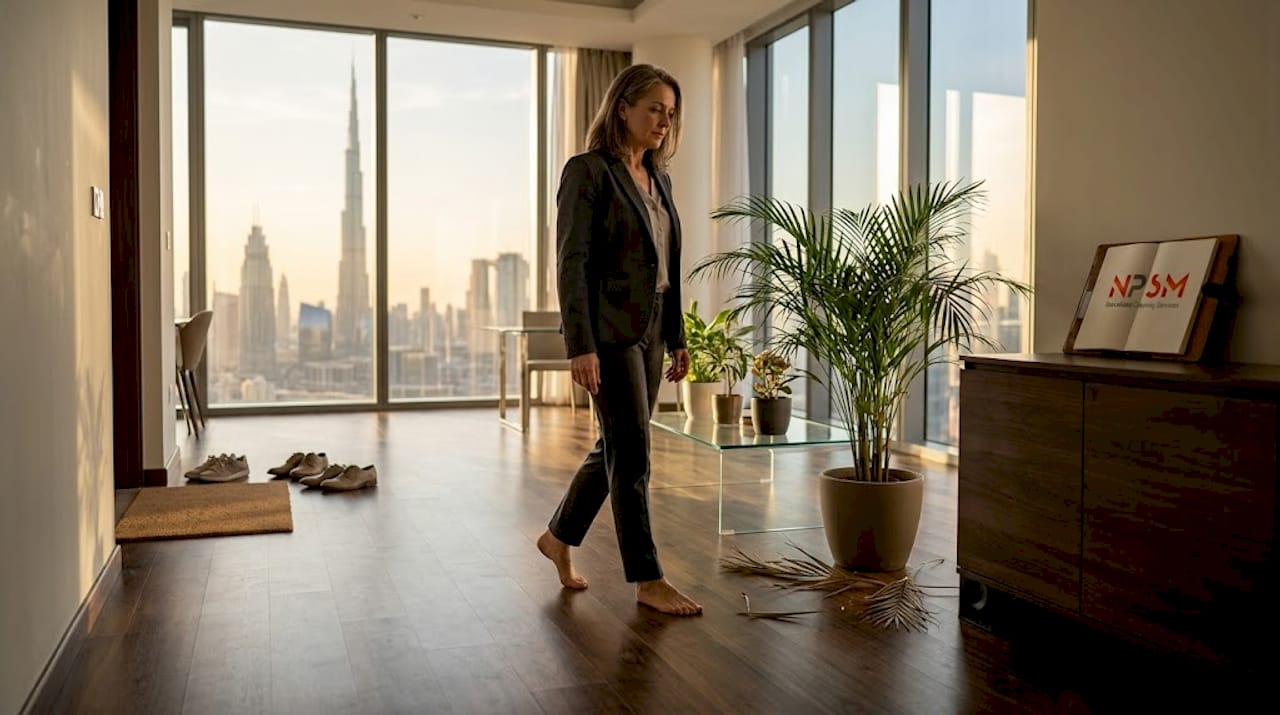
Enforce a no-shoes policy in main living areas. Hard-soled shoes, especially heels, concentrate enormous pressure on tiny surface areas and can dent even hardwood finishes. A dedicated shoe rack near the entrance makes this policy easy to follow.
-
Trim pet nails regularly. Pet nails are among the most common causes of fine surface scratches on luxury wood floors. Monthly trimming keeps this risk under control.
-
Use furniture sliders for any heavy piece that needs to move. Dragging furniture across wood floors, even briefly, can leave deep gouges that require professional floor sanding vs polishing to fix.
These floor protection methods are backed by flooring industry research and consistently recommended by professional floor care specialists.
Pro Tip: Install humidity sensors in rooms with wood flooring. Dubai’s indoor humidity can drop below 30% in heavily air-conditioned spaces, which causes wood to shrink and crack. Keeping indoor humidity between 40% and 60% prevents most climate-related wood damage without any additional maintenance effort.
When selecting new wood floors for your Dubai property, understanding the best wood flooring types for the local climate saves you from expensive mistakes down the line. Engineered hardwood, for example, handles humidity fluctuations far better than solid wood because its layered construction resists expansion and contraction.
Choosing the right floor finish: Polyurethane vs. oils for Dubai conditions
Having covered prevention strategies, it is crucial to examine how selecting the right protective finish makes a difference for Dubai’s exclusive properties. The finish is the primary barrier between your wood and everything that threatens it.
The two main categories are polyurethane finishes and oil-based penetrating finishes. Each has real advantages and real limitations, and the right choice depends on how you use the space and how much maintenance you are willing to do.
| Feature | Polyurethane finish | Penetrating oil finish |
|---|---|---|
| Durability | Very high, forms hard surface film | Moderate, soaks into wood fibers |
| Repairability | Difficult, requires full refinishing | Easy, spot repairs possible |
| Appearance | Glossy to satin, uniform sheen | Natural, matte, shows wood grain |
| Maintenance frequency | Low, annual cleaning sufficient | Higher, reapplication every 1-2 years |
| Moisture resistance | Excellent, seals surface completely | Good but not waterproof |
| VOC levels | Water-based poly is low VOC | Oil-based has higher fumes |
| Best for Dubai | High-traffic areas, kitchens | Bedrooms, low-traffic luxury spaces |
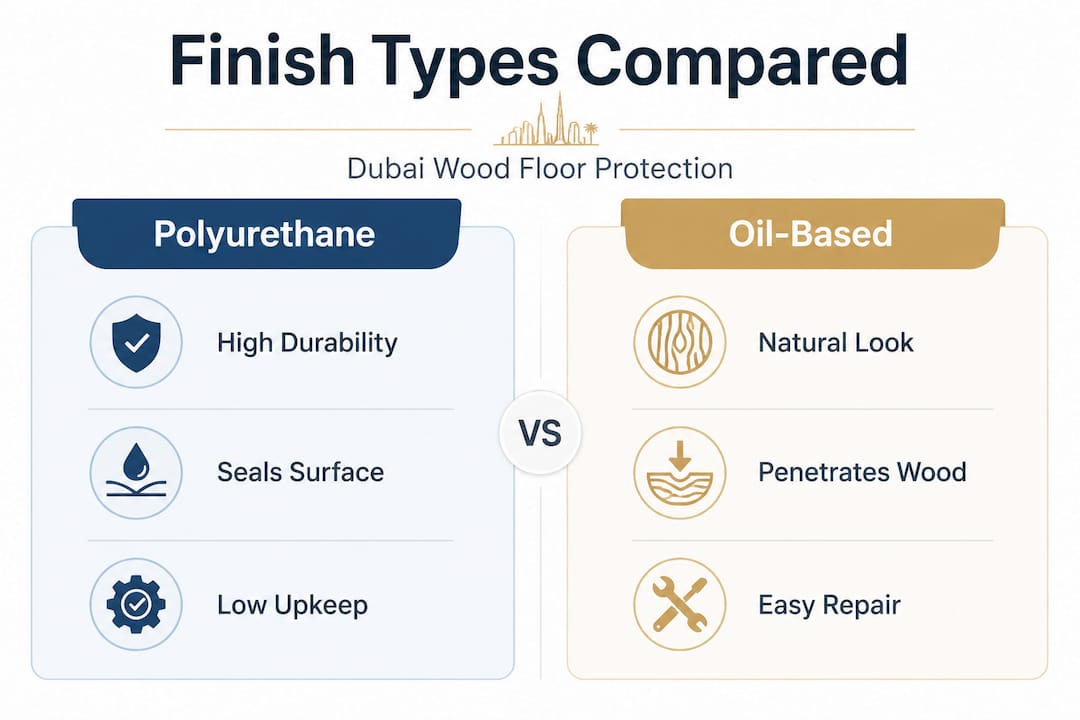
Polyurethane finishes form a hard protective film on top of the wood, making them ideal for Dubai’s high-traffic villas and apartment common areas. They resist spills, sand abrasion, and daily wear extremely well. The tradeoff is that when they do get damaged, spot repairs are difficult because new polyurethane does not blend seamlessly with aged finish.
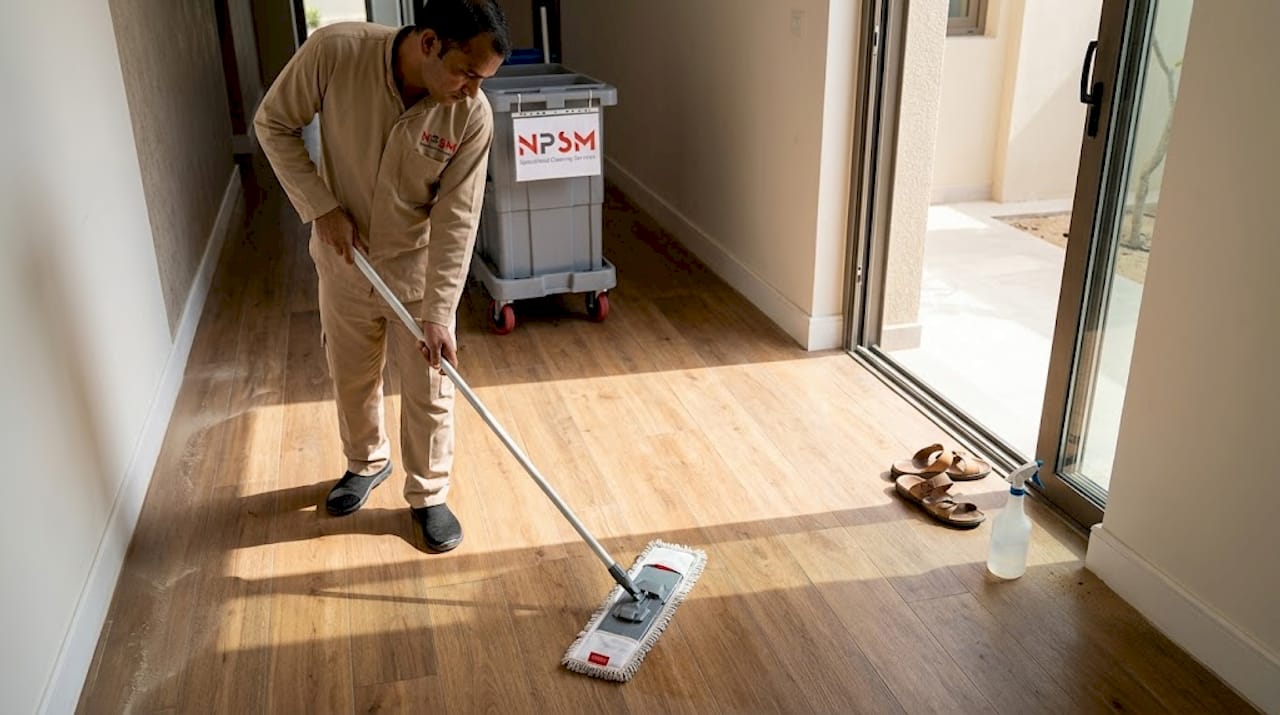
Oil finishes work differently. They penetrate the wood fibers and nourish the wood from within, which is why they feel more natural underfoot. In Dubai’s humid climate, penetrating oils nourish wood effectively, but polyurethane seals better against spills and moisture intrusion. For luxury bedrooms and low-traffic living areas, oils create a beautiful, organic look that many high-end designers prefer.
Pro Tip: Before applying any new finish, test the existing finish type by placing a few drops of water on an inconspicuous area. If the water beads up, you likely have a polyurethane or similar film finish. If it soaks in, you have an oil or wax finish. Applying the wrong product over an incompatible existing finish can cause peeling and costly damage. Always test before you treat.
Water-based polyurethane is increasingly preferred for luxury Dubai interiors because it dries clear without the amber tint of oil-based versions, dries faster, and has significantly lower VOC emissions. This matters in enclosed air-conditioned spaces where fumes linger longer than in naturally ventilated homes.
To restore wooden floors that have lost their protective finish, professional assessment is always the safest starting point before choosing a new finish type.
Long-term maintenance and restoration: Preventing damage before it starts
Finally, to ensure lasting durability and preserve your luxury investment, ongoing maintenance and timely restoration are essential. The most expensive floor repairs in Dubai almost always trace back to neglected maintenance, not unavoidable accidents.
Here is a practical maintenance timeline that works for Dubai’s luxury properties:
| Frequency | Task | Purpose |
|---|---|---|
| Daily | Dry sweep or dust mop | Remove sand and grit before abrasion occurs |
| Weekly | Damp mop with pH-neutral cleaner | Remove surface oils and fine dust |
| Monthly | Check and replace furniture pads | Prevent scratches from worn pads |
| Every 6 months | Inspect finish for wear, check humidity levels | Catch early signs of damage |
| Annually | Professional cleaning and polish | Restore sheen and add protective layer |
| Every 3-5 years | Professional recoating or refinishing | Renew protective finish before damage penetrates |
| As needed | Spot repair, sanding, full restoration | Address damage before it spreads |
Following proper floor care routines prevents the majority of damage that leads to expensive restoration. The key insight here is that restoration costs increase exponentially the longer damage is left unaddressed. A surface scratch costs almost nothing to buff out. That same scratch, ignored for a year, can allow moisture to penetrate and cause structural damage that requires full board replacement.
Signs that your Dubai wood floors need professional attention include:
-
Visible dullness that does not improve after cleaning, indicating finish depletion
-
Deep scratches that have broken through the protective finish layer
-
Water stains or dark spots showing moisture has penetrated the wood
-
Surface peeling or flaking indicating finish failure
-
Gaps between boards caused by humidity fluctuation and wood movement
-
Squeaking or movement under foot pressure, suggesting subfloor issues
-
Discoloration or fading from UV exposure through windows
Subfloor moisture testing is critical in Dubai because the building foundation can hold residual moisture that slowly damages wood from below. This is a step many installers skip, and it is a leading cause of premature floor failure in the region.
Professional resurfacing wooden floors can reverse years of accumulated wear without replacing the floor entirely. For truly damaged floors, floor refinishing for luxury interiors restores both the appearance and structural integrity of the wood. Understanding when to clean, when to recoat, and when to refinish saves significant money over the life of the floor. For comparison, even materials like marble require regular maintenance to stay beautiful, and wood is no different.
Dubai luxury floors: The realities most guides ignore
Here is something most floor care guides will not tell you: the majority of serious wood floor damage in Dubai happens before the floor is ever walked on.
Improper acclimation during installation is the number one cause of premature failure we see in luxury properties. Wood needs time to adjust to the specific humidity and temperature of the room it will live in. When installers skip this step to meet a deadline, the wood expands or contracts after installation, causing gaps, buckling, or cracked boards within months. No amount of maintenance can fix a floor that was installed wrong.
The second reality is that luxury property managers often fall into a false economy trap. They invest heavily in expensive wood species and custom finishes, then cut corners on ongoing maintenance because it feels like an unnecessary expense. The result is that a floor worth tens of thousands of dirhams gets destroyed by neglect that would have cost a few hundred dirhams per year to prevent.
We have seen this pattern repeatedly. A quick fix with the wrong cleaning product strips the finish. The owner notices the floor looks dull and applies another quick fix product. Within two years, the finish is so compromised that full sanding and refinishing is the only option. Understanding wooden floor polishing costs upfront helps property owners budget for proper maintenance rather than being surprised by restoration bills.
The uncomfortable truth is that protecting luxury wood floors in Dubai is not about finding the perfect product. It is about consistency. The homeowners and property managers whose floors look incredible after ten years are not using secret formulas. They are doing simple things correctly, every week, without exception.
Polished results: Protect your wood floors with Dubai experts
If you are ready to move from reactive repairs to proactive protection, working with a local expert team makes the process straightforward and cost-effective. Our floor restoration and polishing services are designed specifically for Dubai’s climate and the demands of luxury residential and commercial properties. Whether your floors need a full restoration, a protective recoat, or a customized ongoing maintenance program, our specialists assess your specific situation and recommend exactly what is needed, nothing more. Explore our wooden floor polishing services or review our step-by-step floor polishing guide to understand what professional care involves before booking your first inspection.
Frequently asked questions
What is the most effective wood floor protection method in Dubai?
Combining daily dry cleaning, entry mats, and a high-quality finish like polyurethane provides optimal protection against sand, humidity, and heavy use. Daily dry sweeping and entry mats are the two habits that prevent the most damage at the lowest cost.
How do I choose between polyurethane and oil finishes?
Polyurethane is more durable and low-maintenance, making it ideal for high-traffic areas, while oils are easily repairable and suit low-traffic luxury spaces but need periodic reapplication. Polyurethane vs. oil finishes each serve different needs, so the right choice depends on how the space is used.
Can wood floor protection extend lifespan in Dubai luxury properties?
Yes, regular maintenance and appropriate finishes prevent early damage and keep floors pristine for years, especially in high-end locations. Acclimation and moisture testing during installation are equally critical for long-term performance in Dubai’s climate.
What signs indicate my Dubai wood floors need restoration?
Look for dullness, deep scratches, water stains, or surface peeling because these signal it is time for professional restoration or refinishing. Consistent daily care prevents most of these issues from developing in the first place.