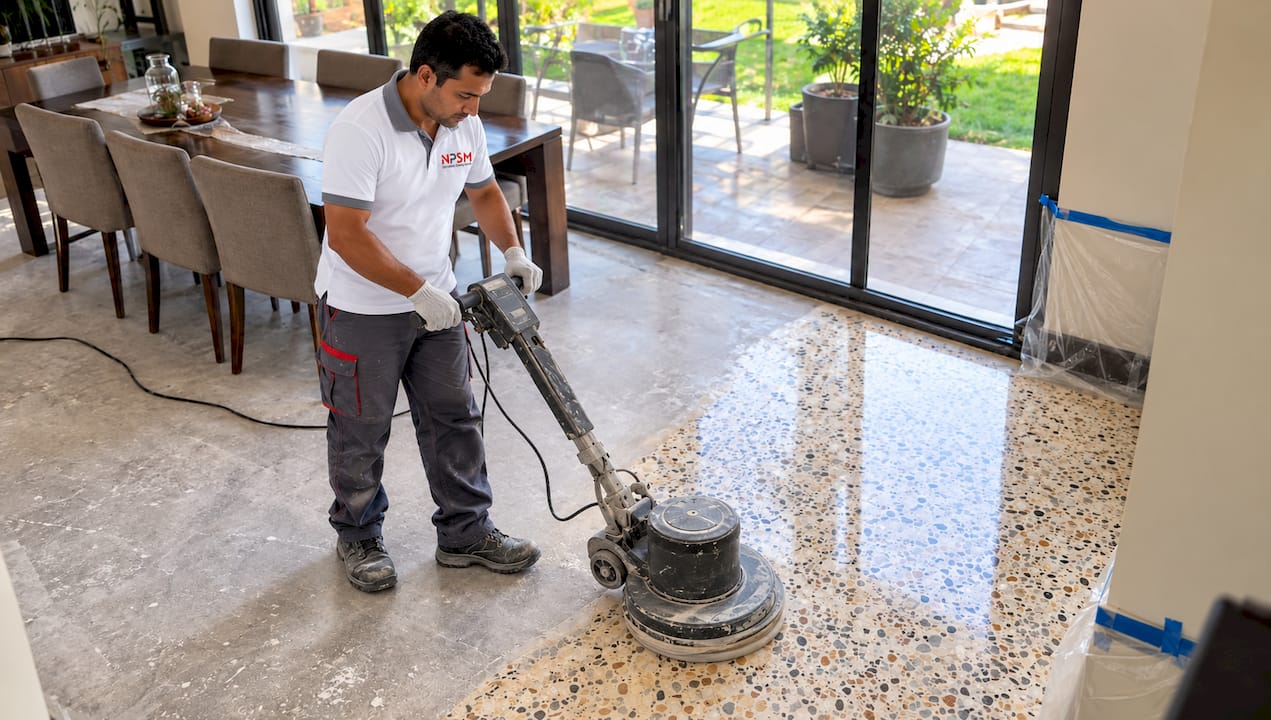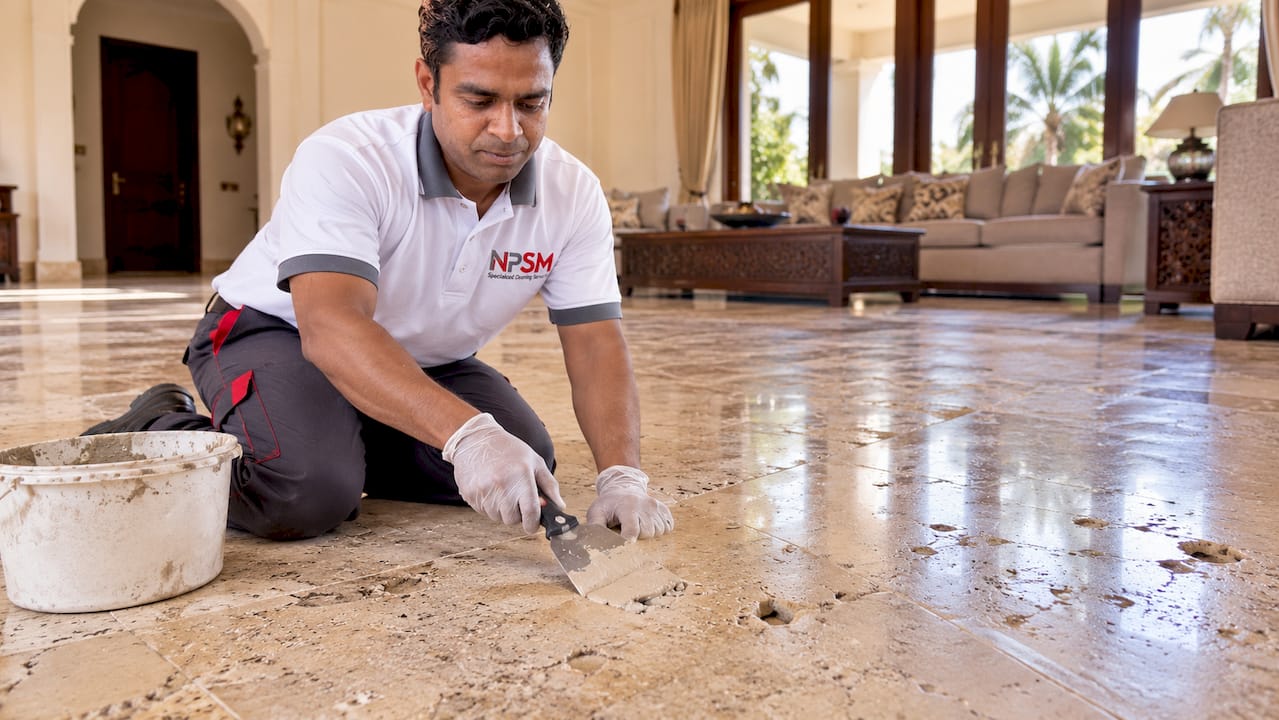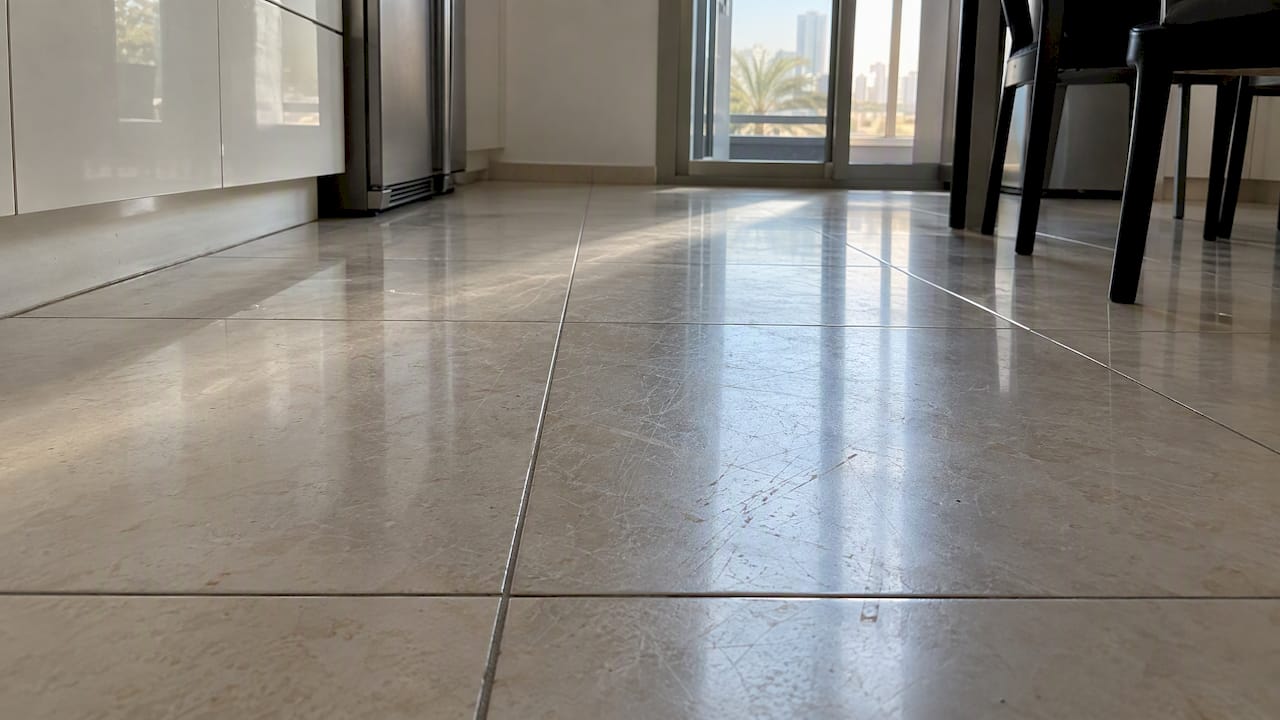

Sometimes, yes. Dull patches, light scuffs and fine micro-scratches on porcelain and ceramic tiles can often be improved, and in some cases removed, by professional honing and polishing. Deep scratches that cut through the glaze usually cannot be polished out, and in that case an honest contractor will tell you so before starting. What decides the outcome is the depth of the damage and the type of tile, not how bad the floor looks from across the room.
This guide is written for Dubai villa, apartment and building owners, property managers and fit-out teams who are deciding whether to restore a tile floor or replace it. It explains how to sort scratches into repairable and not repairable, what professional restoration involves, which home fixes cause more harm than good, and when replacement is the smarter spend.
TL;DR
- Light scuffs, haze and fine surface scratches on porcelain and ceramic can often be restored with diamond honing and polishing. Deep scratches that go through the glaze generally cannot.
- Run a fingernail across the mark. If your nail does not catch, the damage is likely shallow and a good candidate for restoration. If it catches, ask for an on-site assessment before spending anything.
- Never use car polish such as T-Cut, steel wool, bleach, acid or ammonia on tile. These are the most common ways a fixable floor becomes an unfixable one.
- Polishing is a cosmetic process and can change the surface, including slip resistance on some tiles, so the finish should be matched to the room.
- Restoration is usually far cheaper and less disruptive than ripping up and relaying a floor, as long as the tile is a viable candidate.
Table of Contents
- Why the answer depends on the scratch, not just the tile
- The fingernail test: sorting your scratches before you call anyone
- Polished, glazed or unglazed: why tile type changes the outcome
- What professional restoration actually involves
- Home fixes: what helps and what makes it worse
- Does polishing change how the tile performs?
- What affects the cost in Dubai
- Our perspective
- When replacement is the honest answer
- Keeping the floor from scratching again in Dubai
- Get your tile floor assessed
- FAQ
Why the answer depends on the scratch, not just the tile
Porcelain and ceramic tiles are hard, but they are scratch-resistant, not scratch-proof. The usual culprit in the UAE is not furniture or heels. It is fine sand and grit carried in on shoes and by wind through balcony doors, which acts like sandpaper under foot traffic. Over months, it dulls the surface in the lines people walk most: the entrance, the corridor, the path from kitchen to living room.
That dulling is the first thing to understand. A floor that looks scratched all over is often not deeply scratched at all. It has thousands of microscopic abrasions that scatter light, so the shine looks flat. This kind of wear sits in the top layer of the surface and is the kind that diamond honing and polishing handles well.
A true scratch is different. It is a single line you can feel, caused by dragging something heavy, a dropped tool, a metal furniture leg or a pool-side trolley. If it has gone through the thin glaze on a glazed tile, there is nothing left to polish: you would be grinding into the body of the tile beneath.
So the same floor can contain three different problems:
- Haze and dullness from grit and the wrong cleaning products.
- Fine scuffs and micro-scratches in the surface.
- A few deep gouges or chips.
The first two are normally restorable. The third is a repair or replacement question.
The fingernail test: sorting your scratches before you call anyone
You do not need tools to get a rough first answer. Clean and dry the area, then look at it from a low angle with a torch or phone light. Drag a fingernail gently across the mark, at a right angle to it.
| What you see and feel | What it probably is | Likely outcome |
|---|---|---|
| Dull, cloudy patch, nothing to feel | Surface wear or residue from cleaners | Good chance of full restoration |
| Fine hairline marks, nail does not catch | Micro-scratches in the surface layer | Often improved or removed by honing and polishing |
| Visible line, nail catches slightly | Deeper scratch, may be at the glaze limit | Needs on-site assessment, results vary |
| Nail catches clearly, different color showing inside the line | Glaze breached, tile body exposed | Polishing will not fix it; repair or replace the tile |
| Chip, crack or missing corner | Structural damage | Tile repair or replacement |
One caution on the test: a mark that looks like a scratch may be a metal transfer or a scuff from a rubber sole sitting on top of the surface. A neutral cleaner and a soft cloth will sometimes remove these entirely. Always try the gentlest option first, but keep it to products made for tile.
Polished, glazed or unglazed: why tile type changes the outcome
The label on the box matters more than most owners expect.
Full-body polished porcelain
This tile has the same material all the way through, and the shine comes from polishing the surface at the factory. Because there is no thin decorative layer to break through, there is more material available to work with. Light to moderate scratching can often be honed out, and the shine rebuilt with progressively finer diamond abrasives. It is generally the most forgiving candidate.
Glazed polished porcelain and ceramic
Here the pattern and shine sit in a thin glassy layer fused on top of the tile. The glaze is the limit. Light surface marks can be refined, but anything that has worn through the glaze shows the body of the tile underneath, and that cannot be undone. This is where an assessment matters most, and where reputable restorers decline jobs rather than take your money for a result they cannot deliver.
Matte and textured tiles
Matte floors hide scratches better, but they show wear differently, with shiny burnished patches in traffic lanes. Restoring them is less about polishing and more about deep cleaning and, sometimes, a careful resurfacing. Aggressive polishing can turn a matte floor patchy and glossy, which is rarely what the owner wants.
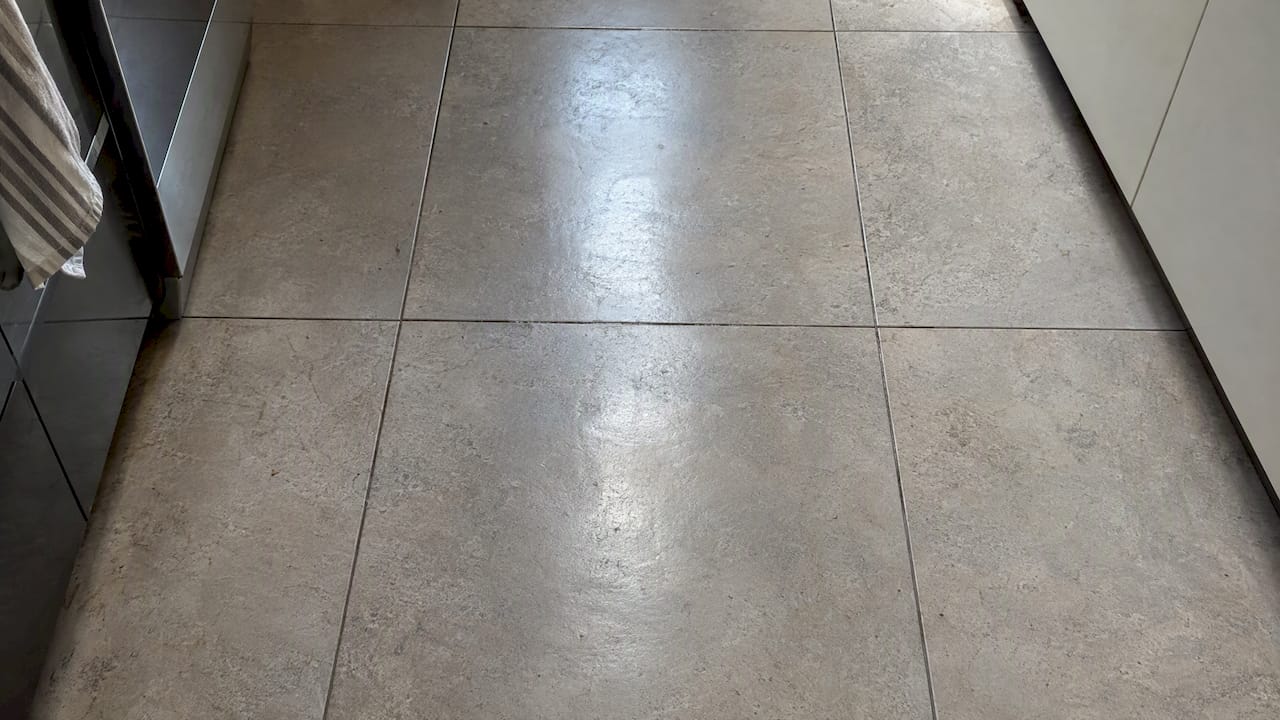
The factory shine is hard to match exactly
The gloss on a new polished tile is applied under factory conditions. Restoring it on site can bring a floor close to the original, but a perfect match is not something to expect on every tile. A sensible expectation is an even, clean, good-looking finish across the whole floor, rather than an identical copy of day one. Restoring the whole area, rather than spot-polishing one scratch, is what keeps the result uniform.
What professional restoration actually involves
A proper tile restoration is a sequence, not a single pass with a machine.
- Inspection. The surface is assessed for scratch depth, tile type, glaze condition, lippage (uneven tile edges) and grout condition. This is also where the decision is made on whether honing is safe.
- Deep cleaning. Grease, sealer residue and ground-in dirt are removed with pH-appropriate products so the abrasives are cutting the tile and not the dirt.
- Grinding or honing where needed. Diamond abrasives, starting at the coarseness the damage requires and no coarser, remove the damaged top layer in a controlled way.
- Progressive polishing. Finer and finer grades rebuild a consistent surface and shine.
- Grout work. Discolored or cracked grout lines are cleaned, repaired or re-grouted, because a restored tile next to tired grout still looks old.
- Sealing and protection. Where the tile type calls for it, a suitable sealer or protective treatment helps resist staining going forward.
The process is mechanical and needs control. Too much speed or too little water creates heat, and heat can damage a glaze permanently. That is why this is not a job for a rented floor machine and a weekend, and why test areas matter before a full floor is committed.
Home fixes: what helps and what makes it worse
The top search results for this question are full of home remedies. Some are harmless. Several are not.
Usually safe to try first
- A neutral, pH-balanced tile cleaner and a soft microfiber mop. Dullness is often residue from the wrong products, not damage.
- A soft cloth with a little water on a suspected scuff mark from a shoe or furniture.
- Consumer scratch-removal products made specifically for polished porcelain, used exactly as directed, and tested first on a spare tile or a hidden corner such as inside a wardrobe or under an appliance.
Avoid
- Automotive polish such as T-Cut. It is designed for car paint, not ceramic glaze. It can leave an uneven texture, a patchy shine or discoloration.
- Steel wool and abrasive pads. They add fine scratches of their own and leave metal fragments that can rust in grout lines.
- Bleach, ammonia, vinegar and other acidic or alkaline cleaners. They can alter grout color and break down sealers. Vinegar is a common mistake because it feels natural and gentle.
- Metal polish and household abrasive powders. They cut an uncontrolled surface and are very hard to correct afterward.
- Tile paint to hide scratches. It covers the problem, wears quickly in traffic lanes, and makes later professional restoration harder.
If you have a spare tile from the original installation, keep it. It is the best place to test any product, and your restorer will want it for reference.
Does polishing change how the tile performs?
Yes, it can, and a good restorer will talk to you about it. Polishing is a cosmetic process. On some tiles, particularly unglazed porcelain, it can change the surface texture, and that affects two things owners care about: how slippery the floor is when wet, and how easily it stains.
This matters most in bathrooms, kitchens, balconies, pool surrounds and hotel wet areas. A mirror finish looks beautiful in a dry living room but is the wrong choice for a shower floor. The right approach is to match the finish to the room: high gloss for dry reception areas, a satin or honed finish where grip matters. If you are managing a hospitality property, our hotel bathroom tile restoration guide covers how this plays out in guest bathrooms.
What affects the cost in Dubai
Tile restoration is quoted after someone looks at the floor, because scratch depth drives the work. We do not publish a fixed price for tile polishing, and you should be cautious of any quote given without an inspection. The main cost factors are:
- Area. Larger floors are cheaper per square meter because setup time is spread across more surface.
- Severity. Light dullness needs fewer abrasive steps than a floor with widespread scratching.
- Tile type. Full-body porcelain, glazed porcelain, ceramic and matte finishes each need a different approach.
- Grout condition. Re-grouting adds time and materials.
- Access. Furniture moving, stairs, multiple rooms and building rules for working hours all affect scheduling.
- Protection and sealing. Whether a sealer is applied afterward changes the scope.
As a reference point for natural stone, our marble polishing cost guide shows how published rates and on-site factors combine. Tile follows the same logic, but quotes depend on the inspection.
The real comparison is against replacement. Replacing tile means demolition, dust, disposal, new material that may be discontinued or a different shade, relaying, and weeks without the room. Restoration is normally a matter of days and leaves the existing floor in place, which matters for occupied villas, serviced apartments and operating hotels.
Our perspective
The most useful thing we can do for a property owner is to say no when restoration will not work. Tile is not marble. A natural stone floor has depth to work with, and diamond honing can take it back a long way. A glazed tile has a limit, and once you reach it, more grinding only exposes the body of the tile and creates a problem you cannot reverse.
So we start every tile job with an assessment, not a promise. We look at the scratch depth, the tile type and the grout. We test a small area where there is doubt. We use professional diamond polishing systems and match the abrasive and the pad to the hardness of the tile, rather than running one method across every floor.
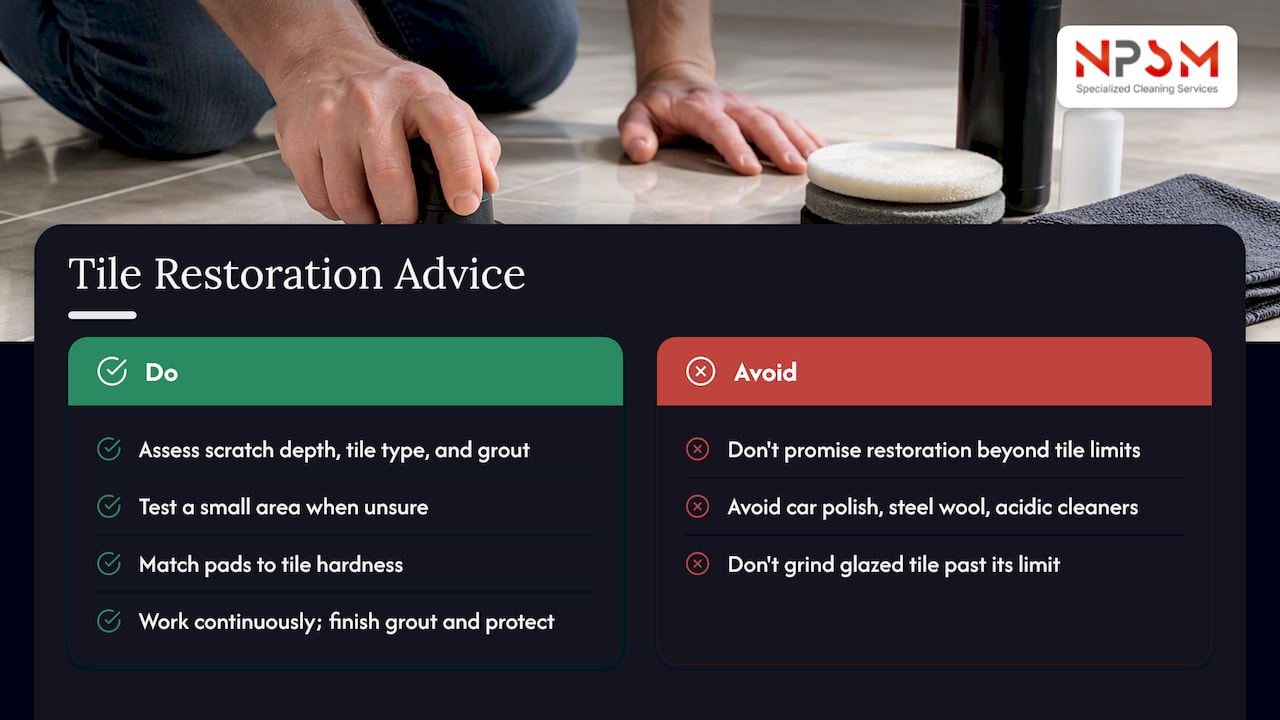
The second thing we see often in Dubai is owners who tried to fix the floor first. Car polish, steel wool and acidic cleaners turn up regularly, and each one makes the job harder. If you are not sure, stop, clean with a neutral product and call before you try anything else.
Third, we think about the whole floor. A single restored patch beside untouched tile will look worse than the original scratch. Evenness is the goal, so we recommend working in continuous areas, finishing the grout, and protecting the surface afterward. Restoration done this way costs less than replacement and keeps the floor you chose in the first place.
— Qadir
When replacement is the honest answer
Restoration is not always right. Consider replacing tiles when:
- The glaze is breached and the tile body shows through across a wide area.
- Tiles are cracked, hollow-sounding or lifting, which points to a bonding or substrate problem that polishing cannot fix.
- The damage is concentrated in a few tiles. Replacing those individually can be cleaner than treating the whole floor, provided you have spares or a close match.
- The tile has a printed pattern or decorative layer that polishing would remove.
For a few damaged tiles in an otherwise good floor, a hybrid often works well: replace the worst ones, then restore the whole area so everything blends. A good restorer will tell you which route costs less for your specific floor, even if it is not the bigger job.
Keeping the floor from scratching again in Dubai
Prevention is cheaper than any restoration, and the habits are simple.
- Put doormats inside and outside every entrance, including balcony and terrace doors. Sand is the main cause of micro-scratches.
- Dry-dust or vacuum before you mop. Mopping grit around is the same as scrubbing with sandpaper.
- Use only neutral, pH-balanced cleaners. Harsh products strip sealers and leave films that dull the surface.
- Fit felt pads under furniture, and lift rather than drag heavy items. This matters in moves, renovation handovers and holiday-home turnarounds.
- Choose soft wheels on office chairs, trolleys and luggage carts in commercial spaces.
- Schedule periodic professional cleaning in high-traffic buildings, before wear becomes deep scratching. For a workflow that suits premium properties, see our tile floor cleaning workflow for luxury properties in Dubai.
For landlords and holiday-home owners, a pre-handover restoration between tenants or guests is often the most cost-effective way to protect the property’s presentation and rental value.
Get your tile floor assessed
If you have scratched or dull porcelain or ceramic tiles in a villa, apartment, office, hotel or retail space, our team can inspect the floor, tell you whether restoration is realistic, and explain the finish we would recommend. Our tile polishing services in Dubai cover ceramic and porcelain tile polishing, deep cleaning and re-grouting. If your property has a mix of tile and stone, see the full list on our services page, or check the areas we serve across Dubai.
FAQ
Can you remove scratches from porcelain tile?
Light scratches and scuffs that sit in the surface can often be removed or greatly reduced by professional honing and polishing. Deep scratches that have gone through the glaze generally cannot be polished out, because there is no surface left to refine. A fingernail test and an on-site inspection will tell you which category you are in.
Does T-Cut get rid of scratches on tile?
We do not recommend it. T-Cut and similar compounds are made for car paint, not ceramic glaze. They can leave uneven texture or discoloration and make professional restoration harder. If you want to try a product yourself, use one made for polished porcelain and test it on a spare tile first.
How do I bring back the shine on porcelain tiles?
Start by cleaning with a neutral pH cleaner, because a dull look is often residue rather than damage. If the shine is still flat, the surface likely has widespread micro-scratches from grit, and it needs diamond polishing to rebuild an even finish. Avoid wax, oil-based products and acidic cleaners, which cloud the surface.
What should you not use on porcelain tiles?
Avoid steel wool, abrasive pads, bleach, ammonia, vinegar, other acidic or alkaline cleaners, and automotive polishes. They can scratch the surface, discolor grout, break down sealers or leave a patchy finish. A soft mop and a neutral tile cleaner are the safe baseline.
Is it cheaper to restore tiles or replace them?
When the tile is a viable candidate, restoration is usually cheaper and faster than replacement, because it avoids demolition, disposal, new material and relaying. If the glaze is breached across a wide area or tiles are cracked or loose, replacement may be the better value. An assessment will show which applies to your floor.