
TL;DR:
- Premium floor polish features cross-linked polymers that provide superior wear resistance and gloss retention. Proper surface compatibility and application techniques are crucial for achieving lasting results in Dubai’s high-traffic environments. Regular burnishing and maintenance extend the polish’s lifespan and ensure consistent appearance.
Premium floor polish is defined as a film-forming protective coating that bonds to a floor surface to deliver gloss, wear resistance, and a barrier against staining and scuffing. For homeowners and property managers in Dubai, choosing the right product matters more than most realize. Marble, concrete, vinyl, and terrazzo floors face intense foot traffic, humidity, and dust that accelerate surface wear. Understanding the qualities of premium floor polish helps you protect that investment before damage sets in. Brands like Zep, Betco, and PROSOCO each approach floor finish chemistry differently, and those differences show up directly in how long your floors stay beautiful.
1. What durability features define a premium floor polish?
Durability is the single most important quality in any high-quality floor polish. Without it, every other feature becomes irrelevant within weeks.
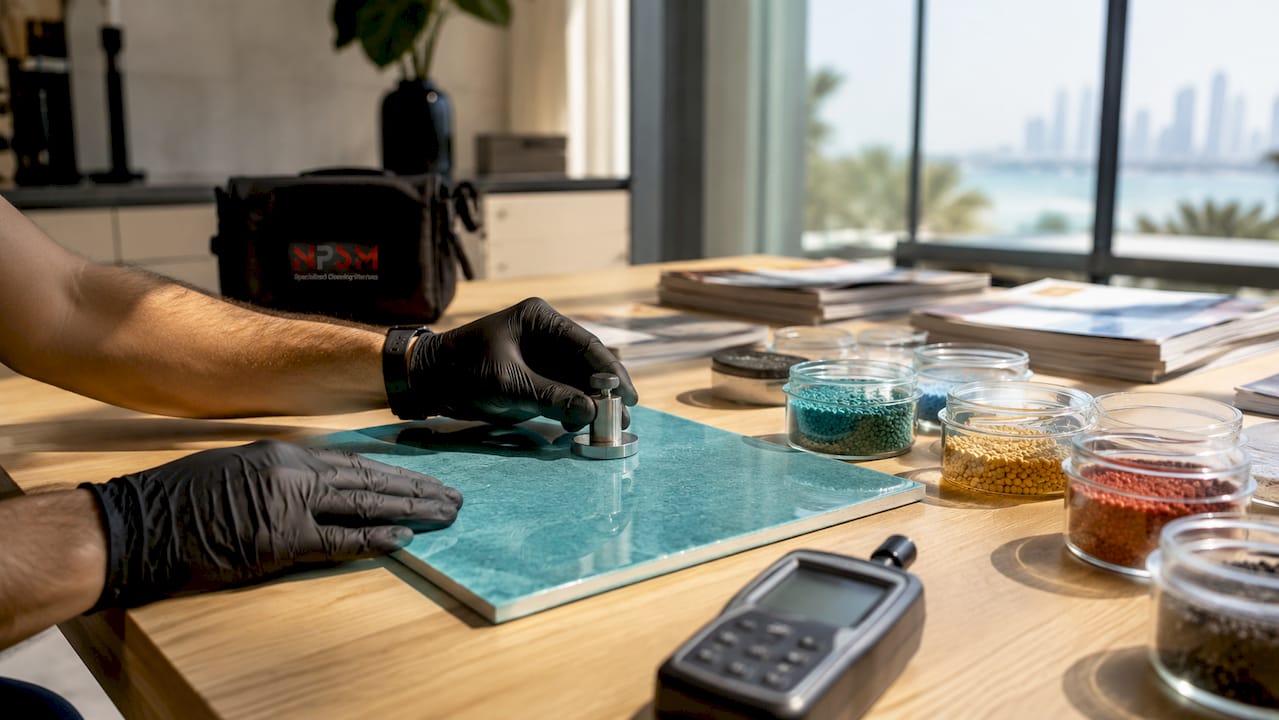
The common assumption is that a higher solids percentage means a more durable finish. That assumption is wrong. Formulation quality and polymer cross-linking matter more than solids content alone. A polish with 25% solids and well-engineered cross-linked polymers will outlast a 30% solids product with poor formulation chemistry. Betco makes this point clearly: the balance of ingredients and how they interact under foot traffic determines real-world performance.
Cross-linking is the process by which polymer chains bond together to form a harder, more resilient film. That film resists abrasion, scuffing, and chemical attack far better than a simple film-forming finish. In Dubai’s high-traffic villas, hotel lobbies, and retail spaces, that difference shows up within the first month of use.
-
Polymer cross-linking: Creates a harder film that resists abrasion and chemical wear.
-
Formulation balance: The ratio of resins, plasticizers, and wax determines flexibility and adhesion.
-
Solids content: Contributes to coat thickness but does not guarantee durability on its own.
-
Maintenance cycle: Even the best polish degrades without regular burnishing and thin recoat schedules.
Pro Tip: Ask your supplier for the polymer technology behind any polish, not just the solids percentage. Cross-linked acrylic or zinc-free formulations typically outperform basic acrylic finishes in high-traffic Dubai properties.
2. How does gloss retention set premium floor polish apart?
Gloss retention is what separates a premium floor finish from a basic one after the first two weeks of use. Any polish looks good on day one. The question is how it looks on day 60.
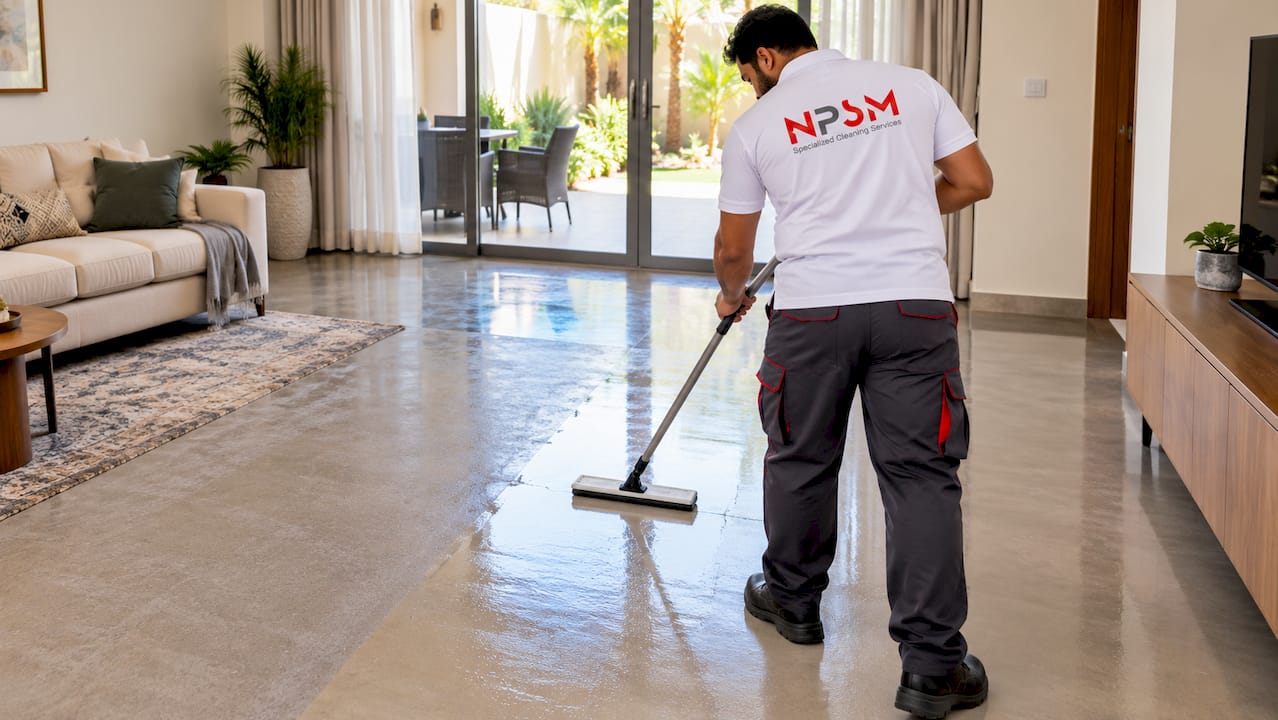
Products like ZepImage wet-look polish deliver a bright, wet-look gloss that resists scuffs and black heel marks. That finish supports ultra-high-speed burnishing, which restores shine without stripping and recoating. The result is a floor that looks freshly polished between full maintenance cycles. PROSOCO PolishGuard takes a different approach on concrete and terrazzo, using UV-stable chemistry that prevents yellowing over time.
Application technique directly affects gloss quality. Thin, even coats with proper dry times between layers produce a clearer, deeper finish than thick single coats. Four thin coats applied 15–20 minutes apart create a more durable and glossier result than two heavy coats. Film thickness also matters: too thin and the finish wears through quickly; too thick and it clouds or peels.
-
Wet-look finish: Achieved through high-gloss polymer formulations that reflect light evenly.
-
Burnishing compatibility: Premium polishes respond well to high-speed burnishing without hazing.
-
UV stability: Products like PROSOCO PolishGuard resist yellowing under Dubai’s intense sunlight.
-
Scuff resistance: Cross-linked films deflect heel marks and dragged furniture better than basic finishes.
3. Why floor compatibility is critical for premium polish success
Applying the wrong polish to the wrong surface is the fastest way to waste money and damage a floor. Compatibility testing before application prevents poor adhesion, peeling, and premature failure. This step is non-negotiable for Dubai properties with mixed flooring materials.
Dubai homes and commercial properties commonly feature marble, polished concrete, vinyl composite tile, terrazzo, and sealed natural stone. Each surface has a different porosity and surface chemistry. A film-forming polish designed for vinyl will not bond correctly to unsealed marble. A penetrating sealer suited for porous concrete will sit on top of a sealed surface and peel within days. Knowing whether your floor needs a film-forming polish or a penetrating sealer is the first decision to make before purchasing any product.
-
Identify your floor type. Marble, concrete, vinyl, and terrazzo each require different polish chemistry. Misidentifying the substrate leads to adhesion failure.
-
Check existing coatings. If a previous polish or sealer is already on the floor, the new product must be chemically compatible with it.
-
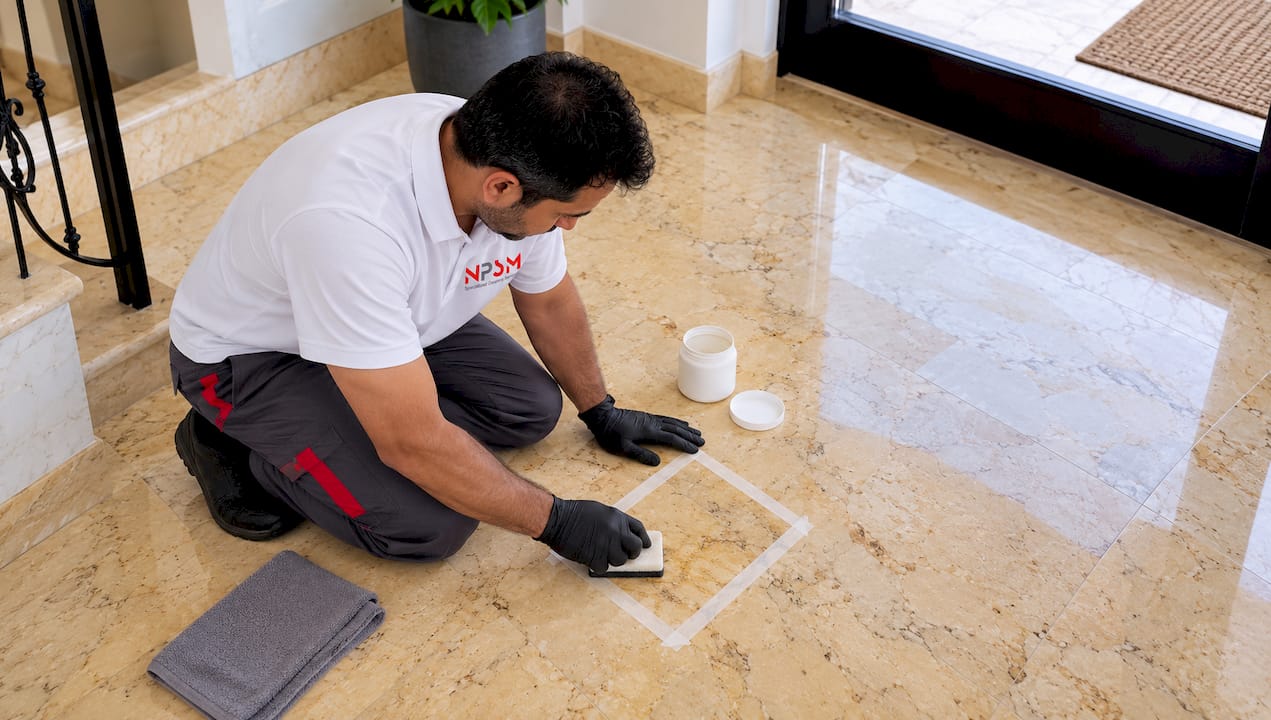
Perform a test patch. Apply the polish to a small, low-visibility area and allow it to cure fully before committing to the full floor.
-
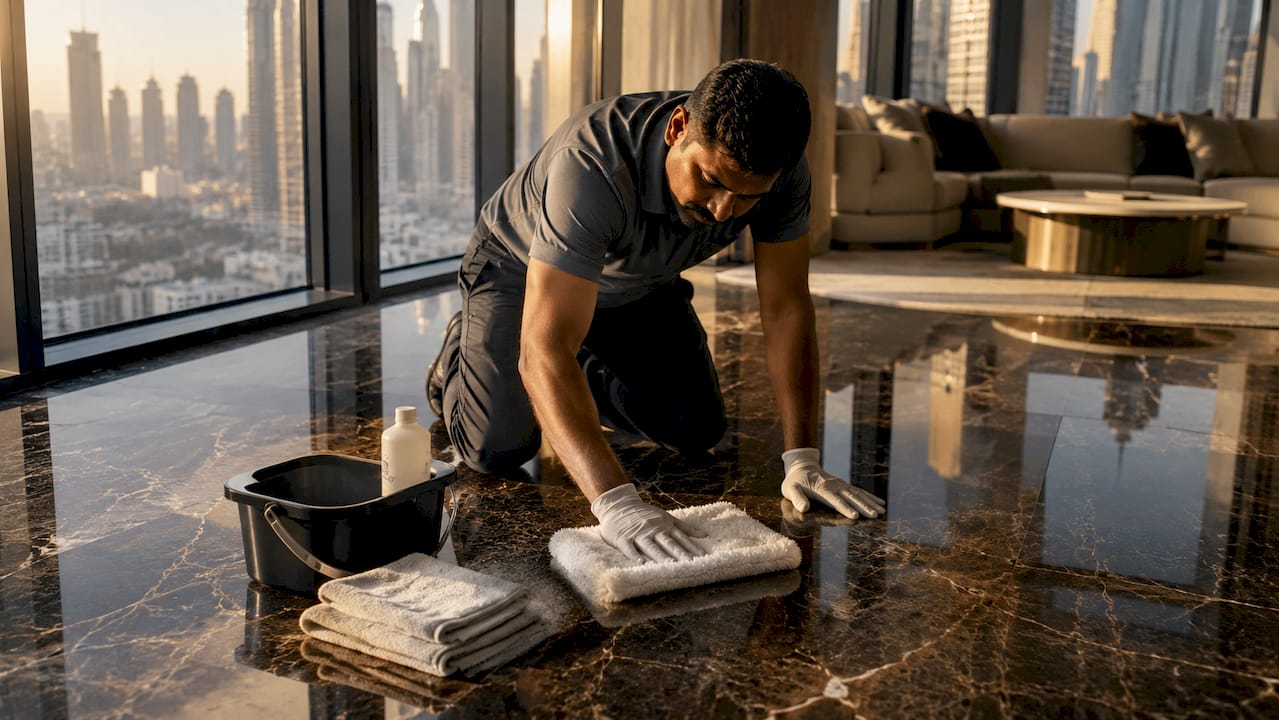
Consult surface-specific guides. For marble floors in Dubai, the marble polishing approach differs significantly from vinyl or concrete treatment.
-
Strip incompatible finishes first. Applying a new polish over a chemically incompatible existing coat guarantees failure regardless of product quality.
For vinyl floors specifically, the decision between DIY and professional application carries real consequences. A professional vinyl floor polishing service ensures the substrate is properly prepared before any product is applied.
4. What maintenance and safety features do premium polishes provide?
Premium floor polishes reduce labor costs and operational disruption. That is a concrete financial benefit, not just a marketing claim.
Water-based polishes dry faster and produce less odor than solvent-based alternatives. For occupied Dubai apartments, hotel corridors, or retail stores, a 15–20 minute dry-to-reopen interval means floors are back in service quickly. Solvent-based products offer longer wear in extreme traffic conditions but require ventilation and longer closure times. The right choice depends on your operational constraints, not just the product’s performance specs.
Slip resistance is a safety feature that premium polishes must deliver. A high-gloss finish that becomes slippery when wet creates liability in any commercial or residential setting. Top-rated floor polishes balance gloss with a surface texture that maintains traction under foot traffic.
| Feature | Water-based polish | Solvent-based polish |
|---|---|---|
| Dry time | 15–20 minutes per coat | Longer, requires ventilation |
| Odor | Low, suitable for occupied spaces | Strong, needs air circulation |
| Wear resistance | Good for moderate traffic | Higher for extreme traffic |
| Best use | Apartments, hotels, retail | Industrial, heavy-use floors |
| Slip resistance | Varies by formulation | Varies by formulation |
Pro Tip: In Dubai’s climate, water-based polishes perform well year-round in air-conditioned interiors. Reserve solvent-based products for outdoor-adjacent or industrial spaces where ventilation is available and traffic is extreme.
5. How do leading premium floor polishes compare on key features?
Choosing between top-rated floor polishes requires comparing the features that actually affect your floor’s performance and your maintenance workload.
Burnishing routines and layered maintenance are the key to preserving a wet-look gloss over time. Zep recommends burnishing 2–3 times per week to maintain gloss and reduce the frequency of full strip-and-recoat cycles to every 12–24 months. That schedule dramatically cuts labor costs compared to polishes that require monthly stripping. PROSOCO PolishGuard covers 400–2,000 square feet per gallon depending on surface porosity, with 15% solids and a VOC level of 100 g/L, making it suitable for occupied spaces in Dubai.
| Product | Solids content | Coverage | Dry time | Best for |
|---|---|---|---|---|
| ZepImage | Not publicly listed | 2,000–2,500 sq ft/gal | 15–20 min/coat | Vinyl, resilient tile |
| PROSOCO PolishGuard | 15% | 400–2,000 sq ft/gal | Fast drying | Concrete, terrazzo |
| Betco formulations | Varies by product | Varies by product | Varies | Multiple substrates |
A premium polish’s real quality shows up in real-world performance and ease of maintenance, not ingredient percentages. Cost-per-square-foot calculations should include labor, burnishing frequency, and stripping intervals, not just the product price per gallon. A less expensive polish that requires monthly stripping costs more over a year than a premium product with a 24-month cycle.
Key takeaways
Premium floor polish performance depends on polymer technology, surface compatibility, and consistent maintenance, not solids content alone.
| Point | Details |
|---|---|
| Polymer cross-linking beats solids percentage | Choose polishes with cross-linked polymer technology for real durability in high-traffic areas. |
| Compatibility testing prevents failure | Always test on a small area before full application to avoid adhesion problems and peeling. |
| Thin coats outperform thick ones | Apply four thin coats with 15–20 minute dry times for a deeper, longer-lasting gloss. |
| Burnishing extends finish life | Burnishing 2–3 times weekly maintains gloss and delays costly strip-and-recoat cycles. |
| Water-based polishes suit Dubai interiors | Fast dry times and low odor make water-based products the practical choice for occupied spaces. |
What I’ve learned about floor polish in Dubai properties
The biggest mistake I see property managers make is choosing a polish based on the solids percentage on the label. That number is almost meaningless without understanding the polymer chemistry behind it. A well-formulated product with lower solids will outlast a poorly formulated one with higher solids every time.
Dubai’s climate adds a layer of complexity that most product guides ignore. Air-conditioned interiors create low-humidity conditions that can affect how a polish film cures and bonds. Floors near entryways face a cycle of dust, sand, and occasional moisture that accelerates surface wear. The signs of quality floor polishing in a Dubai property are specific: even sheen, no clouding near edges, and no peeling at high-traffic transition points.
My honest recommendation is this: match your maintenance capacity to your polish choice before you buy. A premium polish that requires burnishing three times a week delivers excellent results only if you have the equipment and staff to do it. If you don’t, a product with a simpler maintenance schedule will serve your floors better in practice. Professional application, especially for marble and natural stone, removes the guesswork entirely and produces results that DIY application rarely matches.
— Qadir
Professional floor polishing in Dubai: get the finish right the first time
Selecting the right polish is only half the equation. Proper surface preparation, application technique, and ongoing maintenance determine whether that polish performs as advertised. NPSM Specialized Cleaning Services LLC applies professional-grade products to marble, vinyl, concrete, terrazzo, and wooden floors across Dubai’s villas, apartments, hotels, and commercial spaces. Their team handles substrate assessment, compatibility checks, and multi-coat application with the equipment needed to deliver a consistent, lasting finish. For property managers and homeowners who want results without the trial and error, their floor polishing services in Dubai cover every floor type with a maintenance plan built around your property’s specific demands.
FAQ
What makes a floor polish “premium”?
A premium floor polish uses cross-linked polymer technology that delivers superior wear resistance, gloss retention, and adhesion compared to basic acrylic finishes. Real-world performance and ease of maintenance define quality more reliably than solids percentage alone.
How often should premium floor polish be reapplied in Dubai?
With regular burnishing 2–3 times per week, a premium polish system typically requires a full strip-and-recoat cycle only every 12–24 months. Dubai’s high foot traffic and dust levels may shorten that interval without consistent maintenance.
Can I use the same polish on marble and vinyl floors?
No. Marble and vinyl require different polish chemistry. Applying a vinyl-formulated product to marble causes adhesion failure, and vice versa. Always match the product to the specific substrate and perform a compatibility test before full application.
Is water-based or solvent-based polish better for Dubai homes?
Water-based polish is the better choice for most Dubai interiors. It dries in 15–20 minutes per coat, produces low odor, and performs well in air-conditioned spaces. Solvent-based products suit industrial or outdoor-adjacent areas where ventilation is available.
Does a higher solids percentage mean better durability?
No. Higher solids contribute to thicker coats but do not guarantee better durability or gloss. Polymer cross-linking and formulation balance are the factors that determine how long a finish holds up under real-world traffic conditions.