
TL;DR:
Luxury flooring in Dubai requires specialized maintenance to preserve appearance, lifespan, safety, and brand standards.
Proper, scheduled care can extend floor life from 5-7 years to 10-15 years, reducing costs.
Proactive, environment-specific strategies improve guest satisfaction and property value significantly.
Luxury flooring in a Dubai villa or hotel is not decoration. It’s a capital asset worth hundreds of thousands of dirhams, and its lifespan can literally double or shrink to half based entirely on how it’s maintained. A 200-room hotel floors investment runs between $800,000 and $2.4 million, yet most property managers treat daily cleaning as their primary strategy. That gap between what flooring costs and what maintenance actually delivers is where smart Dubai property managers win or lose money every single year.
Table of Contents
Key Takeaways
| Point | Details |
|---|---|
| Specialized services matter | Hospitality floor care combines advanced methods and schedules to protect high-value flooring assets. |
| Prevention beats repair | Structured maintenance doubles floor lifespan and slashes replacement costs. |
| Dubai’s challenges | Sand, humidity, and traffic require customized solutions beyond generic cleaning. |
| Expert care drives ROI | Flooring care excellence can boost guest satisfaction, reviews, and overall property revenue. |
What is hospitality floor care?
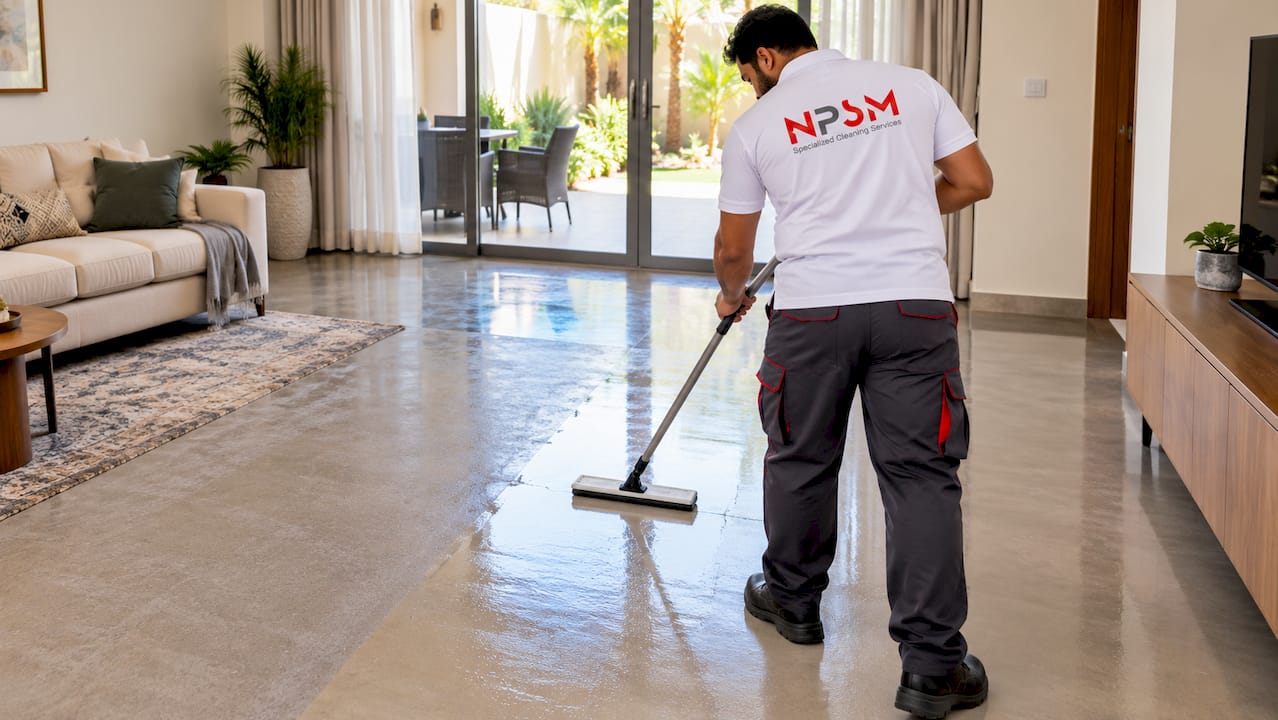
Hospitality floor care is not the same as hiring a cleaning crew three times a week. It is a structured, specialist discipline built around four distinct pillars: appearance, lifespan, safety, and brand compliance. Each one carries real financial weight.
According to industry standards, hospitality floor care refers to specialized maintenance and cleaning services for flooring in hotels, luxury villas, apartments, and commercial spaces designed to preserve appearance, extend lifespan, ensure safety, and meet brand standards amid high traffic and environmental challenges like Dubai’s sand and humidity. That’s a very different mandate than mopping a lobby.
The four core pillars every property manager needs to understand are:
-
Appearance: Flooring is the first sensory impression guests and residents form. Dull marble or stained carpet signals neglect instantly.
-
Lifespan: Proper care doubles the useful life of carpets and hard floors, directly reducing capital expenditure cycles.
-
Safety: Worn, slippery, or poorly maintained floors create liability exposure. Slip and fall incidents are a real legal risk in high-traffic areas.
-
Brand compliance: For managed properties and hotel brands, floor condition is inspected against specific standards. Failures cost contracts.
Dubai adds layers that most standard hospitality guidelines don’t address. Fine silica sand from the desert migrates indoors constantly. It behaves like slow sandpaper on polished marble and hard wood. Humidity spikes during summer months can warp wooden floors and promote mold beneath carpet backing if extraction methods aren’t thorough. These are not hypothetical risks. They are daily realities that professional floor care in Dubai must account for in every maintenance plan.
“The stakes in luxury hospitality are uniquely high. A single scuffed ballroom floor or a stained corridor carpet can cost a property its five-star rating during a brand audit.”
What separates hospitality floor care from generic cleaning is intentionality. Every product, every method, and every schedule is chosen deliberately to protect a specific floor type. This is not a one-size-fits-all practice.
Core floor care methods and schedules
Understanding the scope of hospitality floor care is one thing. Putting it into a workable operational routine is another. The best property managers don’t just know what to do. They know exactly when to do it and why timing matters.
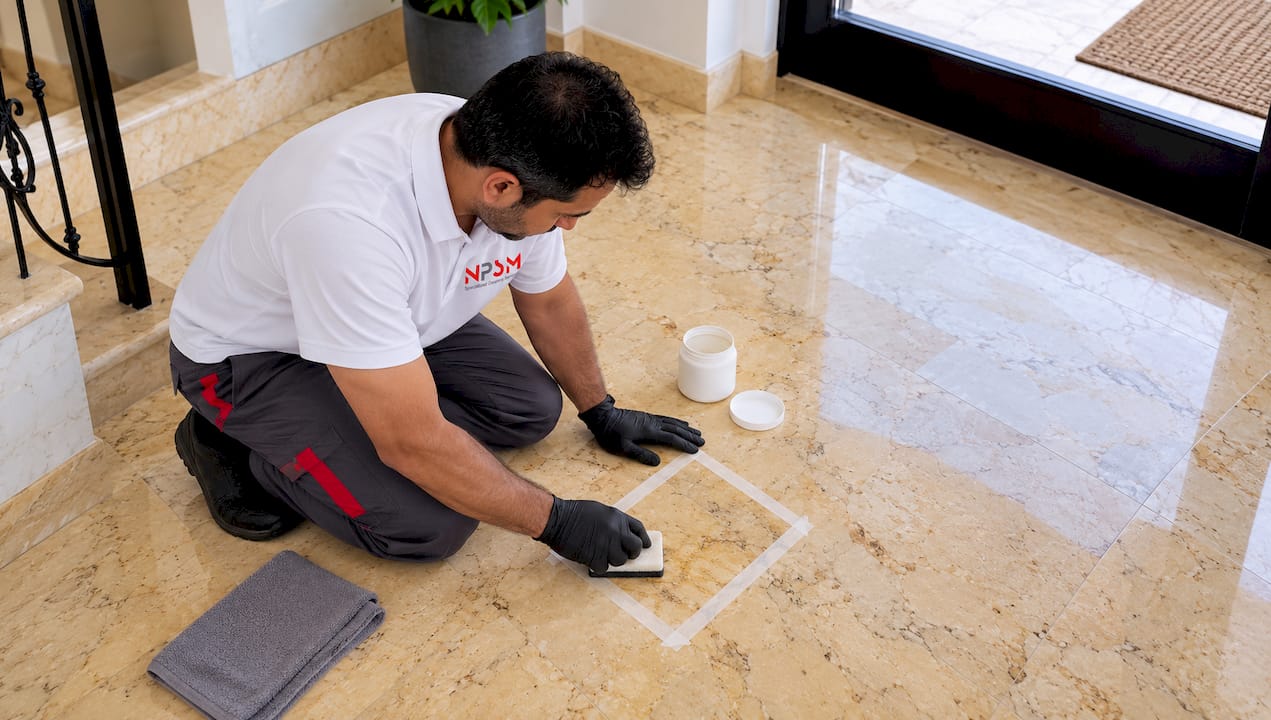
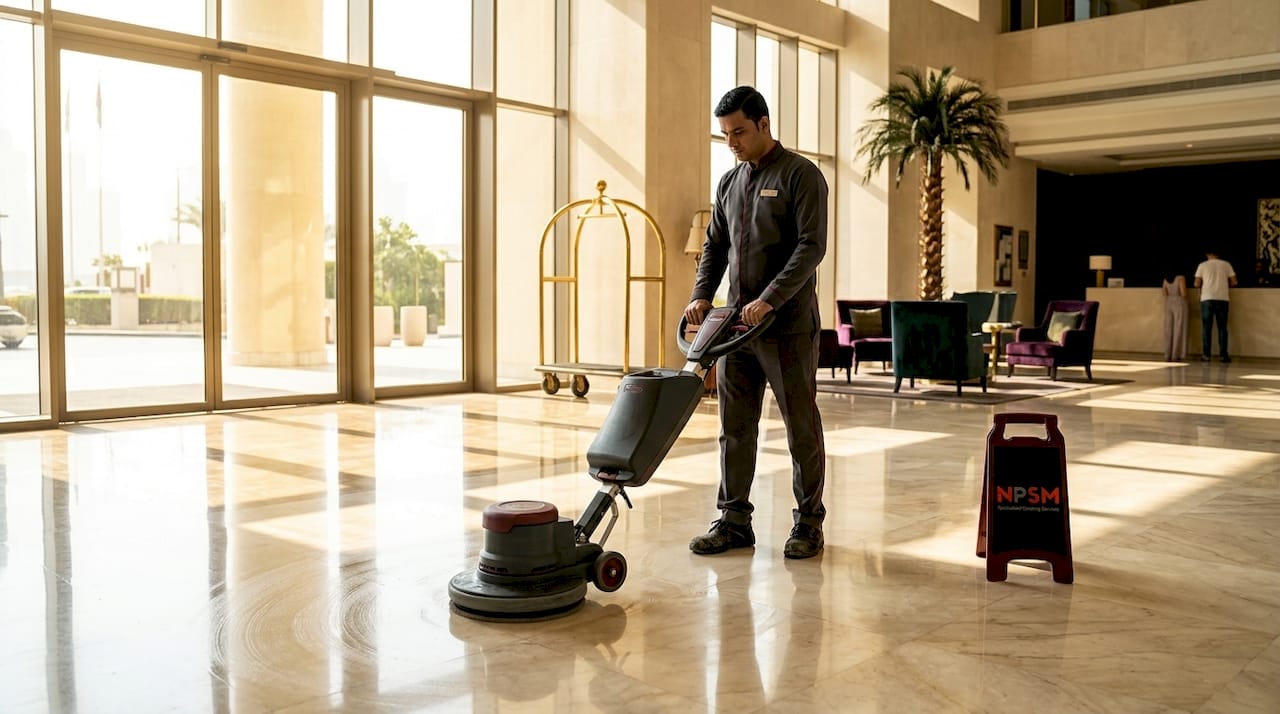
Core methodologies include daily vacuuming and spot treatment, weekly edge detailing, quarterly deep extraction and hot water extraction for carpets, and annual sealing and polishing for hard surfaces like marble. Each layer of that schedule serves a distinct protective function.
Here’s how those frequencies map across common floor types in Dubai luxury properties:
| Floor type | Daily | Weekly | Quarterly | Annual |
|---|---|---|---|---|
| Carpet | Vacuum, spot treat | Edge detail, shampoo high-traffic zones | Hot water extraction (HWE) | Full restoration, re-staining |
| Marble | Dust mop, pH-neutral wipe | Buff, inspect grout | Diamond pad polish | Professional reseal and restore |
| Hardwood | Dry sweep, microfiber mop | Inspect for gaps, light buff | Deep clean, minor sanding | Full sand, refinish, reseal |
| Vinyl/LVT | Damp mop, spot clean | Strip and buff | Deep scrub and recoat | Inspect adhesion, replace worn sections |
| Tiles | Sweep, spot mop | Grout scrub | Grout re-sealing, tile polish | Full grout restoration if needed |
Structured preventive maintenance across these frequencies cuts replacement cycles in half and prevents brand inspection failures. That means a carpet scheduled to last five to seven years without proper care can realistically deliver ten to fifteen years of service life when the PM calendar is followed consistently.
Dubai’s sand problem deserves special attention. After a sandstorm, the standard weekly schedule becomes inadequate. Fine particles embed deep into carpet fibers and grout lines within hours. Properties that skip high-traffic floor care following sandstorm events see accelerated surface degradation that compounds with every subsequent weather event.
An ideal maintenance sequence by floor type would look like this:
-
Marble corridors: Daily dust mop, twice-weekly pH-neutral wet clean, quarterly professional diamond polish, annual reseal.
-
Carpet in guest rooms: Daily vacuum, weekly spot inspection, quarterly HWE, annual deep restoration.
-
Wood in lobby or spa: Daily sweep with microfiber, weekly light buff, quarterly deep clean, annual sanding and refinish.
-
Tiles in common areas: Daily mop, weekly grout scrub, quarterly reseal, annual full restoration assessment.
Pro Tip: Treat any carpet stain within 30 minutes. Industry data shows an 85 to 90 percent stain removal success rate in that window. Waiting until the next scheduled clean drops that to under 20 percent, meaning the stain becomes part of the floor permanently.
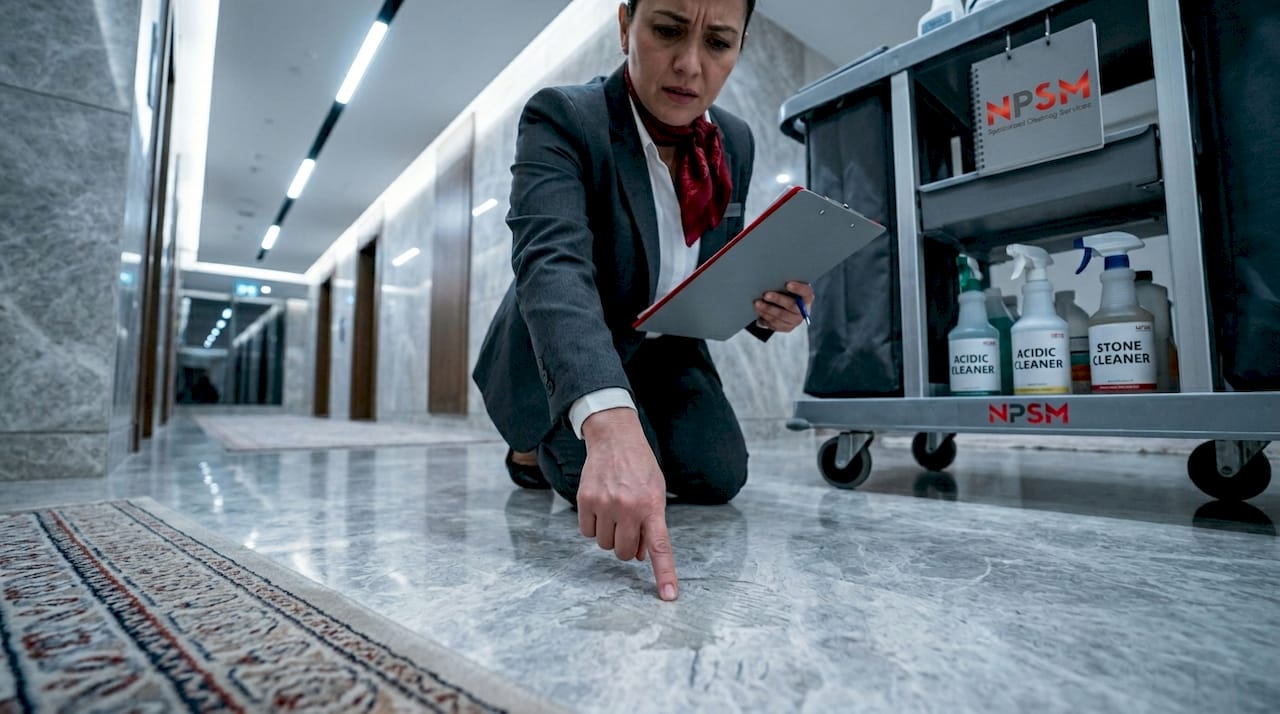
Using the wrong cleaning method is not just ineffective. It causes lasting damage. Acidic cleaners on marble etch the surface at a microscopic level, creating permanent dullness and micro-pitting that no amount of buffing can fully reverse. The correct method paired with the correct schedule is what floor restoration in Dubai hotels professionals are specifically trained to execute.
Edge cases and risks: What property managers must know
Knowing the right routine is only half the battle. Dubai properties face specific edge cases that can ruin a floor overnight if managers aren’t prepared. These are not rare situations. Many happen seasonally or after common events.
The three most common mistakes made by Dubai property managers are:
-
Post-sandstorm neglect: Waiting for the regular cleaning schedule after a major sandstorm. Sand embedded in carpet or scratched into marble during the next foot-traffic cycle causes damage that is costly to reverse.
-
Acidic mopping on marble: Using general-purpose floor cleaners or vinegar-based solutions on marble or natural stone. This permanently etches the surface and voids any restoration warranty.
-
Delayed carpet spot cleaning: Leaving spills for housekeeping’s next scheduled round. After 24 hours, stain removal success on carpet drops to 10 to 20 percent, making the stain effectively permanent without aggressive chemical treatment that may itself damage the fiber.
Here’s a quick comparison of the right versus wrong approach for the most common floor types in luxury properties:
| Floor type | Wrong approach | Right approach | Consequence of wrong |
|---|---|---|---|
| Marble | Acidic or bleach-based cleaner | pH-neutral stone cleaner, soft mop | Permanent etching, dull patches |
| Carpet | Soaking with water, delayed treatment | Blot immediately, HWE quarterly | Mold growth, permanent staining |
| Hardwood | Wet mopping, steam cleaning | Dry microfiber, approved wood cleaner | Warping, cupping, finish failure |
| Tiles/Grout | Bleach-only scrubbing | pH-balanced grout cleaner, reseal | Grout degradation, tile loosening |
Understanding marble cleaning best practices is particularly important in Dubai’s luxury segment, where Calacatta and Carrara marble feature heavily in villa lobbies, bathrooms, and pool surrounds. The financial replacement cost of etched marble is significant, easily running into hundreds of thousands of dirhams in a large property.
Pro Tip: Always use a pH-neutral cleaner specifically labeled safe for natural stone. Before introducing any new product, test it on a hidden section of the floor, such as inside a wardrobe or behind a door, and wait 24 hours before checking for any reaction.
“If you’ve missed the 30-minute stain window on carpet, you’re no longer in stain removal territory. You’re in damage control, and the odds are not in your favor.”
For marble countertop polishing and floor surfaces, the rule is consistent: the moment a wrong product touches the stone, the clock starts on irreversible damage. No cleaning product undoes acid etching. Only mechanical restoration can address it, and that carries both cost and downtime.
Grout is another silent victim in Dubai properties. High humidity and regular mopping push moisture into grout lines, encouraging mold and staining from the inside out. A structured tile cleaning workflow that includes periodic grout resealing is not optional in Dubai’s climate. It is preventive infrastructure.
Proven benefits of proactive maintenance
What does getting floor care right actually deliver? The results from real hospitality data are striking, and they apply directly to Dubai villas, apartments, and commercial properties, not just international hotel chains.
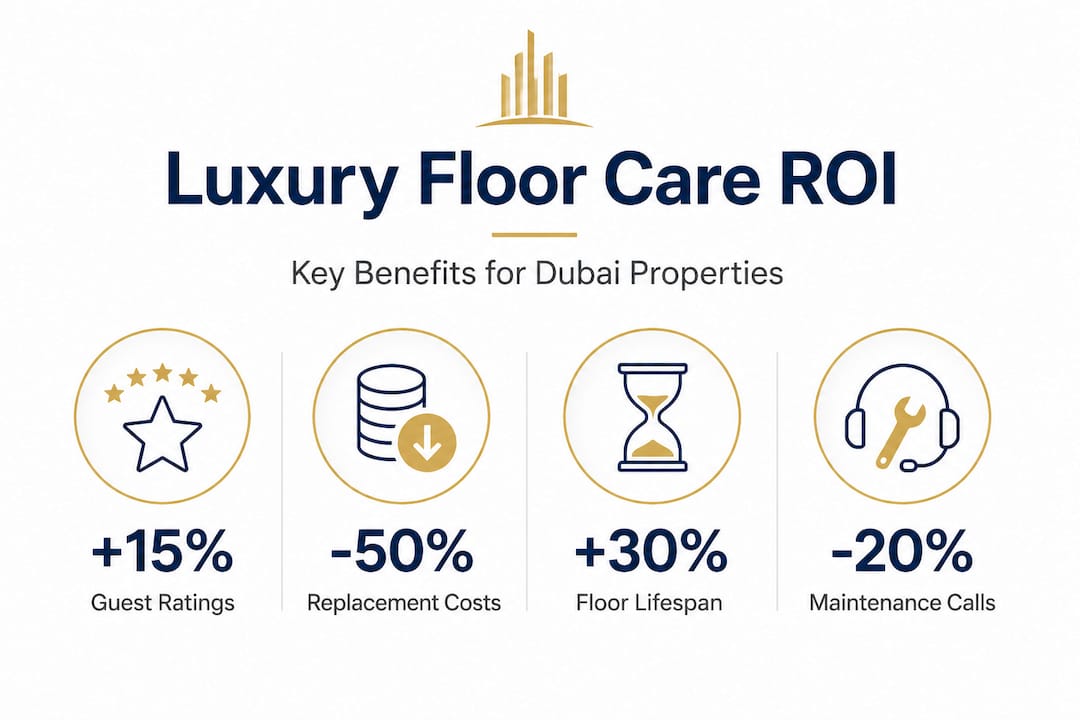
A luxury resort that shifted to proactive, scheduled floor maintenance saw its TripAdvisor rating rise from 4.1 to 4.7, RevPAR increase 10 percent from $187 to $205 per room per night, and maintenance complaints drop by 83 percent. Those are not incremental improvements. They represent a measurable, compounding return on a maintenance investment.
Here’s what the before and after picture looks like across key performance metrics:
| Metric | Before proactive PM | After proactive PM |
|---|---|---|
| Guest satisfaction score | 4.1 / 5 (TripAdvisor) | 4.7 / 5 (TripAdvisor) |
| Revenue per available room | $187 | $205 (+10%) |
| Maintenance complaints | Baseline | Down 83% |
| Carpet replacement cycle | Every 5 to 7 years | Every 10 to 15 years |
| Hard floor restoration need | Frequent reactive repairs | Annual scheduled, reduced costs |
The capital expenditure savings alone justify the investment. Reactive replacement at five to seven years versus engineered life cycles of ten to fifteen years through PM means a property owner can delay a multimillion-dirham flooring replacement by nearly a decade with the right maintenance program in place.
The major benefits across financial, reputational, and operational dimensions include:
-
Reduced CapEx: Doubling floor lifespan cuts major replacement spending by 40 to 50 percent over a 15-year horizon.
-
Higher rental yield: Well-maintained luxury villas and apartments command premium rents. Scuffed floors and stained tiles erode asking prices.
-
Fewer emergency repairs: Preventive care catches problems before they become costly urgent fixes.
-
Brand audit readiness: Managed properties maintain compliance without crisis-mode scrambling before inspections.
-
Guest retention: Repeat guests and referrals are driven partly by the physical impression of a property. Flooring is central to that impression.
These outcomes are not limited to five-star hotels. Dubai villa owners and apartment building managers who implement post-renovation floor care protocols see the same compounding benefits on a smaller scale. A villa with well-maintained marble and wood floors holds its value better, rents faster, and attracts quality tenants who treat the property well.
Perspective: The hidden ROI and what most owners overlook
Here’s the uncomfortable truth that many Dubai property managers don’t want to hear: floor care is not a cleaning expense. It is an asset management strategy, and treating it as a line-item cost to minimize is one of the most financially damaging decisions you can make in luxury real estate.
We see this regularly. A property owner spends AED 3 to 5 million on marble, premium hardwood, and designer carpet during a fit-out. Then they hand the building over to a facilities team with a budget focused on lowest-cost contracts and a checklist that satisfies the monthly report. Within three years, the marble is dull, the carpet is showing traffic lanes, and the wood floors have gaps and finish failure in high-use zones.
The restoration cost to bring those floors back is significant. But the invisible cost is greater: depressed rental yield, reduced property valuation, and guest reviews that mention wear and tear in a property that should be commanding luxury rates.
The contrarian insight is this: cheap quick cleans are not a savings. They are a slow-burn liability. Every time an acidic cleaner touches your marble or a carpet stain sits overnight because there was no protocol in place, you are eroding asset value in ways that won’t show up on a balance sheet until the next rental cycle or property valuation.
The right approach is to demand documented PM schedules from your floor care provider, proof of method (what products, what equipment, what certifications), and regular condition reports rather than just contract checklists. Floor polishing and restoration done correctly is not a premium luxury add-on. In Dubai’s premium property segment, it is the baseline for protecting what you’ve already invested.
Dubai’s market is unforgiving at the top end. Guests and tenants in luxury properties have direct experience of what world-class looks and feels like. Flooring that doesn’t meet that standard costs you revenue, not just aesthetics. Property managers who treat floor care as a strategic investment rather than a compliance task are the ones who outperform the market consistently.
Get expert hospitality floor care for your Dubai property
For property managers ready to turn floor care from a cost center into a competitive advantage, the starting point is working with specialists who understand Dubai’s specific environment and luxury standards. At floorpolishing.ae, we build customized maintenance programs for marble, granite, hardwood, vinyl, tiles, and natural stone across luxury villas, apartments, and commercial properties. Our floor restoration services cover everything from grout restoration and broken tile repair to full wooden floor sanding and epoxy applications. Whether you need a complete floor polishing guide for a newly renovated villa or high-traffic floor care solutions for a busy commercial building, we bring the right methods, the right products, and a documented PM schedule that protects your investment long term. Contact us today for a property-specific consultation.
Frequently asked questions
What makes hospitality floor care different from standard cleaning?
Hospitality floor care is a specialized maintenance approach structured around luxury environments, advanced methods, and brand compliance rather than basic janitorial cleaning. It accounts for specific floor types, high-traffic demands, and environmental factors like Dubai’s sand and humidity.
How often should hard floors be polished in Dubai properties?
Annual polishing and sealing is the recommended minimum for luxury hard surfaces like marble, with quarterly buffing and additional treatments required in high-traffic areas or after Dubai’s sandstorm season.
What’s the best way to remove stains from hotel carpets?
Treat the stain within 30 minutes, blotting rather than rubbing, for an 85 to 90 percent removal success rate. After 24 hours, that rate drops to just 10 to 20 percent, making quick response your most important protocol.
How does proactive floor care impact guest satisfaction ratings?
Industry case studies show that proactive floor maintenance lifted TripAdvisor scores from 4.1 to 4.7 and cut maintenance-related complaints by 83 percent at a single luxury resort property.
Can marble floors be damaged by using the wrong cleaning products?
Yes, absolutely. Acidic cleaners permanently etch marble at the surface level, creating dullness and micro-pitting that can only be addressed through professional mechanical restoration, not further cleaning.