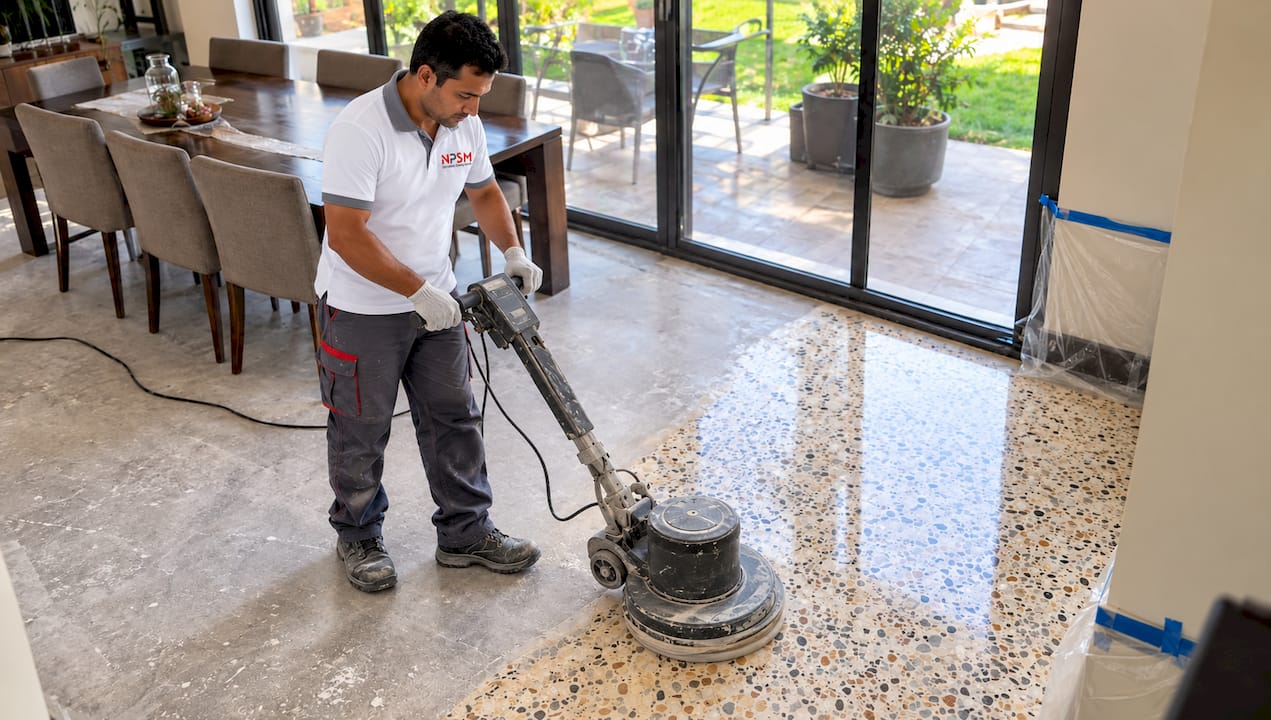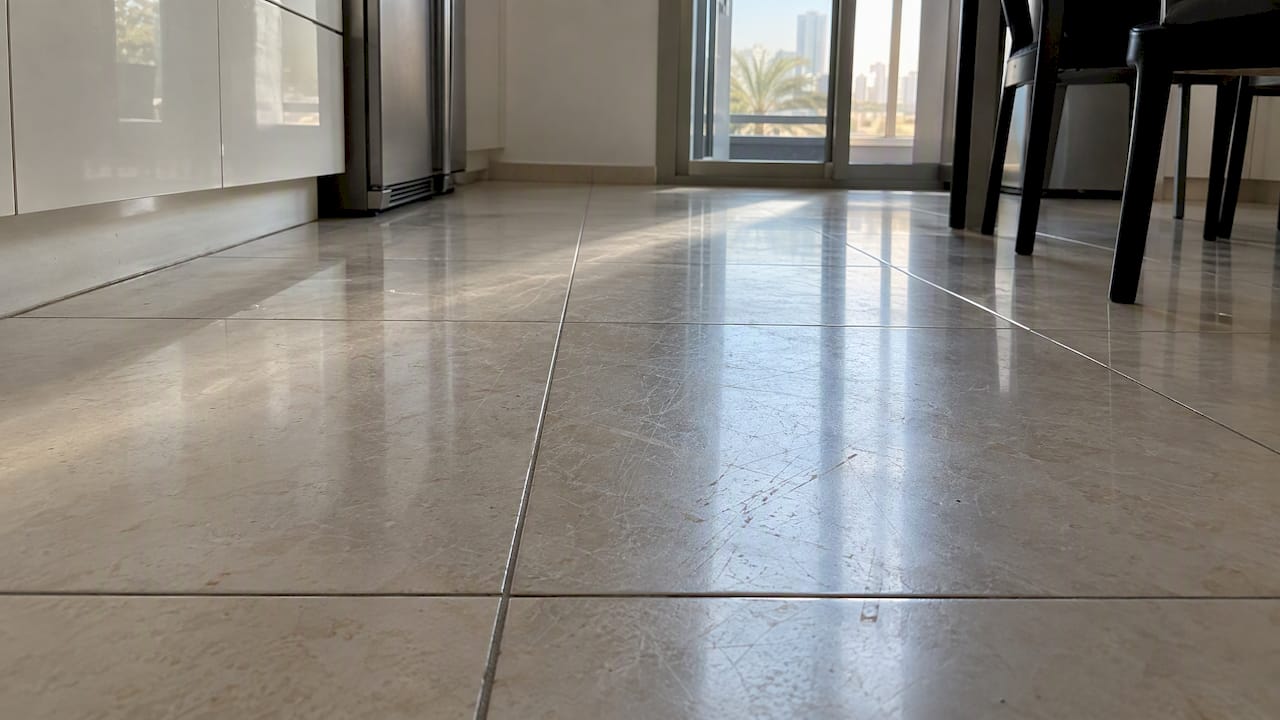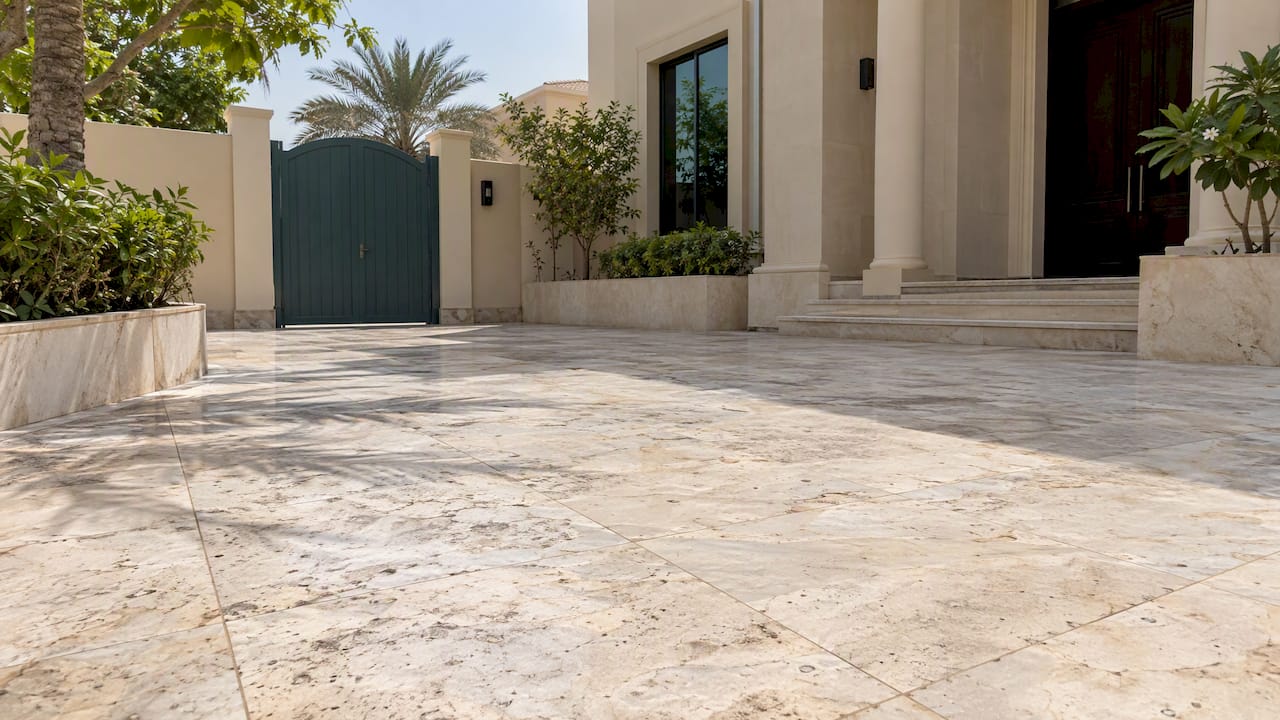

Exterior marble in Dubai needs regular, gentle cleaning, the right sealer for outdoor use and an early inspection for moisture problems. Interior habits do not carry over. Sun, salt, sand and humidity work on outdoor stone every day, and the mistakes that cause the most damage are usually well-meant ones: pressure washing, acidic cleaners and sealers meant for indoor floors. This guide covers what outdoor marble faces here, how often to look after it, which methods are safe, and when to bring in a specialist.
TL;DR
- Dubai’s heat, UV, salt-laden air, sand and humidity wear outdoor marble faster than indoor marble. Plan a routine rather than waiting for visible damage.
- Clean gently: pH-neutral products, soft tools, low pressure or steam. Never use high-pressure jets or acid-based cleaners on marble.
- Coastal and main-road properties need attention more often than inland villas. A seasonal rhythm works for most owners, with a check after summer.
- Use a sealer made for exterior stone. An interior sealer can trap moisture behind the surface.
- Cracks, loose cladding or spalling are structural questions. Confirm with a licensed consultant whether a permit is needed before work starts.
Table of Contents
- Why exterior marble ages differently in Dubai
- Where exterior marble shows up on Dubai properties
- How often to clean and inspect
- What to check before any cleaning agent touches the stone
- Safe cleaning methods for exterior marble
- Sealing exterior marble correctly
- Polishing, honing and restoring weathered marble
- Rules and permits in Dubai
- Perspective: what we see on Dubai exteriors
- Maintenance plans for different property types
- How to choose a contractor for exterior marble
- Working with us
- FAQ
Why exterior marble ages differently in Dubai
Marble is a calcium-based stone. It is beautiful, but it is softer and more reactive than granite. Indoors, the main threats are foot traffic, spills and the wrong cleaner. Outdoors, the same stone also faces:
- Heat and UV. Surfaces facing the sun swing from cool nights to very hot afternoons. The stone expands and contracts, which stresses joints and any hairline cracks.
- Salt. Along the coast, salt-laden air settles on stone and can leave a dull film and white deposits.
- Sand and dust. Fine sand sits in pores and joints, acts as a mild abrasive underfoot and holds moisture and grime.
- Humidity and condensation. Summer humidity on the coast and moisture from irrigation, pool splash and air-conditioning condensate can enter unsealed stone.
- Organic growth. Shaded, damp corners of terraces and entrances can develop algae or dark staining.
The common thread is moisture. Water that enters the stone and cannot leave is behind most outdoor marble failures, from stains to flaking surfaces. That is why a good maintenance routine starts with water, not with polish.
If you want to understand how humidity affects marble more generally, our page on why marble floors turn dull in Dubai’s humidity explains what happens at the surface.
Where exterior marble shows up on Dubai properties
Owners tend to think of facades, but most of the exterior marble we are asked about is at ground level and in daily use:
- Villa entrance steps, porches and driveways
- Pool surrounds, terraces and covered balconies
- Exterior staircases and landings
- Hotel and residential-tower entrance lobbies and drop-off areas
- Outdoor tables, countertops and barbecue areas
- Cladding on walls, columns and feature elements
Each has a different exposure. A shaded, sheltered porch behaves very differently from a pool deck in full sun that gets wet every day. A hotel drop-off area has heavy foot traffic and vehicle drips on top of climate. Match the routine to the exposure, not to the material alone.
How often to clean and inspect
There is no single schedule for every property, but exposure gives a useful guide. As a working rhythm:
| Location | Exposure | Suggested rhythm |
|---|---|---|
| Beachfront or near the sea | Salt, humidity, wind-blown sand | Professional cleaning roughly every 3 months |
| Beside a main road or heavy traffic | Dust, exhaust film, grime | Every 3 to 4 months |
| Inland villa or apartment terrace | Sand, sun, occasional irrigation | Roughly every 6 months |
| Sheltered or covered elevations | Limited rain and sun | About once a year |
Between professional visits, owners can sweep or dust-mop regularly, rinse with clean water at low pressure, and wipe spills quickly. For managed buildings, put the schedule in the annual maintenance plan so it does not depend on someone noticing a dull patch.
A good moment for an inspection is after summer, when heat and humidity have had their full effect, and before the cooler months when terraces are used most.
What to check before any cleaning agent touches the stone
Cleaning is the visible part. Inspection comes first, and it is what separates maintenance from cosmetic fixes.
- Look for water entry points. Check around drains, joints, planters, irrigation lines and pool edges. Standing water or damp patches that never dry point to a problem under or behind the stone.
- Check the joints and grout. Cracked, missing or crumbling joints let water in. Re-pointing may be needed before any polishing.
- Tap for hollow spots. Slabs that sound hollow may have lost adhesion.
- Note stains by type. Rust, oil, organic growth and water marks each need a different treatment. Guessing is how etching happens.
- Photograph everything. A dated record helps with warranty discussions, management reports and comparing quotes.
If you see cracks, loose or lifting cladding, or flaking and peeling stone, stop. That is no longer a polishing job.
Safe cleaning methods for exterior marble
The aim is the gentlest method that works. Over-cleaning does more permanent harm than leaving a little weathering in place.
What works
- Dry removal first. Brush or vacuum sand and dust before wetting anything. Wet sand turns into an abrasive paste.
- pH-neutral stone cleaner. Marble reacts to acid, so use a cleaner formulated for natural stone and a soft brush or pad.
- Low-pressure rinsing or steam. Steam and low-pressure water lift organic growth and soiling without scouring the surface.
- Poultices for localized stains. Rust, oil or tea-type stains are drawn out with a stone-appropriate poultice, tested on a hidden patch first.
- Thorough rinsing and drying. Residue left behind attracts more dirt and can leave streaks.
What to avoid
- High-pressure washing. It works on hard granite, but on marble it can roughen the surface and open the pores, so the stone then collects dirt faster.
- Acidic cleaners. Descalers, vinegar, bathroom products and many tile cleaners etch marble, leaving dull marks that no amount of rinsing removes.
- Abrasive pads and powders. They scratch polished finishes.
- Chasing every last mark. Stone that looks clean but lived-in is better than stone that looks pristine but has lost its surface.
If an etched or scratched patch does appear, it can usually be refinished. Our overview of marble polishing versus grinding versus crystallization explains which process suits which level of damage.
Sealing exterior marble correctly
Sealing slows water and stain absorption. It does not stop etching, because etching is a chemical reaction on the surface, and no sealer makes marble acid-proof.
For outdoor use, the important rules are:
- Choose an exterior-rated, breathable impregnating sealer. Moisture vapor must be able to leave the stone. An interior-grade or film-forming product can trap water, and trapped water expanding in strong sun can cause the surface to flake.
- Clean and dry the stone completely first. Sealing over damp stone or residue locks the problem in.
- Test a small area. Some stones darken slightly when sealed.
- Re-seal on schedule. Water that soaks in rather than beading on the surface tells you the sealer is spent. Pool decks and coastal terraces will need it sooner than a covered porch.
Sealing is also where the scope matters. A sealer is a protective layer, not a repair. If joints are open or the substrate is damp, fix those first.
Polishing, honing and restoring weathered marble
When cleaning no longer brings back the surface, restoration is the next step. In rough order of intensity:
- Polishing and buffing refreshes shine on stone that is dull but structurally sound.
- Honing removes light etching and scratches and leaves a smooth, satin finish, which is often the better choice outdoors because it hides wear and is less slippery than a high gloss.
- Grinding with diamond abrasives levels lippage, removes deeper damage and prepares the surface for polishing.
- Stain removal and repair deal with specific marks, chips and cracks before the final finish.
Slip resistance deserves a thought on outdoor areas. A mirror-polished finish looks superb in a lobby, but on a wet pool deck or an entrance step a honed or lightly textured finish is usually the safer call. Ask your contractor to discuss the finish with you, not just the shine.
Pricing depends on condition and scope. Our marble polishing and restoration service starts from AED 30 per sqm, and the final figure depends on the area, the condition of the stone and the finish. Our marble polishing cost page explains what moves a quote up or down.
Rules and permits in Dubai
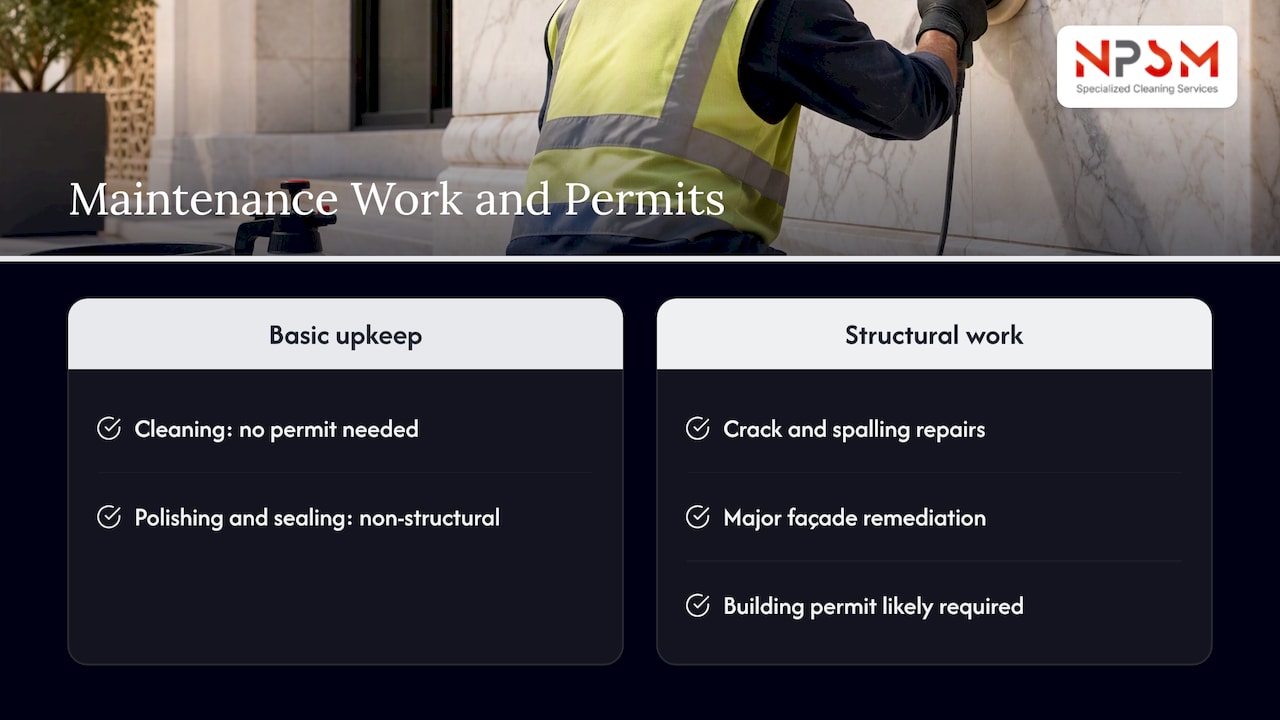
Routine cleaning does not need a permit, but two points matter for owners and building managers.
Wastewater. Dubai rules on public health and building maintenance put responsibility on the occupant to keep the building in compliant condition. Discharging dirty water onto pavements or roads, or letting condensate leak onto them, is not acceptable. Any exterior cleaning should include a plan for collecting or directing wash water properly. Ask your contractor how they will manage runoff, especially at entrances, podiums and road-facing frontages.
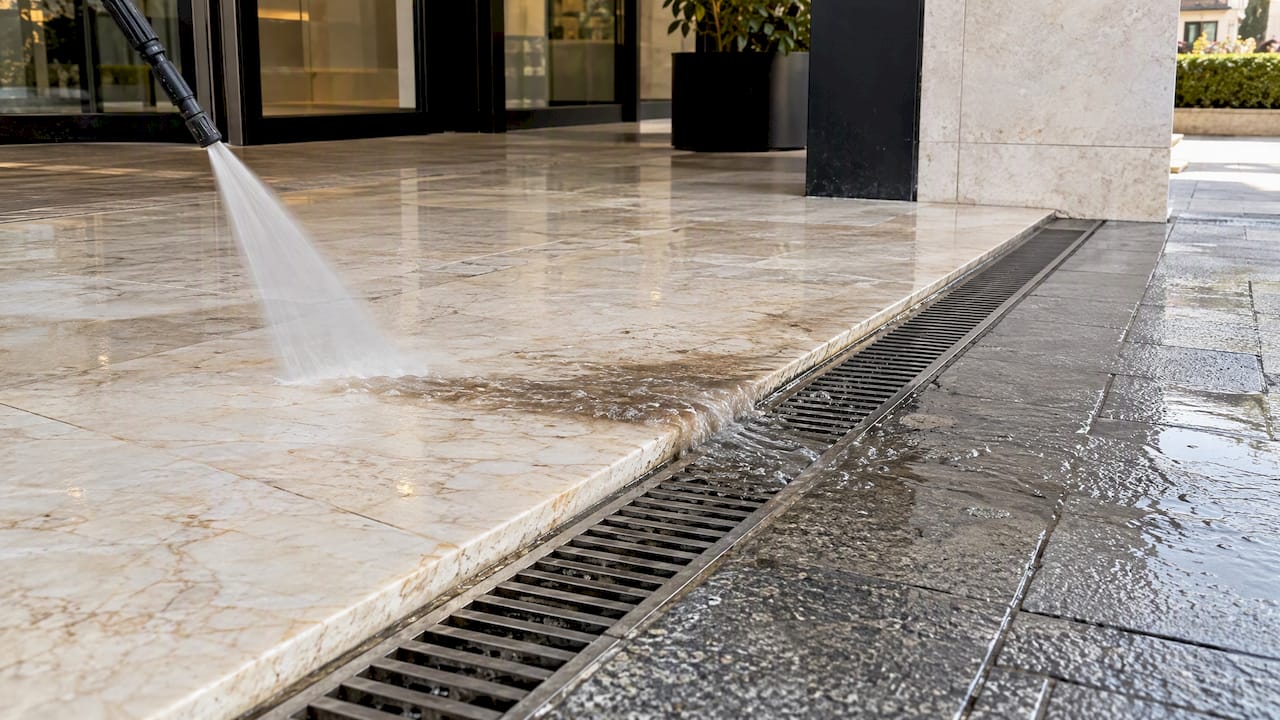
Structural work. Under Dubai’s rules on licensing maintenance works, basic maintenance, meaning non-structural upkeep, is treated differently from structural maintenance. Repairing cracks, fixing spalling stone cladding or doing major facade remediation is likely to fall under structural maintenance works, which require a permit through Dubai’s building permit system. Before you commission anything beyond cleaning, polishing and sealing, confirm with a licensed consultant whether the scope is basic or structural. Building managers should also check the owners’ association or developer guidelines, since many communities set rules on appearance and access for contractors.
Perspective: what we see on Dubai exteriors
Most exterior marble we are called to look at has not failed suddenly. It has been through years of the same pattern: a high-pressure wash because it looked dirty, an acidic cleaner on a stubborn stain, a sealer that was never meant for outdoor use. Each step seemed reasonable. Together they leave a rough, porous surface that dirties faster and needs more intervention each time.
Our approach is the reverse. We look at the stone, the moisture and the way the area is used before choosing a method. We would rather recommend a gentle clean and a better maintenance plan than sell a full restoration that the stone does not need. Where the problem is structural, we say so and point owners to the right consultant, because polishing over a leak only hides it for a season.
For property managers, the best value is predictability. A schedule tied to exposure, a record of what was done and a clear note of what to watch costs far less than emergency restoration before a handover or a hotel season.
— Qadir
Maintenance plans for different property types
Villas and luxury homes
Entrances, courtyards, pool decks and outdoor staircases take the most wear. A twice-yearly clean and an annual check of the sealer is a sensible baseline for inland villas, with more frequent visits near the coast. For ideas on keeping stone in top condition across a villa, see our marble floor care tips for Dubai villas.
Apartment buildings and residential towers
Common areas such as podiums, entrances and drop-off zones see heavy foot traffic and vehicle drips. Agree a schedule with the building manager, check that the wastewater plan is written into the contract and plan work for low-use hours.
Hotels and resorts
Guests judge a property from the entrance. Exterior marble at drop-off areas, pools and terraces should be on a fixed calendar, with work timed around occupancy. Finish matters here because of slip resistance on wet surfaces. Our notes on professional floor care for luxury Dubai properties cover the standards hospitality owners usually expect.
Offices and retail
Entrance plazas and storefront thresholds collect grit that gets tracked inside. Regular exterior cleaning protects the interior floors as well, so the two should be planned together.
How to choose a contractor for exterior marble
Whatever company you choose, ask these questions before you accept a quote:
- What method will you use? The answer should be low-pressure or steam and pH-neutral products, not a pressure jet.
- Which sealer, and is it rated for exterior use? Ask for the product name and data sheet.
- How will you handle wash water? A clear plan protects you from complaints and penalties.
- Will you test a small area first? A reputable contractor will.
- How do you decide between cleaning, honing and grinding? The reasoning matters more than the price.
- Will you tell me if the problem is structural? If the answer is vague, keep looking.
- What does the quote cover? Area, finish, sealing, access and any minimum charge for small jobs should be written down.
Compare quotes on scope, not just the per-square-metre figure. A low rate that skips sealing or joint repair is rarely cheaper over two years.
Working with us
We handle marble polishing and buffing, stain removal, full restoration and repair, and staircase and countertop work for villas, apartments and commercial properties across Dubai. We use professional-grade equipment and diamond polishing systems, and we tailor the method to the stone and the property. For exterior areas, we start with a site assessment so the plan fits the exposure and the condition of the stone.
If your terrace, entrance or staircase is dull, stained or showing wear, you can request a quote on our marble polishing and restoration page, or see everything we do on our services page.
FAQ
Can I pressure wash exterior marble in Dubai?
No. High pressure suits hard stone such as granite, but it roughens marble and opens its pores, so the stone then collects dirt more quickly. Use low-pressure water or steam with a pH-neutral stone cleaner instead. If grime will not lift, ask a specialist rather than raising the pressure.
How often should exterior marble be cleaned in Dubai?
It depends on exposure. Beachfront and main-road properties usually need professional attention every three to four months, inland villas around every six months, and sheltered areas about once a year. Regular sweeping and quick spill removal between visits keep the intervals longer.
Do I need a permit to restore exterior marble?
Cleaning, polishing and sealing are normally basic maintenance. Repairing cracks, fixing spalling cladding or major facade work is likely to count as structural maintenance and needs a permit through Dubai’s building permit system. Ask a licensed consultant to confirm which category your project falls into before work begins.
Can I use my interior marble sealer outside?
It is better not to. Interior products may not let moisture vapor escape, and water trapped under the surface can cause flaking in strong heat. Choose a breathable sealer rated for exterior stone, and apply it only to clean, fully dry marble.
Will sealing stop my marble from etching?
No. A sealer slows liquids soaking in, which gives you time to wipe spills, but etching is a chemical reaction with acids on the surface. Avoid acidic cleaners, and if etch marks appear, honing or polishing can usually remove them.