
Most marks on marble are either mineral deposits or soap film sitting on the surface, and those clean off with the right method. True etching, on the other hand, is a chemical burn in the polish that no amount of scrubbing will undo. Wet the mark first to see which one you’re dealing with, clean with a pH-neutral stone cleaner, and dry completely. If the spot still looks dull or feels rough afterward, stop wiping and start looking for a stone restoration pro.
TL;DR:
Water spots that disappear or fade when wet are likely etches and require professional polishing, as cleaning cannot restore the original shine.
Mineral deposits and soap film typically feel smooth and respond well to gentle cleaning with pH-neutral stone cleaner, avoiding acids or abrasives.
Stubborn stains below the surface may need a poultice treatment, which involves applying an absorbent paste for 24 to 48 hours and repeating if necessary.
Attempting to fix etching with acids like vinegar or lemon juice can cause permanent damage, making professional restoration essential.
Regular maintenance, including quick spill cleanup and annual sealing, can help prevent future water stains and surface damage on marble surfaces.
Table of Contents
Is That a Marble Water Stain or an Etch?
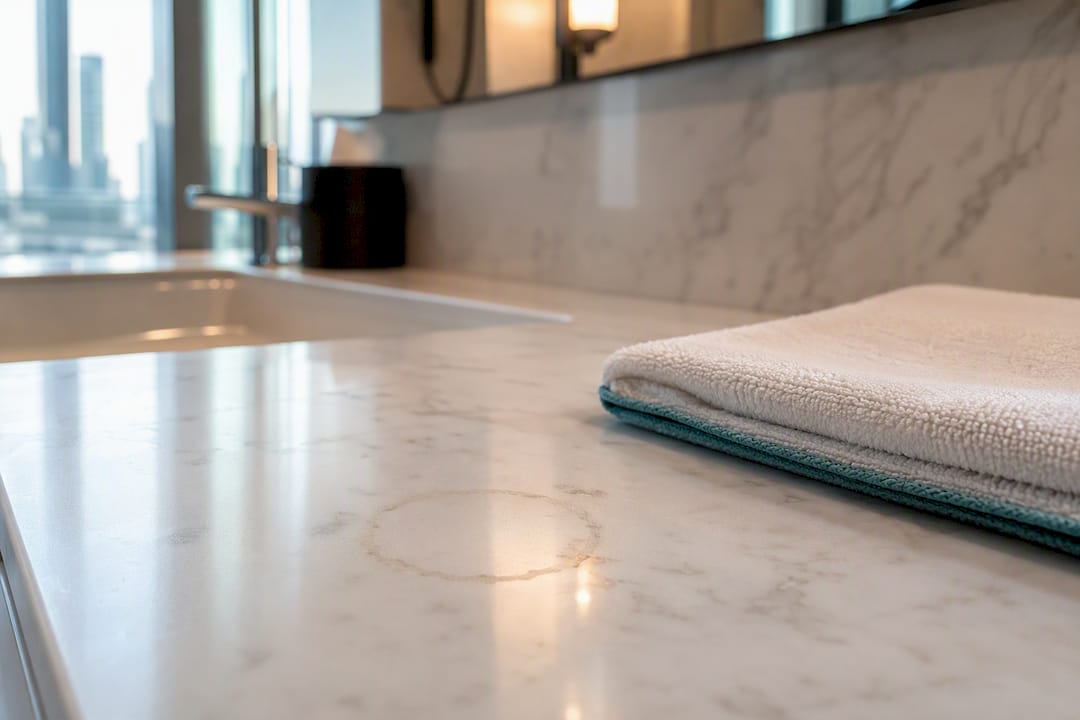
The fastest diagnostic tool you own is a wet paper towel. Lay it over the mark, let the water sit for a minute, and check the spot while it’s still wet. If the mark disappears or fades noticeably while wet, you’re looking at an etch, a spot where an acid reacted with the calcium carbonate in the stone and dulled the polish. If it stays visible wet or dry, you’re dealing with residue sitting on top of the surface, usually mineral deposits or soap film.
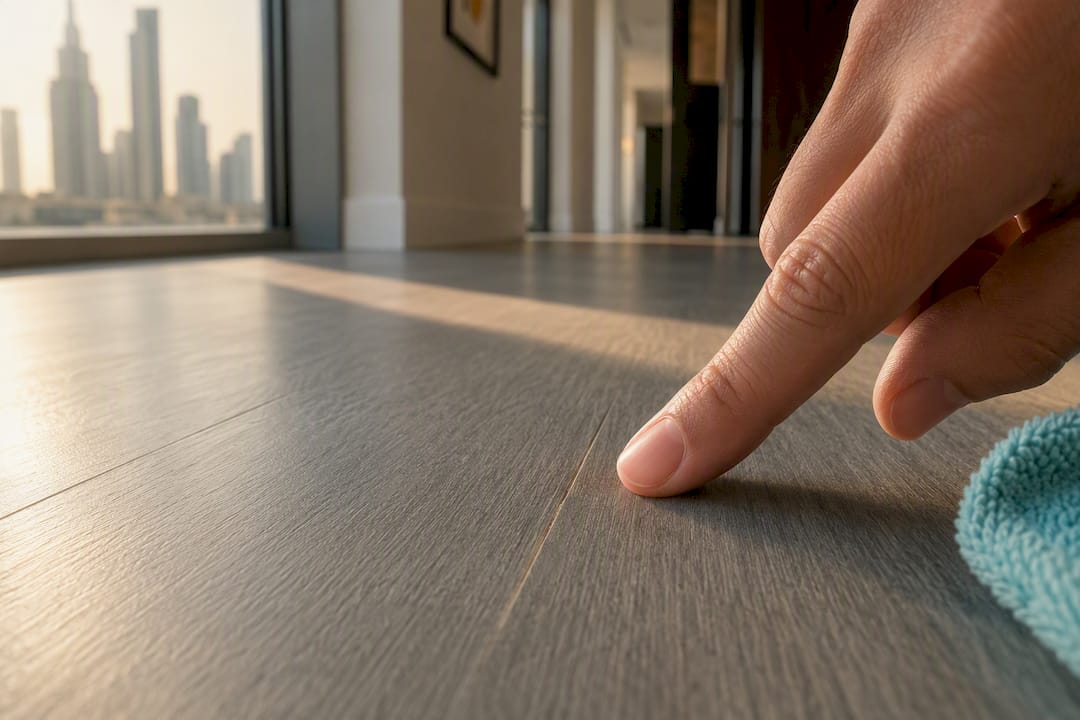
Run your fingertip across the area, too. Etching feels slightly rough or matte compared to the surrounding gloss, because the acid has physically altered the crystal structure at the surface. A stain, by contrast, feels smooth. It’s just discolored.
Different causes leave different signatures:
-
Hard water rings: white, chalky, and slightly raised. These come from calcium and magnesium minerals left behind as water evaporates.
-
Soap film: a cloudy, grayish haze that builds up near sinks and shower walls from repeated use.
-
Sealer haze: a streaky film, often uniform across a section, from a sealer that wasn’t wiped off properly.
-
True etching: a dull or frosted patch, usually round, from citrus juice, vinegar, wine, or an acidic cleaner.
-
Rust stains: orange or brown, often from a metal can, planter, or furniture leg left too long on the surface.
Safe First Steps for Light Water Marks
Before you reach for anything stronger, try the gentlest option. Most surface residue comes off with nothing more aggressive than warm water and patience.
-
Mix a pH-neutral stone cleaner, or a few drops of mild dish soap, into warm water.
-
Wipe the stained area with a soft microfiber cloth, using light pressure in a circular motion.
-
Rinse with a clean, damp cloth to remove any soap residue.
-
Dry the area completely with a separate microfiber towel. Leftover moisture just re-deposits the same minerals you’re trying to remove.
-
Repeat once or twice if the mark is faint. If it hasn’t budged after two or three attempts, stop. You’re likely dealing with a stain that has penetrated the stone, or an etch that cleaning alone can’t fix.
Skip vinegar, lemon juice, and any bathroom descaler marketed for tile or grout. Marble reacts to acid the same way it does to the citrus that caused the etch in the first place, so an acidic cleaner can turn a surface stain into a permanent dull patch. Bleach and abrasive scrub pads belong on the same “never” list. Bleach can discolor certain marble varieties, and abrasive pads scratch the polish, creating a haze that catches light differently from the rest of the floor.
Pro Tip: Keep a dedicated microfiber towel just for marble. Cloths that have touched other cleaning chemicals can leave trace residue that reacts unpredictably on stone.
How to Poultice a Stubborn Marble Stain
A poultice is the right call when a dark mark stays put after gentle cleaning and clearly sits below the surface rather than on top of it. The technique works by drawing the trapped substance out of the stone’s pores using an absorbent material, and it’s the same approach conservation technicians use on museum-grade marble when treating oil, ink, or dye stains.
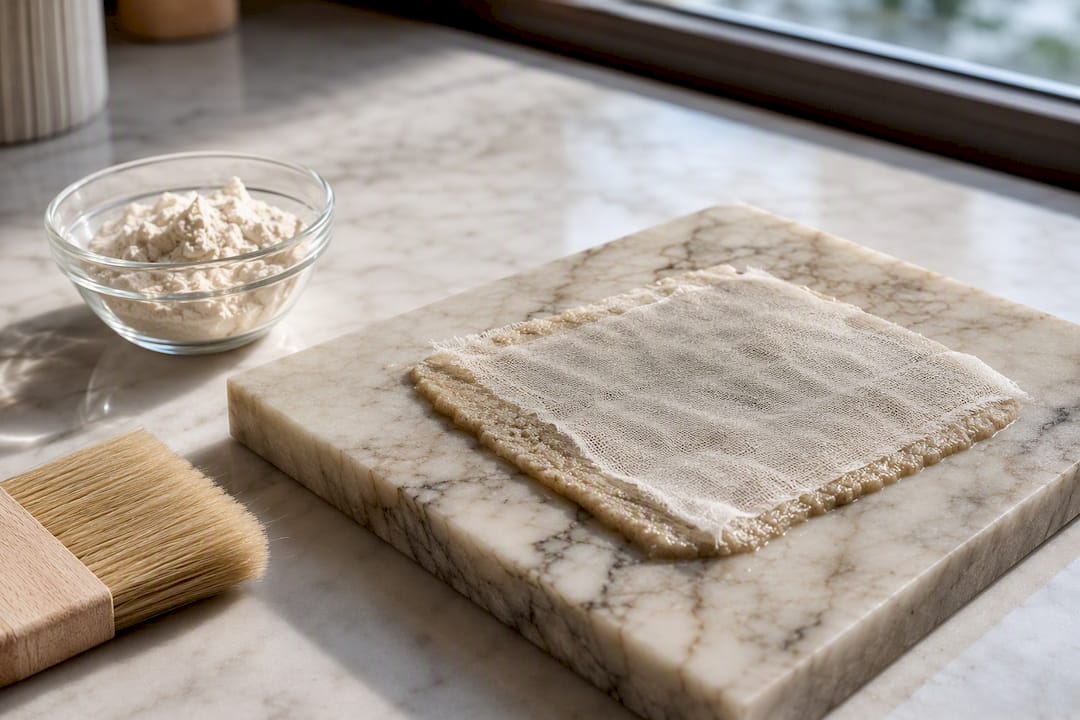
You have two practical options for the poultice base. A commercial stone poultice powder is the simplest route. If you’d rather build one yourself, mix baking soda with a small amount of distilled water until it forms a paste roughly the consistency of peanut butter. For organic stains like coffee or tea, some technicians add a small amount of hydrogen peroxide instead of water, but keep the concentration low.
Here’s the process:
-
Clean and dry the stained area first.
-
Apply the poultice about a quarter inch to a half inch thick, spreading slightly beyond the stain’s edges.
-
Cover with plastic wrap and tape down the edges to slow evaporation.
-
Let it sit for 24 to 48 hours. This dwell time is what gives the paste enough time to pull the stain out of the pores.
-
Remove the plastic and let the poultice dry completely, then scrape it off gently and rinse with clean water.
Conservation research on rust removal from calcareous stone shows that even carefully formulated poultice chemistry can slightly etch high-gloss polished marble, which is why testing an inconspicuous spot first matters more than the recipe itself. Repeat the cycle up to two or three times if the stain fades but doesn’t fully disappear. If you see no improvement after three full cycles, or if you’re working on colored or heavily polished marble where any dulling would be obvious, stop. That’s your signal the stain is either deeper than a poultice can reach or the risk of surface damage outweighs the benefit of continuing.
Why Etching Needs Professional Polishing, Not Cleaning
Etching isn’t dirt, and it isn’t a stain. It’s a chemical change to the stone itself. When an acid touches marble, it reacts with the calcium carbonate and dissolves a microscopic layer of the polished surface, leaving a dull or frosted patch behind. No cleaner, no poultice, and no amount of buffing with a cloth will restore that gloss, because the material that reflected the light is gone.
Signs you’re dealing with etching rather than a removable mark:
-
The spot stayed visible during the wet test.
-
The area feels rough or matte compared to the surrounding polish.
-
The mark appeared shortly after a spill of wine, juice, coffee, or a cleaning product.
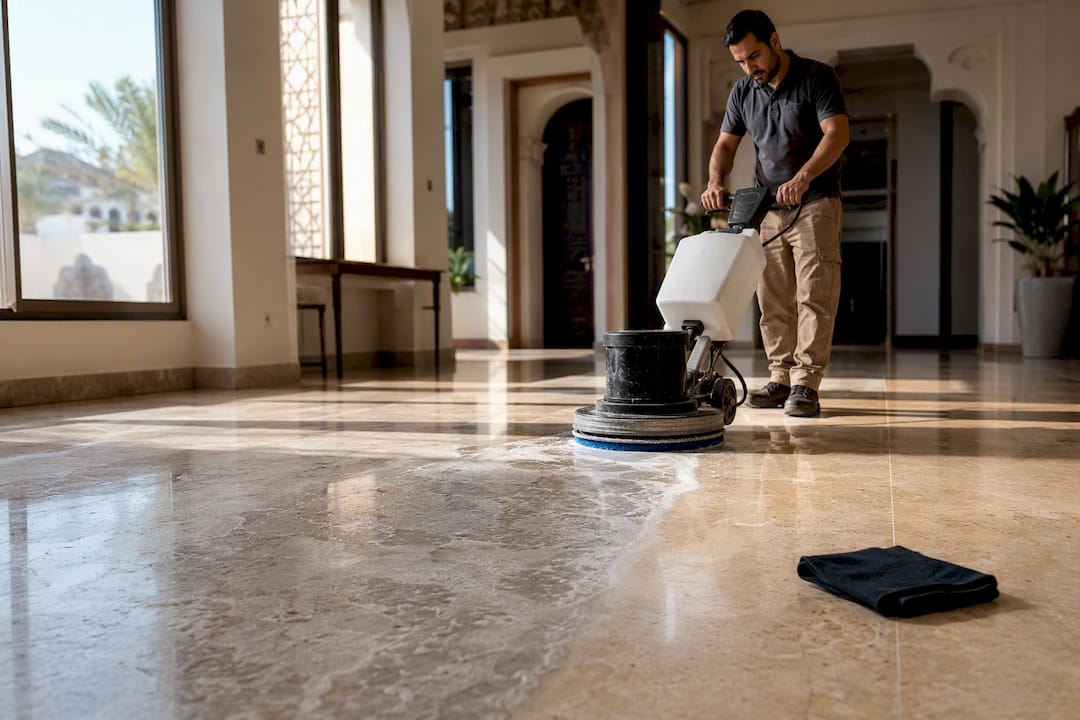
Professional restoration fixes this through mechanical correction, not chemistry. Honing levels out the etched layer with progressively finer abrasives, polishing restores the reflective shine, and in cases of deeper wear or larger damaged areas, technicians may recommend grinding and crystallization to rebuild the surface uniformly. A proper inspection also checks the stone’s overall wear pattern, existing sealer condition, and whether adjacent tiles need blending so the repaired section doesn’t stand out.
Turnaround for a typical residential job runs from a few hours for a small kitchen island to a full day or more for an entire floor, depending on the extent of etching and how much honing is needed. Cost drivers include the size of the affected area, the depth of the etching, and whether the marble needs a full re-polish versus a spot repair. NPSM Specialized Cleaning Services LLC handles this kind of work through its marble polishing and restoration services, and if you’re unsure whether your floor needs honing or a lighter touch, a comparison of polishing, grinding, and crystallization is worth reading before you call anyone.
Preventing Future Water Stains on Marble
A few daily habits do more to protect marble than any product you can buy. The goal is simple: minimize how long water and residue sit on the surface.
-
Wipe counters and vanities dry after each use, especially around sinks where soap and toothpaste splash.
-
Keep a squeegee in the shower and run it over marble walls or floors after every use to stop soap film and mineral buildup before they set.
-
Use coasters, trivets, and small trays under glasses, planters, and toiletries to prevent standing moisture and acidic residue from sitting directly on the stone.
-
Clean spills immediately, especially anything acidic like citrus, wine, or coffee. Speed matters more than product choice here.
Sealer plays a supporting role, not a starring one. A good sealer slows how fast liquids soak into the stone, buying you time to wipe up a spill before it stains, but it does nothing to protect against etching from acid contact. Check your seal roughly once a year by dripping a small amount of water on the surface. If it beads up, the seal is holding. If it darkens the stone within a minute or two, it’s time to reseal.
Periodic professional maintenance polishing, typically every one to three years depending on foot traffic, keeps the shine even and catches minor wear before it becomes visible etching. A marble maintenance guide can walk you through what that schedule looks like for kitchens versus bathrooms. If you’re shopping for accessories that help with prevention, a scalloped marble vanity tray is a small, practical way to keep toiletries off bare stone.
What Homeowners Usually Get Wrong About Marble Stains
The mistake I see most often isn’t neglect. It’s overcorrection. Someone notices a dull ring, panics, and reaches for vinegar or a bathroom descaler because that’s what works on tile. Within a week, a removable mineral stain has become a permanent etch. The second most common error is scrubbing harder when gentle cleaning doesn’t work fast enough. Marble punishes impatience.
The instinct to fix it yourself is reasonable. Most water marks genuinely are DIY territory. But once a surface feels rough or the shine won’t come back with cleaning, mechanical polishing is the only path forward, and that’s a job for equipment most homeowners don’t own.
— Qadir
How NPSM Specialized Cleaning Services LLC Handles Marble Stain Removal
If your marble still looks dull, rough, or stained after trying the cleaning and poultice steps above, that’s the point where DIY stops making sense. NPSM Specialized Cleaning Services LLC gives Dubai property owners a direct path to fixing it instead of guessing with another home remedy. The team handles marble stain removal, honing, polishing, and sealing as part of its marble polishing and restoration services, pricing marble polishing work from 19 AED per square meter depending on the scope of the job.
Before you request a quote, take a few clear photos of the affected area in natural light, along with the approximate square footage of the space. That’s usually enough for the team to give you a realistic estimate without a site visit. For a broader look at what’s included across marble, wood, tile, and other flooring, the full services overview covers the range of restoration work on offer. If you’re ready to move past DIY, request an inspection and get a straight answer on whether you’re dealing with a stain or an etch.
Sources for Further Reading
The diagnostic and cleaning guidance in this article draws on conservation technical procedures for removing oil, ink, and dye stains from marble, along with published research on chelating poultice methods for rust removal from calcareous stone. Background on hard water mineral content comes from standard water hardness references, and practical stain-versus-etch distinctions reflect widely used stone-care testing methods.
FAQ
Is It Possible to Get Water Stains off Marble?
Yes, in most cases. Water rings caused by mineral deposits or soap film usually respond to a pH-neutral stone cleaner and a soft cloth, while deeper stains often need a poultice treatment with a longer dwell time to pull the residue out of the stone’s pores.
What Can I Use to Remove Hard Water Stains From Marble?
A pH-neutral stone cleaner or a few drops of mild dish soap in warm water is the safest starting point, applied with a microfiber cloth and followed by a full dry. Avoid vinegar, lemon juice, and bathroom descalers, since marble’s acid sensitivity means these products often etch the surface instead of cleaning it.
Can Marble Be Permanently Stained?
Yes, some stains do become permanent, particularly deep organic or rust stains that have sat for a long time or acidic etching that has already dulled the polish. In those cases, a poultice may lighten the mark but professional honing and polishing is usually the only way to fully restore the shine.
Are Water Stains on Granite Permanent?
Granite is denser and less reactive to acids than marble, so water rings on granite are usually surface residue rather than permanent etching, and they typically clean off with a pH-neutral stone cleaner. Genuine staining on granite is less common but follows the same poultice approach described for marble when it does occur.