TL;DR:
- Floor honing is a process that uses diamond abrasives to remove surface damage and create a matte finish on stone floors. It is different from polishing, which adds gloss and does not remove damage, making honing more suitable for worn or etched surfaces. Regular honing prevents deeper damage, enhances safety, and maintains the stone’s appearance in high-traffic or humid environments.
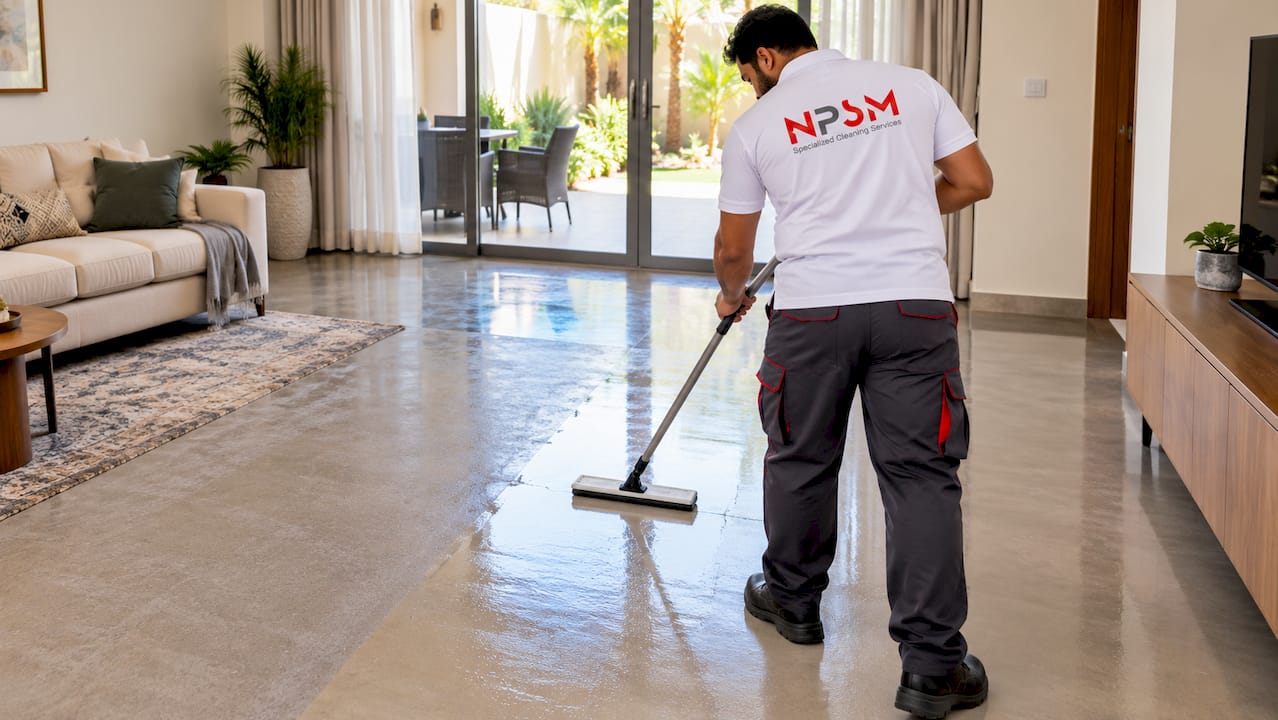
Floor honing is defined as a mechanical surface refinement process that uses diamond abrasives to remove physical damage from stone floors and produce a smooth, matte or satin finish. Unlike polishing, honing does not add gloss. It removes scratches, acid etching, and uneven wear by grinding away a microscopic layer of stone. The industry term for this work is “stone honing,” and it applies to marble, granite, limestone, travertine, and terrazzo. For homeowners, property managers, and real estate professionals in Dubai, understanding what is floor honing means knowing when a floor needs more than a surface clean and when restoration is the right call.
What is floor honing and how does it differ from polishing?
Floor honing and floor polishing are two distinct processes that serve different purposes. Honing uses diamond grit pads from 200 to 1,500 to mechanically abrade the stone surface, removing damage and leaving a matte or satin finish. Polishing uses grits of 3,000 and above, which burnish the surface to a high gloss without removing significant material. Grinding sits at the other end of the scale, using very coarse grits below 200 to flatten severely damaged or uneven stone.
The practical difference matters for property owners. Honing removes physical damage like acid etching and deep scratches that polishing cannot fix. Polishing adds shine but leaves underlying damage in place. If your marble floor has dull patches from lemon juice or cleaning products, polishing will not fix them. Honing will.
| Process | Grit Range | Finish | Best Use |
|---|---|---|---|
| Grinding | Below 200 | Rough, flat | Severe damage, lippage removal |
| Honing | 200–1,500 | Matte or satin | Scratches, etching, uneven sheen |
| Polishing | 3,000+ | High gloss | Aesthetic shine, maintained surfaces |
For a deeper look at how these three processes compare, the marble polishing vs grinding guide from NPSM Specialized Cleaning Services LLC breaks down each method with real examples.
What are the benefits of floor honing?
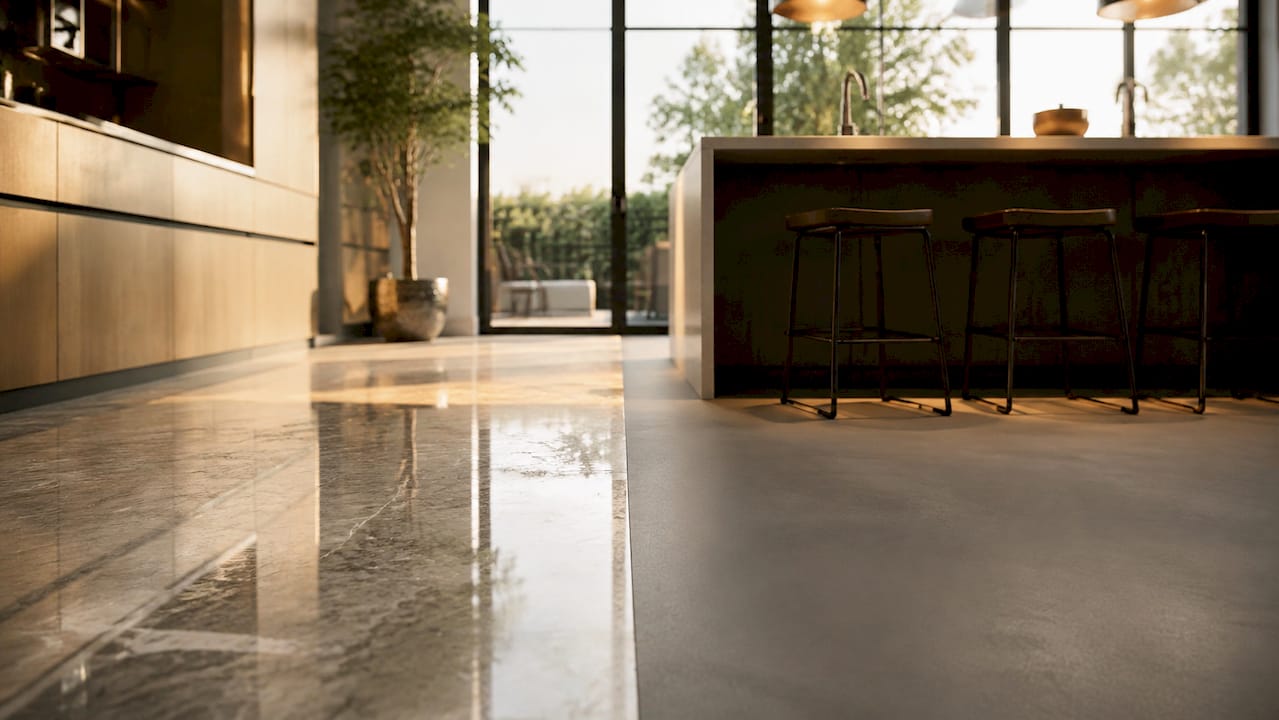
Honed finishes deliver practical advantages that polished surfaces cannot match in busy homes and commercial properties. Honed floors are recommended for kitchens, bathrooms, and hallways because the matte surface offers better slip resistance than a high-gloss finish. This is especially relevant in Dubai’s high-humidity environments, where polished marble can become dangerously slick when wet.
The visual benefits are equally compelling. Etching on honed marble is far less visible than on polished marble because the matte texture diffuses light and blends dull spots into the surface. A polished floor shows every water ring and fingerprint. A honed floor absorbs visual noise and looks cleaner for longer between maintenance sessions. This makes honed stone a practical choice for high-traffic tile areas in both residential and commercial settings.
Long-term preservation is another strong argument for honing. Regular honing removes shallow damage early, preventing minor imperfections from deepening into costly repairs or full floor replacements. Think of it as the equivalent of treating a small crack in a wall before it spreads. The cost of a honing session is a fraction of the cost of replacing marble flooring.
Key benefits at a glance:
-
Slip resistance: Matte surface grips better underfoot, especially in wet areas.
-
Damage concealment: Scratches and etch marks are far less visible on honed stone.
-
Easier maintenance: Matte surfaces show dust and smudges less than high-gloss finishes.
-
Stone preservation: Early damage removal prevents deeper structural deterioration.
-
Design flexibility: Honed finishes suit modern interiors with multiple reflective surfaces like mirrors and chrome fixtures.
Pro Tip: If your home has young children, pets, or heavy foot traffic, a honed finish is almost always the better long-term choice over polished stone. It forgives daily wear and requires less frequent professional intervention.
What does the floor honing process involve?
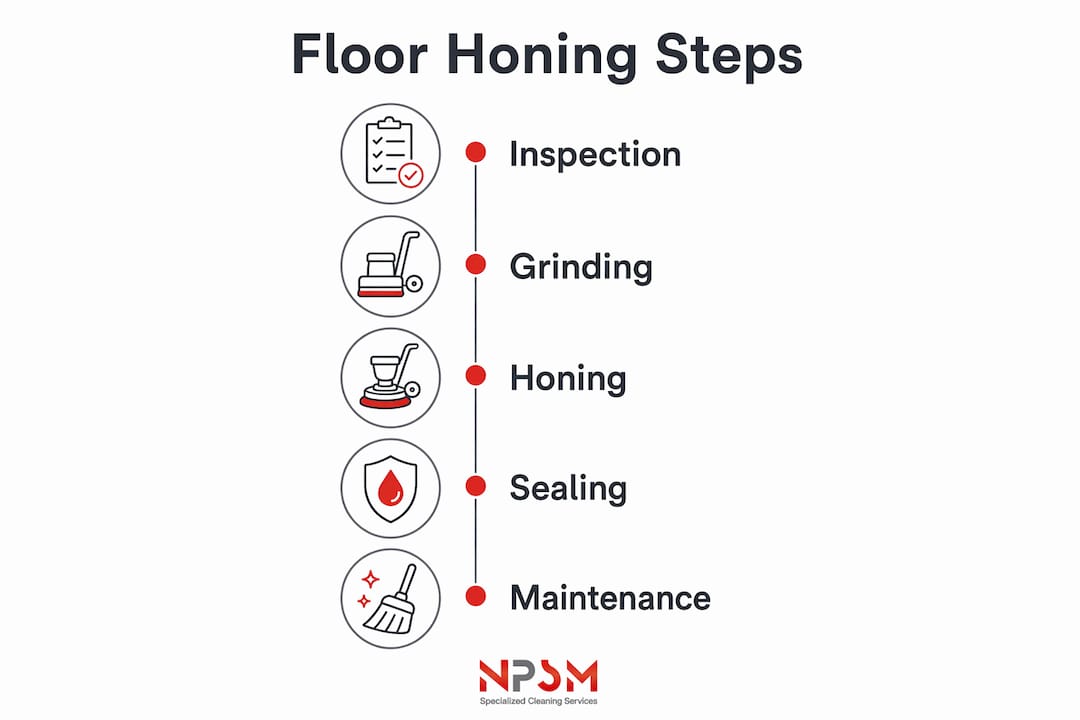
The floor honing process follows a structured sequence of steps that moves from coarse to fine diamond grits. Each stage removes the scratches left by the previous grit, gradually refining the surface until the target finish is achieved. Skipping a grit level leaves visible scratch patterns in the final result.
A professional honing job typically follows this sequence:
-
Surface assessment. The technician inspects the floor for damage type, stone hardness, and existing finish to select the correct starting grit.
-
Area preparation. Furniture is moved, and surrounding surfaces are taped and protected. Slurry containment measures are set up because honing generates wet stone dust that can stain walls and baseboards.
-
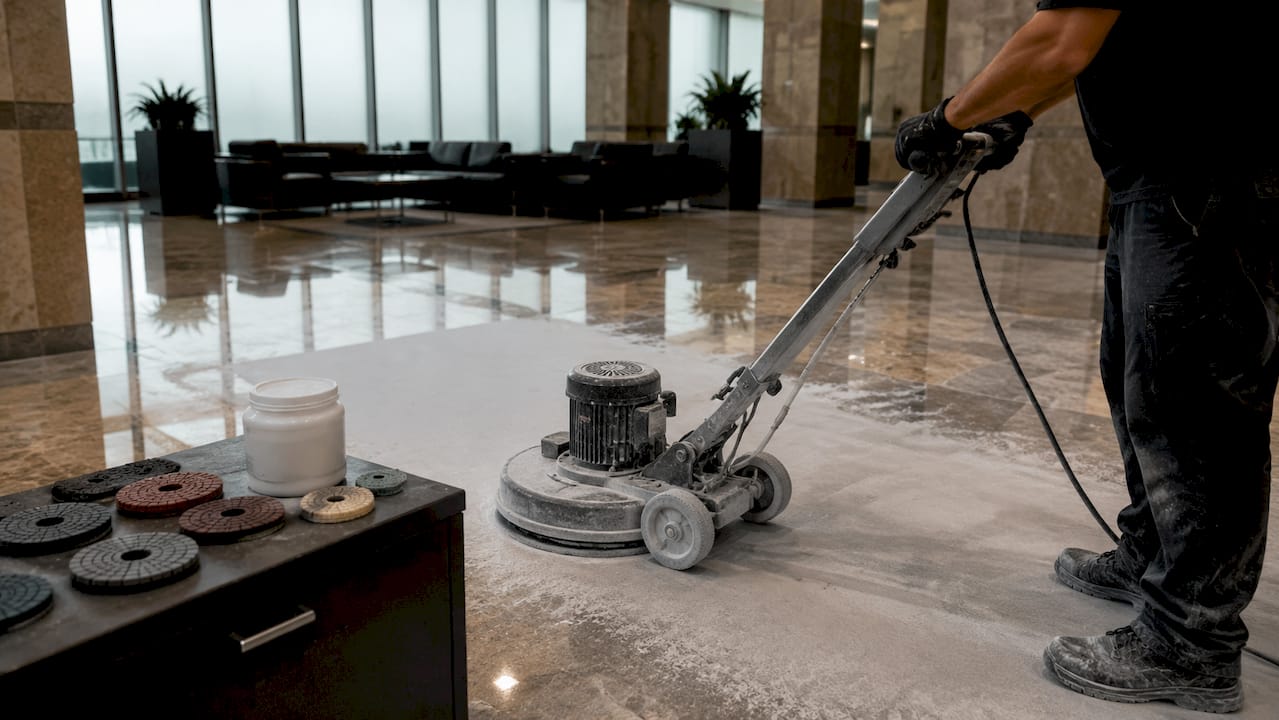
Coarse honing. Work begins with a lower grit pad (typically 200–400) to remove the bulk of the damage. Heavy-duty rotary or planetary machines apply consistent downward pressure across the floor.
-
Progressive grit refinement. The technician moves through medium grits (400–800) and then finer grits (up to 1,500 for a satin finish), cleaning the slurry between each pass.
-
Edge and detail work. Hand tools and smaller machines address corners, edges, and areas the main machine cannot reach.
-
Final cleaning. All slurry is removed, and the floor is allowed to dry completely before the next step.
-
Sealing. Post-honing sealing is mandatory because honing removes old sealant and exposes the porous stone surface. A stone-specific impregnating sealer is applied to protect against staining and moisture.
Pro Tip: Never skip the sealing step after honing. An unsealed honed floor absorbs spills almost instantly, and marble is particularly vulnerable to acid-based liquids like wine, coffee, and citrus juice.
Why DIY floor honing falls short
DIY honing kits exist, but they rarely produce professional results. Professional technicians use heavy-duty rotary or planetary machines that generate the downward pressure needed to remove damage evenly. Consumer-grade tools lack this pressure and often create uneven finishes or swirl marks. Selecting the wrong starting grit can also remove more stone than necessary, thinning the surface over time. For marble, limestone, or travertine floors, professional technique is the standard that protects your investment.
When should you choose professional floor honing services?
Knowing when to call for floor honing services saves property owners from spending money on the wrong treatment. Polishing a damaged floor does not fix it. It just makes the damage shinier.
Signs your floor needs honing rather than polishing or cleaning:
-
Acid etching. Dull, irregular patches where cleaning products or acidic liquids have reacted with the stone.
-
Visible scratches. Surface scratches that catch light and cannot be buffed out with standard cleaning.
-
Uneven sheen. Some areas look dull while others retain their finish, indicating uneven wear.
-
Loss of texture. A floor that once had a matte finish now looks inconsistent or patchy.
-
Pre-polishing preparation. Honing is required before polishing damaged stone to create a uniform base.
For commercial properties like hotels, restaurants, and retail stores, honing fits naturally into a regular maintenance schedule. High foot traffic accelerates surface wear, and a honing session every one to two years keeps stone floors looking consistent and safe. Residential properties with natural stone in kitchens or bathrooms benefit from honing every few years, depending on use.
Cost is a common concern. Professional floor honing services cost more than a standard clean but far less than stone replacement. For property managers preparing a unit for sale or lease, a freshly honed floor adds visible value without the expense of new flooring. Real estate professionals consistently report that well-maintained stone floors improve buyer perception and support higher asking prices.
For Dubai homeowners dealing with humidity-related dullness, the humidity damage guide from NPSM Specialized Cleaning Services LLC explains exactly how moisture affects marble and when honing is the right response.
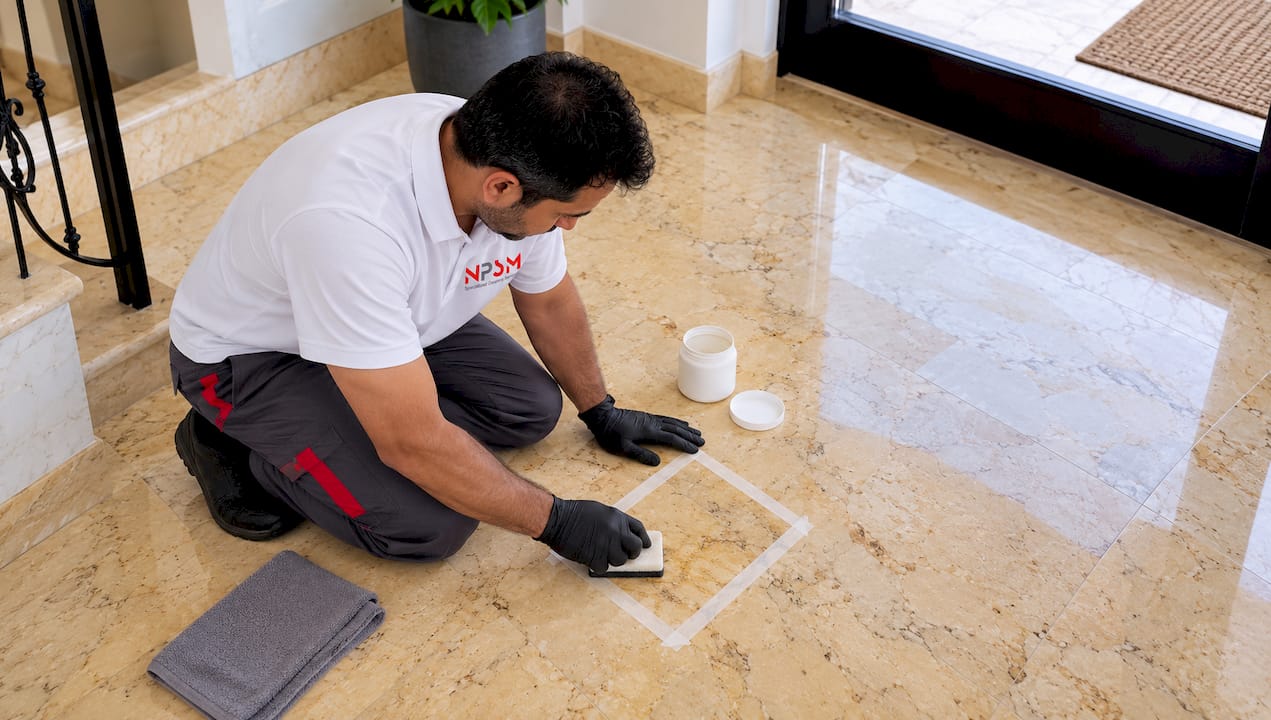
Pro Tip: Ask any floor honing service provider for a test patch before committing to a full job. A reputable professional will always demonstrate the expected result on a small area first.
Key Takeaways
Floor honing is the most effective first step in restoring damaged stone floors because it physically removes surface imperfections that polishing and cleaning cannot address.
| Point | Details |
|---|---|
| Honing vs polishing | Honing uses 200–1,500 grit to remove damage; polishing uses 3,000+ grit to add gloss. |
| Best applications | Honed finishes work best in kitchens, bathrooms, and high-traffic areas for safety and durability. |
| Sealing is mandatory | Always apply a stone-specific sealer after honing to protect the exposed porous surface. |
| Professional results | Heavy-duty planetary machines produce even results that DIY kits cannot replicate. |
| Maintenance value | Regular honing prevents minor damage from becoming costly structural repairs. |
Why I think most property owners get this completely wrong
Most homeowners I speak with assume that a polished floor is a well-maintained floor. That assumption costs them money. Polishing a scratched or etched floor is like painting over rust. The surface looks better for a few weeks, and then the underlying damage shows through again.
The shift toward honed finishes in modern interior design is not just aesthetic. It reflects a practical understanding of how stone floors actually behave in lived-in spaces. Honed finishes reduce visual noise in rooms with mirrors, chrome, and glass, which describes almost every contemporary Dubai apartment or villa. A polished marble floor in that environment can feel overwhelming. A honed floor feels calm and intentional.
The other misconception I encounter regularly is that honing is a one-time fix. Stone honing is not merely aesthetic. It is integral to floor longevity, preventing minor imperfections from worsening into costly damage through timely intervention. Property managers who build honing into their regular maintenance schedule spend less on emergency repairs and replacements over a five-year period than those who only call for help when the floor looks terrible.
My honest advice: assess your stone floors once a year. If you see etching, uneven sheen, or scratches that cleaning does not remove, schedule a honing session before the damage deepens. The cost is predictable. The cost of ignoring it is not.
— Qadir
Professional floor honing in Dubai with NPSM Specialized Cleaning Services LLC
NPSM Specialized Cleaning Services LLC provides professional floor honing and restoration services across Dubai for residential, commercial, and hospitality properties. The team uses diamond honing technology and heavy-duty planetary machines to restore marble, granite, limestone, travertine, and terrazzo floors to a consistent matte or satin finish. Every honing job includes post-honing sealing with stone-specific impregnating sealers to protect the restored surface. Whether your floor has acid etching from years of use or scratches from heavy foot traffic, the floor restoration and polishing services at FloorPolishing.ae cover the full process from assessment to final seal. Contact NPSM Specialized Cleaning Services LLC for a free quote and a test patch demonstration before any work begins.
FAQ
What is floor honing in simple terms?
Floor honing is a mechanical process that uses diamond abrasive pads to remove surface damage from stone floors and create a smooth, matte finish. It physically grinds away scratches, etching, and uneven wear rather than adding a coating on top.
How long does floor honing take?
Professional honing typically takes 30–60 minutes per 100 square feet, depending on the stone type, damage level, and number of grit passes required. Larger or heavily damaged floors take proportionally longer.
Can I hone my marble floor myself?
DIY honing kits are available but rarely produce professional results. Professional machines apply the consistent downward pressure needed for even material removal, and selecting the wrong grit can permanently thin the stone surface.
Does honing make floors slippery?
Honing produces the opposite effect. The matte surface created by honing offers better slip resistance than a polished high-gloss finish, making it the preferred choice for wet-area flooring in kitchens and bathrooms.
How often should stone floors be honed?
Commercial properties with heavy foot traffic benefit from honing every one to two years. Residential stone floors in kitchens or bathrooms typically need honing every two to four years, depending on use and the type of stone.