
TL;DR:
- Dubai’s arid climate accelerates wooden floor wear requiring regular professional resurfacing every 3 to 5 years.
- Resurfacing involves sanding, repairing, and sealing to restore and protect floors effectively.
- Proper aftercare, including humidity control and routine maintenance, extends the lifespan of resurfaced wooden floors.
Wooden floors look stunning in any Dubai villa or apartment, but most homeowners are surprised by how fast they lose that fresh, polished look. Dubai’s combination of fine desert sand, extremely low humidity, and constant air conditioning creates wear conditions unlike almost anywhere else in the world. What looks like minor dullness after a year could be early-stage surface breakdown that costs far more to fix if ignored. Dubai’s arid climate accelerates wooden floor wear in ways that standard cleaning simply cannot reverse. Professional resurfacing is the most effective way to restore beauty, protect your investment, and extend the life of your floors significantly.
Table of Contents
- Understanding wooden floor resurfacing
- Signs your wooden floor needs resurfacing
- The resurfacing process: Step by step
- Aftercare and maintenance in Dubai’s climate
- Our Dubai perspective: Why expert resurfacing transforms homes
- Give your Dubai home the wooden floor it deserves
- Frequently asked questions
Key Takeaways
| Point | Details |
|---|---|
| Dubai requires special care | The city’s dry, dusty climate means wooden floors need tailored maintenance and more frequent resurfacing. |
| Spot the warning signs early | Look for dullness, surface scratches, or gaps—addressing them soon prevents bigger problems. |
| Professional resurfacing pays off | Hiring Dubai experts ensures the job lasts, protects investment, and keeps your home beautiful. |
| Post-resurfacing care matters | Daily cleaning and correct humidity extend the new finish’s life significantly. |
Understanding wooden floor resurfacing
To understand why professional resurfacing matters, let’s break down what the process actually involves.
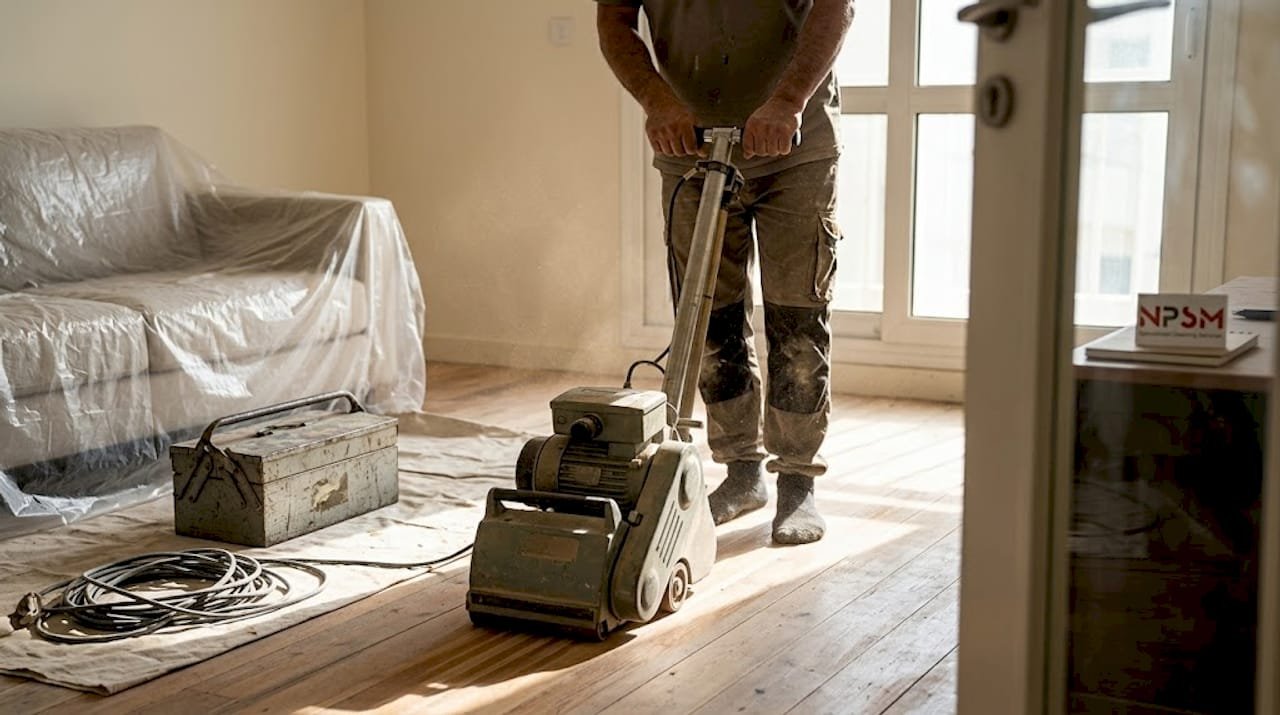
Resurfacing is the process of sanding down the top layer of your wooden floor to remove surface damage, then repairing any problem areas, and finally applying a fresh protective coating. It is not the same as refinishing or replacing. Refinishing typically refers to applying a new finish coat without sanding, which works only when the surface is still structurally sound. Replacing means pulling out planks entirely, which is costly and disruptive. Resurfacing sits between the two: it removes enough of the worn surface to reveal fresh wood underneath, then seals it properly.
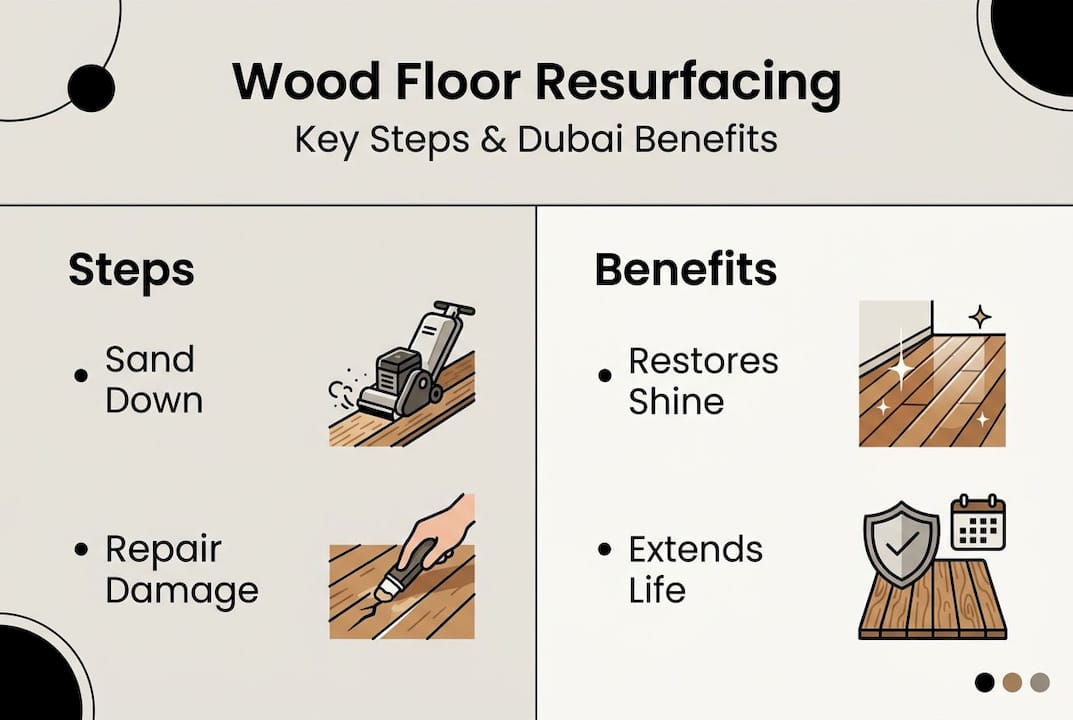
For Dubai properties, resurfacing is often the most practical solution. The dry, dusty climate causes wooden floors to lose their finish faster than in more temperate climates, making resurfacing a regular part of home maintenance rather than a one-time fix.
Here is what resurfacing addresses that other methods cannot:
- Surface scratches from sand particles tracked in from outside
- Dullness and discoloration caused by UV exposure and low humidity
- Minor gapping between planks from wood contraction in dry air
- Uneven finish from spot cleaning or inconsistent maintenance
- Loss of protective seal that leaves wood vulnerable to moisture damage
Understanding dull wooden floor causes helps you recognize when resurfacing is the right call versus a simple polish. There is also a meaningful difference between sanding and polishing that affects which treatment your floor actually needs.
Pro Tip: If your floor looks dull even right after mopping, that is a sign the protective coating has worn through. Polishing alone will not fix it. You need resurfacing.
Resurfacing done correctly can add years to your floor’s life and restore a finish that looks genuinely new. It is an investment in your home’s aesthetics and long-term value.
Signs your wooden floor needs resurfacing
Once you know what resurfacing involves, the next step is spotting when your floor actually needs it.
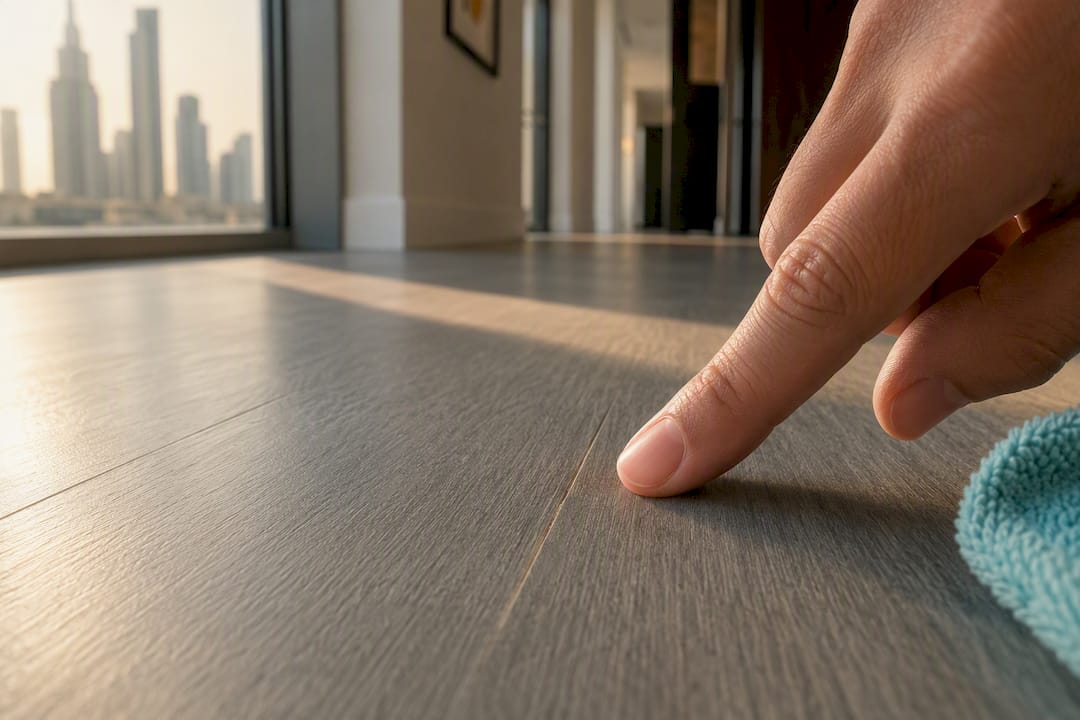
Dubai’s environment is particularly hard on wooden floors. Fine sand particles act like sandpaper underfoot every single day. The AC use and dust that are unavoidable in Dubai accelerate surface wear far beyond what you might expect in a cooler, more humid city. Most Dubai homes require resurfacing every 3 to 5 years, and high-traffic areas like living rooms and hallways often show signs sooner.
Here are the physical signs to watch for:
- Gray or white scratches visible under direct light, especially near entryways
- Dull, flat appearance that does not improve with cleaning or polishing products
- Discoloration or dark patches from spills that soaked into unprotected wood
- Small gaps between planks that appear during summer months when AC runs constantly
- Rough texture underfoot where the finish has worn completely through
- Squeaking or creaking in areas that were previously silent
The most important thing to understand is that early resurfacing is always cheaper than late resurfacing. When the protective finish wears away and sand keeps grinding against bare wood, the damage goes deeper into the plank. At that point, you may need more aggressive sanding or even plank replacement, which is significantly more expensive.
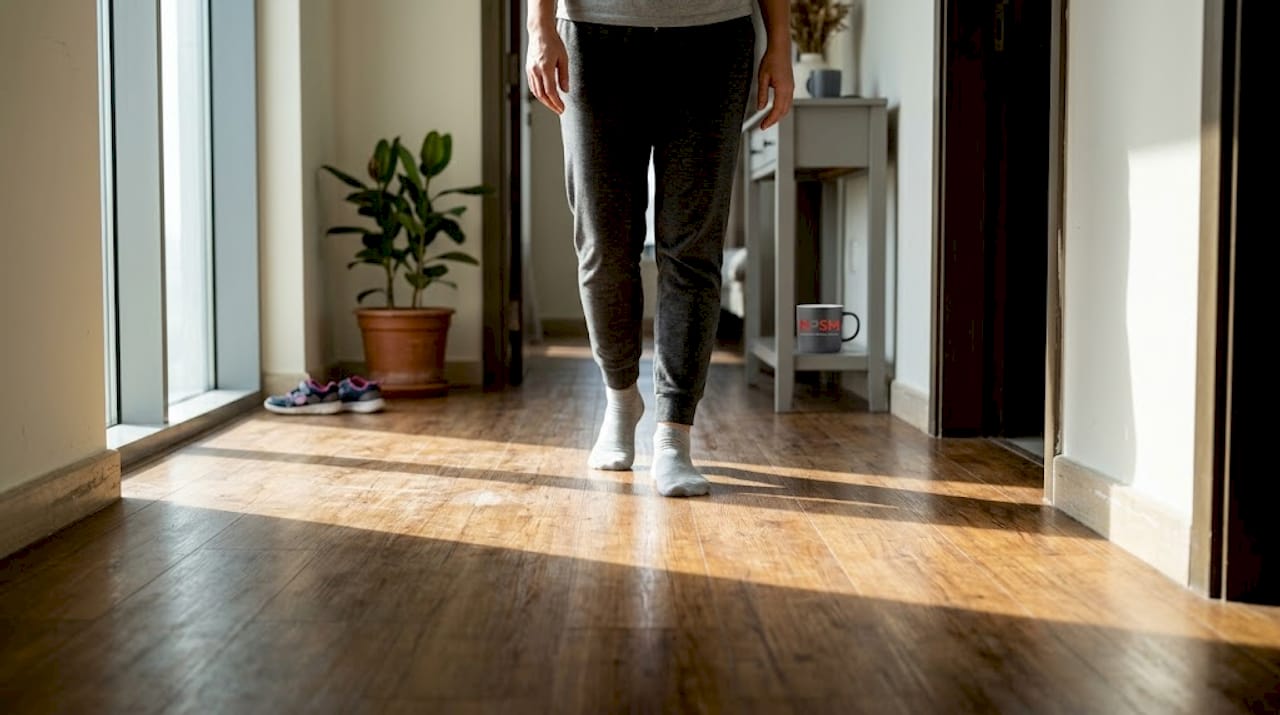
Reviewing Dubai floor maintenance tips regularly helps you stay ahead of the wear cycle. For premium properties, luxury interior refinishing approaches the process with the level of detail that high-end finishes require.
Pro Tip: Walk across your floor in socks during the day with sunlight coming through the windows at a low angle. That raking light reveals scratches and dullness that are invisible under overhead lighting. If you see a pattern of fine lines, resurfacing is overdue.
Do not wait until the damage is obvious from across the room. By then, the repair is already more complex and more costly.
The resurfacing process: Step by step
Recognizing the need is only half the battle; understanding the exact steps demystifies the process.
Professional resurfacing follows a structured sequence. Each step builds on the last, and skipping any one of them produces a result that looks good briefly but fails quickly. Here is how it works:
- Initial assessment — The floor is inspected for damage depth, plank condition, existing finish type, and any structural issues like soft spots or loose boards.
- Surface preparation — Furniture is removed, the floor is cleaned thoroughly, and any protruding nails or staples are countersunk.
- Coarse sanding — Heavy-duty drum or belt sanders remove the old finish and the top layer of damaged wood. This is where skill matters most.
- Fine sanding — Progressively finer grits smooth the surface to prepare it for coating. Edge sanders handle corners and borders.
- Dust cleanup — All sanding dust is vacuumed and wiped down. In Dubai’s environment, humidity control and dust management during this step are critical to a clean finish.
- Repairs — Gaps, cracks, and minor damage are filled with color-matched wood filler.
- Recoating — A suitable finish, typically oil-based polyurethane or water-based sealant, is applied in multiple coats with drying time between each.
| Factor | Professional resurfacing | DIY resurfacing |
|---|---|---|
| Time to complete | 1 to 2 days | 3 to 5 days |
| Finish quality | Smooth, even, durable | Often uneven or streaky |
| Equipment | Commercial-grade sanders | Rental machines, lower power |
| Dust control | Contained and managed | Spreads through the home |
| Durability | 5 to 8 years | 1 to 3 years |
| Cost efficiency | Higher upfront, longer lasting | Lower upfront, more frequent |
The proven sanding steps used by professionals make a measurable difference in how long the result lasts. Understanding wooden floor polishing costs in Dubai helps you budget realistically and compare options.
The most common DIY mistakes are using the wrong sandpaper grit sequence, applying finish in high humidity, and not allowing adequate drying time between coats. In Dubai’s climate, these errors are even more damaging because the environment is already stressing the wood.
Aftercare and maintenance in Dubai’s climate
Your newly resurfaced wooden floor can only shine if cared for; let’s look at how Dubai’s environment shapes your aftercare.
The first 72 hours after resurfacing are critical. Avoid walking on the floor with shoes, placing furniture, or introducing moisture. After that initial curing period, a consistent routine protects your investment long term.
Maintaining indoor humidity between 35 and 55 percent is one of the single most important things you can do for wooden floors in Dubai. Below 35 percent, wood contracts and gaps form. Above 55 percent, it expands and can warp. Dubai’s indoor air during summer often drops well below 35 percent when AC runs continuously, so a humidifier in rooms with wooden floors is a practical investment.
| Task | Frequency | Recommended approach |
|---|---|---|
| Dry dust mopping | Daily | Microfiber pad, always with the grain |
| Damp mopping | Weekly | Barely damp mop, pH-neutral cleaner |
| Deep cleaning | Monthly | Professional-grade wood floor cleaner |
| Humidity check | Weekly | Digital hygrometer, adjust as needed |
| Professional inspection | Annually | Catch early wear before it deepens |
| Protective coating reapplication | Every 2 to 3 years | Maintenance coat, not full resurfacing |
Additional habits that extend your floor’s life:
- Place doormats at all entry points to trap sand before it reaches the floor
- Use felt pads under all furniture legs, and replace them every six months
- Avoid dragging furniture across the floor at any time
- Keep blinds or curtains drawn during peak sun hours to reduce UV discoloration
- Never use steam mops or excessive water on wooden floors
For ongoing guidance, the post-resurfacing maintenance tips we recommend are tailored specifically for Dubai’s climate conditions.
Pro Tip: Set a calendar reminder every six months to check the floor finish under raking light. Catching a worn patch early means a simple maintenance coat instead of a full resurfacing job.
Our Dubai perspective: Why expert resurfacing transforms homes
We have worked on wooden floors across hundreds of Dubai villas and apartments, and one pattern stands out clearly. Homeowners who try to manage floor wear with DIY products almost always end up spending more in the long run. The problem is not effort. It is that Dubai’s environment is genuinely demanding in ways that standard products and rental equipment are not designed for.
Dust here is ultrafine. It works into every micro-scratch and accelerates wear from the inside out. Humidity swings between AC-cooled interiors and humid outdoor air stress the wood constantly. A DIY resurfacing job that looks acceptable in October often looks worn again by March.
Professional resurfacing is not just about aesthetics. It is about understanding the environment and responding to it correctly. The right finish choice, the correct sanding sequence, and proper sealing all factor into how long the result actually lasts. Homes that invest in expert resurfacing do not just look better. They hold their value better, feel more comfortable, and require less reactive maintenance over time. The floor restoration benefits go well beyond surface appearance, touching everything from indoor air quality to resale value.
Give your Dubai home the wooden floor it deserves
If this guide has helped you recognize where your floor stands, the next step is getting a professional assessment. We specialize in wooden floor polishing in Dubai and offer tailored resurfacing solutions for villas and apartments across the city. Our team evaluates your floor’s condition, explains exactly what it needs, and delivers results built to last in Dubai’s specific climate. Whether you need a full resurfacing, a maintenance coat, or guidance on the right aftercare routine, we are here to help. Explore our floor polishing guide or connect with us directly for a free consultation. See why homeowners trust us as the best floor restoration service in Dubai.
Frequently asked questions
How often should wooden floors be resurfaced in Dubai?
Due to dust and dry climate conditions, Dubai wooden floors typically need resurfacing every 3 to 5 years, or sooner for high-traffic areas like hallways and living rooms.
Can resurfacing fix deep scratches and gaps?
Sanding and recoating effectively repair surface scratches and fill minor gaps, but very deep damage or severely warped planks may require individual board replacement before resurfacing.
What’s the difference between resurfacing and refinishing?
Resurfacing involves sanding down the top wood layer and resealing it, while refinishing typically means applying a new finish coat over an existing surface without the full sanding step.
Is humidity control really necessary after resurfacing?
Yes. Maintaining 35 to 55% indoor humidity prevents the gapping and cracking that Dubai’s dry, AC-cooled air causes in wooden floors year-round.