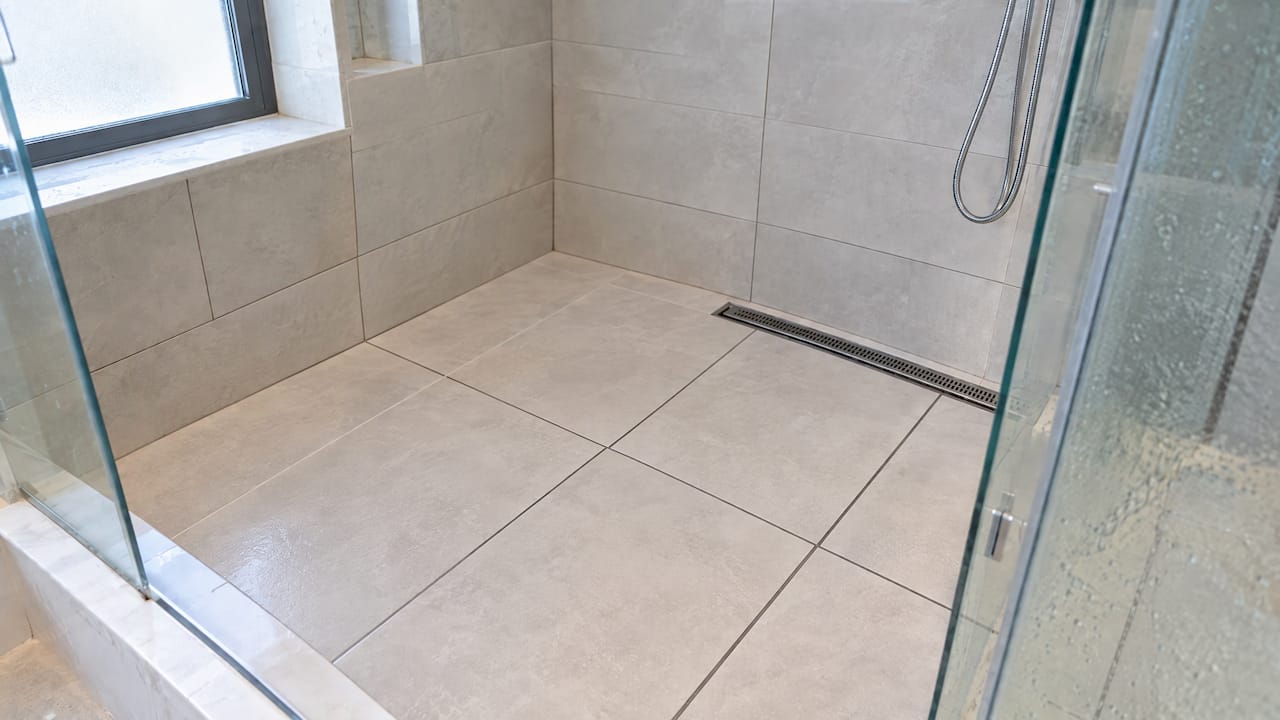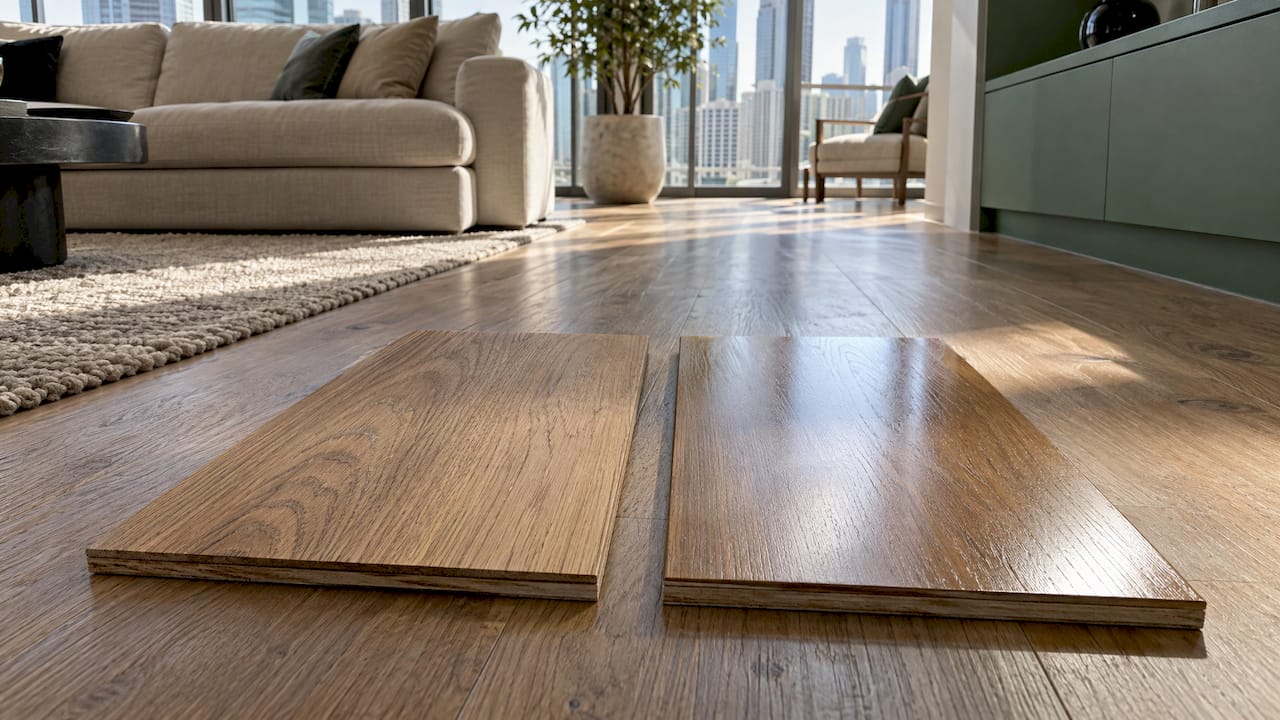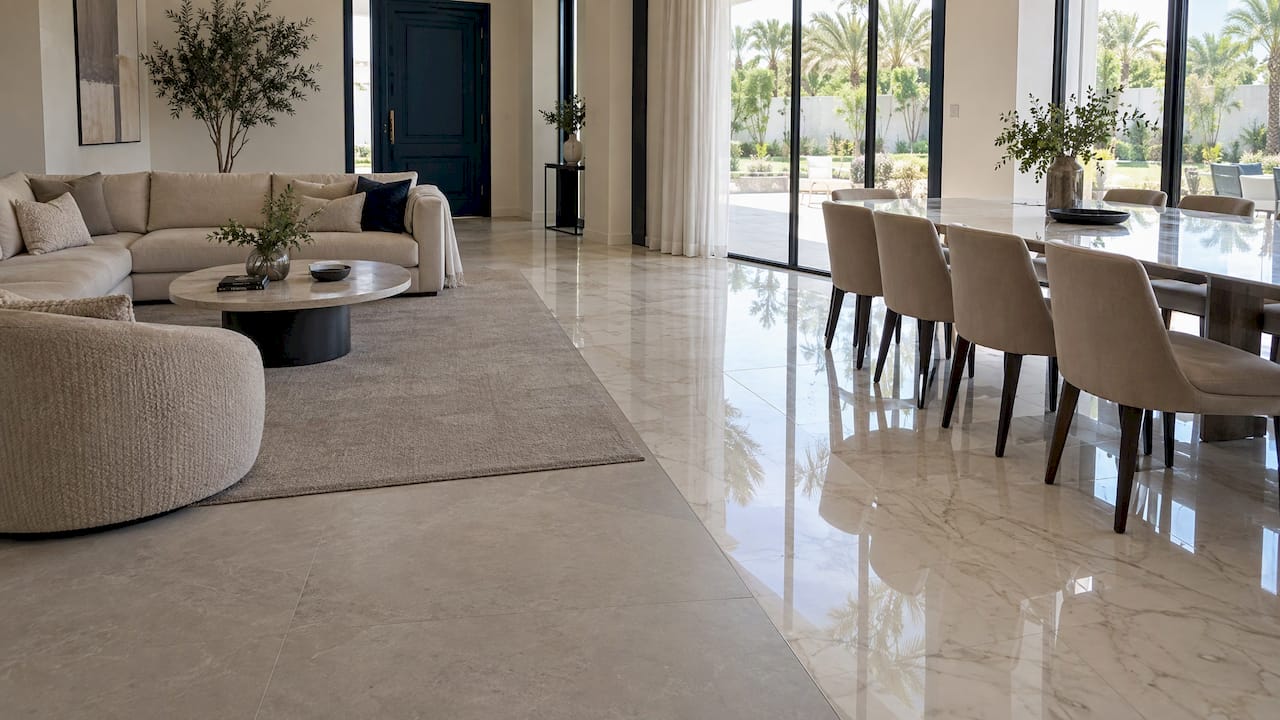

Choose glossy where you want light, drama and easy wiping, and matte where you want grip, a calm look and forgiving daily upkeep. In a Dubai villa, apartment or hotel, that usually means matte or honed surfaces in wet areas, on stairs and on terraces, and gloss or high polish in dry, well-maintained, lower-traffic spaces. The finish matters as much as the material. The same marble or porcelain can look and behave very differently depending on how its surface is finished.
TL;DR
- Glossy floors reflect light, make rooms feel brighter and bigger, and wipe clean easily. They show footprints, water spots, dust and scratches more clearly, and they get slippery when wet.
- Matte floors scatter light, cut glare and hide everyday marks. They can look flatter in dim rooms, and textured versions need more effort to deep-clean.
- Wet areas, showers, terraces and pool surrounds call for a matte or textured surface with a tested slip rating, not the word “anti-slip” on a brochure.
- Existing floors can often be changed or revived: gloss is restored by polishing, and a soft matte look on stone comes from honing, with sealing to protect either one.
- Match the finish to the room, the light and the traffic, then plan the upkeep that finish needs.
Table of Contents
- What matte and glossy actually mean
- How light and appearance change
- Which one hides dirt better
- Safety: slip resistance comes first in wet areas
- Matte vs glossy tile
- Marble and natural stone: polished vs honed
- Wood and parquet
- Room-by-room guide for Dubai properties
- Upkeep: what each finish needs
- Already have a floor you are unhappy with?
- How to decide: five questions
- Our perspective
- Want a different finish, or the current one restored?
- FAQ
What matte and glossy actually mean
A matte floor has a flat, low-sheen surface. It does not bounce light back at you. The result is a soft, natural, understated look. A glossy floor has a smooth, reflective surface that throws light around the room, deepens colour and gives a polished, luxurious feel.
The words describe how the surface treats light, not the material underneath. Porcelain and ceramic tile get their finish at the factory through glazing or polishing. Natural stone gets its finish from mechanical work on the surface: a polished finish is brought to a high shine, while a honed finish is smoothed to a soft matte or satin look. Wood and vinyl reach their sheen through the coating or finish applied on top.
That last point is useful for owners. A finish is not always permanent. On many existing floors, the sheen can be changed or brought back, which is a different decision from replacing the floor.
How light and appearance change
Gloss reflects light sharply, almost like a mirror. In a small or windowless room that helps: the space feels brighter and more open. In a large living area with floor-to-ceiling glazing, the same reflectivity can turn into glare, especially in strong Dubai daylight, at the hours when the sun sits low and hits the floor directly.
Matte scatters light instead. Colours look more even and quiet, and the room feels calmer. The trade-off is that a matte floor in a room with little natural light can read darker and less spacious, because it does not give anything back to the room.
A few practical checks before you commit:
- Look at the floor at the room’s worst moment. For a living room that might be late afternoon with the sun low, or evening with downlights and a television on. Glare from overhead lights and screens is a common reason people prefer matte in lounges.
- Think about the furniture. Matte surfaces are less likely to reveal the fine scratches that furniture legs leave.
- Think about the architecture. Large glazed walls and spotlights both amplify gloss. Warm, softly lit rooms with a natural material palette often suit matte better.
Which one hides dirt better
This is the question most owners really ask. The honest picture is a trade-off.
Glossy floors show dust, footprints, streaks, water droplets and fingerprints quickly. The smooth surface wipes clean in one pass, but you will be wiping more often to keep the look. Scratches and etching are more obvious on a mirror finish, and installation flaws such as uneven edges are easier to see in reflected light.
Matte floors hide everyday dust, water spots, light scuffs and footprints better, which suits busy family homes and floors that are not cleaned daily. Their weak spot is texture. A textured matte surface can hold stuck-on grease, soap residue and dried spills, so a deep clean takes more scrubbing. Using the wrong cleaner on a matte surface can also leave a visible film.
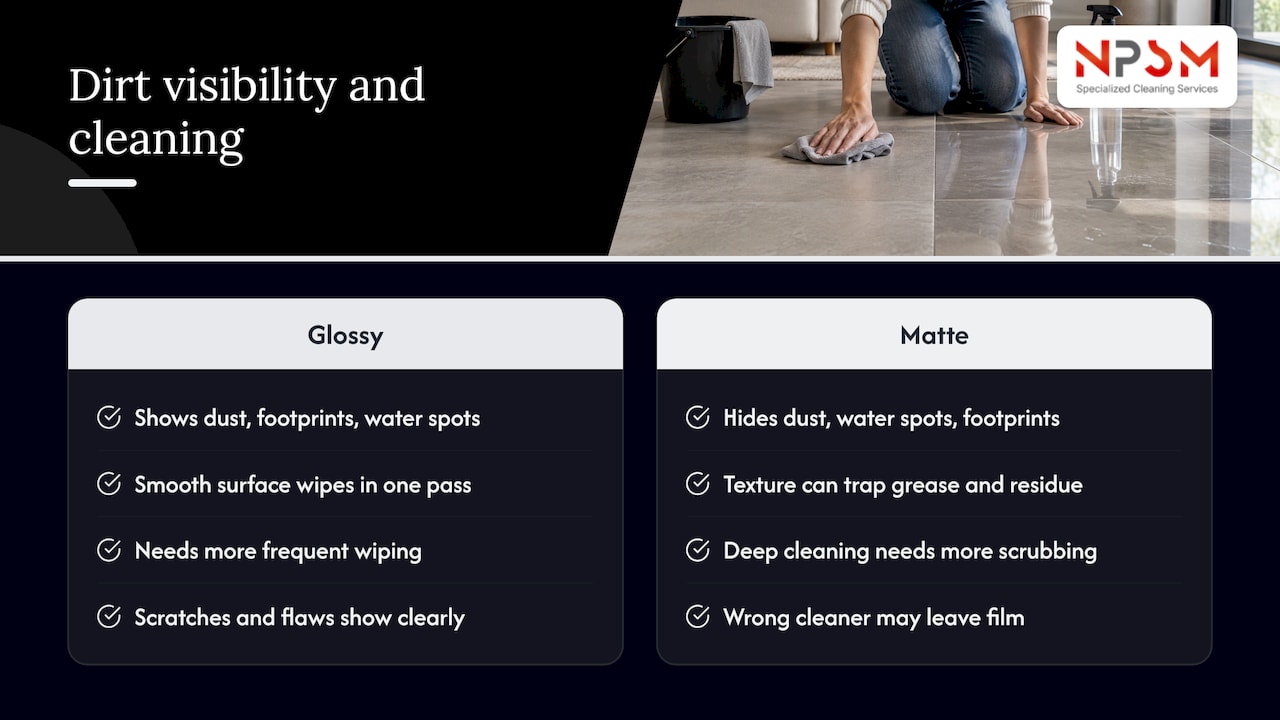
In short, gloss is easy to clean but quick to show it needs cleaning. Matte looks clean for longer but is harder to restore when it gets properly dirty. If you want a routine for the second case, our tile floor cleaning workflow walks through it.
Safety: slip resistance comes first in wet areas
A polished surface becomes slippery when wet. That is not a style point, it is a safety point, and it decides the finish for bathrooms, showers, entrances, kitchens with frequent spills, terraces and pool areas.
Two habits keep you out of trouble:
- Ask for a tested slip rating for the intended use. Do not accept the phrase “anti-slip” on its own. A matte tile is not automatically slip-resistant, because some matte surfaces are smooth. Texture and a tested rating are what count.
- Match the test to the situation. Shoes on a hallway floor and bare feet in a wet shower are different conditions. For showers and pool surrounds, ask for a rating that reflects wet, barefoot use.
In commercial and hospitality settings, slip resistance is treated as a use-specific safety issue, not a visual choice. The Dubai Health Authority’s facility guidance on floors considers contamination, footwear, activity and environment together, and notes that textured ceramic tile is a common compromise between traction and cleanability. If you manage a clinic, hotel spa, school or similar facility, check the requirements that apply to your building type with your consultant or the relevant authority before you choose or alter a finish.
The practical rule for homes: gloss is for dry areas, and wherever water meets bare feet, choose matte or textured.
Matte vs glossy tile
Tile is where most people meet this decision, so here is the side-by-side.
| Factor | Glossy tile | Matte tile |
|---|---|---|
| Look | Bright, reflective, luxurious | Soft, natural, understated |
| Light | Amplifies light, can make small rooms feel larger | Absorbs light, reduces glare, can feel darker in dim rooms |
| Visible marks | Shows footprints, water spots, smudges, scratches | Hides dust, fingerprints, water marks and light wear |
| Wet traction | Slippery when wet | Better grip, but check the tested rating |
| Everyday cleaning | Wipes clean quickly | Texture can trap grime, soap film and grease |
| Best for | Feature walls, dry living areas, low-traffic rooms | Bathroom floors, terraces, kitchens, busy family areas |
A useful middle path is satin or semi-polished tile, which softens glare while keeping some brightness. Many designers also mix finishes: gloss on a bathroom wall or kitchen backsplash, matte on the floor below it. That gives you the light and the easy wipe-down on surfaces nobody walks on, and the grip where people do.
Marble and natural stone: polished vs honed
With stone, the choice is between polished and honed, and it carries real consequences for how the floor ages.
Polished marble has deep colour, strong veining and a mirror-like shine. It is stunning in lobbies, majlis spaces, feature walls and vanities. It also shows scratches and etching more clearly, and it is slippery when wet.
Honed marble has a soft matte or satin surface with lower glare. It is more forgiving of traffic, disguises wear better and suits floors and stairs. Honed stone still needs good sealing, because the surface is less closed than a polished one and can take on stains if left unprotected.
Some owners start with polished marble and later find that a hallway or staircase feels too slick or shows too much wear. Others have a honed floor and miss the depth of colour that a polish brings out. Either change is possible on an existing floor. Our guide on polished vs honed marble explains how to decide, and the marble polishing and restoration page shows what we do for stone floors, stairs and surfaces.
Wood and parquet
Should a wooden floor be glossy? In most homes, a satin or matte finish is the safer call. High-gloss wood shows every footprint, speck of dust and scratch, and it can throw hard reflections in a sunny room. A low-sheen finish keeps the grain looking natural and is more forgiving of daily life.
Gloss can still work, in a formal room with controlled light and low traffic, where the glamour is the point. If you are unsure, test a small area or a sample under the room’s real lighting before committing to the whole floor.
If an existing wooden or parquet floor looks tired, the sheen is only part of the question. Whether it needs a refresh of the finish or a deeper sanding depends on how worn the surface is. Our wooden floor sanding vs polishing guide covers that choice, and our wooden floor polishing service handles both polishing and restoration.
Room-by-room guide for Dubai properties
Living rooms and majlis
Matte or honed works well here. It cuts glare from large windows, spotlights and screens, and it is kind to furniture scratches. If you love the look of gloss, keep it to rooms with controlled light and plan a regular cleaning routine, since every footprint will show.
Kitchens
Kitchens combine spills, grease and foot traffic. A matte or lightly textured floor gives grip, while a glossy backsplash keeps wall surfaces easy to wipe. Be realistic about grease, and clean it promptly so it does not settle into texture.
Bathrooms and showers
Choose matte or textured for the floor, with a tested wet rating suited to bare feet. Keep gloss for the walls if you want brightness. Hotel and serviced-apartment owners should treat bathroom floors as a safety and guest-experience issue together, and our hotel bathroom tile restoration guide covers how to maintain luxury standards without losing traction.
Bedrooms and home offices
Both finishes work. Gloss brightens a small room, while matte gives a quiet, restful base. Let the room’s natural light decide.
Staircases and entrances
Grip matters most here. Honed stone or matte tile is the sensible choice, particularly where people arrive with wet shoes or where bare feet are common.
Terraces, balconies and pool areas
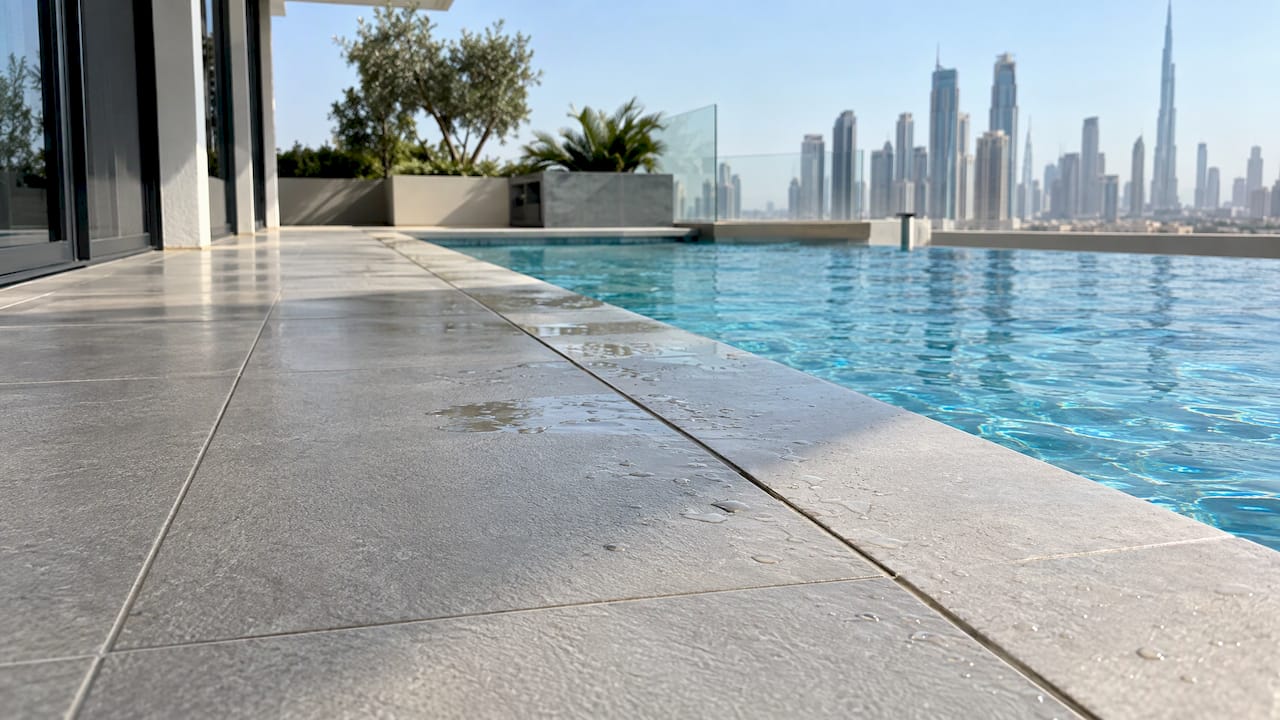
Use matte, brushed, flamed or otherwise textured surfaces. Polished surfaces on outdoor wet areas are a poor match for both safety and sun glare.
Lobbies, retail and hospitality spaces
A polished floor makes a strong first impression in a lobby or showroom, and it can be made to last with the right maintenance plan. High-traffic areas need that plan to be realistic: regular cleaning, protection at entrances and periodic re-polishing. Heavy traffic is where finishes wear first, so plan the schedule before choosing the sheen.
Upkeep: what each finish needs
Whatever you choose, a few habits protect the surface:
- Remove loose grit first. Sweep or vacuum before mopping, because sand and dust act like sandpaper under a mop. Dubai’s fine dust makes this especially relevant.
- Use a pH-neutral cleaner. Harsh products such as bleach, acids, ammonia, wax or oil-based cleaners can dull or damage finishes. This is especially true on natural stone, where acids etch the surface.
- Avoid abrasive pads on polished and honed surfaces.
- Rinse and dry properly on matte surfaces, so no cleaner film is left behind.
- Seal stone and grout as needed, so spills do not soak in. Honed and textured surfaces in particular benefit from diligent sealing.
- Protect entrances with good mats to catch grit before it reaches the floor.
Our Dubai floor care guide covers routine care for marble, wood and tile in more detail.
Already have a floor you are unhappy with?
Many owners ask this question because their floor no longer looks the way it did on day one. The cause is often not the choice of finish but wear on it. Foot traffic, grit, cleaning products and water spots dull a glossy surface over time, and a floor that was once mirror-bright starts to look flat.
Before thinking about replacement, work out what you have:
- Dull but intact surface. This is often a candidate for polishing. See our guide on dull floor tiles: polish, restore or replace.
- Gloss that has faded. Our article on how to restore tile gloss explains the methods.
- Too shiny, too slippery or too scratch-prone. On stone, honing can give a softer matte or satin look.
- Stained, etched or scratched stone. This points to restoration work such as grinding, honing, polishing and sealing in the right order.
What can be done depends on the material and its condition, which is why an on-site assessment beats guessing from photos.
How to decide: five questions
- Is the area ever wet or used barefoot? If yes, go matte or textured with a tested wet rating.
- How much natural light does the room get? Strong sun suggests matte. A dim room suggests gloss or satin.
- Who uses the space, and how often is it cleaned? Busy households and shared spaces lean matte. Quiet, well-kept rooms can carry gloss.
- How do you feel about visible marks? If footprints will bother you every day, choose matte.
- Do you want to change the finish later? Know that many stone, tile and wood surfaces can be re-polished or honed, so the first choice is not final.
Our perspective
We see the same pattern across Dubai villas, apartments, hotels and offices: owners choose a finish for how it looks on installation day, then live with how it behaves in daily use. Gloss is beautiful, but it asks for more attention, and in high-traffic or wet areas it needs a plan.
Our view is that the finish should follow the room. Polish where drama matters and traffic is light, hone or keep matte where people walk, wet feet and sun glare meet. The good news is that a floor is rarely stuck with its first finish. Polishing, honing, grinding and sealing let us bring back shine, soften an overly slick surface, or even out wear, without the cost and disruption of replacing good material.
Each floor and property is different, so we tailor the approach to the material, the condition and how the space is used.
Qadir
Want a different finish, or the current one restored?
If your marble, tile, wood or terrazzo floor looks dull, scratched or too slippery, we can assess it on site and advise on polishing, honing, sealing or restoration. Start with our tile polishing services, see the full range on our floor polishing and restoration page, or contact us through floorpolishing.ae for an assessment.
FAQ
Is matte or glossy tile better?
Neither wins everywhere. Matte suits wet areas, busy households, sunny rooms and anyone who dislikes visible footprints. Glossy suits dry, well-lit or small rooms where brightness and a luxurious look matter. Many homes use both, with gloss on walls and matte on floors.
What are the downsides of matte finish tiles?
Textured matte tiles can trap grease, soap residue and grime, so deep cleaning takes more effort. They can also make a dim room feel darker because they do not reflect light. Good cleaning habits and the right pH-neutral cleaner keep them looking fresh.
Should hardwood floors be glossy?
Usually a satin or matte finish is the more practical choice, because high gloss shows footprints, dust and scratches and can create glare in sunny rooms. Gloss works best in formal, low-traffic spaces with controlled lighting. Test a sample under the room’s real lighting before deciding.
Can I change a floor from glossy to matte, or bring the shine back?
Often, yes, depending on the material and condition. On natural stone such as marble, honing produces a soft matte or satin look, and polishing restores shine. An on-site assessment tells you what is possible for your floor.
Which finish is safest for bathrooms?
Choose a matte or textured floor with a tested wet slip rating suited to bare feet, and avoid polished or glossy floor tiles in showers and wet rooms. Ask the supplier for the rating instead of relying on the term “anti-slip”.