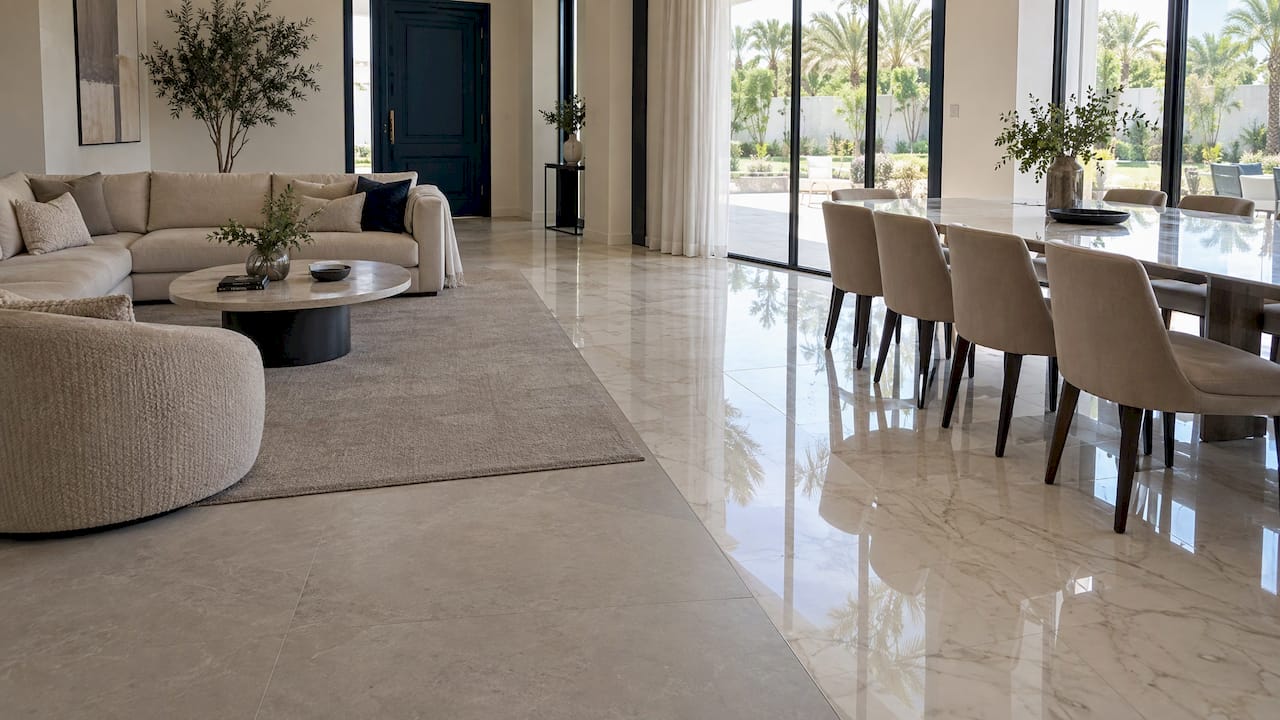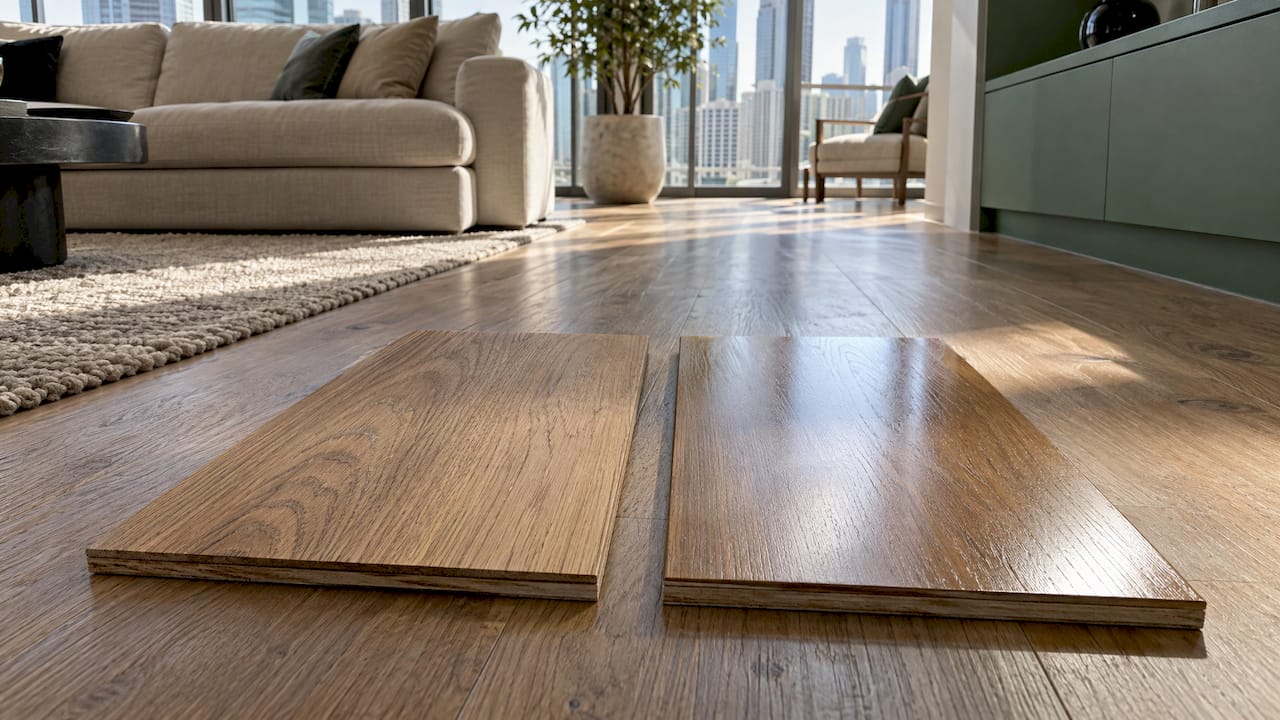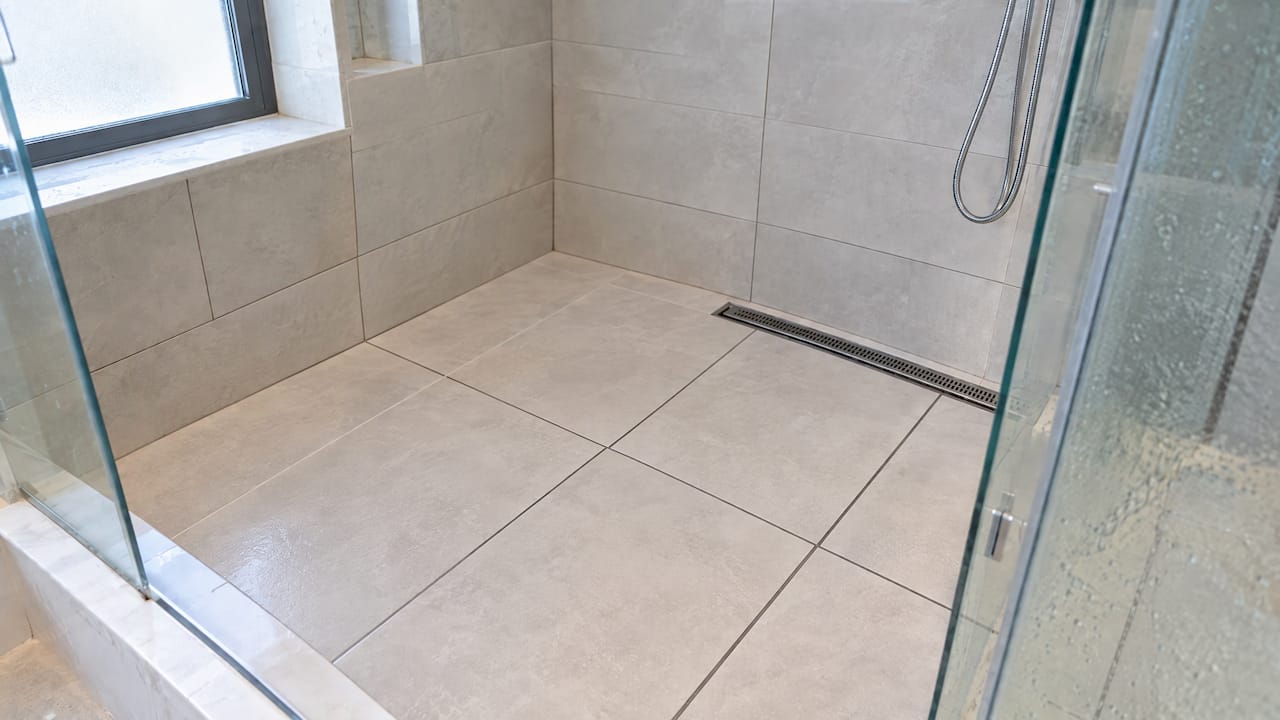

Grout color sealing is a restoration treatment. After deep cleaning, a pigmented sealer is applied to the grout lines. It evens out the color and closes the pores that trap dirt. It suits grout that is stained, patchy or faded but still structurally sound, and it avoids the dust, noise and cost of hacking out and replacing the grout. It is the wrong tool for crumbling or hollow grout, and it needs care on natural stone. This guide covers how to tell which case you have, what the work involves in a Dubai villa, apartment or commercial space, and how to keep the result looking good.
TL;DR
-
Color sealing cleans the grout, then coats it with a pigmented sealer. The lines come out a uniform color and are easier to wipe clean.
-
It works best on sound grout that is discolored, stained or uneven. Cracked, missing or hollow grout needs repair or regrouting first.
-
Surface preparation decides the result. The grout must be clean, completely dry and fully cured before any color is applied.
-
In Dubai, hard water, construction dust, strong cleaning chemicals and sun exposure on balconies and terraces are the usual causes of grout that looks tired.
-
Natural stone such as marble, travertine and limestone needs a stone-specific assessment before anything pigmented goes near the joints.
Table of Contents
What grout color sealing is
Grout is porous. Cement-based grout in particular absorbs water, oils, cooking residue, soap and dust. Over time the lines darken, stain unevenly and stop matching the tile. Scrubbing helps with surface soil, but it cannot always bring back an even color.
Color sealing combines three jobs in one process:
-
Cleaning. Embedded soil, soap film, construction residue and old cleaner residue are removed so the new coating can bond.
-
Recoloring. A pigmented product is worked into the joints. You can restore the original shade or choose a new one, such as a deeper grey to hide staining on a light floor.
-
Sealing. The product leaves a protective layer in the joint, so the grout resists staining and is easier to maintain.
Tile industry guidance recognizes grout colorants as a way to change grout color, and notes that they usually seal as well, so a separate penetrating sealer is typically unnecessary. Manufacturers also position these products as an alternative to removing and replacing grout when the problem is color rather than structure.
Color sealing leaves the tile untouched. If the tile itself is dull, scratched or etched, that is a separate job, covered in our guide to restoring tile gloss.
Color sealing, clear sealing and regrouting compared
Three options get confused. They solve different problems.
| Clear (penetrating) sealer | Grout color sealing | Regrouting | |
|---|---|---|---|
| What it does | Soaks into the grout and reduces absorption without changing how it looks | Recolors and seals the joint | Removes the old grout and installs new |
| Best for | New or clean grout that is still an even color | Stained, faded or uneven grout in sound condition | Cracked, crumbling, missing or hollow grout, or failed joints |
| Changes color | Little or no change | Yes, by design | Yes, new grout color |
| Disruption | Low | Low to moderate | High: dust, noise, longer downtime |
| Cost level | Lowest | Middle | Highest |
The logic is simple. If the grout is healthy and clean, a clear sealer protects it. If it is healthy but ugly, color sealing fixes the look. If it is failing, no coating will hold it together, and you should look at floor regrouting instead.
When color sealing is the right call
Professional cleaning bodies make a useful distinction. Soil that has not penetrated deeply often responds to proper cleaning. Deeply set stains may need regrouting or a topical color-seal product. That gives you a practical test.
Color sealing usually suits:
-
Grout that stays discolored after a thorough professional clean
-
Uneven color caused by patchy staining, water marks or past spot repairs
-
Dark or badly stained grout on floors, shower walls or kitchen splashbacks
-
Rental or resale preparation, where a uniform, fresh look matters and a full retile is not on the table
-
Hotel bathrooms and apartment turnovers where downtime has to stay short
Look at repair or regrouting first when:
-
Joints are cracked, powdery or have gaps
-
Tiles sound hollow or move underfoot
-
Water is getting behind the tile, for example in a shower with failed joints
-
The grout is a different material from what you think it is, such as epoxy grout, which behaves differently from cement grout (see our comparison of epoxy and cement grout)
If you are unsure which side of the line your floor falls on, a site inspection settles it in minutes. A technician can press on joints, check for hollow tiles and test how the grout reacts to cleaning.
What Dubai property owners should consider
The same product behaves differently depending on the building and the conditions it lives in. These are the local factors we see most.
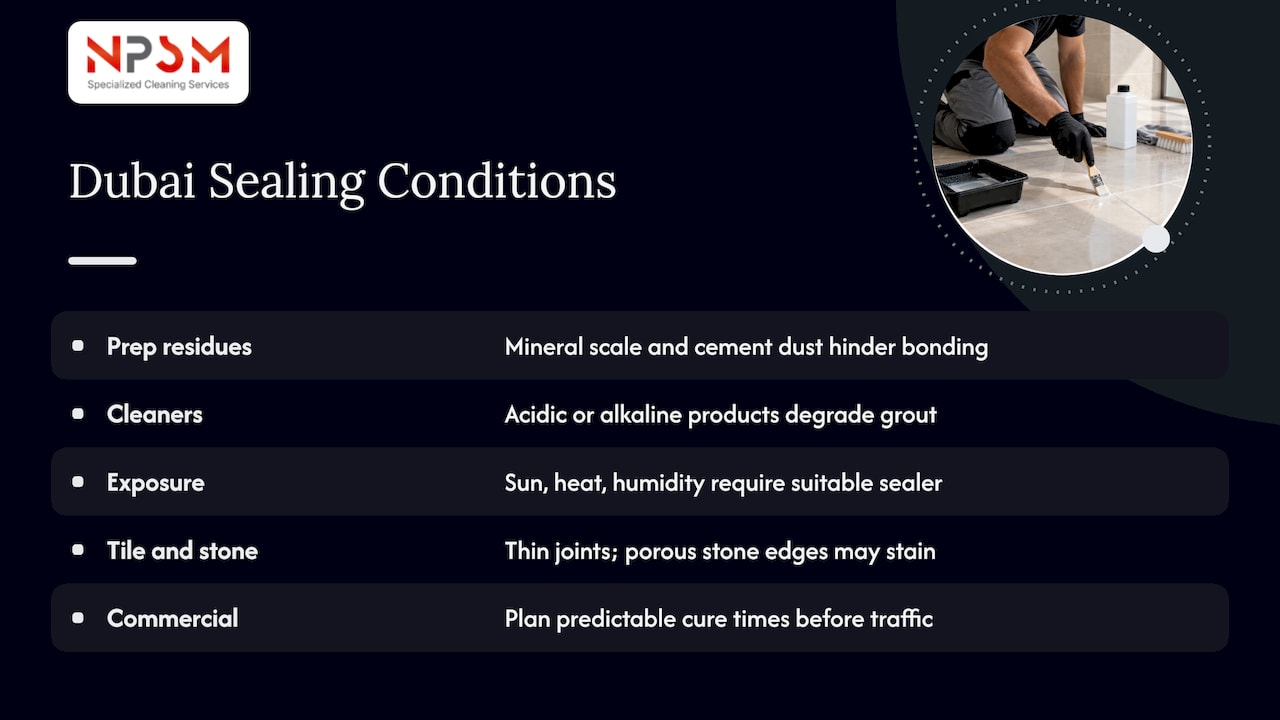
Hard water and mineral deposits. Water in Dubai leaves mineral scale on shower floors, around basins and on kitchen splashbacks. Scale sits in the grout and has to be dealt with during cleaning, or the color coat will bond to deposits instead of to the grout.
Construction and handover dust. New apartments and villas often have fine cement dust and residue in the joints from fit-out. Left in place, it dulls the grout and can affect how a sealer takes. Our guide to removing cement haze without etching explains why the cleaning method matters, especially next to stone or polished tile.
Aggressive cleaning products. Acidic bathroom cleaners and strong alkaline degreasers are common in households and cleaning crews. They can degrade cement grout and leave residue that attracts soil. A previous history of oil-based soaps or heavy cleaners can also make it harder for a colorant to bond, so tell your contractor what has been used on the floor.
Sun, heat and humidity. Balconies, terraces and sun-facing entrances see far more thermal movement and UV than interior rooms. Bathrooms and laundry areas run humid, which encourages mildew in porous joints. Work in these areas needs the right product for the exposure. Not every interior color sealer suits an exterior or wet-area use.
Large-format porcelain with thin joints. Many Dubai apartments use large porcelain tiles with narrow grout lines. Narrow joints are easy to recolor but unforgiving: sealer smeared onto the tile face must be removed before it dries.
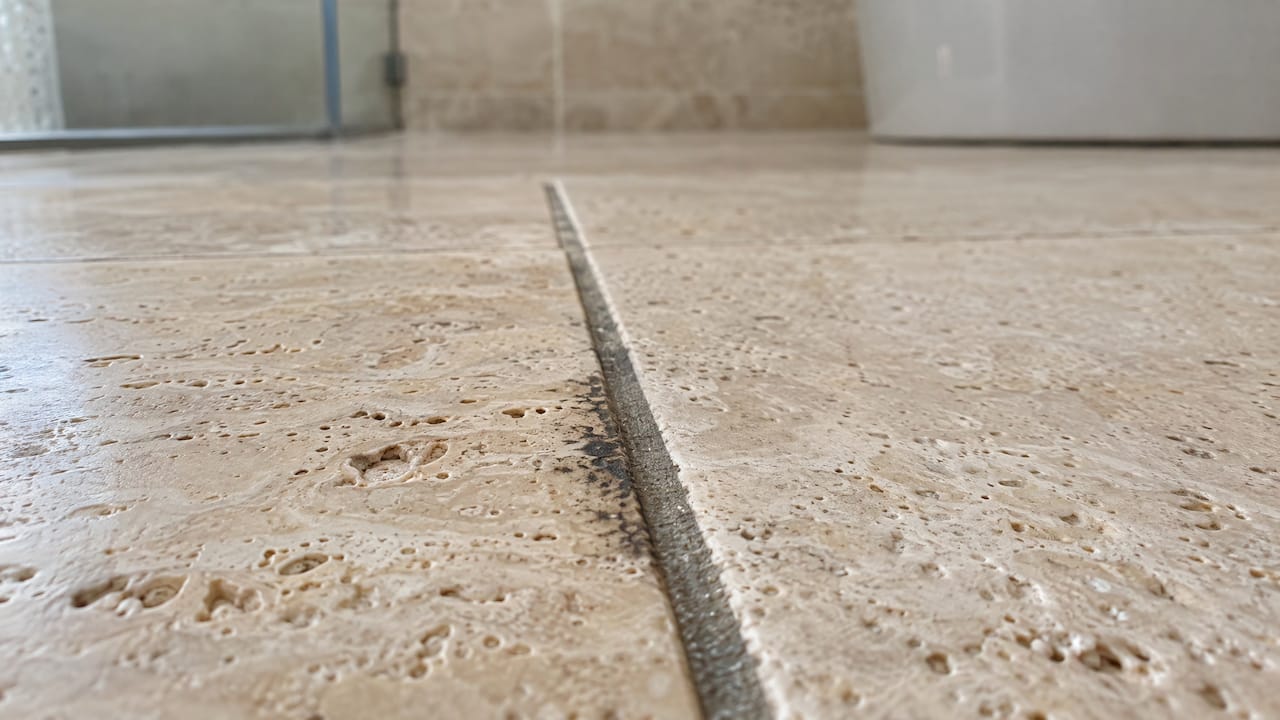
Natural stone. Marble, travertine, limestone and similar stones are porous and sensitive to chemicals. Some pigmented grout sealers are not recommended next to porous, unglazed tile or natural stone, because a coating that wicks into the stone edge can stain it permanently. On stone floors, the grout treatment must be planned together with the stone itself. For that reason we assess marble and stone floors individually, and our natural stone sealing guide explains how sealing differs for stone.
Commercial and hospitality settings. Hotels, retail units and offices need work done around opening hours, with predictable cure times before traffic returns. Our hotel bathroom tile restoration guide covers how to phase this kind of work.
How the process works, step by step
A good color sealing job is mostly preparation. The coating itself takes a fraction of the time.
-
Inspection and test. Check the grout type, condition and any earlier coatings. Test the product on an inconspicuous area to confirm the shade and that it bonds.
-
Protect the surroundings. Mask skirting, cabinet bases and any natural stone or other sensitive surface. Ventilate the room. Operators wear chemical-resistant gloves and eye protection.
-
Deep clean the joints. Remove soil, soap residue, construction dust, hard-water scale and cleaner residue. This is where most failures begin, because a coating on a dirty joint will not hold.
-
Repair what needs repair. Small chips and missing sections are filled before color goes on.
-
Dry completely. Trapped moisture limits how the sealer bonds and performs. Manufacturer instructions for colorants generally call for clean, thoroughly dry joints.
-
Apply in small sections. Work the product into the joints with a small stiff brush, applicator or sponge. Keep the coat even and not heavy. An over-thick coat can blister, crack or debond later.
-
Remove excess promptly. Wipe any product off the tile face within the working time on the label. Once it dries on the tile it is hard to remove.
-
Cure. Keep the area dry and free of cleaning for the period the manufacturer specifies. Many products ask for around two days before wetting or washing. Follow the data sheet for the product used, as some call for longer.
For new cement grout, manufacturers typically want the grout itself to be fully cured before any sealer or colorant is applied. Their data sheets give a minimum cure time, and areas that will be constantly wet, such as steam rooms, usually need longer. We follow the written instructions for the specific product, and they take priority over any rule of thumb.
A note on doing it yourself
Small touch-ups are possible, but professional results come from correct cleaning, controlled drying and consistent application across the whole floor. Patchy coverage and shade mismatch are the common problems on larger areas. For a villa ground floor or any commercial space, a trained team keeps the color consistent from room to room.
How long does grout color sealing last?
There is no single answer, and any honest figure comes with conditions. Some manufacturers quote long protection periods, in one case up to 15 years when correctly applied. Those figures describe ideal use according to the maker. Real-world life depends on:
-
Preparation quality. Clean, dry, cured grout holds the coating far better.
-
Application thickness. Thin, even coats outperform thick ones.
-
Traffic. A hallway or hotel lobby wears faster than a guest bedroom.
-
Water exposure. Shower floors and wet areas are harder on any coating than dry living areas.
-
Cleaning chemistry. Harsh products shorten the life of the finish.
-
Sun exposure. Outdoor areas face UV and temperature swings.
Color sealing is a surface treatment, so over many years it can wear and need refreshing in the highest-use areas. Refreshing is a cleaning and recoat job, not a rebuild. Plan for it as part of the maintenance cycle for busy floors.
Keeping color-sealed grout looking good
Maintenance is simple, and it protects your investment.
-
Sweep or dust-mop first. Grit scratches coatings and tile alike. Remove it before any wet cleaning.
-
Use a pH-neutral cleaner. Professional cleaning guidance recommends a no-rinse neutral-pH cleaner for routine care. Acidic or alkaline products can degrade grout and leave residue that attracts dirt.
-
Use a microfiber flat mop. It lifts soil from the joints without harsh scrubbing.
-
Avoid stiff wire brushes and abrasive pads. They can scuff the coating.
-
Wipe up spills. Oils, coffee, and colored liquids are easier to remove when fresh.
-
Respect the cure window. Do not wet-clean the floor until the cure period is over.
The goal is stain and soil resistance, not a permanently beading surface. Residue from the wrong cleaner matters as much as the original application. Our grout cleaning guide for Dubai covers routine care in more detail, and the step-by-step grout restoration guide walks through the full sequence.
Our perspective
Most grout problems we are called to are not tile problems. The tile is fine, the layout is fine, and the room looks old because the lines between the tiles have gone grey, patchy or dark.
That is why we treat grout as part of floor restoration, not an afterthought. In Dubai, hard water, fit-out dust, heavy cleaning products and hot, humid bathrooms all work on the joints every day. Replacing a whole floor because of that is rarely sensible. Restoring the joints, and where needed the tile surface as well, keeps a premium floor in service and protects the value of the property.
Our approach is to inspect first. We check whether the grout is sound, what type it is and what sits next to it, then recommend the treatment that fits: deep cleaning, repair, regrouting or recoloring. On marble and other natural stone we plan the joints together with the stone, because the stone is usually the most valuable thing on the floor. We use professional-grade equipment and eco-friendly products, and we tailor each job to the floor type and the property.
If your grout looks tired, start with a proper assessment. It is the quickest way to know what you actually need.
Qadir
What it costs and how to get a quote
Grout work is priced by the area, the condition of the joints, the tile type and the access. Two bathrooms of the same size can differ if one needs repairs and the other needs only cleaning and color. Our published pricing for floor polishing and restoration runs from AED 25 to AED 200 per sqft depending on the work, and marble polishing and restoration starts from AED 30 per sqm. Grout treatment is quoted after we see the floor, because the preparation needed is what sets the price.
To ask for an assessment, start with our tile polishing and grout services in Dubai. We cover tile deep cleaning, tile polishing and re-grouting, serving villas, apartments, offices, hotels and retail spaces. If your floors are marble or other natural stone, see our marble polishing and restoration page or our natural stone restoration services, and the team will plan the grout and stone work together.
Before you request a quote, it helps to have this ready:
-
The tile type and approximate area
-
Whether the grout is cement or epoxy, if you know
-
Where the discoloration is worst (wet area, kitchen, high-traffic hallway, outdoor)
-
What cleaning products have been used
-
Photos of the joints in good light
-
Any deadline, such as a handover, a tenant turnover or an opening date
FAQ
What is a grout color seal?
It is a pigmented sealer that is worked into cleaned grout joints. It changes or evens out the color and protects the grout from stains and moisture. Many products do both jobs at once, so a separate clear sealer is usually not needed.
Can you color seal grout on a marble or natural stone floor?
It needs care. Natural stone is porous and chemically sensitive, and some pigmented grout products are not recommended near it because they can stain the stone permanently. The grout and the stone should be assessed together before any product is chosen, so ask a stone restoration specialist to inspect the floor first.
How long does grout color sealing take to dry before I can use the floor?
It depends on the product. Many manufacturers ask you to keep the area dry and uncleaned for about two days after application, and some require longer. Your contractor should give you the exact time from the product’s data sheet and schedule the work so the floor stays untouched through that window.
Is regrouting better than color sealing?
They solve different problems. Regrouting is the answer when grout is cracked, crumbling or hollow, or when water is getting behind tiles. Color sealing suits sound grout that has stained, faded or gone uneven. An inspection tells you which applies to your floor.
How do I clean grout after it has been color sealed?
Sweep first, then use a pH-neutral cleaner with a microfiber mop. Avoid acidic bathroom cleaners, harsh degreasers and stiff wire brushes, and do not wet-clean until the cure time has passed. Wipe spills quickly, especially oils and strongly colored liquids.