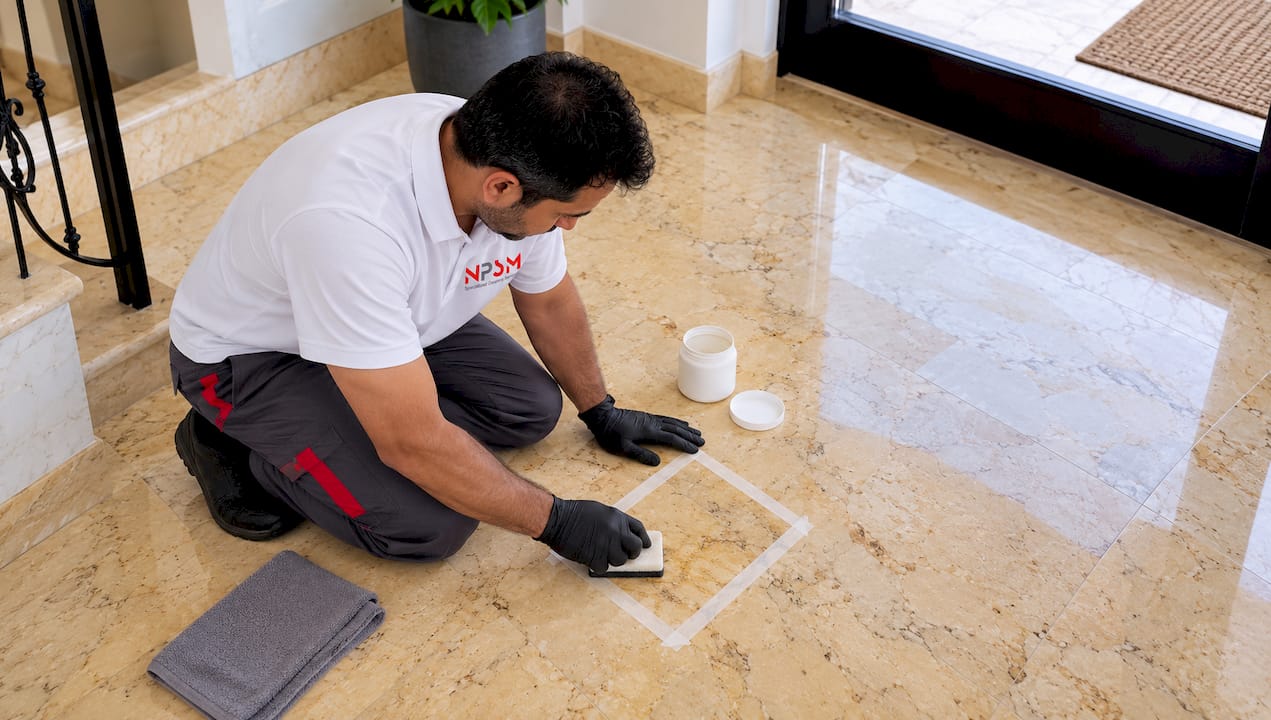

Marble floors stain in seven predictable ways: oil, organic pigment (coffee, wine, food), ink, rust, biological growth, paint or adhesive residue, and etching. Professionals treat the first six with a poultice, an absorbent paste that pulls the stain out over 24 to 48 hours. Etching is fixed by grinding, honing, and polishing instead. If you just spilled something, blot it immediately, never scrub, and test any product on a hidden corner first.
TL;DR:
Oil stains may require multiple applications of a poultice with acetone or mineral spirits to fully lift deep or old marks.
Rust stains, often embedded in pores, are difficult to remove completely and require specific rust removers or professional grinding.
Etching cannot be treated with paste and instead needs mechanical correction through grinding, honing, and polishing to restore surface shine.
DIY poultice attempts should be limited to two or three cycles on small stains before consulting a professional to avoid damage.
Regular maintenance, including prompt spill blotting, sealing every 6 to 12 months, and avoiding acids like vinegar or lemon, can prevent most stains and etching.
Table of Contents
Marble Floor Stains: 7 Common Types and What Actually Removes Them
Not every mark on marble is a stain. Some are etches, which is a chemistry problem, not an absorption problem, and mixing up the two is why so many DIY attempts make things worse. Here’s how to tell the seven apart and treat each one correctly.
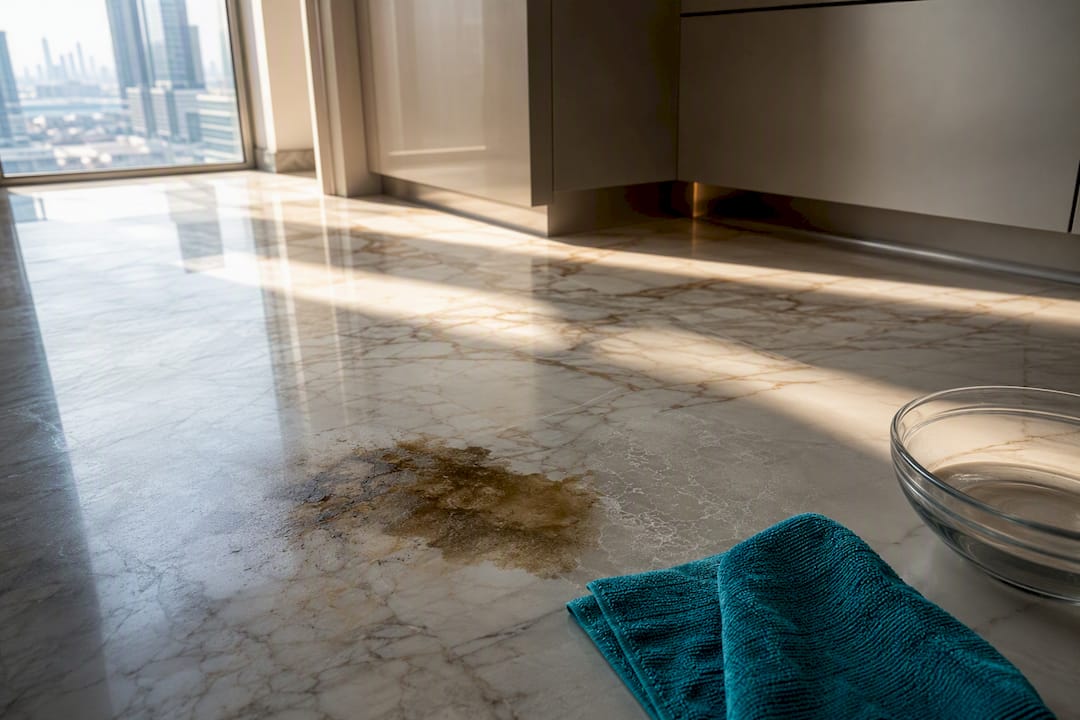
1. Oil-based stains. These show up dark and slightly glossy, almost like the stone got wet and stayed that way. They come from cooking oil, hand cream, or car fluid tracked in on shoes. Start with a few drops of dish soap in warm water and a soft cloth. If the shadow stays, mix a poultice using acetone or mineral spirits combined with diatomaceous earth into a paste roughly the thickness of peanut butter, spread it over the stain, cover with plastic wrap, tape the edges, and leave it for a day or two. Deep or old oil stains often need several applications before they lift fully.
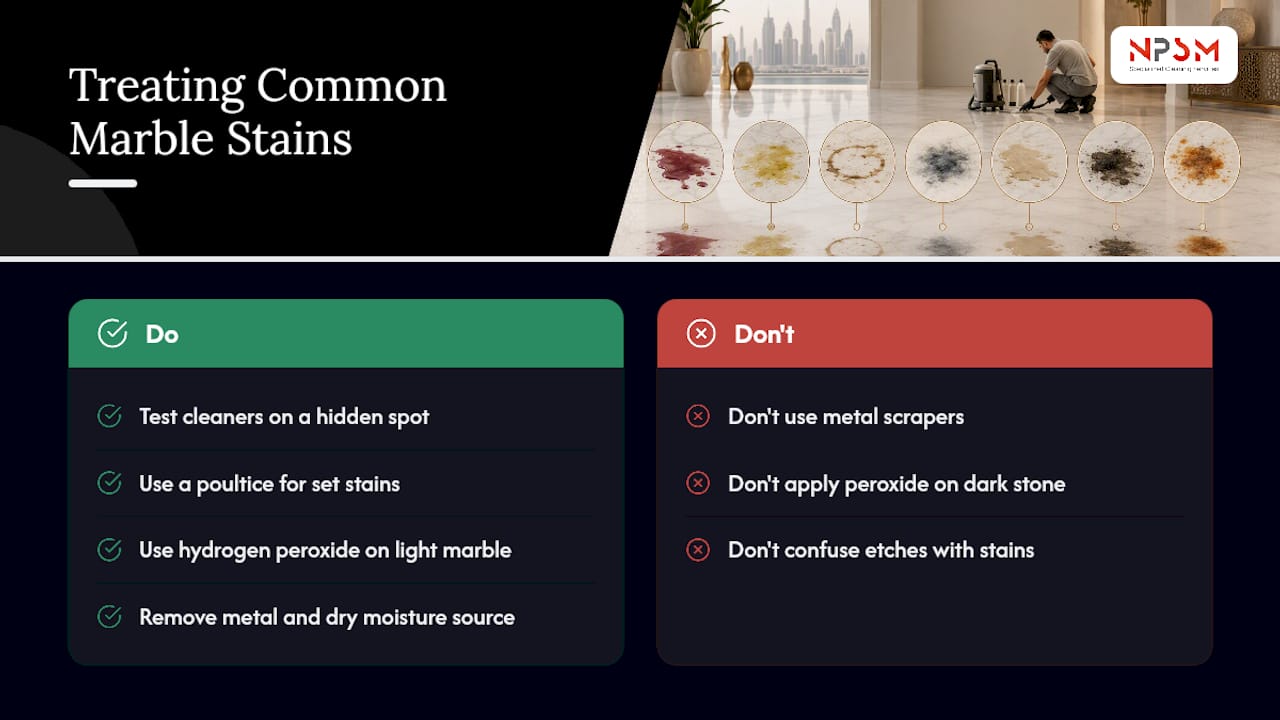
2. Organic stains (coffee, wine, food). These leave a brown or tan tint with soft, feathered edges. Wipe first with a pH-neutral cleaner. If pigment remains, a hydrogen peroxide poultice is usually the safest next move on light-colored marble, since peroxide breaks down organic pigment without the acidity that damages the stone’s finish. Leave it for about a day under plastic. Skip peroxide on darker or dyed stones, where it can bleach an uneven halo around the treated area.
3. Ink stains. Fresh ink responds to isopropyl alcohol on light stone or acetone on darker varieties, but test both on a hidden spot first since acetone can dull certain finishes. Dried or set-in ink usually needs a diatomaceous earth and hydrogen peroxide poultice, applied the same way as the organic stain treatment above.
4. Rust stains. Orange or reddish brown discoloration, often in a ring shape from a planter, furniture leg, or dripping pipe. Rust is one of the toughest stains on this list because the iron works its way into the stone’s pores rather than sitting on the surface; understanding why rust stains can be difficult to remove is explained in detail in How to Remove Rust Stains From Carpet at Home. An iron-specific rust remover or a commercial rust poultice is the right tool, but even that doesn’t guarantee full removal. Move the metal object that caused it before you treat the stain, or it will come right back.
5. Biological growth (mildew, mold). Dark speckling, usually in grout lines or shaded, damp corners like a shower threshold or an entry mat that never fully dries. A dilute hydrogen peroxide solution scrubbed into the grout handles most of it, but the fix that actually sticks is finding and drying out the moisture source.
6. Paint or adhesive residue. Scrape gently with a plastic putty knife, never metal, then apply a stone-safe lacquer thinner or paint stripper on a small test patch before treating the full area. Thin splatters usually respond to this. Heavy paint drips or old adhesive layers are a job for a professional, since aggressive stripping chemistry can eat into the polish underneath.
7. Etching. This one isn’t a stain at all. It’s a dull, rough, or whitish patch left by an acid, like a splash of lemon juice, vinegar, or wine that sat too long. A poultice does nothing here because there’s no pigment to draw out. The surface itself has been chemically burned, and the only fix is mechanical: grinding down to a fresh layer, then honing and repolishing to restore the shine.
Pro Tip: Keep a small tube of pH-neutral stone cleaner and a microfiber cloth near the kitchen and entry. The habit of wiping a spill within sixty seconds prevents more marble damage than any poultice ever will.
When Should You Call a Marble Restoration Professional?
DIY poulticing has a reasonable success rate on small, fresh, well-identified stains, but it isn’t unlimited. Know when to stop.
-
Try one or two poultice cycles on a small, isolated stain before deciding it isn’t working.
-
Stop after two or three failed attempts. Repeating a treatment that isn’t lifting the stain usually just risks damaging the surrounding finish.
-
Call a professional immediately for etching, since it needs mechanical repolishing, not a paste.
-
Call earlier for stains covering a large area, tiles that feel loose or cracked, or marble that’s antique, imported, or otherwise expensive to replace.
-
Wear gloves and work in a ventilated room when handling any poultice chemistry. Never combine bleach with ammonia or acetone with peroxide.
-
Always run a test patch in an inconspicuous spot before applying any product to the visible stained area.
How Professionals Fix What Poultices Can’t
Grinding, honing, and polishing form a sequence, not a single step. Grinding removes a thin layer of stone to eliminate deep etching or embedded rust, honing smooths the surface to a matte finish, and polishing brings back the reflective shine. This is the only route for chemical damage, since etching alters the stone’s surface structure rather than sitting in its pores.
-
Professional-grade poultices use stronger solvent ratios and monitored dwell times, which is why a technician often clears a stain in one or two visits that might take a homeowner three or four attempts.
-
After any chemical or mechanical treatment, the surface gets neutralized, rinsed, buffed, and resealed.
-
Some rust or age-set stains never come out completely, even with professional tools. A specialist will tell you that upfront rather than promise a result the chemistry can’t deliver.
Pro Tip: If a company can’t explain the difference between an etch and a stain in the first five minutes of a site visit, that’s a red flag about how they’ll treat your floor.
A Simple Maintenance Plan to Keep Marble Stain Free
Prevention costs a fraction of restoration, and most of it comes down to habit rather than product.
-
Dry dust the floor weekly to remove grit that scratches the polish underfoot.
-
Blot any spill the moment it happens. Standing liquid is what turns a wipeable mess into an absorbed stain.
-
Skip vinegar, lemon, ammonia, and bleach on marble. All four are acidic or caustic enough to etch the surface on contact.
-
Do a pH-neutral deep clean monthly and check the finish for early dullness or rough patches.
-
Reseal every 6 to 12 months, or sooner if water no longer beads on the surface. That bead test is the simplest way to know sealer has worn through.
-
Use mats at entrances, felt pads under furniture, and keep metal planters or décor off bare marble to prevent rust rings before they start.
Handling Stain Removal Chemicals Safely
Poultice chemistry ranges from mild dish soap to solvents like acetone, mineral spirits, and hydrogen peroxide, and each carries its own risk if handled carelessly. Work in a ventilated space, ideally with a window open or a fan running, since solvent fumes build up fast in small bathrooms or closed kitchens.
Wear nitrile gloves for any poultice mixing, and add eye protection when working with hydrogen peroxide concentrations above the diluted household strength. Never combine chemical families. Bleach and ammonia release toxic gas together, and mixing acetone with peroxide-based products creates an unstable, flammable reaction. Store leftover solvents in their original labeled containers, away from heat sources, and keep pets and kids out of the room while a poultice sets.
Test every product on a hidden section of the marble first, whether that’s under a rug’s edge or inside a closet, since some stain-removal chemistry strips the polished finish along with the stain. If that happens, you’re now looking at a repolishing job on top of the original stain, which is a more expensive fix than the one you started with. Label your poultice mixture with the date and ingredients if you’re leaving it under plastic wrap for the full 48 hours, so nobody in the household disturbs it early or mistakes it for something else. When in doubt about a chemical’s compatibility with a specific stone type, especially dyed, honed, or antique marble, a quick call to a restoration company beats guessing.
The Tools Professionals Use for Marble Stain Removal
A technician’s kit looks different from what’s under most kitchen sinks. Diamond-impregnated polishing pads, ranging from coarse grits for grinding down etched or damaged layers to fine grits for restoring shine, are the backbone of mechanical restoration work. These get run through a floor buffer or a handheld polisher, machines with enough consistent pressure and rotation speed to produce an even finish across a large surface, something a rag and elbow grease can’t replicate.
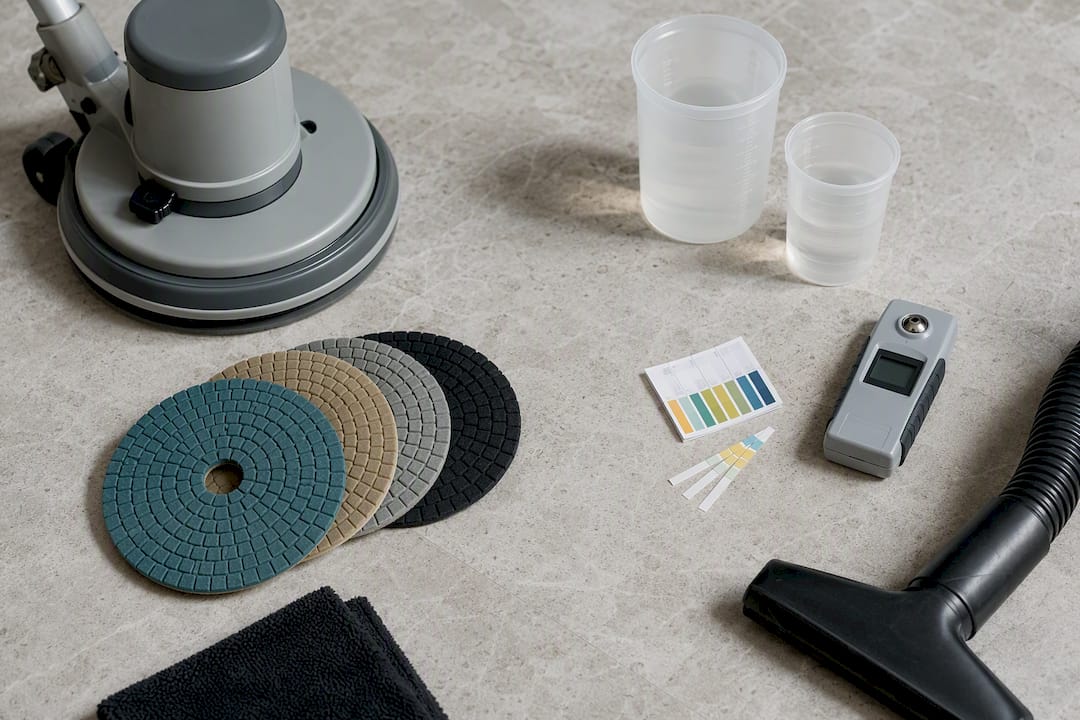
For chemical work, professionals use pH-testing strips to confirm a cleaner won’t etch a specific stone before it touches the floor, along with graduated mixing containers to get poultice ratios precise rather than eyeballed. Wet vacuums extract slurry during grinding and honing, keeping the mess contained and speeding up drying time between passes. A moisture meter checks whether a stone floor has dried enough before sealing, since resealing over trapped moisture traps the problem underneath the new coat.
Finally, impregnating sealers applied with low-nap rollers or sprayers finish the job, penetrating the stone’s pores rather than sitting on top like a topical coating would. The combination of mechanical grinding equipment and targeted chemistry is what separates a same-day professional visit from a homeowner’s third failed poultice attempt.
What I’ve Learned Watching Homeowners Get This Wrong
The single biggest mistake is reaching for vinegar or lemon juice because it’s what’s on hand. Both are acidic enough to etch marble on contact, turning a stain into a permanent dull patch in seconds. The second mistake is skipping the test patch, which is the only thing standing between you and stripping a finish you can’t easily replace.
A good diagnostic sequence never starts with a chemical. It starts with looking: color, shape, and location tell you whether you’re dealing with an absorbed stain or surface etching before you touch anything. A small poultice trial on a discreet section confirms the diagnosis. Only then does it make sense to scale up or call in mechanical restoration.
— Qadir
Get a Marble Stain Assessment From FloorPolishing.ae
If you’ve run through one or two poultice cycles and the stain is still visible, or you’re staring at a dull, etched patch that no paste will fix, that’s the point to bring in a professional. Professional providers handle exactly this gap between DIY and full restoration: on-site diagnosis to confirm stain versus etch, targeted poulticing for absorbed marks, and grinding, honing, and polishing where the surface itself needs correcting.
Request a quote if you’re dealing with a large stained area, visible etching, a stain that keeps returning, or marble that’s simply too valuable to risk on a third home remedy. A technician visit typically starts with identifying the stain type on-site before recommending a treatment path. Check the marble polishing and restoration services page for scheduling details, or browse the full floor restoration services overview to see how stain removal fits alongside grinding, resealing, and ongoing maintenance plans.
Where to Verify Poultice and Etching Guidance
For readers who want to check the chemistry themselves, Floorpolishing cover test patches and repeat poultice cycles in more depth. The polishing versus grinding versus crystallization breakdown explains why etched marble needs mechanical correction rather than a paste treatment.
FAQ
What’s the Difference Between a Stain and an Etch on Marble?
A stain is pigment absorbed into the stone’s pores, which a poultice can pull back out over 24 to 48 hours. An etch is chemical damage to the surface itself, usually from an acid, and it needs grinding, honing, and repolishing rather than any cleaning paste.
How Long Should a Poultice Stay on a Marble Stain?
Most poultices need 24 to 48 hours under plastic wrap to dry fully and draw the stain out. Deep or old stains often need two or three applications before the mark is gone.
Can I Use Vinegar or Lemon Juice on a Marble Stain?
No. Both are acidic enough to etch the marble’s surface on contact, which turns a treatable stain into a permanent dull patch. Stick to pH-neutral cleaners or the specific poultice chemistry suited to the stain type.
How Often Should I Reseal My Marble Floor?
Reseal every 6 to 12 months, or sooner if water no longer beads on the surface when you test it. That bead test is the simplest way to know the sealer has worn through.
When Should I Stop DIY Treatment and Call a Professional?
Stop after two or three poultice attempts that haven’t lifted the stain, and call sooner for etching, cracked or loose tiles, large stained areas, or high-value stone. Professional services are available through marble stain removal services to confirm whether a mark needs a poultice or mechanical polishing.