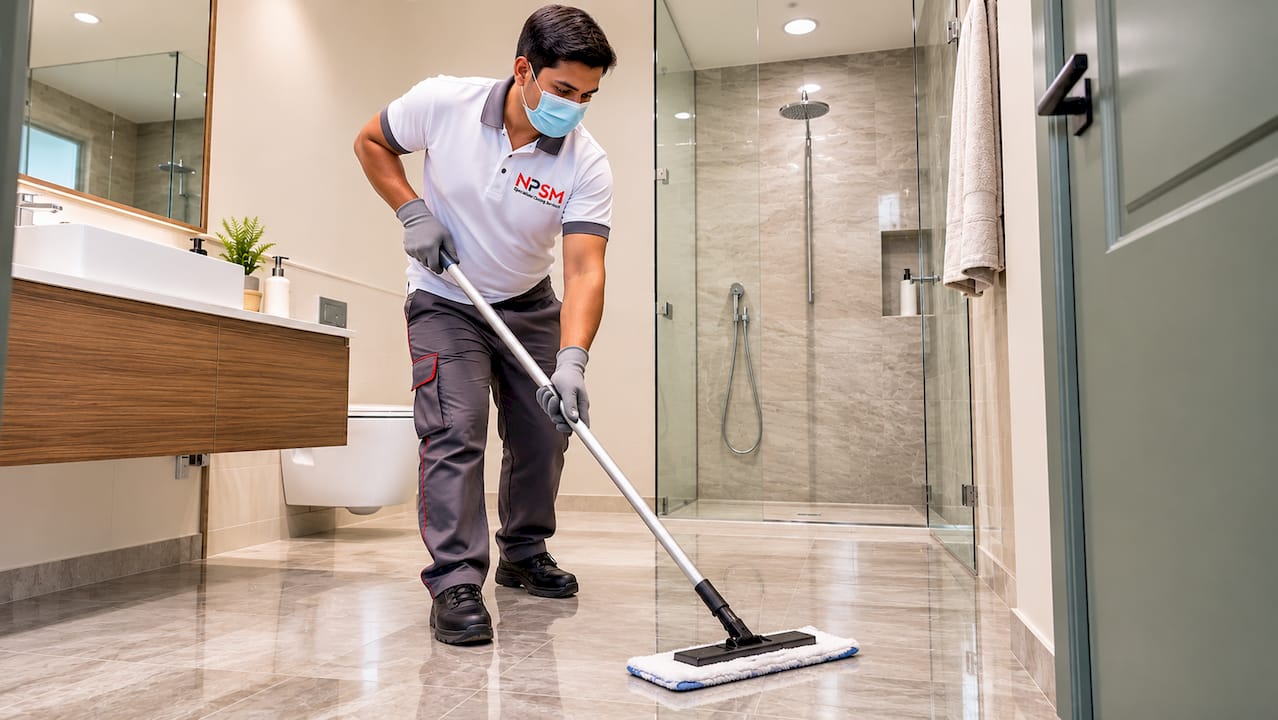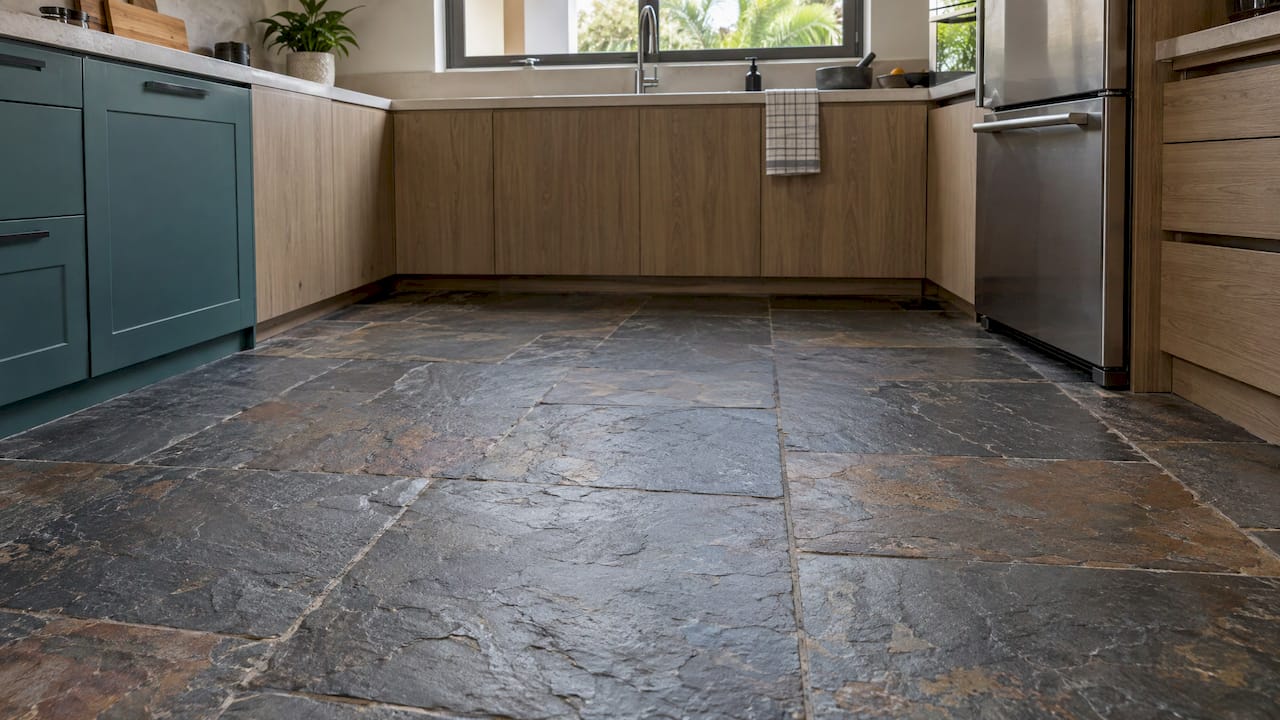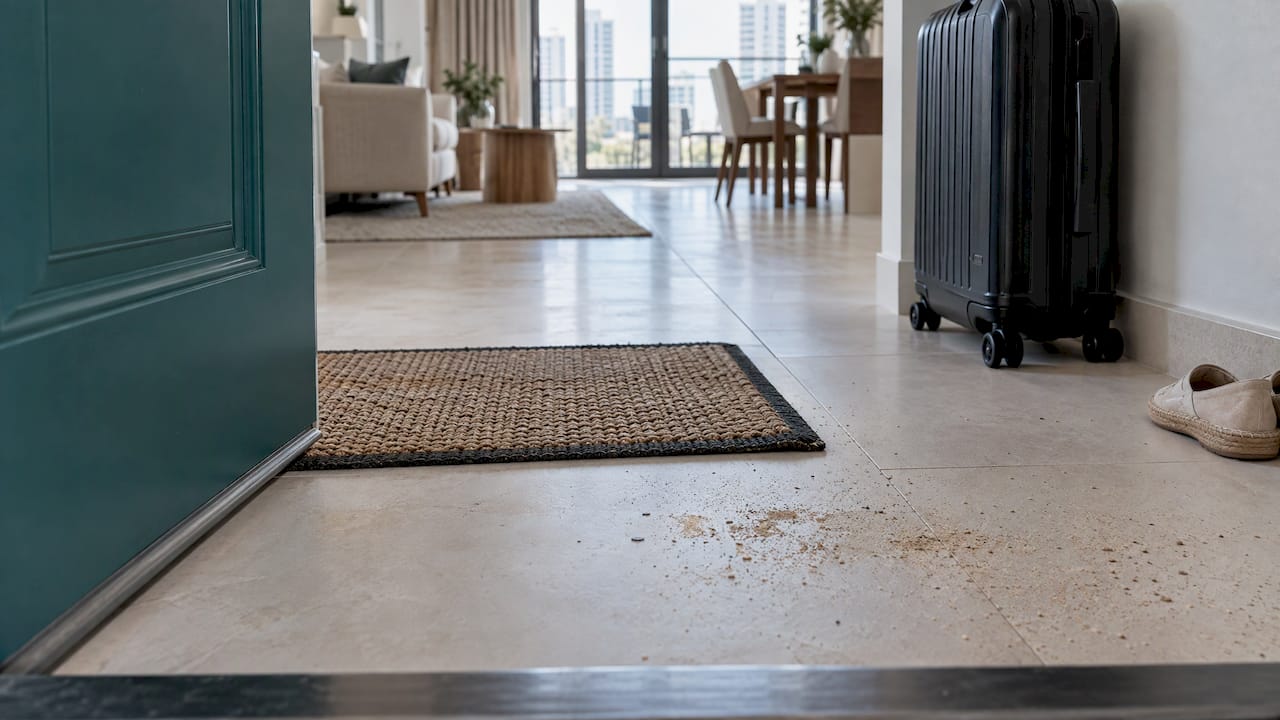

A holiday home in Dubai keeps its floors looking new through three layers of care: a quick, correct clean at every turnover, a short inspection routine each month and quarter, and a scheduled professional polish and seal before dullness turns into damage. Guests judge a property in the first minute, and floors are the largest surface they see. We restore and polish marble, natural stone, wood, vinyl, tile and terrazzo floors across Dubai, so this guide is built around what keeps those floors earning for you.
TL;DR
- Sweep or vacuum dry grit first, then mop damp. Sand and dust dragged under a wet mop are what scratch polished marble.
- Use the right cleaner for each floor: pH-neutral for marble and stone, a barely damp mop for laminate, no wax on vinyl.
- Inspect on a rhythm: after every checkout, grout and seams monthly or quarterly, and one planned maintenance block a year between bookings.
- Dull, etched or stained marble needs polishing or restoration, not stronger cleaning. Book it in a low-occupancy window.
- Our team handles polishing, honing, sealing and restoration for holiday homes, villas and apartments across Dubai.
Table of Contents
- Why holiday-home floors wear faster
- The turnover routine: what to do at every checkout
- Match the cleaner to the floor
- Inspect on a rhythm
- Stop damage before it starts
- Reading the floor: clean, polish, seal, or restore?
- Perspective
- Plan professional care into your calendar
- A yearly floor plan for a holiday home
- FAQ
Why holiday-home floors wear faster
A family home sees the same few people. A holiday home sees a new group every few days, each arriving with luggage wheels, beach sand, pool water and unfamiliar habits. Dubai adds fine desert dust that settles on every surface. Guest-turnover cleaning guidance from Dubai operators stresses that a quick sweep can miss fine dust in corners, under furniture and along skirting boards, and that small entrance mats reduce the dirt and beach sand guests bring in.
The damage is cumulative. Grit acts like sandpaper under a mop or a rolling suitcase, and the first sign is loss of shine in the entrance, kitchen and corridor. According to a 2026 CEOColumn report on Dubai’s hard-floor market, in a heavy-traffic villa entrance the gap between polished and neglected marble becomes visible within about six months. That is a good planning figure for a busy rental.

The turnover routine: what to do at every checkout
Turnover time is short, so the floor routine has to be repeatable. Dubai holiday-home cleaning checklists agree on the same core sequence:
- Dust top-down, then floors last. Shelves to skirting first, so nothing falls onto a clean floor.
- Remove dry grit. Vacuum or dry-sweep hard floors, including balconies and the entrance. Shake or replace the entrance mat.
- Mop damp, not wet. Work from the furthest room toward the entrance so you never walk over a finished floor.
- Check under mats and furniture. Trapped grit or moisture shows up there first.
- Walk through and photograph. Several dated photos of the floors after cleaning record their condition, and they give you evidence if a guest later damages something.
- Report damage the same day. A fresh chip, burn mark or stain is far easier to treat than one found three bookings later.
If the property is near the beach or a pool, such as on Palm Jumeirah or in a marina building, add a check of thresholds, door tracks and floors after water use. Collect the sand dry first, then address marks. Wiping sand while damp drags abrasive particles across polished stone.
Match the cleaner to the floor
The most common self-inflicted damage in rentals is the wrong product, often applied by a cleaning crew in a hurry. Here is what each surface needs.
| Floor | Daily or turnover care | Avoid | Periodic care |
|---|---|---|---|
| Marble and natural stone | Dry dust, then damp mop with a strictly pH-neutral cleaner | Acids, vinegar, bleach, abrasive powders | Re-sealing roughly every 12 to 18 months, polishing when shine fades |
| Terrazzo | Neutral cleaner, treated like marble | Acidic products | Diamond polishing every few years |
| Ceramic and porcelain tile | Neutral cleaner, thorough rinsing | Dirty mop water left in grout | Grout inspection and resealing, grout cleaning or re-grouting |
| Finished wood and parquet | Well-wrung mop with an approved wood cleaner | Standing water, steam | Recoating when the finish thins |
| Laminate | Barely damp microfiber mop, laminate cleaner | Wet or steam mopping, which swells seams | Replacement only if water gets into the core |
| Vinyl (LVT, SPC) | Dry sweep, damp mop with diluted neutral cleaner | Wax, polish, abrasives, soaked seams | Monthly check of seams and edges |
The intervals in the table come from product-care guidance published by floor-supply and flooring retailers in the UAE and elsewhere, and are typical figures rather than guarantees. Your stone type, finish and sealer set the real schedule.
Two cautions apply to every floor. Never mix cleaning products in one bucket: bleach with ammonia releases toxic chloramine gas, and bleach with an acid releases chlorine gas. And keep steam mops off wood, laminate and many vinyl floors, since steam can void a floor’s warranty.
Inspect on a rhythm
Operators who run Dubai holiday homes describe a three-tier schedule that works well for floors:
- Every turnover (about 20 to 30 minutes of checks): look for scratches, chips, lifting edges, stains and water marks.
- Monthly: check seams and edges on vinyl, furniture pads, bathroom thresholds and any area near a leak-prone fixture.
- Quarterly: inspect grout and silicone, reseal where needed. Allow roughly 1.5 to 3 hours per unit.
- Annually: a full-day maintenance block planned between bookings, when polish, seal and repairs happen.
A published preventive-maintenance guide for Dubai holiday homes claims a schedule like this cuts emergency call-outs by roughly 70%. Treat that as an operator’s estimate, but the logic is sound: a small fix made on schedule costs far less than a repair demanded by a complaint mid-stay.
Stop damage before it starts
Prevention in a rental is mostly about the entrance and the first meter inside it.
- Entrance mats, inside and outside. They catch sand and pool water. Check beneath them each turnover.
- Felt pads on every chair and table leg. Replace worn pads monthly.
- Immediate spill handling. Wine, coffee, citrus and cosmetics etch and stain marble within minutes, and spills on laminate swell the board.
- Seam awareness on vinyl. Even a waterproof surface can fail if moisture collects at edges over time.
- House rules in the welcome guide. Ask guests to remove wet swimwear footprints from stone, avoid dragging luggage and report spills.
Reading the floor: clean, polish, seal, or restore?
Most owners ask what level of work a floor needs. Use the symptom, not the calendar, as the guide.
| What you see | What it usually means | Likely work |
|---|---|---|
| Dust and footprints, shine intact | Normal soiling | Routine cleaning |
| Shine fading in walkways, fine scratches | Surface wear | Polishing and buffing |
| Dull patches, ring marks, rough feel on marble | Etching from acids | Honing, then polishing |
| Water soaks in rather than beading | Sealer worn | Cleaning and resealing |
| Dark or discolored grout, loose grout | Absorbed dirt or failed grout | Deep clean or re-grouting |
| Deep scratches, chips, uneven lippage | Structural surface damage | Grinding and full restoration |
| Gaps, cupping or grey patches on wood | Finish gone or moisture | Sanding and refinishing |
A simple test for stone: drop a little water on it. If it beads, the sealer is working. If it darkens and soaks in, the stone is unprotected and more likely to stain.
Cost and downtime depend on floor type, floor area, how deep the damage goes (polishing is lighter work than grinding and full restoration) and access to the property. For that reason we do not publish a fixed price: the cost is set after seeing the floor. As a planning rule, lighter polishing and sealing jobs fit in a gap between bookings, while full restoration needs a longer block, so schedule it when occupancy is lowest.
Perspective
Holiday-home owners often treat floors as a cleaning problem and call us only when guests start leaving reviews about dull or stained marble. By then, the fix is restoration rather than maintenance.
Our view is simple: restoring a floor is almost always cheaper than replacing it, and polishing on a plan is cheaper still. Diamond polishing, honing, grinding and sealing bring worn marble, terrazzo, stone, wood and tile back to a premium finish without lifting a single tile.
We tailor the work to each floor type and each property, and we understand how Dubai’s dust, sand and high-traffic use affect surfaces. For a rental, the best plan is a yearly polish and seal timed to your lowest-occupancy week, with spot treatment in between.
Qadir
Plan professional care into your calendar
For marble, natural stone and terrazzo, our marble polishing and restoration service covers stain removal, polishing and buffing, full restoration and repair, and staircases. Our natural stone and terrazzo service covers granite too. Wood and parquet owners can see wooden floor polishing and restoration, and vinyl and tile have their own pages for vinyl cleaning and polishing and tile polishing and re-grouting. If you are unsure which applies, start with our floor polishing and restoration overview and tell us the floor type and the gap between your bookings.
For how the process works on stone, read our diamond polishing process for marble floors. For sealing, see what floor sealing is.
A yearly floor plan for a holiday home
- Before peak season: inspect every floor, photograph it, and book polishing and sealing for any stone or terrazzo that has lost shine.
- Each turnover: dry-clean grit, damp mop with the correct cleaner, check mats and photograph.
- Monthly: seams, thresholds, furniture pads.
- Quarterly: grout, silicone and sealer check.
- After the busiest months: assess wear and schedule restoration for the lowest-occupancy window.
Managing several units? Our guides to high-traffic floor care and facility management flooring show how to scale the same routine across a portfolio.
FAQ
How often should I professionally polish marble in a holiday home?
It depends on traffic and how the floor looks. In a busy rental, entrances and corridors may need attention yearly, while low-traffic rooms last longer. Use the symptoms table above: fading shine or fine scratches mean polishing is due.
Can I mop marble floors between guests?
Yes, after removing dry grit. Use a damp mop and a pH-neutral stone cleaner, never vinegar, bleach or acidic bathroom products, which etch the surface.
Is a steam mop safe for turnover cleaning?
Not on wood, laminate or most vinyl, where steam can swell seams and affect warranties. A damp microfiber mop with the right cleaner is the safer routine.
How long will floor restoration take between bookings?
Light polishing and sealing is much quicker than grinding and full restoration. The time depends on floor type, area and damage, so we assess the floor first and plan around your calendar.
What should I do about a stain a guest left?
Photograph it and report it the same day, blot rather than rub, and avoid harsh products. Stains on marble are best treated early, and our stain removal service for marble can handle those that cleaning does not lift.