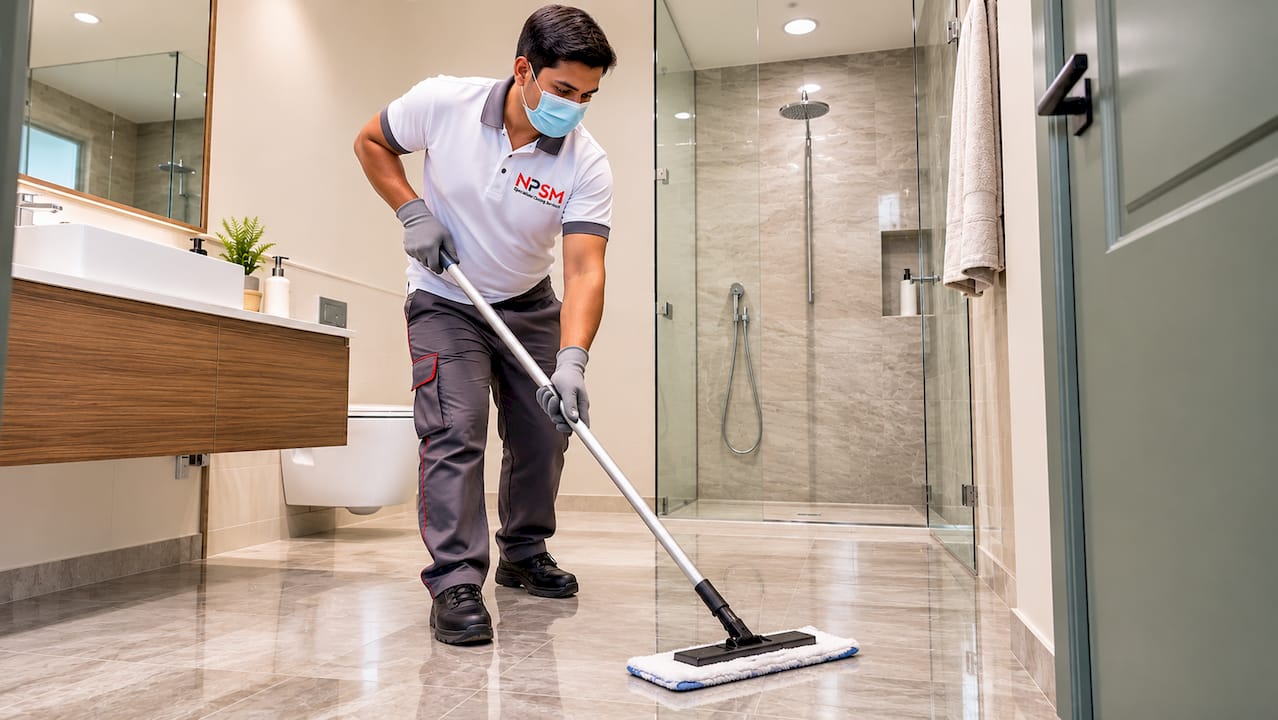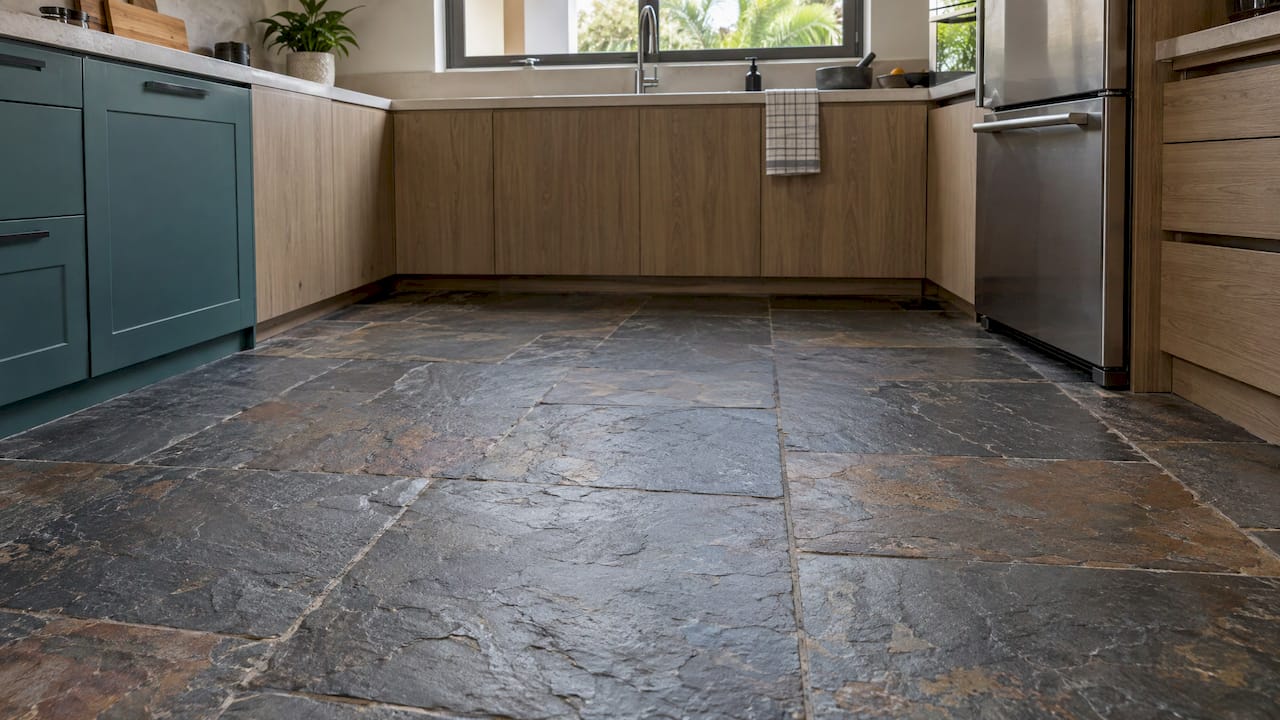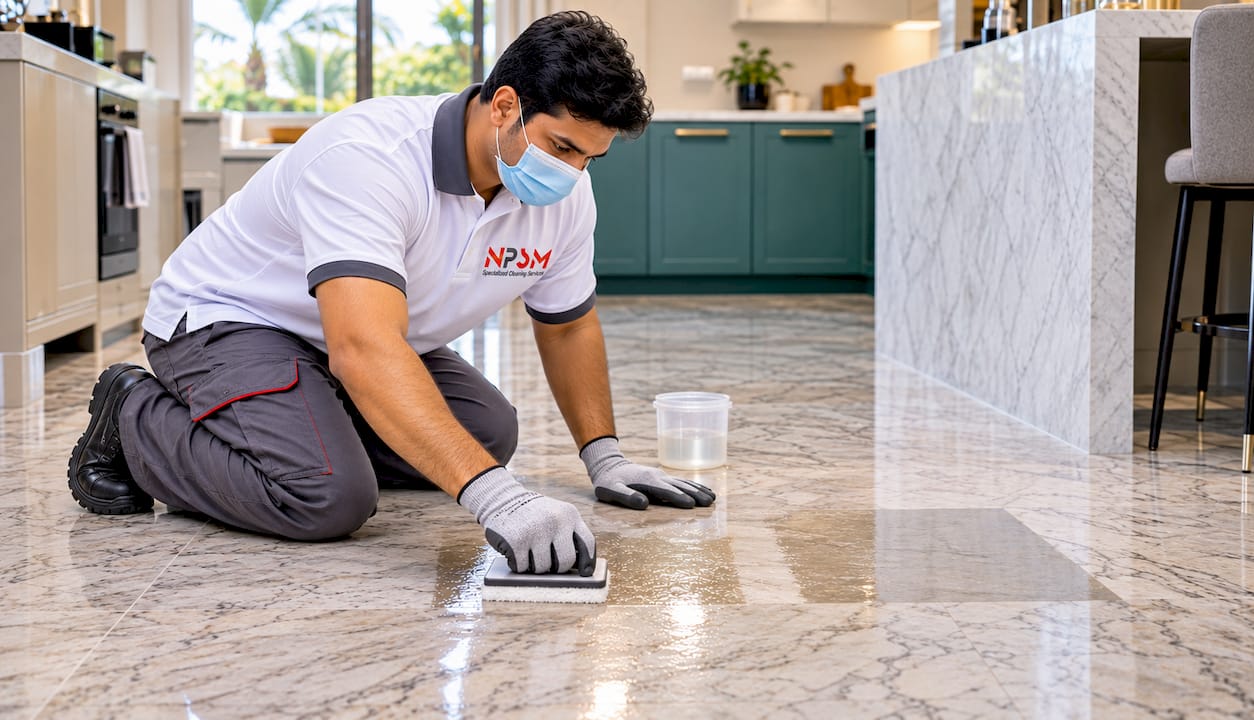

For most marble and natural stone floors in Dubai homes and commercial buildings, the better question is not water versus solvent. It is penetrating versus topical, then which carrier suits the stone, the room and the working conditions. A premium penetrating sealer in either carrier can protect polished marble well when it is applied to clean, dry stone. The carrier changes how the product behaves during application: odor, drying, ventilation and depth. It matters less to the final result than the stone, the prep and the method.
This guide is for villa, apartment and penthouse owners, property and facility managers, hotels, and the contractors and designers who specify floor care in Dubai. It explains the differences in plain terms so you can brief a contractor properly.
TL;DR
-
Water-based and solvent-based refers to the carrier that delivers the sealer into or onto the stone. Both can perform well when the product is good and the application is right.
-
Penetrating sealers soak into the pores and barely change the look. Topical sealers form a film on the surface and add sheen.
-
Polished or dense marble, granite and limestone generally suit a penetrating sealer. Topical coatings need some porosity or texture to grip.
-
Solvent products usually smell stronger and need serious ventilation and protective equipment. Water-based products are easier on indoor air.
-
Never seal over an old sealer without testing. A failed film has to come off first.
Table of Contents
What the two terms actually mean
A sealer has two parts: the active ingredient that repels water and oil, and the carrier that moves it into position. In a water-based sealer, the carrier is water. In a solvent-based sealer, it is a petroleum-derived or other organic solvent. Once the carrier evaporates, the active ingredient stays behind.
That is the whole technical difference. “Water-based” does not tell you whether the product is penetrating or topical, and “solvent-based” does not tell you either. You can find both carriers in both families. This is why many online comparisons, especially those written about concrete driveways and patios, give advice that does not transfer cleanly to a polished marble floor in a Dubai villa.
Two more details worth knowing:
-
Some water-based products still contain small amounts of co-solvents, so “water-based” does not always mean solvent-free. Read the technical data sheet.
-
Modern water-based formulations have improved a great deal. In many stone applications they now perform comparably to traditional solvent products.
Penetrating vs topical: the choice that matters first
Before comparing carriers, decide which kind of protection you want.
Penetrating sealers enter the pores of the stone and line them with a repellent. They normally do not change how the surface looks or feels, and they generally need less routine maintenance. They give no shine of their own.
Topical sealers stay on the surface as a coating. They can be matte, semi-gloss or gloss, they change the look of the stone, and as the film wears you need routine maintenance and eventual recoating.
| Penetrating sealer | Topical sealer | |
|---|---|---|
| Where it works | Inside the pores | On the surface as a film |
| Appearance | Normally unchanged | Matte, semi-gloss or gloss finish |
| Shine | None added | Adds sheen |
| Upkeep | Generally lower | Routine maintenance as the film wears |
| Typical fit | Polished marble, granite, dense stone | Textured or porous surfaces where a finish is wanted |
For polished or dense marble, granite and limestone, penetrating sealers are generally preferred. Topical coatings need enough porosity or texture to bond mechanically, and on a glass-smooth polished surface they are more likely to peel, cloud or scuff. Most Dubai marble lobbies, villa foyers and hotel corridors are exactly this kind of surface.
To understand how sealing fits into the wider care of your stone, our guide on the role of sealing natural stone covers the basics, and what floor sealing is and why Dubai homes need it goes deeper on protection.
Water-based vs solvent-based: side by side
| Factor | Water-based | Solvent-based |
|---|---|---|
| Carrier | Water | Organic solvent |
| Odor | Low | Often strong |
| Ventilation needs | Lower, but still follow the label | High, with source control and protective gear |
| Penetration | Adequate when applied correctly | Can travel faster or deeper in some conditions |
| Drying and curing | Depends on product and humidity | Depends on product and temperature; fast evaporation in heat |
| Appearance (topical types) | Tends toward low gloss, less darkening | Tends to deepen color and add a richer look |
| Best-known fit | Very porous stone, occupied buildings | Dense or high-traffic surfaces when the product is chosen for them |
The table shows tendencies, not rules. A premium product of either type protects well, and a poor product of either type disappoints. The manufacturer’s data sheet for the exact stone is always the final word.
Appearance
Penetrating sealers of either carrier should leave marble looking the way it did. Some products can slightly deepen the tone of a stone, which is why a test patch is standard practice. With topical sealers, solvent-based acrylics tend to give a wetter, richer color, while water-based ones tend to look more matte and subtle. If you are protecting a pale Dubai marble such as Crema Marfil or a white Thassos, ask for a test area before the whole floor is treated.
Protection and durability
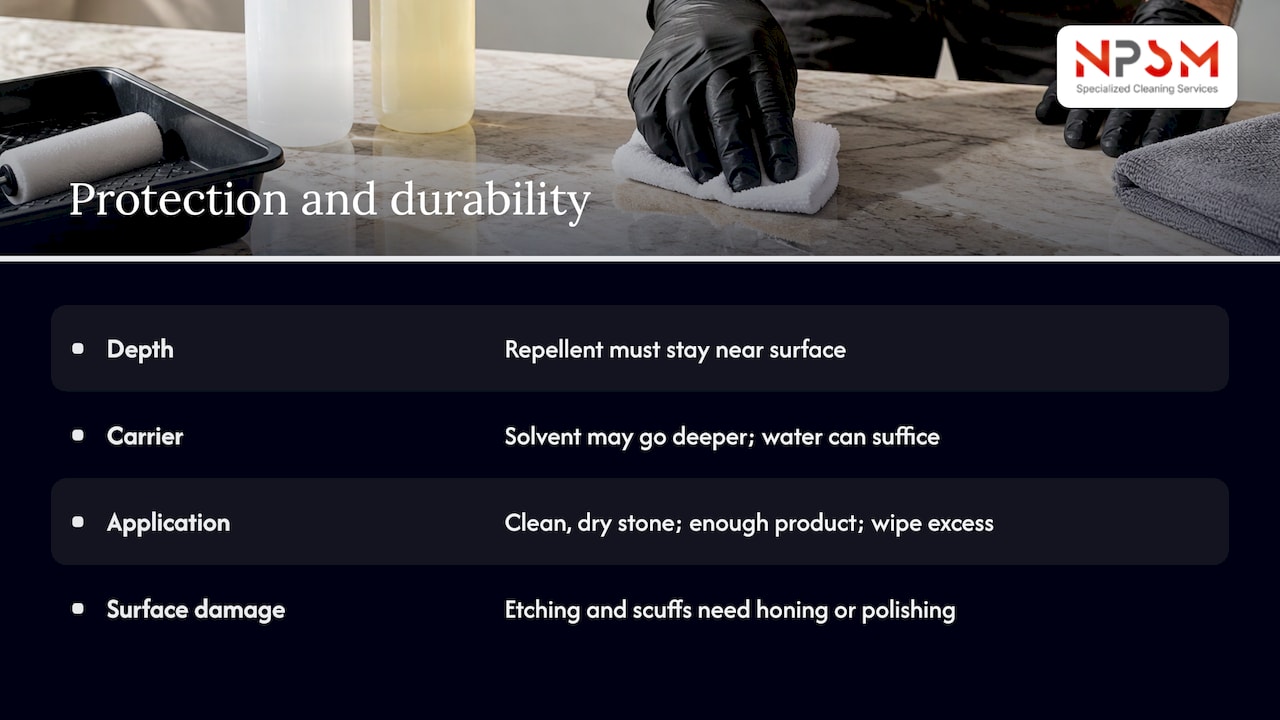
The protection comes from the active chemistry and where it sits. Deeper is not automatically better: the repellent has to stay close enough to the surface to stop an incoming stain. A solvent carrier may push a sealer deeper, but a water-based one can reach adequate depth too. What counts is correct application on stone that is clean and dry, using enough product and wiping off the excess.
No penetrating sealer prevents etching or scuffing. If a splash of lemon juice, a cleaning acid or a scratchy shoe sole damages the surface itself, that is a job for honing or polishing, not for a sealer. If you are comparing those options, see polished vs honed marble and polishing vs grinding vs crystallization.
Drying, odor and the Dubai climate
Dubai’s heat changes the working window. Solvents can evaporate so quickly on a hot surface that the sealer has less time to penetrate. Humidity in coastal areas, on the other hand, can slow the curing of water-based products. Both problems are managed by controlling the room: air conditioning on, direct sun blocked from the work area, surface temperature checked, and the product applied inside the window its label allows.
Odor is the clearest practical difference. Solvent products can smell strongly and linger in a closed apartment. If the unit is occupied, or it is a hotel room, clinic or restaurant that needs to reopen quickly, that favors water-based products.
Safety and ventilation when solvents are involved
Solvent vapors need respect. Dubai Municipality’s technical guidance on industrial organic solvents says that, where practicable, water-based alternatives should replace organic solvents. It also says hazardous vapors should be controlled at the source, with local exhaust ventilation, rather than depending only on general ventilation. Where solvents are used, it calls for solvent-resistant gloves, protective clothing and eye or face protection, and treats respiratory protection as a supplement to proper controls, never a substitute.
In practice, for a property owner or manager that means:
-
Ask your contractor which product they plan to use and request the safety data sheet.
-
For solvent-based products, expect the crew to arrange ventilation and protective equipment, and to keep occupants, pets and food out of the space during application and drying.
-
Keep ignition sources away from solvent work, as the label directs.
-
In occupied residential and hospitality settings, ask whether a water-based product of the same quality level is available for the stone.
-
Follow the label for curing time before furniture goes back and before the floor sees heavy foot traffic.
Which sealer fits which situation
Polished marble in a villa or apartment. A breathable penetrating sealer on clean, dry stone is the usual choice. Water-based is attractive in occupied homes because of the low odor. Dense polished marble absorbs little, so the sealer’s job is to stop slow staining from oils, drinks and cosmetics in kitchens, bathrooms and dining areas.
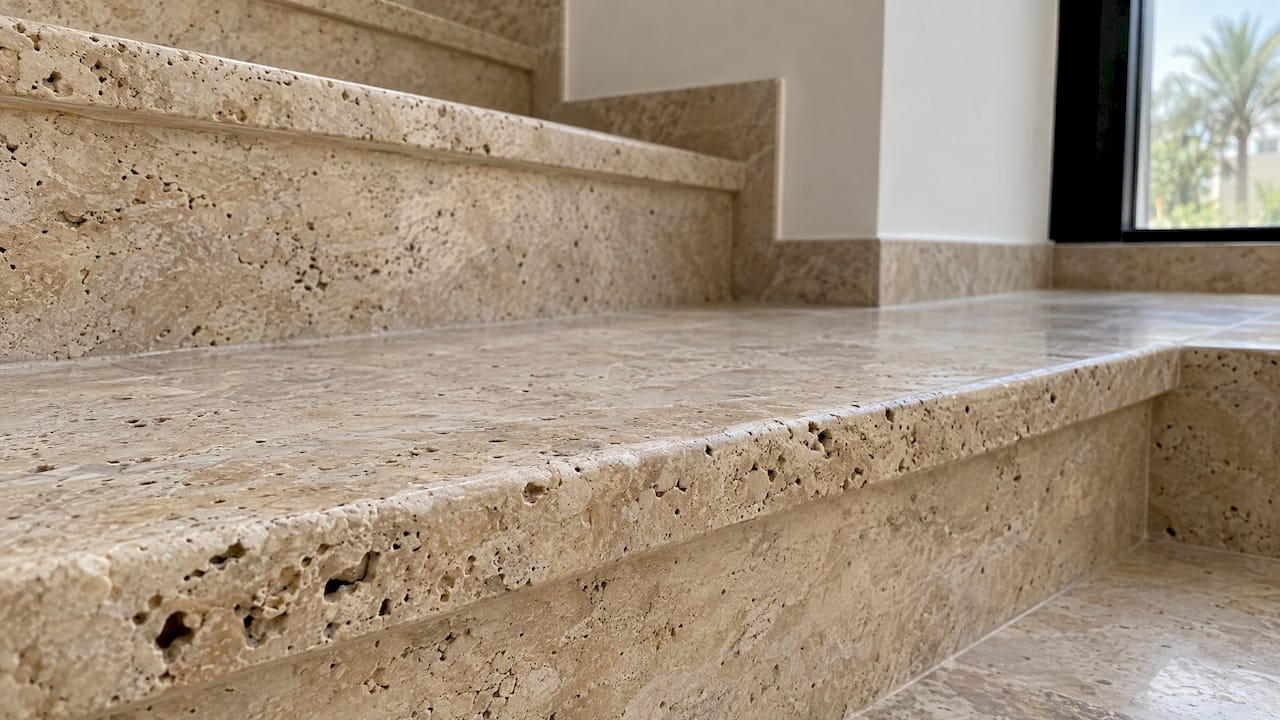
Very porous stone, such as travertine or some limestones. Water-based penetrating sealers work well on very porous natural stones, and these stones often need more than one coat. If you own travertine, our honed vs polished travertine guide explains the finish options, and our travertine restoration page covers filling, honing and polishing.
Hotel lobbies and high-traffic commercial floors. Traffic wears surfaces, so planning matters more than carrier. Choose a penetrating sealer for the protective base, then a maintenance routine with neutral cleaners and scheduled polishing. Slip resistance also matters in lobbies and wet areas, which is why our marble floor safety measures guide is worth reading before any sealer or finish is chosen.
Terrazzo and granite. Both generally respond well to penetrating sealers. Terrazzo with cement binder can be more absorbent than it looks. See our terrazzo restoration page for the repair and polish side.
Countertops and tables. Kitchen marble takes oils, wine and citrus. A penetrating sealer helps against stains but will not stop etching, so day-to-day care still matters.
How to check what is already on your floor
Most floors in Dubai already have something on them: a builder’s sealer, a crystallized finish, a wax or an acrylic from a previous contractor. Before any new product goes down, find out what is there.
-
Put a few drops of water in several spots, including a high-traffic area and a protected corner.
-
Watch for 5 to 10 minutes. Beading suggests the surface still repels. Quick darkening means the stone is absorbing and the protection is reduced or gone.
-
For a stricter check, cover the water so it does not evaporate and observe for around 20 minutes. No change suggests an active sealer or very dense stone. Slight absorption suggests weak or partial protection. Full absorption suggests unsealed, absorbent stone.
-
Test the new product on a hidden area and watch it over several days for haze, tackiness or poor adhesion.
The reason this matters: a new sealer cannot reach the stone through an old film. If the existing coating is failing or incompatible, it should be removed before resealing. This is also why mixing a solvent product over a water-based one, or the reverse, is a gamble. The result depends on the two chemistries, and the only safe route is a test patch or a professional assessment.
Preparation and application: where results are won
The label of the product you use is the final authority. These principles apply to most marble and natural stone work:
-
Clean with a neutral cleaner. Acidic cleaners damage marble. The stone, tile and grout should be clean and fully dry before sealing.
-
Fix surface damage first. Etching, scratches and dullness should be dealt with before sealing, not after, because a sealer will lock in the problem. Our diamond polishing process explains how marble is brought back to a clean, even surface.
-
Test first. Use spare stone or a hidden corner to confirm the look and the behavior.
-
Apply as directed and remove excess. Leaving excess sealer on the surface is the most common cause of smears and hazy patches.
-
Respect coat intervals. Some products specify about an hour between coats. Others differ, so follow the data sheet.
-
Cure before use. Keep traffic, moisture and heavy cleaning off the floor for the time the product requires.
-
Do not forget grout. Grout is more porous than the tile or stone around it. Our grout restoration guide shows how to bring it back before sealing.
Perspective: why we start with the stone, not the carrier
We are asked every week which sealer is “best”, and the honest answer starts with the floor in front of us. A polished marble foyer in a Marina apartment, a travertine terrace in a Jumeirah villa and a hotel corridor with thousands of footsteps a day are three different jobs.
Our approach is to treat sealing as the last step of a restoration, not a product you add on top of a worn floor. We assess the stone, check what is already on it, correct etching, scratches and dullness through grinding, honing and diamond polishing where needed, and only then protect the surface. A sealer applied to a damaged or contaminated floor protects the damage.
We tailor the choice of protection to the property and the stone. For occupied homes and hotels, we consider how low odor and quick return to use fit the schedule. For dense polished marble, we lean on penetrating protection that keeps the stone looking like stone. Our team uses professional-grade equipment and eco-friendly products, and works with the climate in mind, because Dubai’s heat and humidity affect every application window.
If you are unsure what is on your floor, that is the right moment to call us rather than to guess. A proper assessment costs far less than replacing marble.
Qadir
Common mistakes to avoid
-
Choosing by carrier alone. The stone and the sealer type come first.
-
Using a topical coating on polished marble because it promises shine. On dense polished stone, coatings are more prone to problems.
-
Sealing a dirty or damp floor. Moisture and residue get trapped.
-
Assuming a sealer stops etching. It does not. It slows staining.
-
Skipping the water test before resealing a floor that has a previous finish.
-
Ignoring ventilation with solvent products indoors.
Let us handle the sealing and the restoration
If your marble, travertine, granite or terrazzo needs assessment, restoration and protection, our team works on villas, apartments, hotels, offices and retail spaces across Dubai. We match the process to the floor and the property, from stain removal and polishing to sealing and maintenance. See our marble polishing and restoration services or our wider natural stone polishing and restoration page, then contact us for an assessment.
FAQ
Is water-based or solvent-based sealer better for marble?
Neither wins every time. A quality penetrating sealer of either type can protect marble when applied to clean, dry stone. Water-based suits occupied spaces because of low odor, while solvent products may be chosen for certain dense or demanding surfaces. The stone, the finish and the product data sheet should decide.
What is the difference between a penetrating and a topical sealer?
A penetrating sealer soaks into the pores and normally leaves the look unchanged. A topical sealer forms a film on the surface, adds sheen and needs routine upkeep as it wears. Polished or dense marble generally suits penetrating products.
Can I put a water-based sealer over a solvent-based one, or the reverse?
It depends on what is on the floor and what you are applying, so do not assume. A new sealer cannot pass through an existing film, and a failing film should be removed first. Run a water absorption test, then try the new product on a hidden area and watch it for several days.
Does a sealer stop marble from etching or scratching?
No. Sealers help resist staining by slowing liquid absorption, but they do not stop acids from etching the surface or shoes from scuffing it. Etching and scratches are corrected by honing or polishing.
Is solvent-based sealer safe to use indoors in Dubai?
It can be used safely only with proper controls: ventilation at the source, protective gloves, clothing and eye protection, and keeping people out during application. Dubai Municipality guidance favors water-based alternatives where practicable. For occupied homes and hotels, ask your contractor about a water-based option.