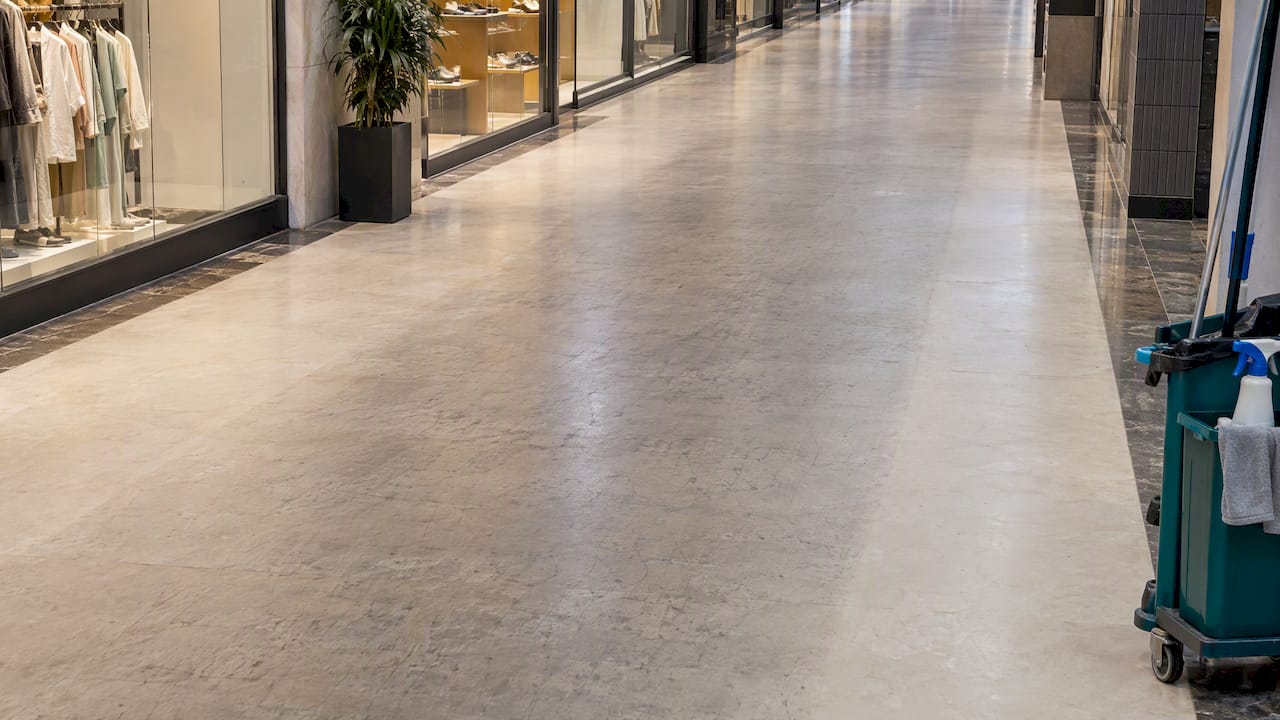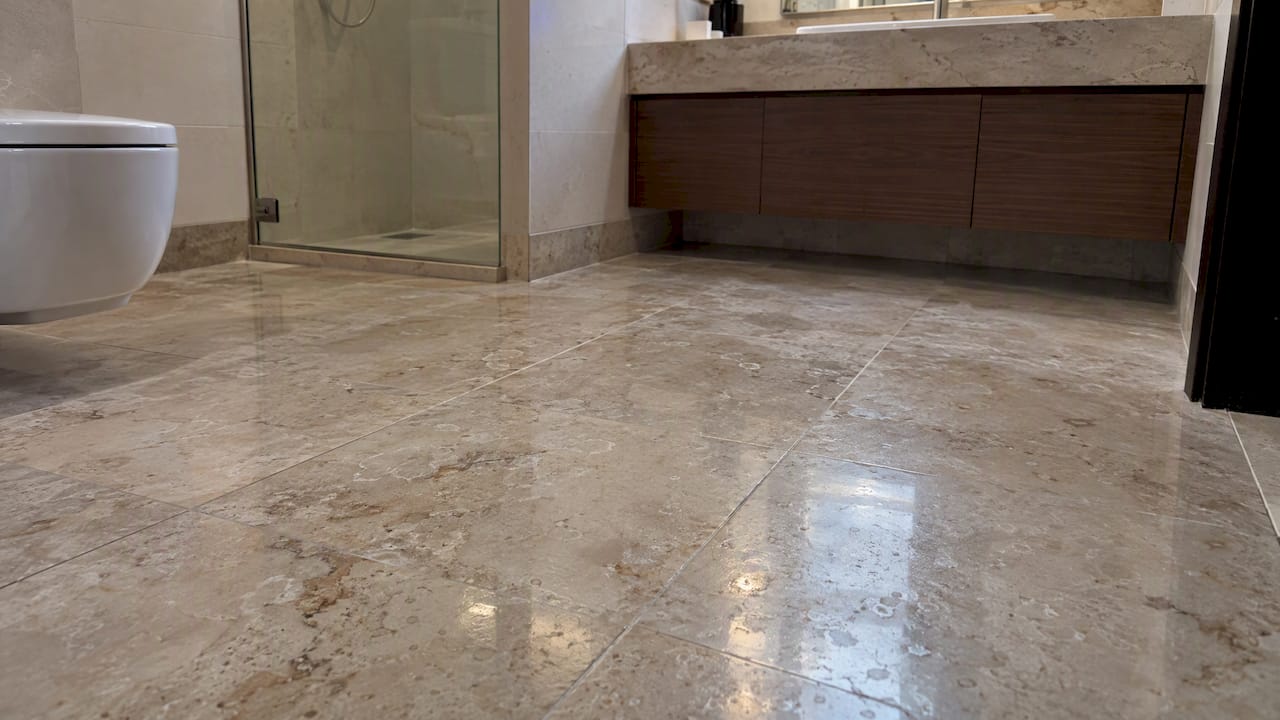

Most dull tile floors do not need replacing. Whether you polish, restore or replace depends on three things: what the tile is made of, why it lost its shine, and whether the tiles are still sound underneath. Marble, natural stone, terrazzo and unglazed through-body tiles can usually be brought back by a specialist. Glazed ceramic and porcelain usually cannot be polished, but they often only look dull because of residue. Tiles that are loose, hollow or cracked are the real candidates for replacement.
This guide shows you how to tell the difference, what each route involves, and how to decide for a villa, apartment, hotel or commercial space in Dubai.
TL;DR
- Check for residue first. A film of detergent, hard-water scale or sealer buildup is the most common cause of a “dead” look, and it needs cleaning, not grinding.
- Marble, travertine, granite, terrazzo and through-body tile respond well to honing and polishing. Glazed ceramic and porcelain generally do not, because grinding removes the glaze.
- Replace only when tiles are loose, hollow-sounding, cracked, or when the substrate has failed. Dullness alone is rarely a reason.
- Replacement also means demolition, licensed debris removal and downtime, so restoration is usually the lower-disruption route when the tile is sound.
- A short assessment on site settles the question faster than guessing from photos.
Table of Contents
- Why tiles go dull after years of use
- A simple check before you spend anything
- Polish, restore or replace: the options side by side
- When restoration is the right answer
- Glazed ceramic and porcelain: the exception
- Other floor types that dull
- When replacement makes sense
- What the decision costs
- Our perspective
- Getting your floor assessed
- Keeping the shine once you have it
- FAQ
Why tiles go dull after years of use
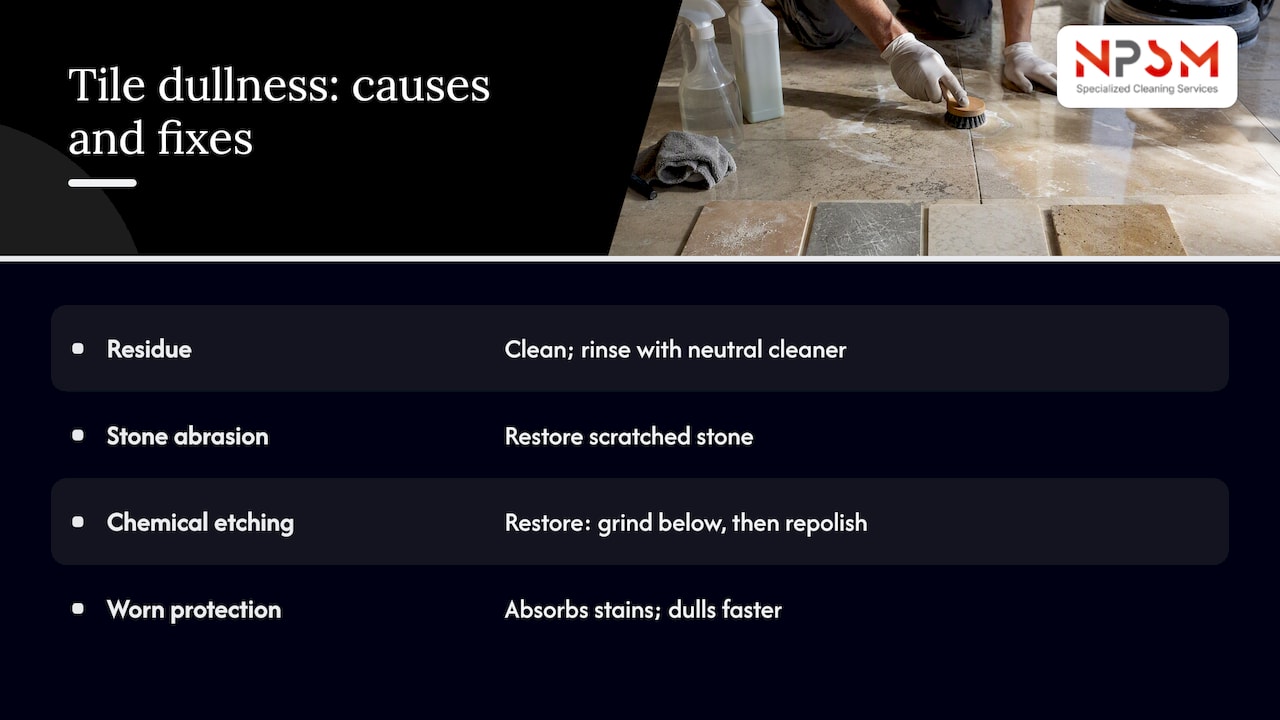
Dullness is a symptom, not a diagnosis. Four different problems produce the same flat look, and each has a different fix.
Residue. Too much cleaning product, or a cleaner that is never rinsed properly, leaves a thin film that traps dirt and scatters light. Hard water does the same with mineral scale. This is the cheapest problem to fix, and sometimes a thorough rinse with clean water and a neutral cleaner is enough.
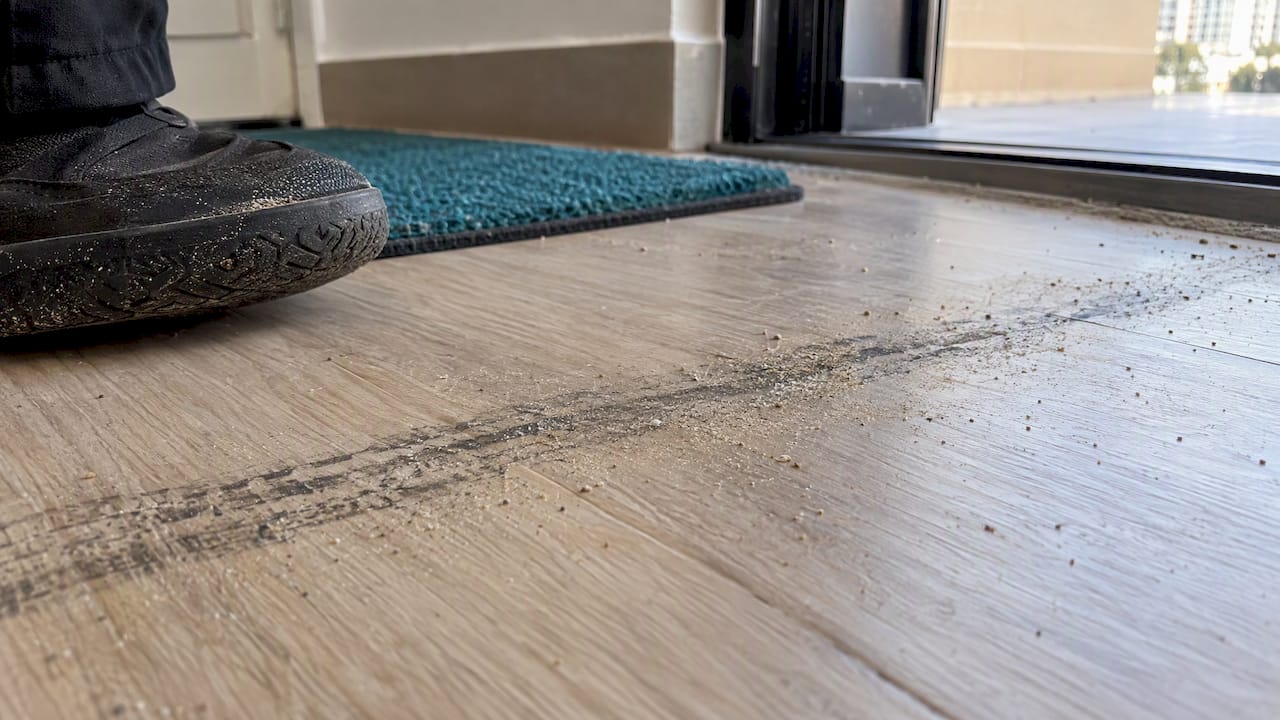
Abrasion. Sand and fine grit are a fact of life in Dubai. Carried in on shoes and settling through windows and balcony doors, it acts like sandpaper on a polished surface. On marble and polished stone, thousands of microscopic scratches build up in walkways, entrances and kitchens until the reflection is gone.
Chemical damage. Acidic spills such as juice, vinegar, lemon, and some bathroom and tile cleaners react with calcium carbonate in marble and limestone. The result is etching: dull, pale marks that are a change in the stone itself. No amount of scrubbing removes etching, because there is nothing sitting on the surface to remove. The surface has to be ground back to below the damage and re-polished.
Worn or stripped protection. Sealers on stone and the glaze on ceramic wear away. Harsh cleaners such as bleach and strong acids speed this up. Once protection goes, the surface absorbs stains and dulls faster.
Knowing which of these you have is the whole decision. Residue means clean. Abrasion and etching in stone mean restore. A failed tile or bed means replace.
A simple check before you spend anything
You can learn a lot in twenty minutes without any equipment beyond a flashlight and a bucket.
- Identify the material. Marble and travertine are soft, often veined, and usually show natural variation tile to tile. Granite is speckled and hard. Terrazzo shows chips of stone set in a cement or resin matrix. Ceramic and porcelain look uniform and printed. Look at a chipped edge or an offcut if you have one: a different color under the surface suggests a glazed tile, a uniform color throughout suggests through-body.
- Rinse a test patch. Clean one square meter with a pH-neutral cleaner, rinse with plain water twice and dry with a clean microfiber cloth. If the shine returns, the problem was residue.
- Try the water test. Put a few drops of water on the tile. On stone, if it soaks in and darkens within a few minutes, the sealer has gone. This tells you sealing is part of the job.
- Use raking light. Hold a flashlight nearly flat against the floor and look across the surface. Scratch patterns and swirl marks that are invisible under ceiling lights will show up. Contractors use the same technique to check restoration work between stages.
- Tap for hollow spots. Knock on tiles with a coin or the handle of a screwdriver. A hollow sound means the bond to the screed has failed. Polishing a hollow tile does not fix it.
- Look at the grout and edges. Cracked, crumbling or missing grout is a separate repair, and it does not mean the tiles are finished.
If the patch cleaned up, you are done. If the tile is stone and scratched or etched, you are in restoration territory. If tiles sound hollow or are cracked in several places, move to the replacement section below.
Polish, restore or replace: the options side by side
| Clean and refresh | Polish or restore | Replace | |
|---|---|---|---|
| What it fixes | Residue, scale, light soiling | Scratches, etching, wear, dull finish, stains in stone | Cracked, loose, hollow or failed tiles; outdated style |
| Works on | Almost any tile | Marble, limestone, travertine, granite, terrazzo, through-body tile | Any tile |
| Disruption | Hours | Typically a few days depending on area and floor type | Days to weeks, with demolition and dust |
| Debris | None | Slurry, handled on site | Broken tile and rubble that need licensed removal |
| Risk if the wrong tile type | Low | Ruining a glazed surface | Mismatched stock or levels |
| Result | Original finish, nothing more | Renewed surface on your existing material | New material and layout |
The table shows why the question “which is best” has no single answer. Cleaning is the right first move on every floor. Restoration is the strongest value when the material is stone or another polishable surface. Replacement is the right call when the tile itself or what it sits on has failed.
When restoration is the right answer
Stone floors are the clearest case. Marble, travertine, limestone, granite and terrazzo are cut or cast in thick slabs, so a specialist can remove a thin layer of damaged surface and bring up a fresh one. The process works in stages: grinding if there is lippage or deep damage, honing to remove scratches and etching, then polishing to the finish you want, with sealing after. A floor that looks beyond saving is often a candidate. If you want to understand where honing stops and heavier grinding starts, our guide on marble polishing versus marble grinding explains it, and the comparison with crystallization covers the third finishing route.
There are common situations where restoration clearly beats a new floor:
- Villa entrance halls and living areas with large-format marble that has lost its reflection under years of foot traffic.
- Kitchen and bathroom floors with etch marks from cleaners or spills.
- Hotel lobbies, corridors and bathrooms, where closing an area for a full replacement is expensive. Our hotel bathroom tile restoration guide looks at how to keep luxury standards without ripping out finishes.
- Terrazzo in older buildings, which is meant to be re-polished over its life.
- Stairs and landings, where matching new stone to existing material is hard.
Another point in favor: matching. Natural stone varies by batch and quarry, and the stone you bought years ago may not be available in the same tone. Restoring what you have keeps the floor continuous.
Glazed ceramic and porcelain: the exception
This is where homeowners get the worst advice. The shine on most ceramic and porcelain floor tile is not a polish on the surface, it is the glaze, a thin fused layer applied at the factory. Grinding or abrading it removes the layer permanently and leaves a patchy, rough surface that stains easily. Only through-body (unglazed) porcelain is generally suited to multi-stage mechanical polishing with diamond abrasives, and even then it needs a skilled operator and the right tile.
So if your floor is glazed, a dull look usually means one of three things:
- residue or scale, solved by correct cleaning,
- micro-scratching from grit, which can sometimes be improved with deep cleaning and professional machine work that does not cut the glaze,
- a glaze worn through in high-traffic spots, which cannot be reversed.
In the last case, the honest options are to live with it, use a protective treatment to slow further wear, or replace the affected tiles. Anyone offering to “polish” glazed porcelain like marble should explain exactly what they will do to the glaze. Our tile polishing and deep cleaning service starts with identifying the tile type for this reason.
Common household tricks also deserve caution. Vinegar-based mixes appear in many online guides, but acids etch marble, travertine and limestone and can strip sealers. Never use them on stone.
Other floor types that dull
Wood and parquet. Dullness is often worn lacquer or oil. Sanding and refinishing renews the surface if the wood layer is thick enough. See our pages on wooden floor polishing and parquet restoration and resurfacing wooden floors.
Vinyl. Commercial vinyl loses its finish through traffic and cleaning. It can be stripped and refinished with the right buffer and product. Our guide to restoring dull vinyl floors covers the method.
Concrete. Dull or dusty concrete can often be ground and polished rather than covered, particularly in commercial and industrial areas.
When replacement makes sense
Replace tiles when the problem is structural or the material cannot be rescued:
- Hollow-sounding tiles across a wide area, which suggests the adhesive or screed has failed.
- Cracked tiles in multiple places, especially if the cracks follow a line, which can point to movement in the slab.
- Missing or loose tiles that keep coming back after repairs.
- Glazed tiles worn through across most of the floor.
- Water damage reaching the substrate.
- A design change. If you want a different material, layout or size, replacement is a design decision rather than a repair.
Be realistic about what replacement involves. Old tile has to be broken out and carted away, dust spreads through a home, and levels at doors and thresholds may need adjusting. In Dubai, construction and renovation debris is regulated, so removal has to go through a licensed waste contractor, and community management and building rules may restrict work hours, lift use and noise. Apartment owners should check with their building management before starting. Property managers should factor this into schedules for occupied buildings.
Also check the replacement material. A new tile that is cheaper at the shop can be more expensive after demolition, waste removal, installation and a week without a usable room.
What the decision costs
Prices vary with area, tile type, condition and access, so treat any number as a starting point. Our published rates are:
- Floor polishing and restoration: AED 25-200 per sqft depending on the floor type and the work involved, per our services page.
- Marble polishing and restoration: from AED 30 per sqm, per our marble page.
These are published on different pages and in different units, so the final quote depends on a site assessment. Other services, including stain removal, staircase work, tile re-grouting and wooden floor sanding, have no published price and are quoted after we see the floor.
When you compare restoration with replacement, add up the full replacement picture: new material, demolition, debris removal, installation, grout and finishing, plus the days the space is unusable. Restoration usually avoids most of those lines, which is why it is the better value whenever the tile is sound and polishable.
Our perspective
The most useful thing we do on a first visit is tell people what not to do. We see owners about to pay for new flooring when the existing marble needs honing, and we also see owners ask for polishing on a glazed tile that cannot take it. Both are avoidable with ten minutes of inspection.
Our rule is simple. We identify the material first, test a small area, and explain whether the floor needs cleaning, restoration or replacement. When restoration is right, we match the process to the floor: grinding where the surface is uneven or deeply damaged, honing and polishing for scratches and etching, sealing for protection. In Dubai, where sand, humidity, heavy foot traffic and strong cleaning habits all work against floors, a good restoration pairs the work with a realistic maintenance routine, otherwise the shine fades quickly.
We would rather lose a job than restore a floor that should be replaced, because the result would not last and the owner would not come back.
— Qadir
Getting your floor assessed
If you have stone, terrazzo, wood, vinyl or tile that has lost its look, we can inspect it, identify the material and tell you whether to clean, restore or replace. We work in villas, apartments, hotels, offices, retail and other commercial properties across Dubai. Start with our floor polishing and restoration services, or go straight to the page for your material: marble, natural stone and terrazzo or tile.
Keeping the shine once you have it
Whatever route you take, daily habits decide how long the result lasts.
- Use a neutral cleaner, in the right dilution. More product does not clean better. It leaves a film.
- Rinse and dry. Plain water for the final pass, and a dry cloth or mop to avoid scale from Dubai’s hard water.
- Keep acids away from stone. That includes vinegar, lemon, and bathroom and descaling products not labeled safe for stone.
- Wipe spills fast. Especially coffee, juice, wine and oils on marble.
- Put mats at entrances. Grit is the main enemy of polished surfaces, and mats at balcony doors and the front door stop a lot of it.
- Use felt pads under furniture, and avoid dragging heavy items.
- Reseal stone when the water test shows it is absorbing.
- Schedule periodic professional care for high-traffic areas such as lobbies, corridors and entrances rather than waiting for the surface to look ruined.
For new homes, a post-handover polish can set the right baseline. See our post-renovation floor polishing guide.
FAQ
Can dull ceramic or porcelain tiles be polished?
Usually not. On most ceramic and porcelain, the shine comes from a glaze, and grinding it away damages the tile permanently. Only unglazed, through-body porcelain is typically suitable for mechanical polishing. For glazed tiles, start with proper cleaning to remove residue and scale.
How do I know if my floor needs restoration or just cleaning?
Clean and rinse a small test patch with a neutral cleaner and plain water. If the shine returns, the problem was residue. If the surface stays dull, or you see scratches under a flashlight held low across the floor, the surface itself is worn and needs restoration, assuming it is polishable stone or similar.
Is it cheaper to restore or replace marble floors?
In most cases restoration is cheaper when the marble is sound, because you avoid new stone, demolition, debris removal and installation. Our marble polishing starts from AED 30 per sqm, with the final price set after a site assessment. If the stone is cracked or the bed has failed, replacement may be unavoidable.
Can etching and water marks on marble be removed?
Light water marks sometimes lift with correct cleaning, but etching is a chemical change in the stone, so cleaning will not remove it. It needs honing and re-polishing to take the surface down below the damage. Our guide to removing marble water stains explains which marks you can handle yourself and which need a specialist.
Do I need building approval for floor work in Dubai?
Often yes, especially in apartments and managed communities. Many buildings set work hours, require permits or notice for contractors, and have rules for lift protection and waste. Ask your building or community management before booking any floor work, whether restoration or replacement.