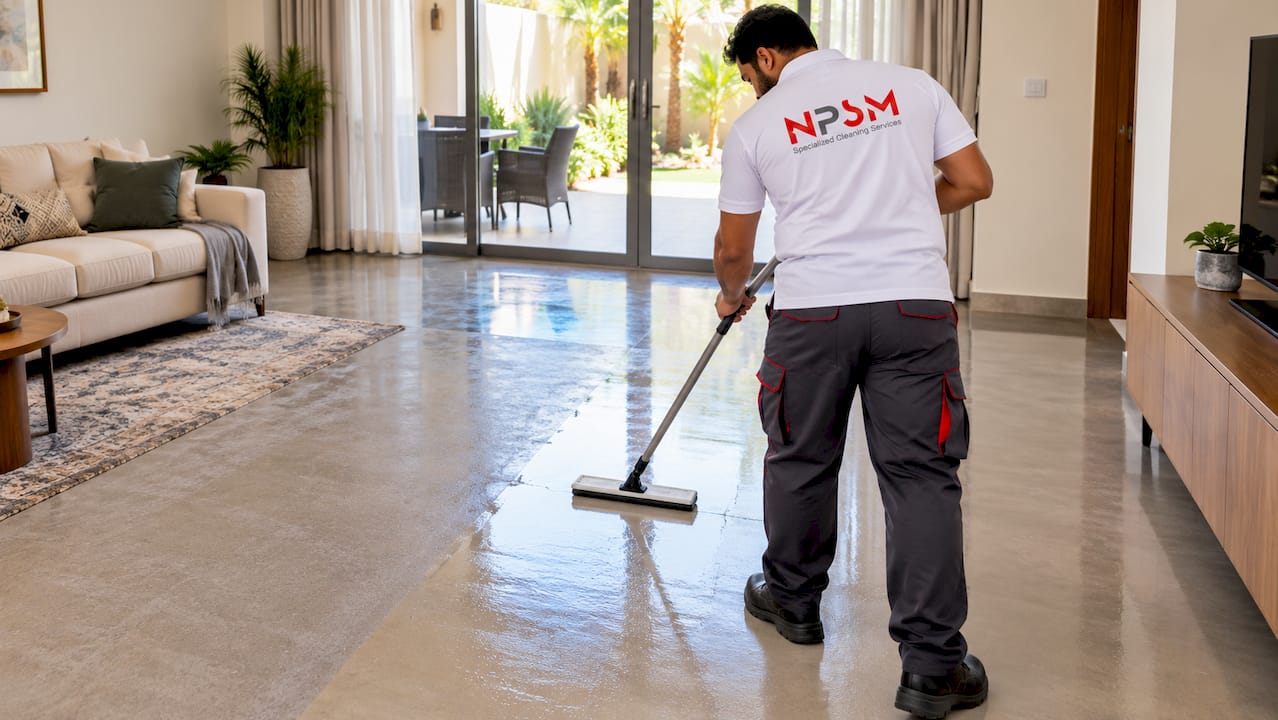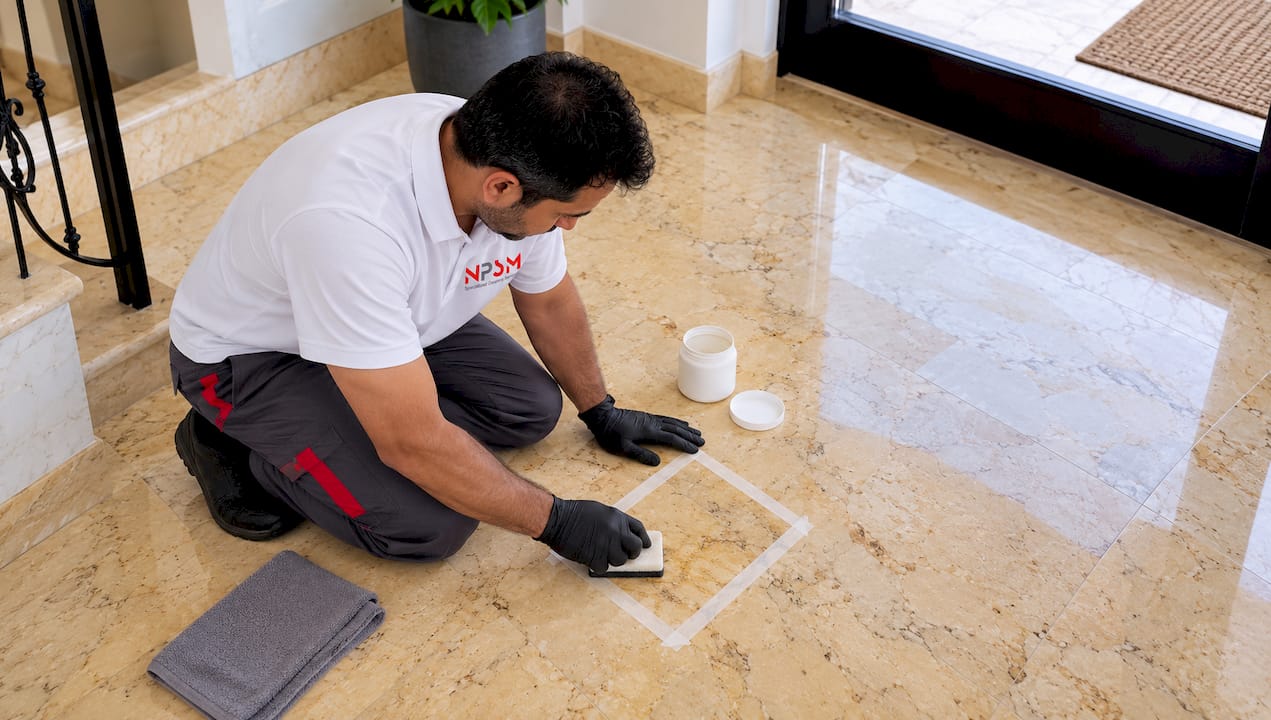

If the wear layer and the substructure are both intact, controlled sanding and refinishing will usually bring an old parquet floor back to a like-new finish. The two things that decide the outcome are how much wood is left above the tongue and groove and whether the blocks are still bonded and flat. Before booking anything, run a small test-sand in a hidden corner or arrange a professional inspection.
TL;DR:
- Sanding is only suitable if the wear layer remains at least 2.8 millimeters thick and the blocks are still firmly bonded to avoid exposing the base material.
- A test-sand on a hidden patch can determine if the wood responds evenly and if the finish will hold, but water-stained or lifting blocks indicate a failed bond requiring replacement rather than refinishing.
- Solid wood parquet can typically be sanded multiple times over decades, whereas engineered parquet’s limited wear layer restricts the number of possible sandings.
- Proper restoration involves inspection, a small test-sand, repairs, progressive sanding with different grits, optional staining, and multiple coats of sealing finish, with dust extraction crucial throughout.
- Costs vary based on room size, repair needs, finish type, and dust control, with full job completion usually requiring a few days and phased work for larger spaces; estimates improve with detailed photos and scope.
Table of Contents
- How to inspect your parquet and run a quick test
- Which parquet types and conditions are sandable
- Step-by-step: what a professional sanding and refinishing job involves
- What drives cost and how long restoration typically takes
- Aftercare and how to extend the life of a sanded parquet floor
- Why choose a professional: what to expect from a contractor
- Author’s view: when sanding is the smarter choice and when to replace
- Getting your floor assessed and restored
- Selected sources and further reading
- FAQ
How to inspect your parquet and run a quick test
Most damage falls into one of two buckets, and knowing which one you’re dealing with saves you from paying for the wrong fix.
- Cosmetic damage includes surface scratches, a dull or cloudy finish, and light staining that sits on top of the wood rather than inside it.
- Structural damage includes cupping (edges higher than centers), blocks that rock or click underfoot, and delamination where the top layer separates from the base.
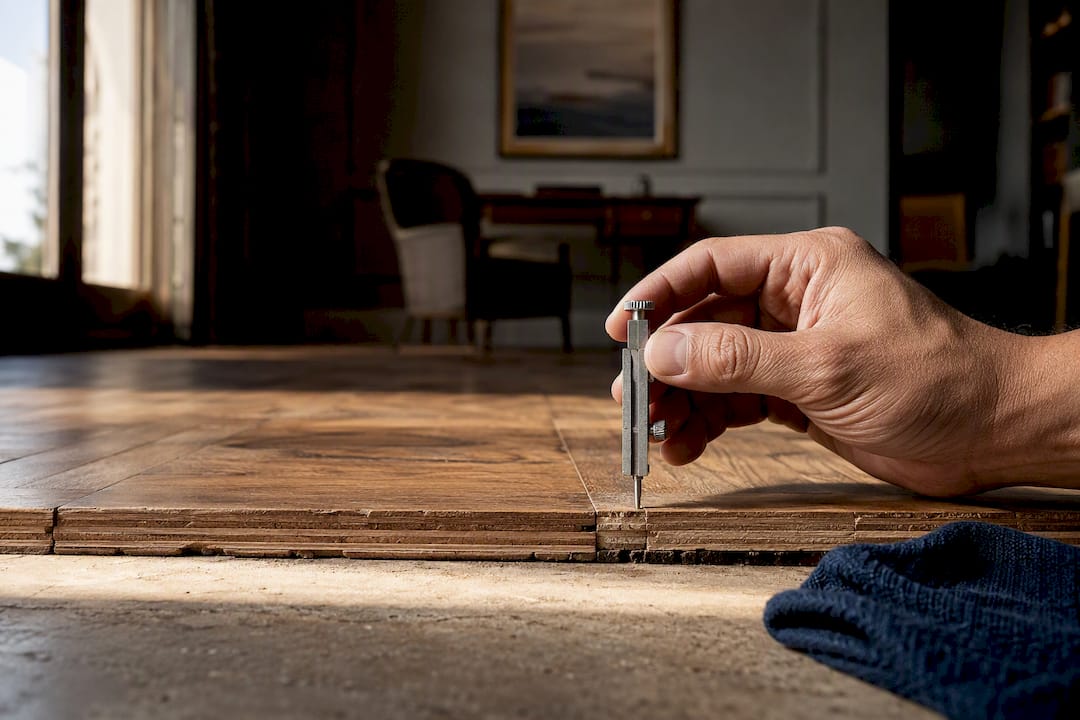
A test-sand tells you more than a visual check ever will. Pick a spot under a rug or behind furniture, run a fine-grit sander or sanding block over a small patch, and see how the wood responds. If it cleans up evenly and the grain looks healthy, full sanding is likely safe. Professionals confirm this with a digital caliper, measuring the remaining wear layer through a small pilot cut rather than guessing from the surface.
Water staining or failed adhesive changes the calculation. If blocks lift, smell musty, or shift when you press on them, the subfloor bond has likely failed, and sanding will not fix that. That’s a repair-or-replace decision, not a finishing one.
Which parquet types and conditions are sandable
Solid wood parquet blocks are typically thick enough to be sanded multiple times over their lifespan. Engineered parquet is different: it has a thin real-wood layer glued to a plywood or composite base, and that layer only allows a limited number of sandings before you hit the base material.
- Solid wood parquet usually tolerates several full sandings across decades of use.
- Engineered parquet depends entirely on wear-layer thickness, and once it’s gone, sanding is no longer an option.
- Previously sanded floors may already be close to their limit, especially engineered types installed with a thin veneer.
As a practitioner rule of thumb, refinishing is often workable with a wear layer around 2.8 millimeters, while replacement is generally recommended once it drops below roughly 2.5 millimeters, since there isn’t enough material left to sand without exposing the base layer. If a section shows cracked veneer, exposed base ply, or blocks that were clearly patched with a mismatched species before, that section may need replacement boards before the rest of the room can be sanded evenly.
Pro Tip: Ask whoever inspects your floor to check wear-layer thickness in more than one spot, since traffic areas near doorways and hallways wear down faster than the rest of the room.
Step-by-step: what a professional sanding and refinishing job involves
A proper job follows a set order, and skipping steps is where most botched sanding jobs go wrong.
- Inspection and prep: the crew checks moisture levels, moves furniture, and confirms the scope in writing before any sanding starts.
- Test sanding: a small patch is sanded and measured with calipers to confirm the wear layer can handle a full pass.
- Repairs: loose blocks are re-glued, damaged boards are replaced, and uneven spots are leveled.
- Progressive sanding: coarse grit removes the old finish and levels the surface, followed by medium and fine grits; edges and corners are sanded separately with smaller machines.
- Staining (optional): a stain is applied if the owner wants to change or deepen the wood tone.
- Sealing and finish: polyurethane or oil-based sealer is applied in multiple coats, with drying time between each.
Dust control matters throughout, not just for tidiness. Dust extraction attached directly to the sander captures most airborne particles at the source, which keeps fine wood dust from settling into furniture, air vents, and lungs during a multi-day job. VOC-aware finishes reduce fumes during the cure period, which matters most in occupied homes where people are still living or working nearby.
What drives cost and how long restoration typically takes
Room size is the starting point for any quote, but it isn’t the only factor. Access, the amount of repair work, the finish you choose, and the level of dust control all move the price up or down. A small room with a straightforward sand-and-seal costs less per square meter than a large space with loose blocks, furniture to move around, or a premium oil finish requiring multiple coats.
- Area and access: tight hallways, staircases, or furniture-heavy rooms take longer per square meter than open floor plans.
- Repairs needed: replacing blocks or re-gluing sections adds time and materials before sanding can even begin.
- Finish choice: oil finishes often need more coats and longer cure times than polyurethane.
- Dust control level: full HEPA extraction setups add cost but reduce cleanup and disruption.
A single room typically moves through prep, sanding, and finishing coats within a few days, with curing time added before furniture goes back. Larger, multi-room jobs are usually phased room by room so parts of the home stay usable. When comparing quotes, ask each contractor for the same scope, the same number of finish coats, and the same dust-control method so the numbers are actually comparable.
Aftercare and how to extend the life of a sanded parquet floor
Freshly sanded and sealed parquet needs time before it can handle normal life again. Restrict foot traffic and keep furniture off the floor until the finish has fully cured, and keep indoor humidity steady rather than letting it swing between very dry and very humid conditions, since wood expands and contracts with moisture.
- Cleaning routine: use a damp (not wet) mop and a pH-neutral wood floor cleaner rather than all-purpose sprays.
- What to avoid: steam mops and abrasive scouring pads strip finish and can force moisture into the seams between blocks.
- Preventive habits: felt pads under furniture legs and mats at entry points cut down on grit that scratches the surface.
A dulling finish that hasn’t broken through to bare wood usually just needs a fresh coat, not a full sand. Once you see raw wood, deep scratches through the finish, or graying patches, it’s time to sand again rather than recoat.
Pro Tip: Recoating every few years, before the finish wears through completely, postpones the next full sanding by years and costs far less.
Why choose a professional: what to expect from a contractor
Sanding parquet is one of the services covered under wooden floor restoration in Dubai, which includes inspection, sanding, repairs, and finish application for both solid and engineered floors. Work like this is typically carried out with professional-grade sanders, edge machines, and dust extraction systems rather than rented consumer equipment, and it follows the same inspect-then-sand sequence across villas, offices, hotels, and retail spaces, as outlined on the areas served page.
Before hiring anyone for a parquet job, ask for the following in writing:
- Scope: exactly which rooms, repairs, and finish coats are included.
- Warranty: what’s covered if the finish fails early.
- Dust control: whether extraction is attached to the sander or handled separately.
- Finish brand and type: so you know what’s going on your floor and how long it should last.
Author’s view: when sanding is the smarter choice and when to replace
Sanding almost always beats replacement on cost when the wear layer and structure hold up, and it keeps the original wood rather than covering it with something new. Repeated water damage or widespread block failure tips the balance toward replacement, since no amount of sanding fixes a broken bond to the subfloor. If you’re unsure which camp your floor falls into, get an inspection before you spend money on either option.
— Qadir
Getting your floor assessed and restored
An old parquet floor rarely needs to be torn out. Most of the time, what it needs is an honest assessment of the wear layer and a sanding job done in the right order, which costs a fraction of a full replacement and keeps the original wood underfoot. NPSM Specialized Cleaning Services LLC handles this through its wooden floor sanding and restoration service, covering everything from the initial test-sand to final sealing.
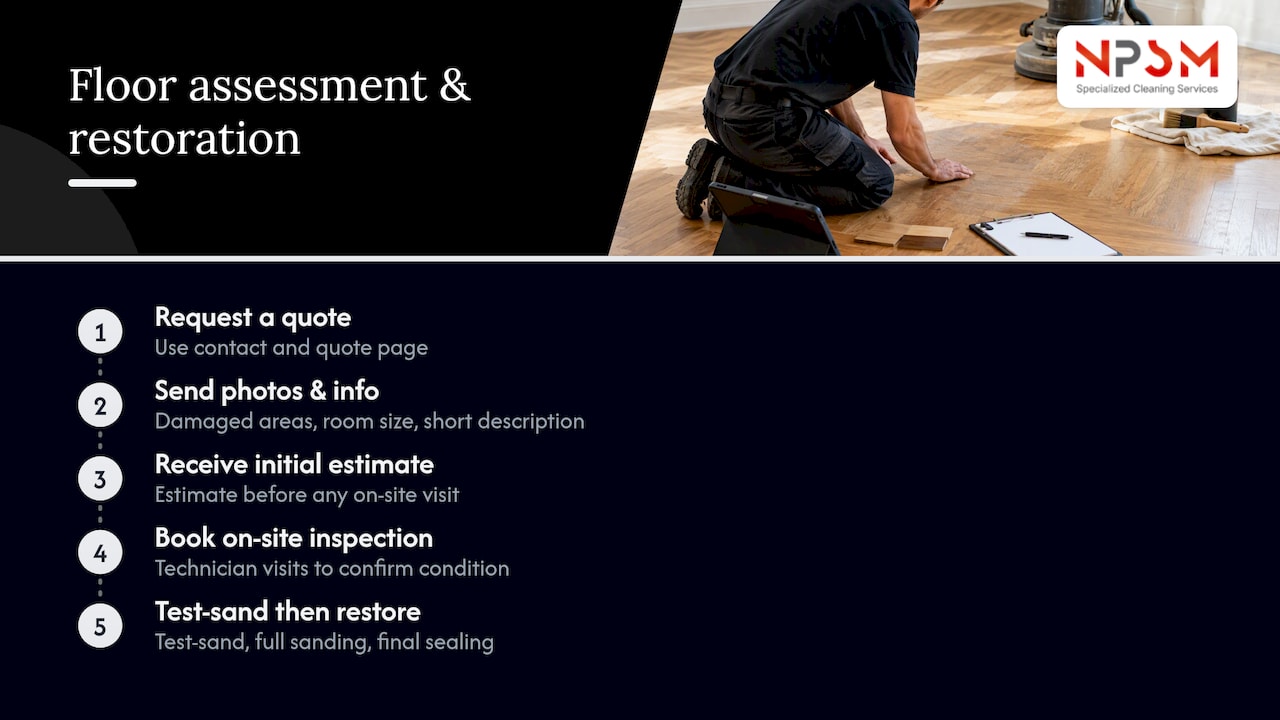
To get a quote that actually matches your floor, send photos of the damaged areas, the approximate room size in square meters, and a short description of what you’re seeing (scratches, dullness, lifting blocks, water marks). That’s usually enough for an initial estimate before anyone steps on site. You can also browse the full range of floor polishing and restoration services if other surfaces in the property need attention at the same time. Reach out through the contact and quote page to book an inspection.
Selected sources and further reading
- Wooden floor sanding vs polishing: explains when sanding is necessary versus when polishing alone is enough.
- Step-by-step floor restoration guide: covers the full workflow from inspection to finish.
- Wooden floor polishing cost guide: local pricing reference for sanding and finishing work.
FAQ
Can you sand back parquet flooring?
Yes, most parquet can be sanded back as long as enough wear layer remains above the tongue and groove and the blocks are still firmly bonded. Solid wood parquet tolerates this multiple times over its life, while engineered parquet has a limited number of sandings before the wear layer runs out.
Can you sand and refinish parquet floors?
Yes, sanding and refinishing is the standard restoration method for parquet with cosmetic wear like scratches, dullness, or surface staining. The process removes the old finish, levels the surface, and applies a new stain or sealer, typically finishing with polyurethane or an oil-based coating.
How much does it cost to sand a parquet floor?
Cost depends mainly on room size, the amount of repair work needed, and the finish chosen, with access and dust-control level also affecting the total. For a rough starting point, wooden floor polishing services in the region are quoted from AED 29.9 per square meter, though parquet with repairs or a premium finish will land higher.
How much does it cost to restore a parquet floor?
Full restoration, which can include block replacement, re-gluing, sanding, and finishing, costs more than a simple sand-and-seal because of the added labor and materials. Getting a fixed quote requires sending photos, room dimensions, and a description of the damage so the estimate reflects the actual condition of the floor rather than a generic per-square-meter rate.