
TL;DR:
Proper slate floor care involves regular cleaning with pH-neutral products and resealing every one to three years to prevent stains and damage.
Professional restoration is necessary when buildup, sealer failure, or surface damage occur, which routine maintenance cannot fix.
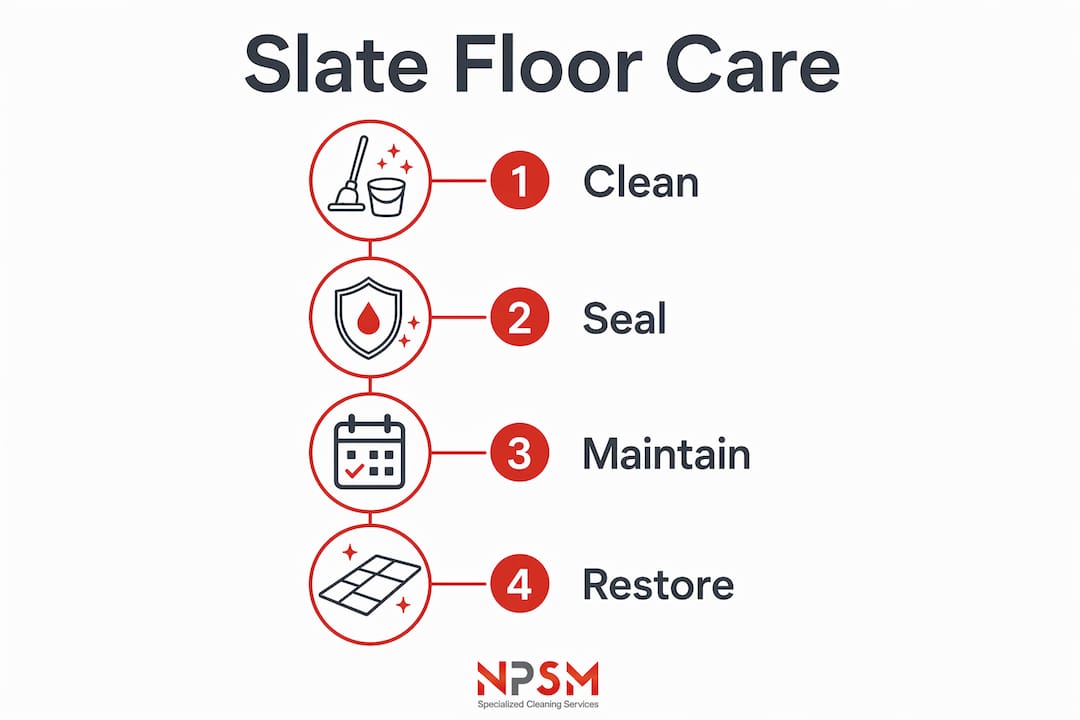
Slate floor care is defined as the ongoing practice of cleaning, sealing, and restoring natural slate to protect its surface, preserve its appearance, and extend its lifespan. Slate is a porous metamorphic stone, which means it absorbs liquids, stains, and grit far more readily than ceramic tile. The industry standard for resealing is every 1–3 years depending on foot traffic, and daily debris removal is non-negotiable. Without a functioning sealer, no amount of mopping will prevent long-term damage. Get these three pillars right — cleaning, sealing, and restoration — and slate floors can last for decades.
Slate floor care explained: how to clean slate effectively
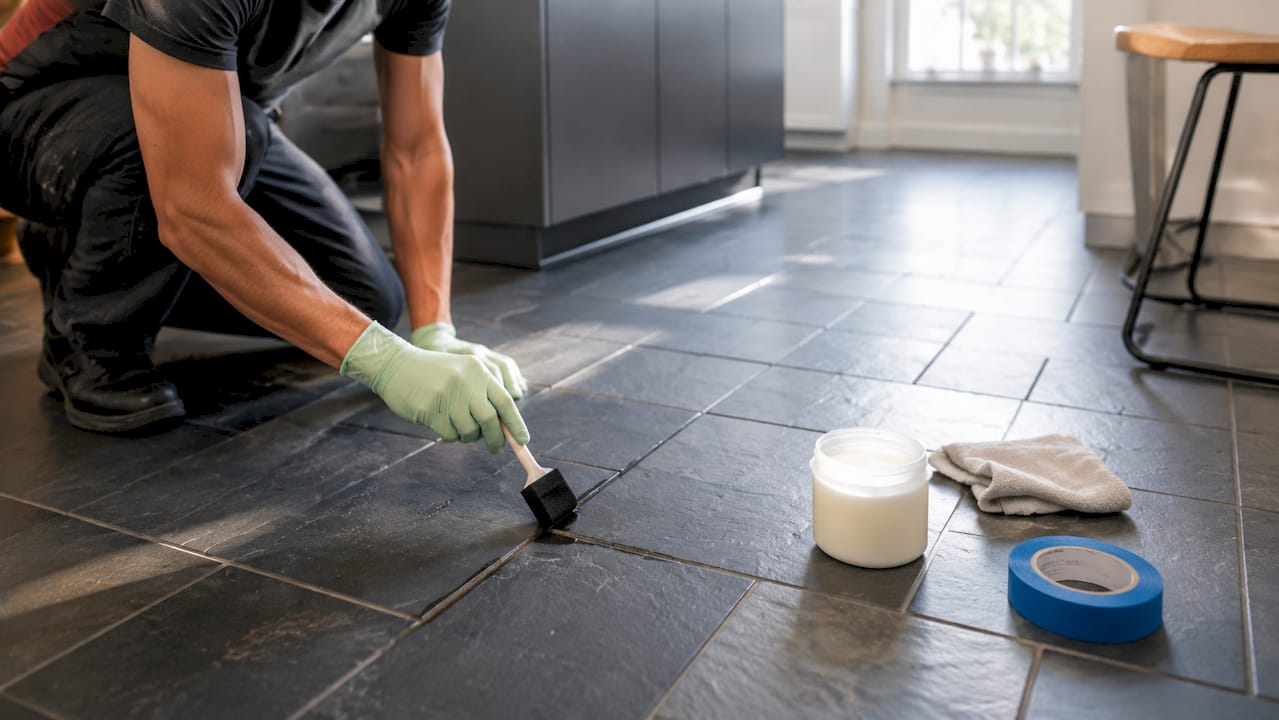
Cleaning slate floors correctly starts with understanding the stone’s texture. Slate’s natural cleft, or riven, surface hides dirt well but traps grit in its ridges. That grit acts like sandpaper underfoot, grinding down the sealer and eventually the stone itself.
Daily and weekly cleaning routines
Follow this sequence for consistent results:
-
Sweep or vacuum daily. Use a soft-bristle broom or a vacuum with a hard-floor attachment. Never use a beater bar, which scratches the surface. Sweeping every 1–3 days removes the abrasive particles before they cause wear.
-
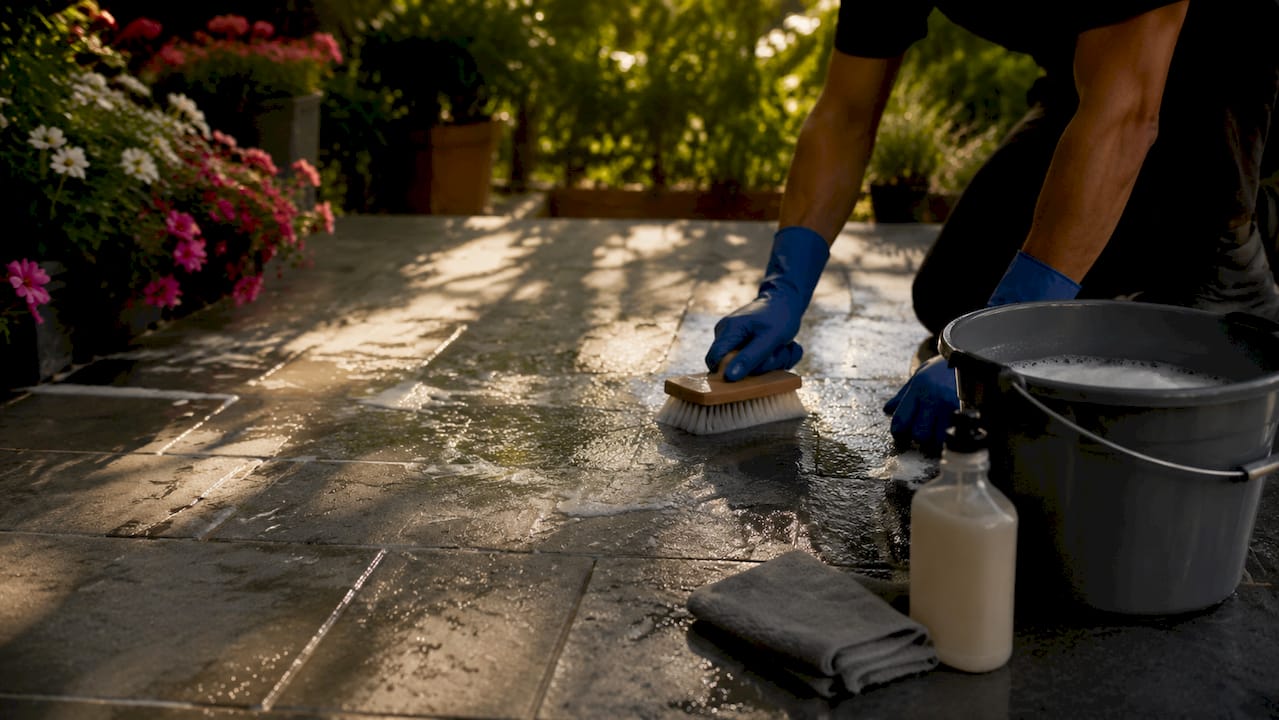
Damp mop weekly. Fill a bucket with warm water and a pH-neutral cleaner formulated for natural stone. Avoid general-purpose floor cleaners, which are often too alkaline or too acidic for slate.
-
Use a soft-bristled mop head. Slate’s ridged texture requires a mop that can reach into the low points. A flat microfiber pad alone often skims over the surface without cleaning the recesses.
-
Wring the mop thoroughly. Over-wetting slate forces water into the pores and grout joints. Standing water weakens grout and can lift the sealer over time.
-
Change rinse water often. Dirty rinse water deposits a cloudy film back onto the floor, which is one of the most common reasons slate looks dull after cleaning.
-
Blot spills immediately. Acidic liquids like wine, coffee, and citrus juice etch the stone and strip the sealer if left to sit.
Pro Tip: Add a capful of stone-safe cleaner to your rinse bucket as well as your wash bucket. This prevents soapy residue from building up in the grout lines and dulling the floor’s natural color.
What cleaners to avoid
Acidic cleaners like vinegar, lemon juice, and citrus-based products cause permanent etching on slate. Harsh alkaline cleaners strip the sealer just as fast. Both categories destroy the protective barrier that keeps the stone stain-free. Stick to pH-neutral products labeled specifically for natural stone. The tile floor cleaning workflow used for luxury natural stone floors in Dubai follows the same pH-neutral principle, confirming it as the industry standard across stone types.
Why and how to seal slate floors
Sealing is the single most important protective step in maintaining slate tile. Cleaning alone cannot prevent stains if the sealer has failed or was never applied. Slate’s porous structure means liquids penetrate the surface within seconds without a barrier in place.
Types of sealers for slate
-
Penetrating (impregnating) sealers. These soak into the stone and repel liquids from within. They do not change the surface appearance and are the most widely recommended option for slate.
-
Color-enhancing sealers. A subtype of penetrating sealer that deepens the stone’s natural tones. Ideal if you want richer, darker color. Test on a hidden area first because the effect is permanent.
-
Topical sealers. These sit on top of the stone and create a visible sheen. They wear faster in high-traffic areas and require more frequent reapplication.
Sealing schedule and application
Reseal slate every 1–3 years based on traffic volume. A kitchen or hallway needs resealing closer to the one-year mark. A low-traffic bedroom may hold for three years.
Use this simple annual water test: drop a small amount of water onto the floor and watch it. If the water beads for at least five minutes, the sealer is still active. If it absorbs within a minute or two, resealing is overdue.
| Sealer type | Appearance change | Reapplication frequency | Best use |
|---|---|---|---|
| Penetrating | None | Every 1–3 years | All slate areas |
| Color-enhancing | Darkens stone | Every 1–3 years | Feature floors |
| Topical | Adds sheen | Every 6–12 months | Low-traffic areas |
Pro Tip: Always test the sealer on an inconspicuous spot before applying it to the full floor. Wipe off any excess sealer within 20 minutes of application. Sealer left to dry on the surface creates a sticky film that attracts dirt and is difficult to remove.
What are the most common slate floor problems?
Slate floors develop predictable problems when care routines slip. Recognizing the cause early prevents minor issues from becoming expensive repairs.
-
Dullness after cleaning. Slate dullness often comes from dirty rinse water, over-wetting, or residue left by the wrong cleaner. More cleaning does not fix it. Stripping the old residue and starting fresh does.
-
Old sealer or wax buildup. A floor that looks perpetually hazy despite regular cleaning likely has old sealer or wax buildup that needs stripping. A stone-safe stripper applied before resealing resolves this.
-
Grit abrasion. Slate’s riven texture hides grit, but that same grit scratches the sealer and stone with every footstep. Increasing sweep frequency is the fix. Entrance mats at every door reduce the volume of grit tracked in.
-
Sealer failure. Signs include water absorbing quickly, stains appearing despite cleaning, and a patchy or peeling surface. Failed sealer requires stripping and full reapplication, not just a top coat.
-
Staining. Oil-based stains respond to a poultice made from baking soda and a stone-safe solvent. Water-based stains often lift with a pH-neutral cleaner and a soft brush. Tannin stains from tea or coffee need a hydrogen peroxide-based poultice formulated for stone.
-
Chips and scratches. Small chips can be filled with a color-matched stone filler. Deep scratches that cut through the sealer into the stone require professional assessment. Replacing a single tile is preferable to leaving exposed, unsealed stone.
-
Acidic spill damage. Etching from vinegar or citrus products leaves a dull, rough patch. Light etching on a sealed floor can sometimes be addressed with a stone polishing compound. Severe etching requires professional honing.
How do you restore and maintain long-term slate beauty?
Restoration goes beyond routine cleaning. It addresses years of buildup, sealer failure, and surface damage that regular mopping cannot fix. The step-by-step floor restoration process follows a clear sequence regardless of the stone type.
The restoration workflow
-
Strip old sealer and buildup. Apply a stone-safe stripper to the entire floor. Allow it to dwell according to the product instructions, then scrub with a stiff-bristled brush or a floor machine fitted with a scrubbing pad. Rinse thoroughly and allow the floor to dry completely, which typically takes 24–48 hours.
-
Inspect and repair. Once the floor is clean and dry, assess each tile. Fill chips with color-matched filler. Replace tiles that are cracked through or structurally compromised. Re-grout any joints where the grout has crumbled or discolored.
-
Deep clean the bare stone. After stripping, a second pass with a pH-neutral stone cleaner removes any remaining residue and prepares the surface for sealing.
-
Apply fresh sealer. Follow the sealer manufacturer’s instructions. Apply in thin, even coats. Wipe off excess within 20 minutes. Allow full cure time before foot traffic, which is usually 24 hours for penetrating sealers.
-
Establish a maintenance schedule. After restoration, daily sweeping and weekly damp mopping protect the investment. Schedule a professional assessment every two to three years to catch sealer failure before it leads to staining.
Maintaining the cleft texture and safety
Slate’s natural cleft texture provides grip underfoot, which matters in kitchens and bathrooms. Deep cleaning and restoration preserve this texture by removing the buildup that fills the ridges and makes the surface slippery. Topical sealers that build up over time can reduce the non-slip quality of the surface. Penetrating sealers maintain the original texture while still protecting the stone.
The granite floor maintenance routines used for Dubai homes apply directly to slate: consistent schedules, pH-neutral products, and professional restoration at the first sign of sealer failure. Slate maintained with this approach can hold its appearance for the life of the building.
Key Takeaways
Slate floor care requires consistent cleaning with pH-neutral products, resealing every 1–3 years, and professional restoration when buildup or sealer failure goes beyond routine maintenance.
| Point | Details |
|---|---|
| Clean with pH-neutral products | Acidic and harsh alkaline cleaners etch slate and strip the sealer permanently. |
| Reseal every 1–3 years | Use the five-minute water bead test annually to confirm sealer is still active. |
| Change rinse water often | Dirty mop water deposits residue that causes dullness, not cleanliness. |
| Strip before resealing | Old sealer or wax buildup must be removed before a new coat will bond correctly. |
| Call professionals for restoration | Deep cleaning, sealer stripping, and tile repair require tools and products beyond routine home care. |
What I’ve learned after years of watching slate floors fail prematurely
The most common mistake I see is owners treating slate like ceramic tile. They grab whatever floor cleaner is under the sink, mop generously, and wonder why the floor looks worse after cleaning than before. The answer is almost always the same: the wrong product, too much water, and rinse water that was never changed.
The second mistake is ignoring the sealer until it fails visibly. By the time you can see staining or patchy absorption, the sealer has been gone for months. The annual water bead test takes 30 seconds. Skipping it costs hours of restoration work later.
What I find genuinely under appreciated is how forgiving slate actually is when you follow the right routine. It does not need expensive products or complicated equipment. A soft broom, a pH-neutral cleaner, a well-wrung mop, and a quality penetrating sealer applied on schedule will keep most slate floors looking excellent for years. The texture that makes slate beautiful is also what makes it durable. You just have to stop fighting it with the wrong tools.
When the floor has gone past what routine care can fix, professional assessment is the right call. Trying to strip and reseal a heavily damaged floor without the right equipment usually makes the problem worse. The cost of one professional restoration is almost always less than the cost of replacing the floor.
— Qadir
Professional slate floor restoration services in Dubai
Some slate floors reach a point where routine care is no longer enough. Years of sealer buildup, deep staining, or surface damage require professional tools and techniques that go beyond what a mop and bucket can achieve. NPSM Specialized Cleaning Services LLC provides floor restoration and polishing services across Dubai for homeowners and property managers who need expert results. The team handles deep cleaning, old sealer stripping, stone repair, and full resealing for residential villas, apartments, and commercial properties. If your slate floor has lost its appearance despite regular cleaning, a professional assessment from NPSM Specialized Cleaning Services LLC is the most cost-effective next step before considering replacement.
FAQ
How often should I reseal slate floors?
Reseal slate floors every 1–3 years depending on traffic. High-traffic areas like kitchens and hallways need resealing closer to annually.
What is the best cleaner for slate floors?
A pH-neutral cleaner formulated for natural stone is the correct choice. Avoid vinegar, lemon juice, and citrus-based products, which etch the surface and strip the sealer.
Why does my slate floor look dull after mopping?
Dullness after mopping is usually caused by dirty rinse water depositing residue back onto the floor, or by using too much water. Change rinse water frequently and wring the mop thoroughly.
How do I know if my slate sealer has failed?
Drop water onto the floor. If it absorbs within a minute or two instead of beading for at least five minutes, the sealer has failed and resealing is needed.
Can I restore a badly stained slate floor myself?
Light stains respond to poultice treatments using stone-safe products. Severe staining, deep etching, or widespread sealer failure require professional stripping and restoration to avoid further damage.