
TL;DR:
- Removing paint from wood floors requires identifying the paint type and using the appropriate gentle method to prevent damage. Homeowners should start with minimal intervention, like warm water or alcohol, and escalate only if necessary, paying close attention to dwell times. Proper workspace preparation and thorough residue neutralization ensure a safe, effective restoration process that preserves the wood’s integrity.
Removing paint from wood floors is a surface restoration process that requires matching your removal method to the specific paint type and floor finish to avoid gouging, staining, or stripping the protective coating. Whether you’re dealing with latex drips from a recent renovation or layers of oil-based paint from decades past, the right approach protects your floor while eliminating the problem. Tools like plastic scrapers, isopropyl alcohol, mineral spirits, and chemical gel strippers each serve a distinct purpose depending on what you’re working with. This guide covers how to identify your paint type, select the correct method, and execute removal safely from start to finish.
How to remove paint from wood floors: identify paint and finish first
The single most important step before any paint removal is identifying what type of paint you’re dealing with and what finish protects your floor. Getting this wrong leads to either ineffective removal or real damage to the wood surface.
Identifying paint type comes down to three quick checks:
-
Water test: Dab a wet cloth on the paint. Latex paint softens slightly; oil-based paint stays hard.
-
Rubbing alcohol test: Apply isopropyl alcohol to a small spot. If the paint lifts, it’s latex. If it stays put, it’s oil-based or enamel.
-
Paint can check: If you still have the original can, the label states the base directly.
Identifying your floor finish matters just as much. Polyurethane is the most common modern finish and tolerates most solvents in small amounts. Wax finishes dissolve with mineral spirits, so you must use those sparingly. Shellac and varnish are more delicate and react poorly to alcohol-based solvents. If you’re unsure, scrape a hidden corner gently with a plastic scraper. A flaky, brittle result suggests shellac or old varnish. A flexible, rubbery result points to polyurethane.
A test patch on a 6×6 inch area confirms both solvent effectiveness and finish compatibility before you treat the full floor. Skipping this step is the most common reason homeowners end up with a bigger problem than the original paint drip.
What tools and materials you need before starting
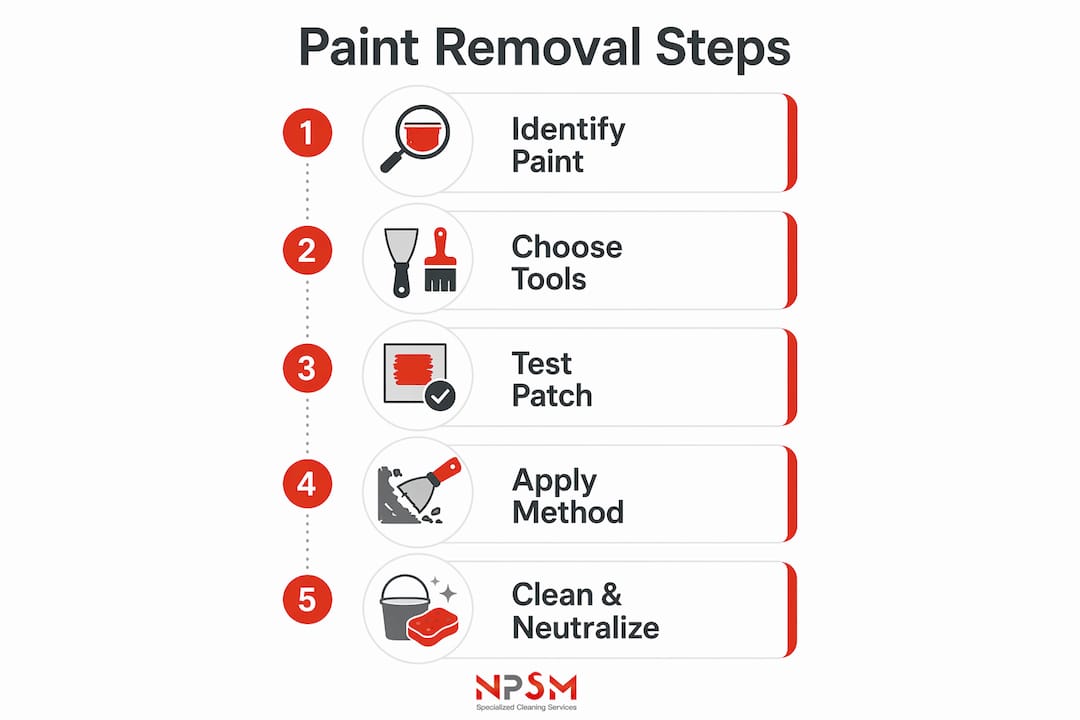
Gathering the right supplies before you begin saves time and prevents mid-job mistakes. Here’s what you need organized by category:
Mechanical tools:
-
Plastic scraper or plastic putty knife (never metal on finished floors)
-
Soft-bristle brush for working solvents into textured grain
-
Clean cotton rags and microfiber cloths
Chemical agents:
-
Isopropyl alcohol (70 to 99%) for latex paint spots
-
Mineral spirits or paint thinner for oil-based paint
-
Professional-grade chemical gel stripper for thick or layered paint
Heat tools:
- Heat gun or hair dryer for softening stubborn paint before scraping
Safety and workspace supplies:
-
Chemical-resistant gloves and safety goggles
-
Respirator mask rated for organic vapors
-
Drop cloths and plastic sheeting
-
Ventilation fan or open windows
| Supply | Purpose |
|---|---|
| Plastic scraper | Lifts softened paint without scratching the finish |
| Isopropyl alcohol | Dissolves fresh or dried latex paint spots |
| Mineral spirits | Breaks down oil-based paint without water damage |
| Chemical gel stripper | Penetrates thick or layered paint buildup |
| Heat gun | Softens paint for easier mechanical removal |
Pro Tip: Buy a plastic scraper with replaceable blades. A dull blade forces you to press harder, which is exactly how gouges happen.
Step-by-step methods based on paint type
The best way to remove paint from wood depends entirely on whether you’re dealing with latex or oil-based paint, and how thick the buildup is. Always start with the gentlest method and escalate only if needed.
Removing latex paint from hardwood floors
-
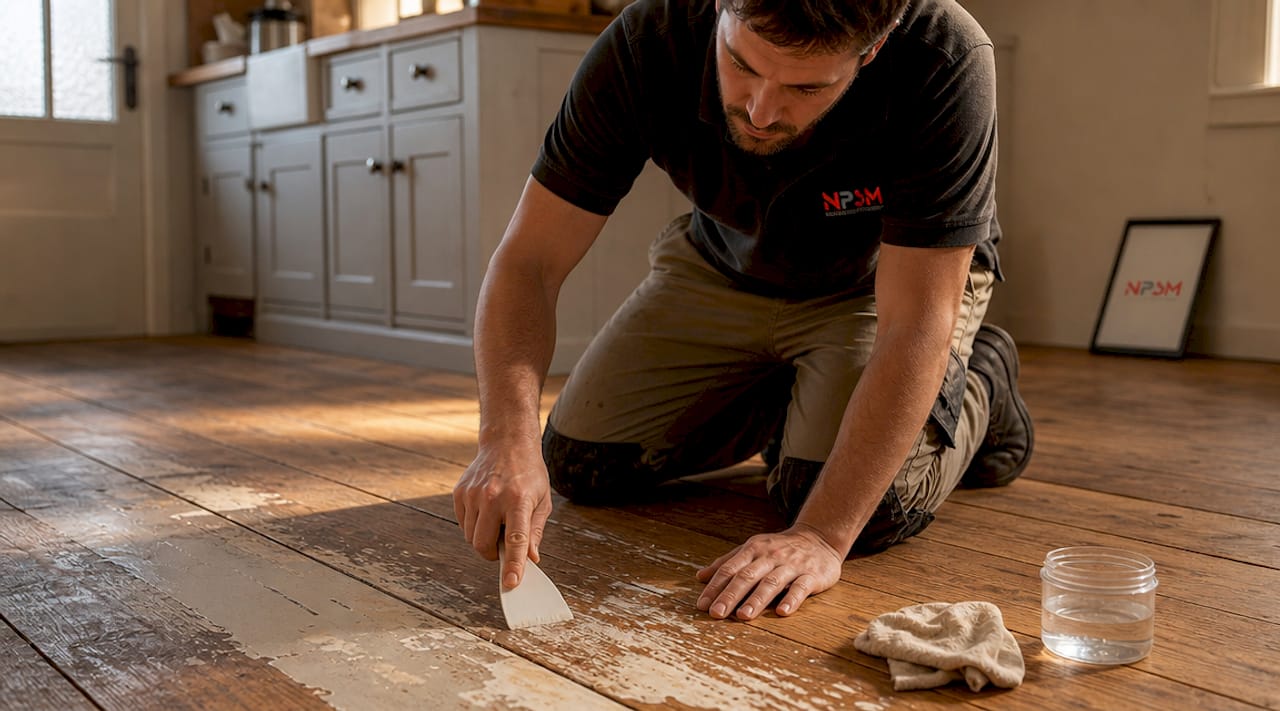
Soften with warm soapy water. For fresh latex paint, apply a warm, damp cloth directly to the spot and let it sit for two to three minutes. The paint will begin to loosen from the surface.
-
Scrape gently with a plastic scraper. Work with the wood grain, not across it. Scraping with the grain prevents surface fiber tears that show through any new finish you apply later.
-
Apply isopropyl alcohol for dried spots. For dried latex paint, soak a cloth in 70 to 99% isopropyl alcohol and hold it against the spot for one to two minutes. The paint softens enough to wipe or scrape away cleanly. Never pour alcohol directly onto the floor.
-
Wipe clean and dry immediately. Remove all residue with a dry cloth. Moisture left on wood floors causes swelling and finish damage.
Removing oil-based paint from hardwood floors
-
Ventilate the room first. Open windows and run a fan before opening mineral spirits or any solvent. Oil-based paint removal produces fumes that accumulate quickly in enclosed spaces.
-
Apply mineral spirits to a cloth. Dampen a rag and press it onto the paint spot. Let it dwell for three to five minutes. Mineral spirits penetrate oil-based paint and break the bond with the floor surface.
-
Test with the slide test before scraping. Slide the edge of your plastic scraper lightly across the paint. If it moves without resistance, the paint is ready. If it drags, wait another two minutes. Many homeowners cause gouging by scraping before the paint has fully softened.
-
Scrape with the grain in short strokes. Keep the scraper at a low angle, around 20 to 30 degrees, to the floor surface. This lifts paint rather than digging into wood.
-
Use chemical gel stripper for thick layers. Apply a 3 to 4 mm thick coat of gel stripper and cover immediately with plastic film. The film traps solvent vapor and doubles penetration effectiveness. Professional-grade strippers require 15 minutes for latex and up to 90 minutes for multiple oil-based coats.
Using heat to soften stubborn paint
A heat gun set to medium heat, held 6 to 8 inches from the floor surface, softens paint in 20 to 30 seconds. Move the gun constantly. Holding it in one spot for longer than 30 seconds risks scorching the wood or blistering the finish. Follow immediately with a plastic scraper while the paint is still warm.
Pro Tip: A hair dryer works as a lower-risk alternative to a heat gun for small spots. It takes longer but gives you more control over heat intensity.
| Method | Best for | Risk level |
|---|---|---|
| Warm water and scraping | Fresh latex paint | Low |
| Isopropyl alcohol | Dried latex spots | Low |
| Mineral spirits | Oil-based paint | Medium |
| Chemical gel stripper | Thick or layered paint | Medium to high |
| Heat gun | Stubborn dried paint | Medium |
How to prepare your workspace and handle post-removal cleanup
A clean, controlled workspace prevents accidents and protects the surrounding floor from solvent damage. Set this up before you open any chemical product.
-
Clear all furniture from the work area and cover adjacent flooring with drop cloths or plastic sheeting.
-
Open at least two windows and position a fan to push fumes outward, not just circulate them.
-
Put on chemical-resistant gloves, safety goggles, and an organic vapor respirator before handling any solvent or stripper.
-
Keep a bucket of clean water and clean rags nearby for immediate spill response.
After paint removal, neutralizing chemical residue is non-negotiable. Residual stripper left on the floor causes finish adhesion failure and peeling when you refinish. Wipe the treated area with mineral spirits to neutralize NMP-based gel strippers, then follow with a clean, dry cloth. Allow the floor to dry for 24 to 48 hours before sanding or applying any new finish.
Pro Tip: Dispose of solvent-soaked rags in a sealed metal container filled with water. Solvent-saturated rags left in a pile can self-ignite. This is a real fire hazard, not a theoretical one.
Avoid mopping the treated area with water-based cleaners immediately after removal. Wood absorbs moisture quickly, and wet wood swells, which can lift the surrounding finish and create an uneven surface. For ongoing wood floor protection, let the area dry fully before any follow-up treatment.
Common mistakes when removing paint from wood floors
Most floor damage during paint removal comes from impatience, not from using the wrong product. These are the mistakes that cause the most harm.
-
Scraping before paint softens. This is the top cause of gouges. Always confirm the slide test passes before applying pressure.
-
Using metal scrapers on finished floors. Metal edges tear surface fibers and leave scratches that show through new finishes. Plastic scrapers are the correct tool for finished hardwood.
-
Over-soaking wood with solvents. Applying too much mineral spirits or alcohol at once saturates the wood and weakens the finish bond. Use a damp cloth, not a wet one.
-
Applying stripper too thinly. A thin coat evaporates before it penetrates. Apply thick coats and cover with plastic film to maintain solvent contact throughout the dwell period.
-
Ignoring dwell times. Rushing the process by scraping too early wastes product and damages floors. Follow the manufacturer’s stated dwell time precisely.
-
Using a heat gun too close or too long. Scorched wood cannot be reversed without sanding. Keep the gun moving and maintain the 6 to 8 inch distance.
For historic homes or floors with suspected lead paint, avoid dry sanding and heat guns entirely. Use gel chemical strippers with wet scraping only. Disturbing lead paint with heat or abrasion releases toxic vapors and dust that pose serious health risks.
Veneered floors require extra caution. Moisture from water-based gel strippers can lift veneers and soften glue joints. Use only solvent-based strippers on veneered or engineered wood floors, and work in temperatures above 15°C for the stripper to perform correctly.
Key takeaways
Effective paint removal from wood floors depends on identifying the paint type first, then applying the gentlest method that works, and neutralizing all chemical residue before refinishing.
| Point | Details |
|---|---|
| Identify paint type first | Use the water test or alcohol test before selecting any removal method. |
| Start with the gentlest method | Use plastic scraping and warm water before escalating to solvents or heat. |
| Apply the slide test | Confirm paint has softened fully before scraping to prevent gouges. |
| Use thick stripper coats with film | Cover gel stripper with plastic film to double penetration and effectiveness. |
| Neutralize and dry before refinishing | Wipe with mineral spirits and allow 24 to 48 hours of drying time. |
Why patience is the real skill in paint removal
I’ve seen more floor damage caused by impatience than by the wrong product. Homeowners grab a metal putty knife, scrape hard, and create scratches that require full sanding to fix. The actual removal method matters less than the discipline to let it work.
My consistent recommendation is to start with isopropyl alcohol or warm water on every job, regardless of what the paint looks like. You’d be surprised how often that handles it. Chemical strippers and heat guns are for situations where the gentle approach genuinely fails, not for saving five minutes. The gentlest methods first principle isn’t just cautious advice. It’s the difference between a 30-minute fix and a floor that needs refinishing.
Ventilation is the other thing people underestimate. I’ve worked in rooms where mineral spirits fumes built up fast enough to cause headaches within minutes. A fan pointed at an open window is not optional. It’s the baseline.
For varnished or shellac-finished floors, I’m especially conservative. These finishes are irreplaceable in older homes, and alcohol-based solvents dissolve them on contact. If you’re working on a floor with an unknown or historic finish, test every product on a hidden corner before touching the main surface. The wood floor sanding process that follows paint removal is where most of the real restoration happens anyway. Get the paint off cleanly, and the refinishing step becomes straightforward.
— Qadir
Restore your wood floors with professional help in Dubai
When paint removal reveals deeper damage, such as scratched finishes, worn coatings, or uneven surfaces, DIY methods reach their limit. NPSM Specialized Cleaning Services LLC provides professional wooden floor polishing in Dubai that goes beyond surface cleaning to fully restore the wood’s appearance and protective finish. Their team handles everything from post-paint-removal sanding to complete floor restoration services for residential and commercial properties across the UAE. If your floor needs more than a scraper and a cloth, getting a professional assessment prevents further damage and protects your investment long term.
FAQ
What is the best way to remove dried latex paint from hardwood?
Apply 70 to 99% isopropyl alcohol to a cloth and hold it against the dried paint for one to two minutes, then scrape gently with a plastic scraper. This method softens latex paint without damaging most polyurethane finishes.
Can I use a metal scraper on wood floors?
Metal scrapers tear surface fibers on finished hardwood and leave scratches that show through new finishes. Always use a plastic scraper or plastic putty knife when removing paint from wood floors.
How long should chemical stripper sit on wood floors?
Professional-grade strippers require 15 minutes for latex paint and up to 90 minutes for multiple oil-based coats. Cover the stripper with plastic film immediately after application to prevent evaporation and improve penetration.
Is it safe to use a heat gun on hardwood floors?
A heat gun is safe when held 6 to 8 inches from the surface and kept moving continuously. Holding it stationary for more than 30 seconds risks scorching the wood or blistering the finish.
Do I need to neutralize the floor after using chemical stripper?
Yes. Wipe the treated area with mineral spirits after stripping, then allow 24 to 48 hours of drying time before sanding or refinishing. Skipping neutralization causes new finish coatings to peel or fail to adhere properly.