
TL;DR:
- Granite surface protection involves applying penetrating sealers or films to prevent stains and damage by filling microscopic pores in the stone. Testing with water beads helps determine when resealing is necessary, with bonded sealers providing long-lasting defense for high-traffic areas like kitchens and floors. Proper maintenance, including Using pH-neutral cleaners and promptly blotting spills, is essential to preserve the stone’s appearance and structural integrity.
Granite surface protection is the application of specialized penetrating sealers and protective films that shield granite countertops and floors from stains, liquid absorption, and surface damage. The industry term for this practice is stone impregnation or sealing, and it works by filling the microscopic pores within granite to create a chemical barrier. Unsealed granite absorbs 1% to 5% of liquid, which means spilled wine, cooking oil, or cleaning products can penetrate the stone within minutes. For property owners and managers in Dubai, where high-traffic use and humidity accelerate surface wear, understanding how protection works is the first step toward preserving your granite investment.
What is granite surface protection and how does it work?
Granite surface protection works by filling the stone’s natural pore structure with a chemical compound that repels liquids before they can cause staining or structural damage. Two primary methods exist: penetrating impregnating sealers and topical surface films. Each works differently at the microscopic level, and choosing the wrong one for your granite type produces poor results.
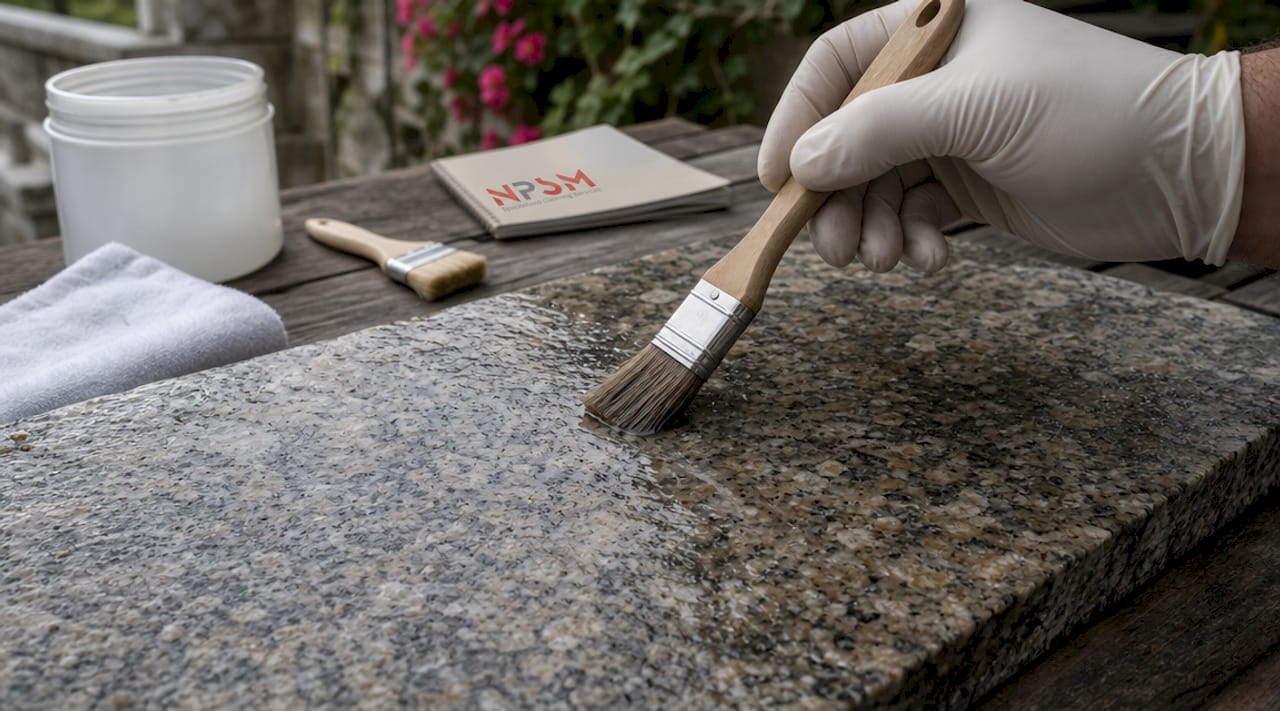
Penetrating impregnating sealers are the industry standard for most granite applications. These products, which often contain silane, siloxane, or polysiloxane compounds, sink below the surface and bond with the stone’s mineral structure. A 15% polysiloxane sealer reduces water absorption to 0.38% while causing only a minimal color shift of ΔE 2.7. That means you get strong protection without visibly altering the granite’s natural appearance.
Topical sealers, by contrast, sit on top of the stone and form a physical coating. They offer a higher-gloss finish and can add a wet-look sheen, but they wear off faster under foot traffic and require more frequent reapplication. They are better suited to decorative or low-traffic surfaces than to kitchen countertops or commercial floors.
Key factors that determine how well a sealer performs:
- Porosity: Denser granites like Absolute Black absorb less and need sealing less often. More porous varieties like Kashmir White require more frequent treatment.
- Finish type: Honed and leathered finishes have more open pores than polished surfaces and demand more frequent sealing and careful maintenance.
- Sealer application time: A proper application takes 15 to 20 minutes and requires the surface to be fully clean and dry before starting.
Pro Tip: Apply sealer to cut edges and sink cutouts separately after installation. These areas are untreated by factory sealers and are the most vulnerable points for moisture wicking into the slab.
What types of granite surface protection are available?
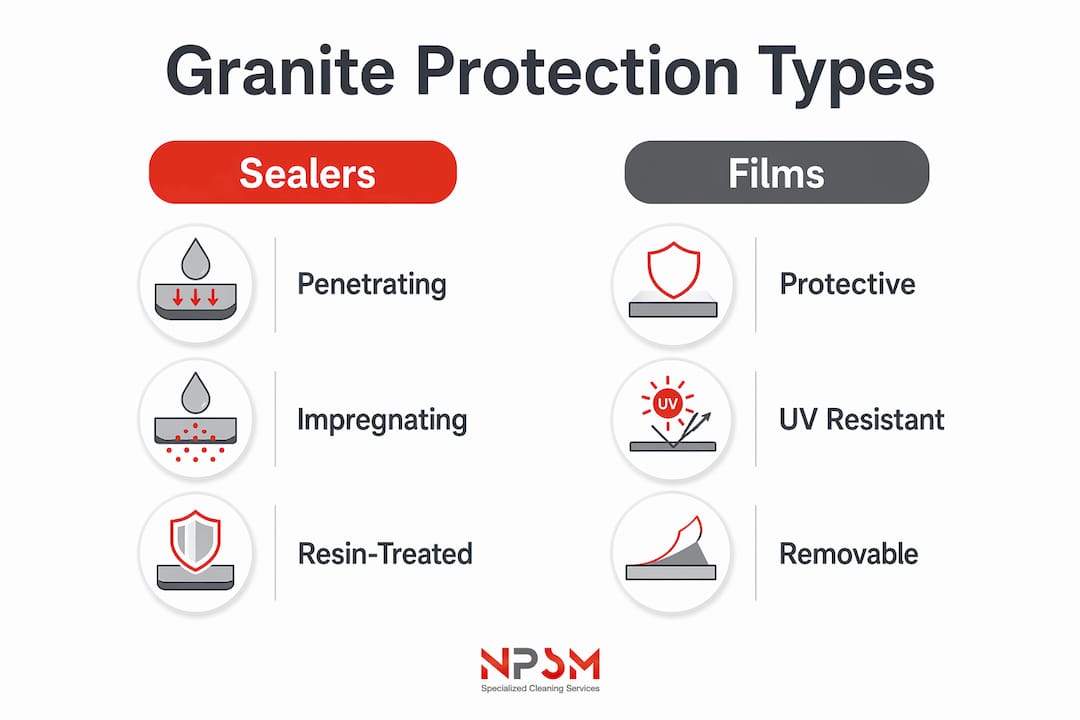
Three main protection categories exist for granite surfaces, each with distinct trade-offs in durability, appearance, and maintenance demand. Understanding these differences helps you match the right product to your property’s specific use case.
| Protection type | Durability | Visual impact | Application complexity | Best use case |
|---|---|---|---|---|
| Penetrating impregnating sealer | 3 to 5 years | Minimal color change | Moderate, DIY possible | Kitchen countertops, floors, high-traffic areas |
| Topical sealer | 6 to 12 months | Adds gloss or wet look | Easy, spray or wipe | Decorative surfaces, low-traffic areas |
| Protective surface film | 1 to 3 years | Slight sheen | Professional recommended | Commercial counters, hospitality surfaces |
Penetrating sealers are the most widely used because they preserve the stone’s natural look while delivering long-lasting protection. They do not peel, cloud, or trap moisture beneath the surface. Topical sealers are faster to apply and deliver a more dramatic visual finish, but they require stripping and reapplication more often. Surface films, sometimes called sacrificial coatings, act as a physical buffer layer that absorbs scratches and scuffs before the granite itself is affected.
One factor that many property owners overlook is factory resin treatment. Many modern granite slabs arrive pre-treated with resin at the fabrication stage, which fills pores and delays the need for resealing by months or even years. Over-sealing a resin-treated slab causes a hazy, milky buildup on the surface that is difficult to remove. Always test before you seal.
Pro Tip: Before purchasing any sealer, check the product’s compatibility with your granite’s finish. A sealer formulated for polished granite applied to a honed surface can cause uneven absorption and patchy results.
For property managers overseeing multiple units, granite floor maintenance protocols should specify the sealer type and reapplication schedule for each finish type across the property.
How to test your granite’s protection status and maintain it properly
Knowing when your granite needs resealing is more reliable than following a fixed calendar schedule. Granite porosity and usage vary greatly between properties and finishes, so a test-based approach beats guesswork every time.
The water-bead test is the standard diagnostic tool used by fabricators and stone care professionals:
- Place a few drops of water on the granite surface in a high-use area, such as near the sink or stove.
- Wait exactly 5 minutes without disturbing the drops.
- Observe the result. If the water beads up and sits on the surface, the sealer is intact.
- If the water absorbs into the stone or darkens the surface, resealing is needed immediately.
- Repeat this test annually in high-traffic zones, and after any deep cleaning or chemical exposure.
Once you confirm the protection status, daily maintenance practices determine how long that protection lasts between applications.
Cleaning: Use only pH-neutral cleaners formulated specifically for natural stone. Acidic cleaners like vinegar or lemon juice strip granite sealers and dull the finish over time. Products like Method Daily Granite Cleaner or dedicated stone-safe sprays from brands like StoneTech are appropriate choices. Avoid bleach, ammonia-based products, and general-purpose kitchen sprays.
Spill response: Sealing provides a time buffer for spill cleanup but does not make granite stain-proof. Blot spills immediately with a clean cloth. Never wipe, as wiping spreads the liquid across a larger surface area and increases absorption risk.
Heat exposure: Granite resists direct heat better than engineered quartz, but repeated heat contact degrades the sealer. Always use trivets or heat pads under hot pots and pans to protect the sealer layer, not just the stone.
Pro Tip: For honed and leathered granite finishes, reseal every 12 to 18 months rather than every 3 to 5 years. These finishes have more exposed pores and absorb liquids faster than polished surfaces.
Common mistakes that undermine granite surface protection
Most granite damage in residential and commercial properties traces back to a small set of repeated errors. Recognizing these patterns before they cause permanent damage saves significant restoration costs.
- Over-sealing resin-treated slabs. Applying sealer to granite that already has factory resin treatment causes a hazy, cloudy buildup on the surface. Always perform the water-bead test before resealing. If water still beads after 5 minutes, the existing protection is sufficient.
- Using acidic or abrasive cleaners. Repeated use of acidic, abrasive, or solvent-based cleaners degrades sealer layers, causing surface dulling and faster stain absorption. Many property owners assume that natural cleaners like white vinegar are safe for stone. They are not.
- Ignoring finish-specific maintenance needs. Treating a honed granite surface the same as a polished one accelerates wear. Honed and leathered finishes require more frequent sealing and gentler cleaning products because their open pore structure is more exposed.
- Delaying spill cleanup. Even sealed granite is not stain-proof. Oil, red wine, and coffee left on the surface for more than a few minutes can penetrate the sealer and reach the stone beneath. Blot spills the moment they occur.
- Skipping professional assessment. Professional fabricators can visually identify porosity and sealing needs that a property owner cannot detect with the naked eye. For commercial properties or high-value residential installations, a professional assessment every two to three years is worth the cost.
Understanding these pitfalls is especially relevant for natural stone polishing contexts, where the condition of the sealer directly affects how well the stone responds to polishing and restoration treatments.
Key takeaways
Granite surface protection works best when you match the sealer type to the stone’s finish, test before resealing, and use pH-neutral cleaners consistently to preserve the protective barrier.
| Point | Details |
|---|---|
| Test before you seal | Use the water-bead test annually to confirm whether resealing is actually needed. |
| Match sealer to finish | Honed and leathered granite need more frequent sealing than polished surfaces. |
| Avoid acidic cleaners | Vinegar, lemon juice, and general-purpose sprays strip sealers and dull the finish. |
| Blot spills immediately | Sealing buys time but does not prevent stains if spills sit for more than a few minutes. |
| Check for factory resin | Many new slabs are pre-treated; over-sealing causes hazy buildup that is hard to remove. |
What I’ve learned from years of working with granite surfaces
Working with granite across Dubai villas, hotel lobbies, and commercial kitchens has taught me one thing that no product label will tell you: granite is not a uniform material, and treating it like one is the most expensive mistake a property owner can make.
Two slabs from the same quarry can have dramatically different porosity levels. I have seen polished granite in a high-end apartment absorb water in under two minutes, while a honed slab in a nearby villa still beaded water after four years without resealing. The difference came down to mineral density and factory resin treatment, not the finish or the price point.
The water-bead test is the single most useful tool in granite maintenance, and most property owners never use it. They reseal on a fixed annual schedule regardless of whether the stone needs it. That approach wastes product, risks hazy buildup on resin-treated slabs, and gives a false sense of security on genuinely porous surfaces that needed attention six months earlier.
For property managers overseeing multiple units, I recommend building the water-bead test into your annual inspection checklist alongside HVAC filters and grout checks. It takes three minutes per surface and tells you exactly where to spend your maintenance budget.
The other thing I would push back on is the idea that protection and aesthetics are in conflict. The right penetrating sealer, applied correctly to a clean and dry surface, is invisible. It does not change the color, the texture, or the feel of the stone. What it does change is your repair bill three years from now.
— Qadir
Professional granite protection and restoration services in Dubai
If your granite surfaces show signs of staining, dullness, or sealer failure, DIY resealing may not be enough to restore them. NPSM Specialized Cleaning Services LLC provides professional granite polishing and restoration services across Dubai, covering residential villas, apartments, hotels, and commercial properties. The team assesses each surface’s porosity and condition before recommending the appropriate sealing, polishing, or restoration treatment. Whether your granite countertops need a fresh seal or your floors require full diamond polishing to remove scratches and restore shine, professional-grade results protect your investment far longer than off-the-shelf products. Contact FloorPolishing.ae for a free assessment and tailored granite care plan.
FAQ
What is granite surface protection in simple terms?
Granite surface protection is the process of applying penetrating sealers or protective films to fill the stone’s pores and create a barrier against liquids, stains, and surface damage. It preserves both the appearance and structural integrity of the granite over time.
How often should granite countertops be resealed?
Resealing frequency depends on the granite’s finish and porosity. Polished granite typically needs resealing every 3 to 5 years, while honed and leathered finishes require attention every 12 to 18 months. The water-bead test is the most reliable way to determine when resealing is needed.
Can I use vinegar to clean sealed granite?
No. Acidic cleaners like vinegar strip granite sealers and dull the finish over time. Use only pH-neutral cleaners formulated for natural stone to maintain sealer integrity.
Does sealing make granite completely stain-proof?
Sealing is not a permanent stain cure. It provides a time buffer that allows you to blot spills before they penetrate the stone, but liquids left on the surface for several minutes can still cause staining even on sealed granite.
Do new granite slabs need to be sealed right away?
Not always. Many modern granite slabs are factory resin-treated and may not need immediate sealing. Perform the water-bead test first. If water beads up after 5 minutes, the existing protection is sufficient and adding more sealer can cause hazy buildup.