


Many Dubai homeowners mistake marble polishing, grinding, and crystallization as interchangeable services, leading to confusion when selecting the right restoration method. Each technique serves a unique purpose in marble care, from leveling damaged surfaces to creating protective glass-like layers. Understanding these differences helps you choose the most effective treatment for your luxury villa or apartment floors, ensuring lasting beauty and durability in Dubai’s demanding climate.
Table of Contents
- Understanding Marble Grinding: The Foundation Of Restoration
- Marble Polishing: Restoring Natural Beauty And Shine
- Marble Crystallization: Advanced Chemical Protection And Shine Enhancement
- Comparing Marble Polishing, Grinding, And Crystallization: How To Choose The Right Method
- Professional Marble Floor Care Services In Dubai
- Frequently Asked Questions
Key takeaways
| Point | Details |
|---|---|
| Grinding levels surfaces | Grinding uses diamond tools to remove deep scratches, stains, and uneven areas as the foundation of restoration. |
| Polishing restores shine | Polishing removes surface imperfections using fine abrasives to reveal marble’s natural luster and smoothness. |
| Crystallization protects chemically | Crystallization creates a harder layer through chemical reaction, enhancing durability and resistance to wear. |
| Each method targets different needs | Choose grinding for deep damage, polishing for shine restoration, and crystallization for long-term protection. |
| Combined approaches deliver best results | Using all three methods in sequence provides optimal beauty and longevity for luxury marble floors. |
Understanding marble grinding: the foundation of restoration
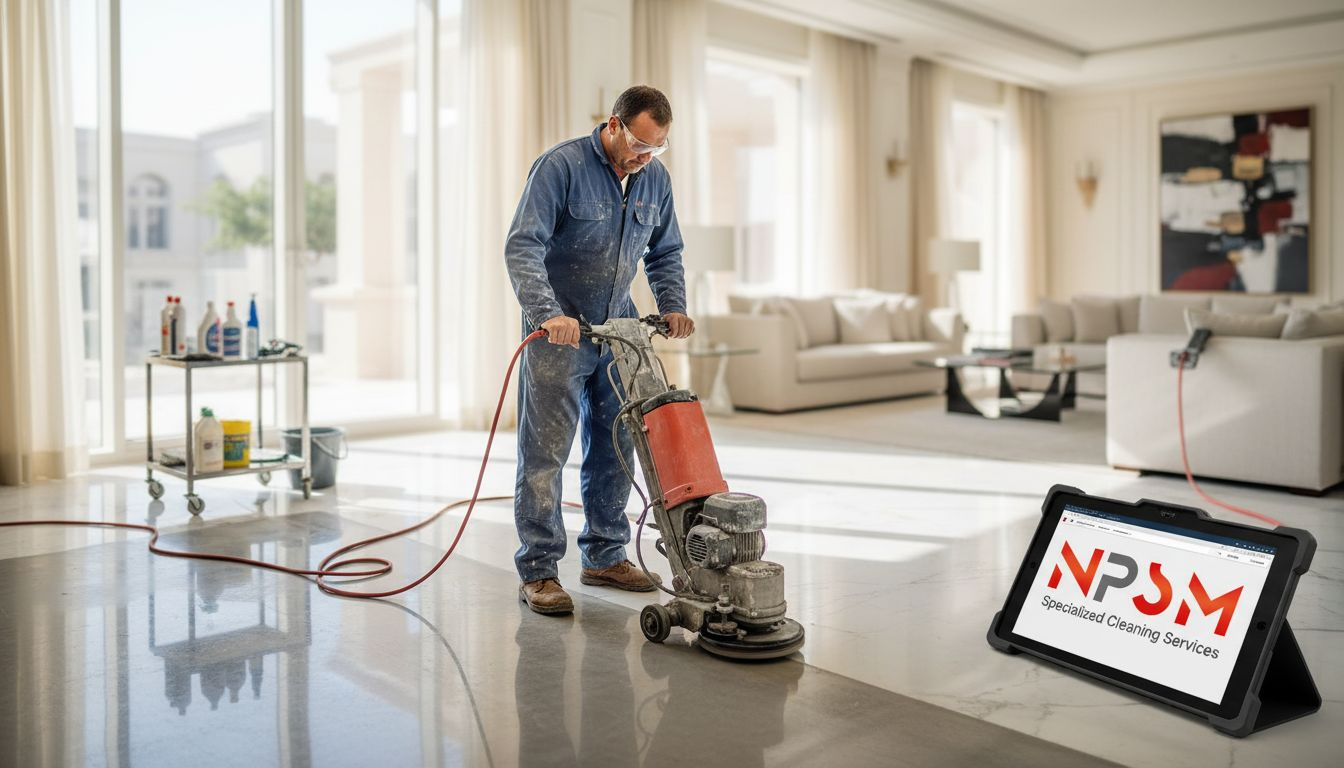
Grinding represents the essential first step in comprehensive marble restoration, addressing severe surface damage that polishing alone cannot fix. This process removes damaged top layers through specialized diamond abrasives, tackling deep scratches, old sealants, and uneven areas that compromise your floor’s appearance.
The grinding procedure involves multiple stages, progressing from coarse to finer abrasives for gradual refinement. Coarse diamond pads remove significant damage, while progressively finer grits smooth the surface for subsequent treatment. This systematic approach levels the marble surface and creates uniform appearance throughout your space.
Diamond tools prove essential for effective grinding without causing excessive stone removal or surface damage. These precision instruments ensure controlled material removal while preserving the marble’s structural integrity. Professional technicians adjust grinding depth based on damage severity, preventing over-grinding that could thin your marble unnecessarily.
Grinding benefits include:
- Removal of deep stains, gouges, and lippage between tiles
- Elimination of scratches from furniture movement or dropped items
- Preparation of smooth base for honing and polishing stages
- Restoration of level surface across entire floor area
- Extension of marble lifespan by addressing damage early
Pro Tip: Properly executed grinding extends your marble’s lifespan by preventing cracks and deep staining. Never skip this foundational step when dealing with severely damaged floors, as attempting to polish over deep scratches only masks problems temporarily.
You must engage professional technicians for grinding work, as improper technique causes irreversible damage. DIY attempts often result in uneven surfaces, excessive material removal, or damaged stone structure. Experts possess the knowledge to select appropriate diamond grit sequences and apply consistent pressure throughout the process. For comprehensive restoration after renovations, consider post renovation floor polishing services that include proper grinding protocols.
Marble polishing: restoring natural beauty and shine
Polishing transforms your marble after grinding, refining the surface to reveal the stone’s inherent beauty and radiant appearance. This process removes minor scratches and dullness using progressively finer abrasives, creating the smooth, glossy finish associated with luxury marble installations.
The polishing sequence begins with honing, which smooths the surface to a matte or satin finish. Technicians then apply finer diamond polishing compounds that restore original shine and increase durability through deeper penetration. Each polishing stage builds upon the previous one, gradually enhancing gloss levels from 30 to 90+ on the gloss meter scale.
Diamond polishing offers superior results compared to traditional powder methods, penetrating deeper into the marble structure for lasting durability. This technique creates a flawless finish that resists future scratches, stains, and wear more effectively than surface-level treatments. The resulting surface feels smoother to touch and reflects light more uniformly across your entire floor.
Polishing advantages include:
- Restoration of smoothness that highlights natural veining patterns
- Enhanced shine that brightens rooms and improves aesthetics
- Reduced susceptibility to future scratches and surface damage
- Improved stain resistance through tighter surface structure
- Extended time between maintenance cycles for busy households
Regular polishing proves vital for maintaining marble floors in Dubai’s high-end homes, where foot traffic and environmental factors constantly challenge surface integrity. The city’s climate demands robust surface treatments that withstand humidity fluctuations and indoor-outdoor transitions common in villa layouts. Professional marble polishing services deliver consistent results that preserve your investment.
Polishing differs fundamentally from grinding by focusing on surface refinement rather than damage removal. While grinding addresses structural issues and deep imperfections, polishing enhances aesthetic qualities and protective characteristics. This distinction matters when communicating your needs to service providers and understanding treatment recommendations.
Pro Tip: Combining polishing with crystallization enhances both durability and gloss significantly, creating a finish that outperforms either treatment alone. Schedule crystallization within 24 hours after polishing for optimal chemical bonding and maximum protective benefits.
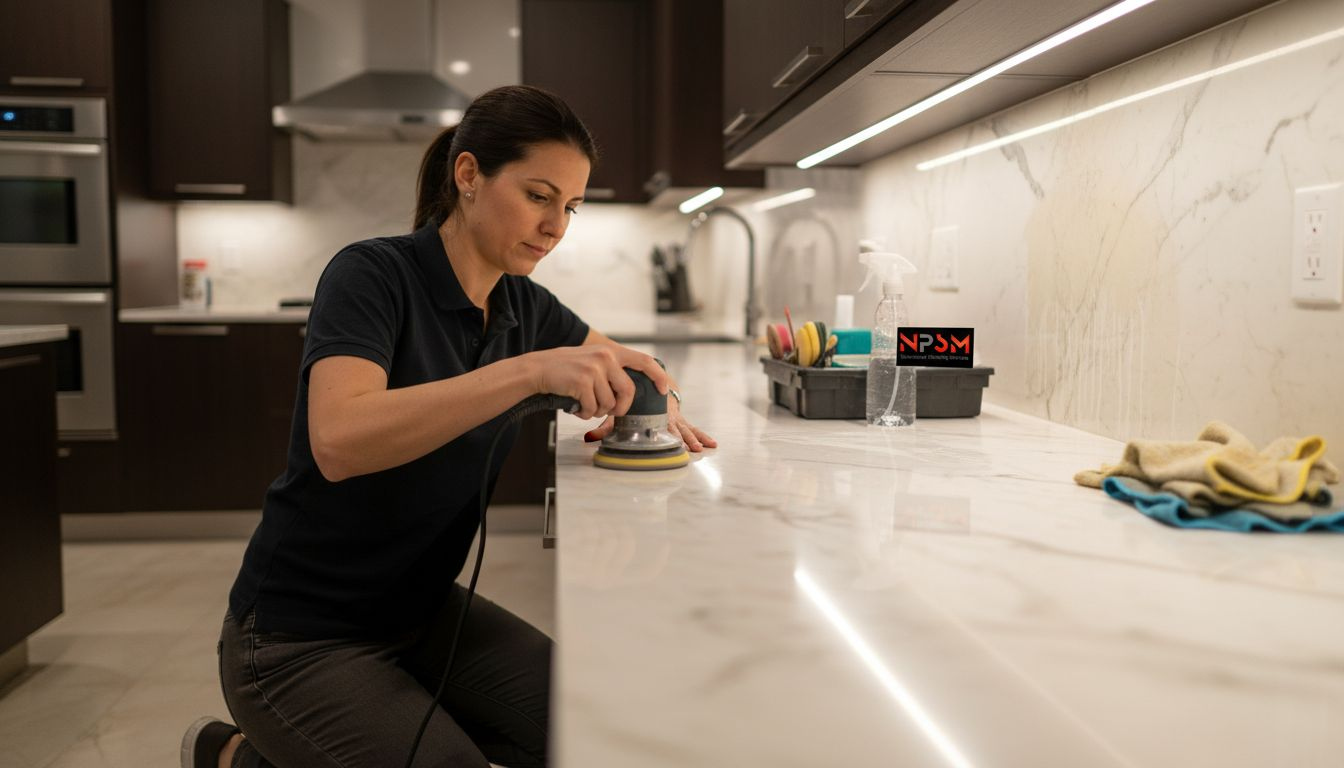
You can also apply polishing principles to marble countertops, where surface quality directly impacts food preparation safety and visual appeal. Countertop polishing requires gentler techniques due to thinner material and different usage patterns compared to flooring applications.
Marble crystallization: advanced chemical protection and shine enhancement
Crystallization represents the most advanced marble treatment, using specialized chemical solutions to transform and strengthen your floor’s surface layer. This process reacts with calcium carbonate in marble, forming a harder, more compact protective barrier that elevates both appearance and durability beyond mechanical polishing alone.
The chemical reaction creates a glass-like layer on your marble surface, enhancing natural shine while improving resistance to scratches, stains, and daily wear. Unlike waxing or coating applications that sit atop the stone, crystallization chemically bonds with the marble structure itself. This integration produces longer-lasting results that withstand Dubai’s environmental challenges more effectively.
Crystallization differs fundamentally from polishing by creating chemical transformation rather than mechanical smoothing. While polishing refines surface texture through abrasion, crystallization forms a durable glass-like finish through molecular restructuring. This distinction explains why crystallized floors maintain their appearance longer between maintenance cycles.
The process proves ideal for Dubai’s environment, combating humidity effects and heavy foot traffic common in luxury properties. High-end villas and apartments benefit from crystallization’s ability to repel moisture penetration while maintaining breathability. This balance prevents trapped moisture that could cause discoloration or structural weakening over time. Protecting your marble from humidity damage requires comprehensive treatments like crystallization.
| Feature | Crystalline Layer | Wax Coating |
|---|---|---|
| Layer Thickness | 0.5 to 2 microns (bonded) | 5 to 15 microns (surface) |
| Gloss Level | 85 to 95+ units | 60 to 80 units |
| Breathability | Maintains natural stone breathing | Blocks pores completely |
| Durability | 12 to 18 months typical | 3 to 6 months typical |
| Scratch Resistance | High (chemical hardening) | Low to moderate |
Crystallization benefits include:
- Enhanced surface hardness that resists daily wear patterns
- Superior gloss that requires no buffing or reapplication for months
- Improved stain resistance through tighter molecular structure
- Better humidity protection for Dubai’s coastal climate conditions
- Reduced maintenance frequency compared to traditional waxing
Pro Tip: Combining crystallization with polishing yields the ultimate marble finish that balances beauty and longevity. Polish first to create an ideal surface, then crystallize within 24 hours for maximum chemical bonding effectiveness.
The crystalline layer’s transparency preserves your marble’s natural color and veining while adding protective benefits. This characteristic makes crystallization suitable for both light and dark marble varieties without altering appearance. You maintain the authentic stone aesthetic while gaining modern protective advantages.
Comparing marble polishing, grinding, and crystallization: how to choose the right method
Selecting the appropriate marble treatment requires understanding each method’s specific purpose, process, and ideal applications for your Dubai property. This comparison framework clarifies when to use grinding, polishing, or crystallization based on your floor’s current condition and desired outcomes.
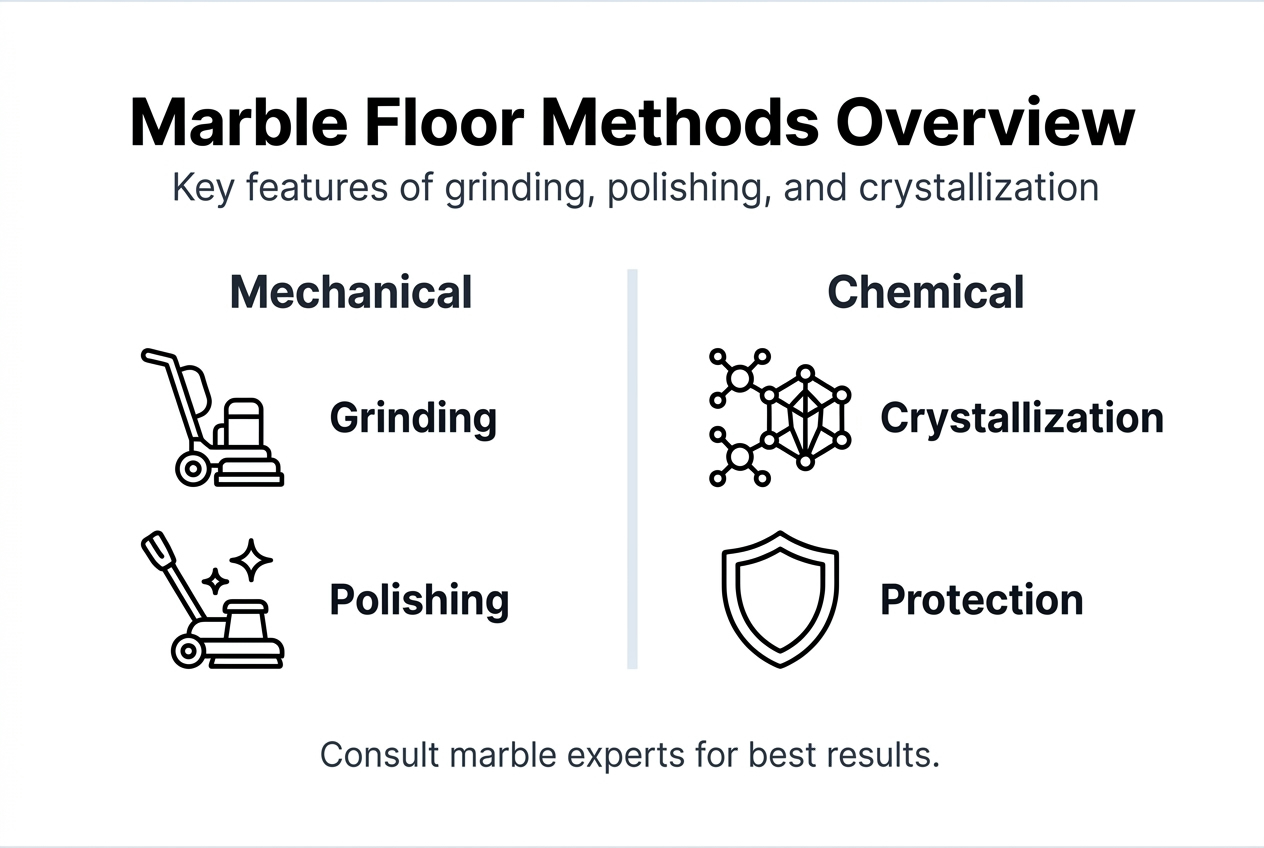
| Aspect | Grinding | Polishing | Crystallization |
|---|---|---|---|
| Primary Purpose | Remove deep damage and level surface | Restore shine and smoothness | Chemically harden and protect |
| Process Type | Mechanical abrasion (coarse to fine) | Mechanical refinement (fine abrasives) | Chemical reaction (bonding) |
| Equipment Used | Diamond grinding pads (30 to 400 grit) | Diamond polishing pads (400 to 3000 grit) | Chemical solutions and buffing |
| Results Achieved | Level, matte surface ready for polishing | Smooth, glossy finish | Enhanced gloss with protection |
| Durability Period | Foundation (not standalone finish) | 6 to 12 months shine retention | 12 to 18 months protection |
| Ideal Use Cases | Severe scratches, lippage, stain removal | Minor wear, shine restoration | New floors or after polishing |
Choosing depends on marble condition, desired finish level, and long-term maintenance goals for your property. Polishing and crystallization serve distinct purposes, both crucial for comprehensive marble care. Assess your current situation before selecting treatments, as incorrect choices waste money and potentially damage your investment.
Questions to ask before selecting services:
- What is your marble’s current condition regarding scratches, stains, and levelness?
- How much daily foot traffic occurs in affected areas?
- What is your expected timeline between maintenance treatments?
- Do you prioritize immediate aesthetic improvement or long-term protection?
- Has your marble received proper grinding if severely damaged?
- What is your budget for initial treatment and ongoing maintenance?
Combined approaches deliver optimal results for luxury Dubai properties, with all three methods together providing durable, high-gloss finishes. A complete restoration sequence starts with grinding to address damage, continues with polishing to restore beauty, and concludes with crystallization for lasting protection. This comprehensive approach maximizes your investment’s lifespan and appearance.
Common pitfalls include confusing polishing with waxing or skipping grinding when deep damage exists. Wax creates temporary shine but traps dirt and yellows over time, while proper polishing produces lasting results through surface refinement. Attempting to polish over deep scratches without grinding first yields disappointing outcomes, as abrasives cannot reach damage depths effectively.
Expert guidance recommends scheduling grinding only when assessing significant damage during initial evaluation. Plan polishing every 12 to 18 months for high-traffic areas and crystallization immediately following polishing for synergistic benefits. Low-traffic spaces may extend intervals to 24 months based on appearance retention. Professional floor polishing services help establish customized maintenance schedules for your specific usage patterns.
Professional marble floor care services in Dubai
Achieving flawless marble finishes requires professional expertise in grinding, polishing, and crystallization techniques tailored for Dubai’s luxury properties. Expert technicians utilize advanced diamond grinding technology, precision polishing equipment, and premium crystallization solutions to deliver superior results that DIY attempts cannot match.
Our comprehensive services address all marble care needs for high-end villas and luxury apartments throughout Dubai. We combine decades of restoration experience with cutting-edge equipment to handle everything from severe damage repair to routine maintenance polishing. Each project receives customized treatment plans based on your marble’s specific condition, traffic patterns, and aesthetic goals.
Professional care delivers enhanced durability that withstands Dubai’s climate impacts, including humidity fluctuations and temperature extremes. Our crystallization treatments create protective barriers specifically engineered for coastal environments, while our polishing techniques reveal maximum shine that reflects your property’s luxury status. You gain peace of mind knowing your marble investment receives expert attention from initial assessment through final inspection.
We invite you to experience the difference professional marble care makes for your property. Request a free consultation to discuss your specific needs and receive a detailed quote for floor polishing services tailored to your villa or apartment. Our team also specializes in natural stone polishing for granite, limestone, and travertine surfaces throughout your home. Visit our website at floorpolishing.ae to explore our complete range of restoration and maintenance solutions.
Frequently asked questions
What is the difference between marble polishing and grinding?
Marble grinding removes a damaged surface layer using coarse diamond abrasives to level floors and eliminate deep scratches or stains. Polishing refines the surface after grinding with progressively finer abrasives, restoring smoothness and creating the glossy finish you see in luxury installations. Grinding addresses structural damage, while polishing enhances aesthetic qualities and shine.
How does marble crystallization protect my floors?
Crystallization chemically bonds with your marble’s calcium carbonate, creating a harder surface layer that resists scratches, stains, and daily wear while enhancing shine. The glass-like protective layer formed through this reaction makes cleaning easier and helps protect against Dubai’s humid climate by preventing moisture penetration. This chemical transformation provides longer-lasting protection compared to surface coatings or wax applications.
Can polishing or crystallization be done without grinding?
If your marble shows only minor surface wear like light dulling or superficial marks, polishing and crystallization alone can effectively refresh its appearance. However, floors with deep scratches, significant stains, lippage between tiles, or uneven surfaces require grinding first for best results. Attempting to polish over severe damage produces disappointing outcomes, as fine abrasives cannot reach deep imperfections.
How do I maintain crystallized and polished marble floors?
Regular cleaning with pH-neutral products helps maintain both shine and the protective crystalline layer without causing chemical degradation. Avoid abrasive cleaners, acidic substances like vinegar, and harsh chemicals that damage the protective surface and dull your marble’s appearance. Schedule periodic professional polishing every 12 to 18 months and crystallization treatments to refresh protection as the chemical layer gradually wears from foot traffic.
Recommended
- marble countertop polishing Archives – Floor Polishing and Restoration Services Dubai
- Chemical floor polishing: Dubai villa guide 2026
- Marble Polishing and Restoration Services Dubai | Get Free Quote
Understanding the differences between marble polishing vs marble grinding is essential for maintaining your marble surfaces effectively.
Permalink