
TL;DR:
- Marble floor safety depends on selecting proper finishes, professional anti-slip treatments, and regular maintenance to reduce slip risks. Honed, textured, or mosaic finishes provide higher friction, especially in wet areas, while micro-etching treatments improve existing polished floors’ slip resistance effectively. Consistent cleaning with neutral products, resealing on schedule, and strategic mat placement further enhance safety and prevent falls.
Marble floor safety measures are the combination of finish selection, professional anti-slip treatments, cleaning routines, and protective accessories that determine whether a marble surface is safe or a liability. Polished marble regularly falls below the ADA’s minimum slip resistance threshold, with Dynamic Coefficient of Friction (DCOF) values between 0.20 and 0.35 against the required 0.42. That gap is not a minor technicality. It represents real fall risk in homes, hotels, and commercial properties across Dubai and beyond. The good news is that every measure covered here is practical, proven, and available in 2026.
1. Choosing the right marble finish for slip resistance
The single most cost-effective marble flooring safety tip is selecting the correct surface finish before installation. Retrofitting slip resistance on polished marble is always costlier and less effective than specifying the right finish from the start.
Polished marble is the most popular choice for its mirror-like shine, but it is also the most dangerous in wet or high-traffic areas. Its DCOF sits between 0.20 and 0.35, well below the ADA minimum of 0.42. Honed marble, which has a matte, satin surface, achieves higher friction values and is the standard recommendation for bathrooms, entryways, and commercial lobbies. Textured and mosaic finishes perform even better because the surface variation creates more contact points for shoe soles.
Here is how common finishes compare by location suitability:
-
Polished: Suitable for dry living rooms, bedrooms, and decorative wall panels only
-
Honed: Appropriate for kitchens, hallways, and light-traffic commercial areas
-
Brushed or textured: Recommended for bathrooms, pool surrounds, and outdoor terraces
-
Mosaic: Best choice for shower floors and wet spa areas due to maximum grout joint coverage
Pro Tip: Ask your stone supplier for the DCOF test certificate for any marble tile before purchasing. A reputable supplier will have this data on file. If they cannot provide it, treat the tile as unsuitable for wet areas.
2. Applying professional anti-slip treatments to existing floors
If you already have polished marble installed, professional micro-etching is the most reliable path to preventing slips on marble without replacing the floor. Anti-slip treatments chemically etch marble at a microscopic level, preserving the visual appearance while increasing surface friction. The treatment lasts three to five years under normal use, making it a cost-effective investment compared to full replacement.
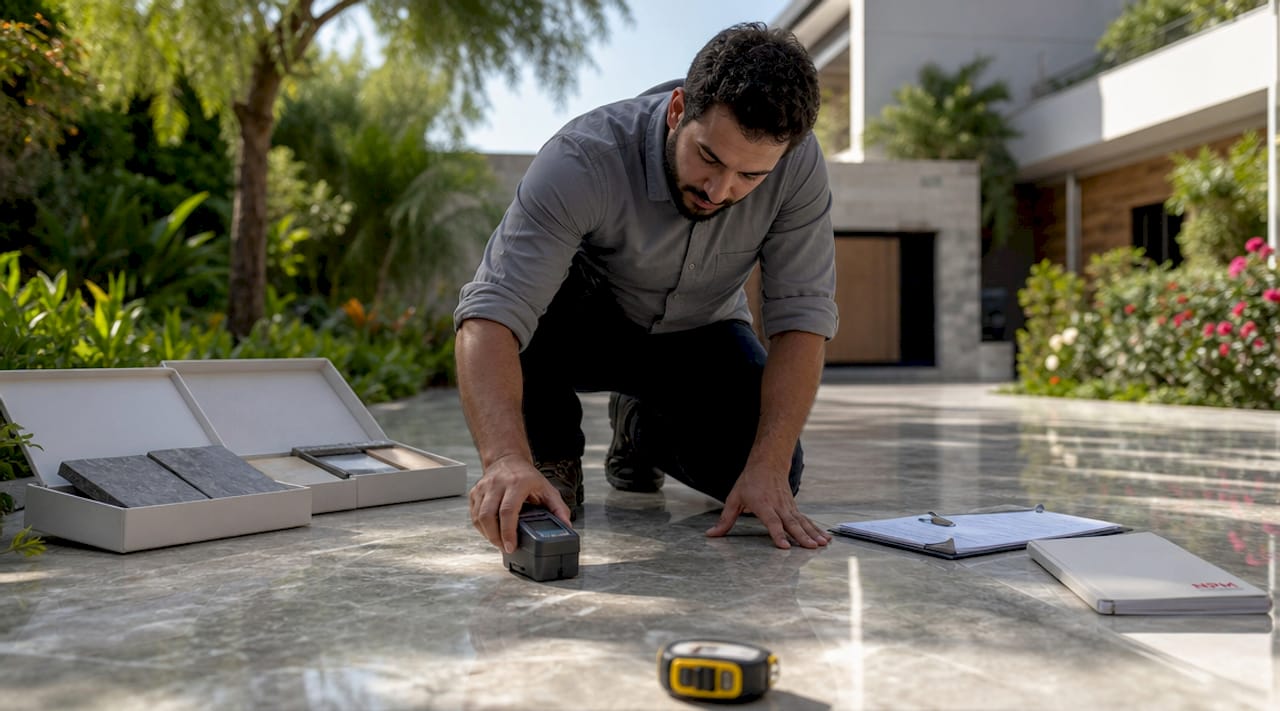
The process works by applying a chemical solution that creates microscopic peaks and valleys across the stone surface. These texture changes are invisible to the eye but dramatically increase grip underfoot. A qualified technician measures the floor’s Pendulum Test Value (PTV) before and after treatment to confirm results. Micro-etching sessions typically take two to three hours and target a PTV of 36 or above, which is the internationally recognized threshold for low slip risk.
Professional micro-etching is not the same as a DIY anti-slip coating. DIY coatings frequently fail due to uneven application and attract dirt over time, reducing rather than improving traction. A professional treatment chemically modifies the stone itself, so there is nothing to peel, chip, or wear unevenly.
Nano-coatings are a complementary option worth knowing. These hydrophobic sealers cause water to bead and run off the surface rather than forming a wet film. They do not replace micro-etching in high-risk wet areas but work well as an added layer of protection in moderate-traffic zones.
3. Cleaning marble floors safely to preserve traction
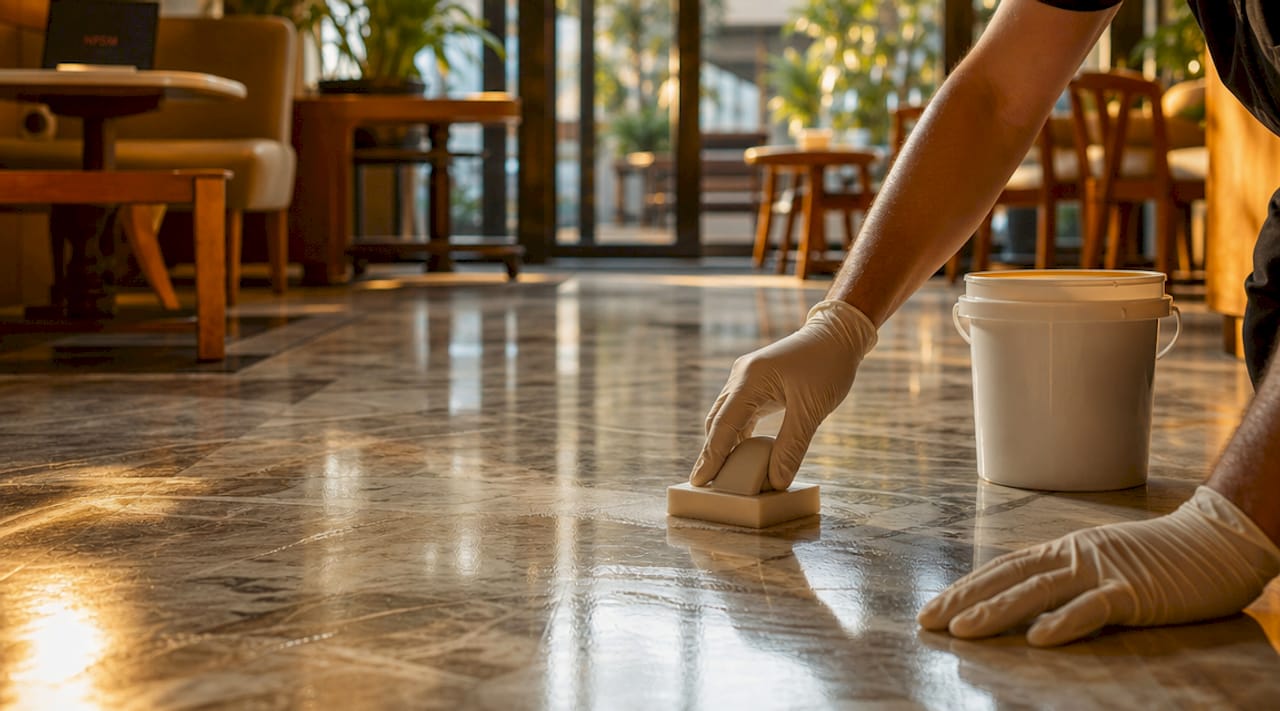
Maintenance is not just about aesthetics. Using improper cleaners reduces marble’s slip resistance over time by leaving a slippery film that no finish or treatment can fully compensate for. Standard household cleaners, wax-based products, and acidic solutions all damage marble and create residue that cuts friction.
Follow this cleaning sequence to keep marble floors safe:
-
Dry sweep or dust mop daily using a microfiber pad to remove grit before it gets ground into the surface or tracked across wet areas.
-
Mop with a pH-neutral, stone-safe cleaner diluted according to the manufacturer’s instructions. Products formulated for natural stone, such as those from Lithofin or Fila, are designed to clean without leaving residue.
-
Rinse thoroughly with clean water after mopping. Soap residue left on marble is one of the most common causes of slippery floors in residential bathrooms and hotel lobbies.
-
Squeegee or dry the surface in wet areas like bathrooms and pool surrounds immediately after use. Standing water on polished marble is the highest-risk condition for a slip.
-
Inspect grout lines monthly for cracks or deterioration. Damaged grout reduces the traction network that grout joints provide, particularly on mosaic and smaller-format tiles.
Pro Tip: Perform a water absorption test on your marble floor every year. Pour a tablespoon of water on the surface and time how long it takes to absorb. If absorption happens within one to two minutes, the sealer is still intact. If the water soaks in immediately, the floor needs resealing.
Sealing schedules matter as much as the sealer itself. Marble floors in high-traffic areas need resealing every 12 to 18 months, while low-traffic areas can go up to three years between applications. A properly sealed floor resists moisture penetration, which directly reduces slip risk in wet conditions.
4. Using mats and rugs with non-slip backings
The best mats for marble floors are heavy-duty, rubber-backed entrance mats that capture moisture and abrasive grit before they reach the stone surface. Matting should be integral to the flooring plan, not an afterthought added after a near-miss incident. Grit tracked in from outside acts like sandpaper on polished marble and, when wet, becomes a serious slip hazard.
Key placement priorities for mats and rugs:
-
Building entrances: Place a scraper mat outside and an absorbent mat inside. The two-mat system removes grit first, then moisture.
-
Bathroom exits: A bath mat positioned directly outside the shower or bathtub catches wet feet at the highest-risk moment. Choose mats with suction-cup or rubber backing rated for wet surfaces.
-
Kitchen work zones: Anti-fatigue mats with non-slip bases protect both the worker and the floor in areas where spills are frequent.
-
Stair landings: Marble stair landings benefit from fitted carpet runners or rubber-backed rugs secured with non-slip tape or gripper rods.
Proper floor drainage and tile layout also reduce slip hazards in ways that mats cannot address alone. A floor slope of at least one-quarter inch per foot toward a drain prevents water from pooling on the surface. This is the most critical design factor in wet areas, ahead of finish choice. Additionally, smaller marble tiles create more grout joints, which function as traction points. Large-format polished tiles in shower floors are a design choice that consistently increases slip risk by eliminating those grip lines.
| Mat type | Best location | Key feature |
|---|---|---|
| Rubber scraper mat | Exterior entrance | Removes grit and debris |
| Absorbent entrance mat | Interior lobby or foyer | Captures residual moisture |
| Suction-cup bath mat | Bathroom, shower exit | Wet-surface rated grip |
| Anti-fatigue mat | Kitchen, commercial counters | Spill resistance, non-slip base |
| Carpet runner with gripper | Stair landings | Secured edge, full coverage |
5. Comparing marble floor safety measures side by side
Not every property has the same risk profile or budget. A villa bathroom in Dubai requires a different approach than a hotel lobby handling thousands of footsteps per day. This comparison helps you prioritize which measures deliver the most value for your specific situation.
| Safety measure | Slip resistance gain | Cost level | Visual impact | Best suited for |
|---|---|---|---|---|
| Honed or textured finish | High (DCOF ≥ 0.42) | Low (pre-install) | Matte appearance | Wet areas, new builds |
| Micro-etching treatment | High (PTV ≥ 36) | Medium | Minimal change | Existing polished floors |
| pH-neutral cleaning routine | Moderate | Very low | None | All marble surfaces |
| Resealing every 12-18 months | Moderate | Low to medium | None | High-traffic areas |
| Non-slip mats and rugs | High at entry points | Very low | Decorative option | Entrances, bathrooms |
| Proper drainage slope | Very high in wet areas | Low (design phase) | None | Showers, pool areas |
| Smaller tile format | High (more grout joints) | Low to medium | Design change | Wet floors, new installs |
The table makes one pattern clear: measures applied during the design phase cost the least and deliver the most. Micro-etching is the most practical fix for existing polished floors, while consistent cleaning and sealing protect whatever level of slip resistance you have already achieved. For a deeper look at how marble polishing techniques affect surface texture and safety, the differences between polishing, grinding, and crystallization are worth understanding before committing to any treatment.
Key takeaways
Effective marble floor safety requires combining the right surface finish with professional treatments, consistent maintenance, and strategic mat placement rather than relying on any single measure.
| Point | Details |
|---|---|
| Finish selection is the foundation | Choose honed, textured, or mosaic finishes for wet areas before installation to meet DCOF ≥ 0.42. |
| Micro-etching fixes existing floors | Professional treatments reach PTV ≥ 36 in two to three hours and last three to five years. |
| Cleaning products affect traction | Use only pH-neutral, stone-safe cleaners to prevent slippery residue buildup on marble surfaces. |
| Reseal on a schedule | High-traffic marble needs resealing every 12 to 18 months; use the water absorption test to confirm timing. |
| Mats and drainage are non-negotiable | Non-slip-backed mats at entrances and a floor slope of one-quarter inch per foot prevent the most common slip scenarios. |
What I’ve learned after years of working with marble floors
Most slip incidents on marble floors are entirely preventable, and they almost always trace back to one of two decisions: the wrong finish was specified, or the right finish was undermined by incorrect cleaning products. I have seen beautifully honed marble in a hotel bathroom turned dangerously slippery because the housekeeping team was using a wax-based cleaner that left a film on the surface. The floor looked immaculate. It was a hazard.
The advice I give every property manager is this: treat your marble floor as a system, not a surface. The finish, the sealer, the cleaner, the mat at the door, and the slope of the drain all interact. Optimizing one while ignoring another creates a false sense of security. A polished marble lobby with a great entrance mat is still a slip risk the moment someone walks past the mat with wet shoes.
For homeowners, the most overlooked measure is the marble floor care routine itself. People invest in beautiful stone and then clean it with whatever is under the sink. That decision quietly degrades both the appearance and the safety of the floor over months. Switching to a stone-safe, pH-neutral cleaner costs almost nothing and makes a measurable difference.
Professional micro-etching is worth every dirham for existing polished floors in wet areas. The hesitation I hear most often is that it will change the look of the marble. In practice, the visual difference is negligible. The safety difference is not. If you are managing a property with polished marble in bathrooms, pool areas, or high-traffic lobbies, schedule a treatment and a pre and post PTV test. The numbers will justify the decision.
— Qadir
How FloorPolishing.ae can make your marble floors safer
NPSM Specialized Cleaning Services LLC provides professional marble safety treatments across Dubai and the UAE through FloorPolishing.ae. Their team applies micro-etching and marble restoration services that increase slip resistance on existing polished floors without altering the stone’s appearance. They also offer customized sealing programs for high-traffic residential and commercial properties, with maintenance schedules tailored to your floor’s specific usage and finish type. Whether you manage a villa, hotel, or retail space, their technicians assess your current DCOF or PTV levels and recommend the most direct path to a safer, compliant floor. Request a free quote through FloorPolishing.ae to get a professional assessment of your marble floor’s current slip risk.
FAQ
What DCOF value makes a marble floor safe?
The ADA minimum for slip resistance is a DCOF of 0.42 on wet surfaces. Polished marble typically scores between 0.20 and 0.35, which falls below this threshold and requires treatment or a finish change.
How long does a professional anti-slip treatment last?
Professional micro-etching treatments last three to five years under normal use. The treatment chemically modifies the stone surface, so it does not peel or wear unevenly the way topical coatings do.
Can I use any cleaner on marble floors?
Only pH-neutral, stone-safe cleaners are appropriate for marble. Acidic cleaners, wax-based products, and standard household detergents leave residue that reduces friction and damages the stone surface over time.
How often should marble floors be resealed?
High-traffic marble floors need resealing every 12 to 18 months. Low-traffic areas can go up to three years. Use the water absorption test to confirm when resealing is needed rather than relying on a fixed calendar date alone.
Do smaller marble tiles really reduce slip risk?
Yes. Smaller tiles create more grout joints per square foot, and those joints function as traction points underfoot. Large-format polished tiles in wet areas eliminate those grip lines and consistently increase slip risk.