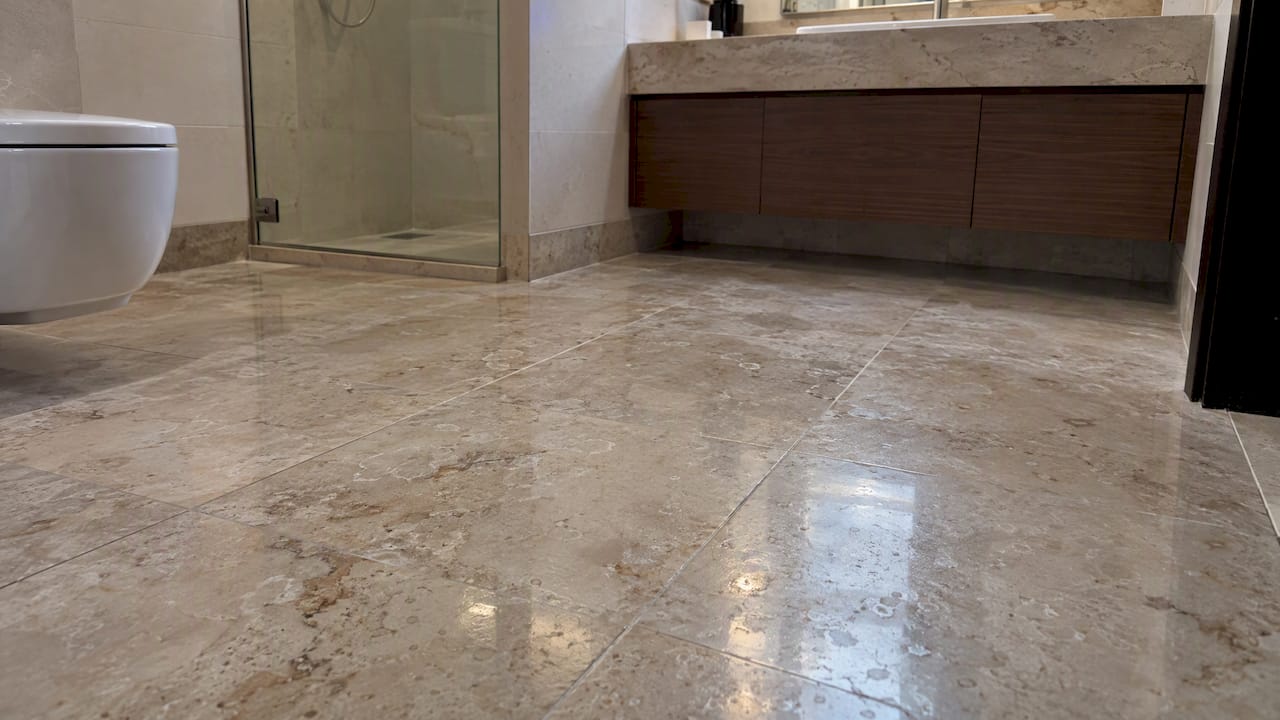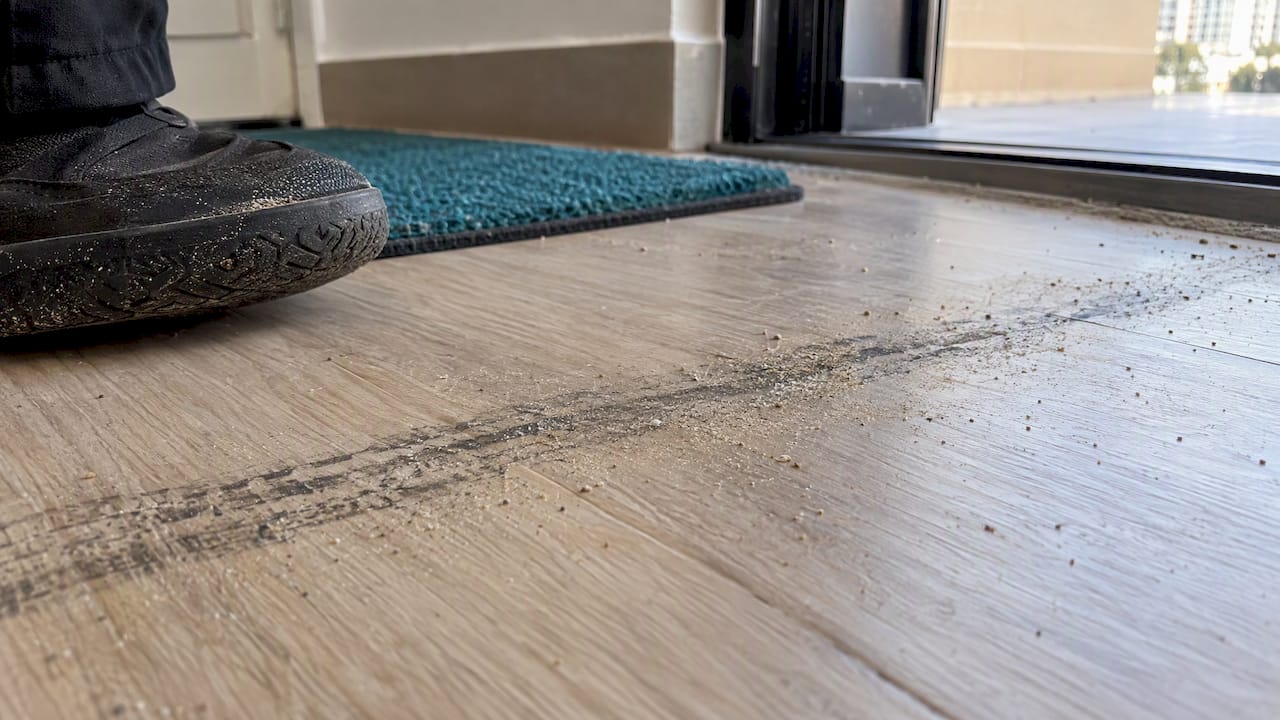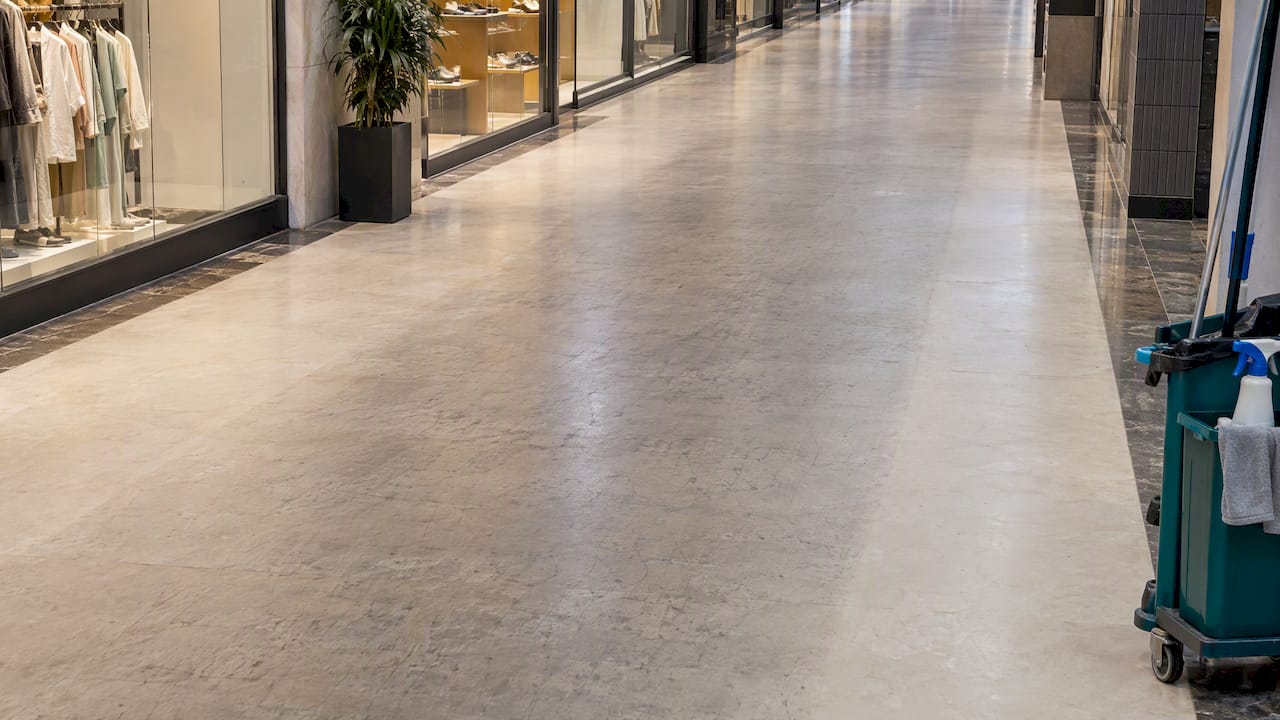

The habit that stretches every one of those intervals is daily dry dust-mopping before opening. Book a professional inspection every 6–12 months, or sooner when gloss drops. The habit that stretches every one of those intervals is daily dry dust-mopping before opening. Book a professional inspection every 6–12 months, or sooner when gloss drops.
TL;DR:
Buff high traffic lanes as wear appears, recoat medium zones when needed, and check manufacturer guidance because some low traffic factory finishes need no polish.
Use neutral pH cleaner for damp mopping, clean spills promptly, and keep entrance mats clean so they trap grit instead of releasing it.
For high traffic lobbies, clinics, and retail entrances, schedule contractor checks quarterly and recoat only where wear shows, rather than relying on dates alone.
Ask for stripping and refinishing when haze quickly returns, wear penetrates the finish, seams lift, bubbles form, or buildup yellows; test slip resistance after polishing.
Table of Contents
How often should you polish by traffic zone?
Start by sorting your building into three lanes. High traffic means entrances, lobbies, main corridors, reception counters and anywhere carts roll all day. Medium traffic covers secondary corridors, open offices, classrooms and retail aisles away from the door. Low traffic covers stockrooms, meeting rooms, storage areas and rarely used wings.
Cleaning frequency should follow traffic and soiling, and regular upkeep costs less than an occasional heavy deep clean. That is why the polish cadence changes by lane:
-
High traffic: buff and recoat as needed, depending on visible wear and slip reports.
-
Medium traffic: recoat as needed, with light buffing if gloss fades unevenly.
-
Low traffic: recoat as needed. Some modern factory-applied finishes may not need polishing at all, so check the manufacturer’s guidance first.
Fixed calendars only get you so far. Move an area up a lane when you see any of these triggers:
-
Loss of gloss, especially a dull path from the entrance to the elevator
-
Visible scuffs or scratches that cleaning does not remove
-
Staining or yellowing near doors, mats or equipment
-
An increase in slip reports from staff or visitors
-
Exposed adhesive or worn patches at seams and edges
Treat the schedule as a baseline and your eyes as the override.
Which daily, weekly and monthly tasks delay polishing?
Most premature polishing is really a grit problem. Sand and dust act like sandpaper under foot traffic, and in Dubai, fine dust finds its way indoors year-round. A solid routine protects the finish so you recoat less often; consider consulting specialized commercial cleaning services to maintain large facilities effectively. Predictable cycles of sweeping, damp mopping, periodic buffing and occasional scrub-and-recoat keep resilient floors in good shape.
-
Daily: Dry dust-mop the entire floor before the building opens. Spot-clean spills immediately and keep entrance mats clean so they trap grit instead of releasing it.
-
Regularly: Damp-mop with a neutral-pH cleaner. Pay extra attention to seams and edges, where dirt collects and finish wears first.
-
Regularly: Auto-scrub with soft pads, or deep clean large open areas. Inspect for stains, yellowing and dull lanes, and log what you find.
-
Quarterly in heavy-traffic zones: Schedule a professional check, as part of a long-term plan with neutral-pH cleaning and soft-pad scrubbing.
Each step interrupts the same failure chain: grit scratches the finish, scratches hold dirt, dirt dulls the shine, and the dull floor gets polished too often. Our guide to vinyl floor care tips covers the day-to-day details for your cleaning crew.
Pro Tip: Skipping the dry dust-mop is the most common cause of rapid dulling, so write it into every cleaning contract as a non-negotiable daily line item.
When should you call a professional?
Your in-house team can handle daily upkeep and light buffing. Escalate to a contractor on a fixed rhythm: an inspection every 6–12 months, and quarterly checks for high-traffic sites such as lobbies, clinics and retail entrances.
A recoat is not always the answer. Ask for stripping and refinishing when you see:
-
Persistent haze that returns soon after cleaning
-
Deep wear that has gone through the finish
-
Adhesive failure, lifting seams or bubbling
-
Heavy build-up that has yellowed or trapped dirt
A useful inspection report documents finish condition and thickness, seam and edge condition, adhesive and moisture concerns, slip resistance, and staining with its likely source. Without that record, you cannot compare one visit to the next.
When you request quotes, ask:
-
What does the written maintenance plan cover, and how often is each task done?
-
Which products and pads will be used, and are they suited to your finish?
-
How do you handle slip-resistance testing after polishing?
-
What triggers an unscheduled visit, and how fast do you respond?
Some slip-retardant products keep their grip in the wear layer rather than the surface finish, so polishing can change slip performance and should be checked against the manufacturer’s guidance. If you are weighing in-house work against contracted care, our DIY or hire a pro comparison lays out the trade-offs.
Which maintenance mistakes shorten a floor’s life?
Most floors fail early because of well-meant habits, not neglect. Write corrections into your contracts:
-
Over-polishing: More coats do not mean more protection. Too much polish, applied too often, creates a build-up haze that traps dirt. Thin coats applied only when needed beat heavy layering.
-
Wrong chemicals: High-pH strippers used as daily cleaners and abrasive powders break down the finish. Require neutral-pH products for routine cleaning.
-
Staining sources: Rubber-backed mats and cart wheels can leave yellow marks on vinyl. Specify non-staining rubber for mats and wheels.
-
Over-wetting: Flooding seams lets moisture reach the adhesive. Damp-mop, never soak.
-
No entrance system: Without walk-off mats, every shoe becomes a grit delivery.
Antioxidant staining: Certain rubber products contain antioxidants that react chemically with flexible vinyl and leave yellowish stains, so choose non-staining rubber mats and wheels.
This kind of stain is permanent in many cases, which is why prevention matters more than any cleaning trick.
What does a copyable maintenance schedule look like?
Paste this into your procurement or maintenance documents and adjust the lanes to your building:
-
Daily (all tiers, in-house): Dry dust-mop and spot-clean spills. Check entrance mats.
-
Regularly (all tiers, in-house): Damp-mop with neutral-pH cleaner, edges and seams included.
-
Regularly (high and medium, in-house or contractor): Auto-scrub with soft pads and inspect for wear. Buff high-traffic lanes.
-
Quarterly (high, contractor): Professional check and recoat where wear shows. Recoat medium zones when wear indicates it is needed.
-
Annually (all tiers, contractor): Full inspection report. Low-traffic zones get a recoat if needed.
-
Move to a higher lane after: events, construction dust, or seasonal dirt surges.
Polishing is optional for some modern vinyl finishes designed for sweeping, mopping and occasional buffing. It becomes required when gloss, slip or staining indicators say so.
How do we build and enforce a polishing program?
We build programs from the floor up. Before proposing any frequency, our team at NPSM Specialized Cleaning Services LLC reviews the traffic pattern, the finish system and the environment, including Dubai’s dust load and the cleaning methods already in use. Then we set the lanes, the tasks and the inspection dates, and we document everything so you can hold us to it.
Our inspection checklist:
-
Confirm traffic lanes and mark them on a floor plan
-
Test finish condition, gloss and slip indicators
-
Check seams, edges and adhesive for lifting or moisture
-
Identify staining sources such as mats and wheels
-
Agree thin-coat polishing limits to prevent haze
-
Record findings and set the next visit
Our vinyl polishing service page explains how we apply this on site.
What matters most in a vinyl maintenance contract?
Here is our view: the polish is the least important part of your floor program. Facilities teams tend to fixate on the shiny finish and the recoat date, yet the evidence points the other way. Grit control, neutral cleaning and non-staining mats decide how often you need to polish at all. A building with excellent daily habits can stretch recoats comfortably, while a building with poor ones will chase a dull floor forever.
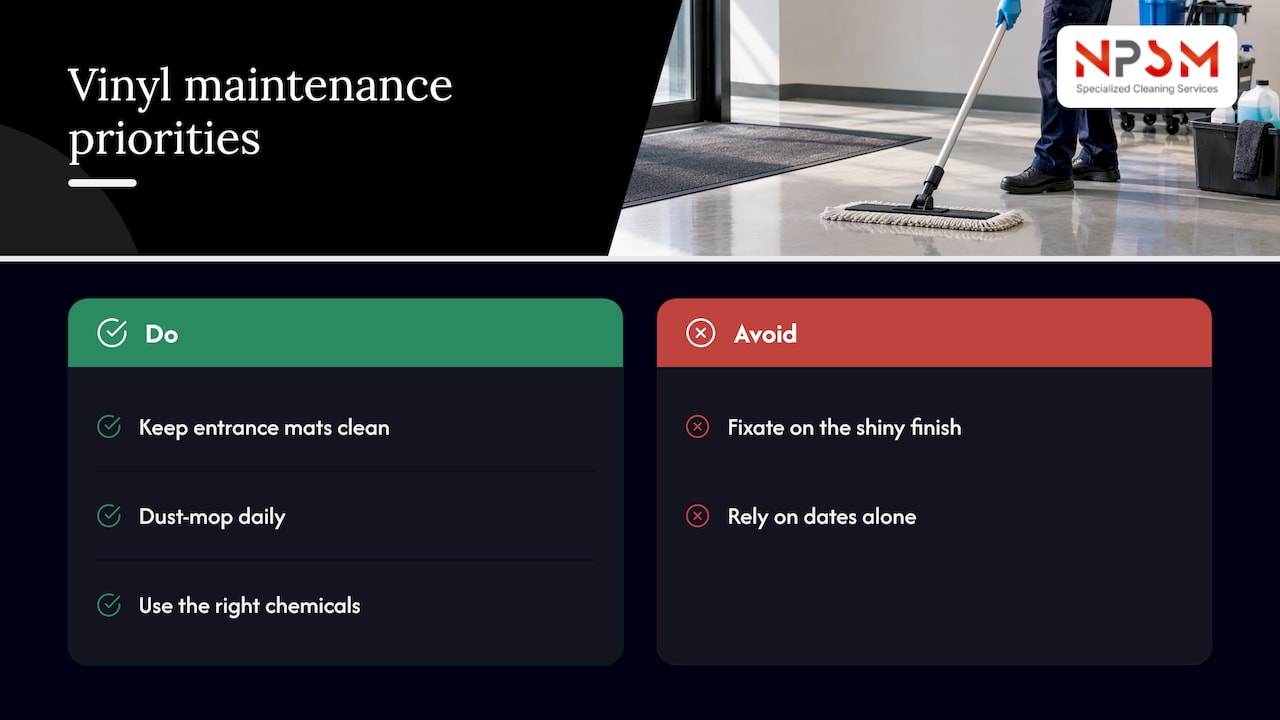
Conventional advice also leans too hard on the calendar. Fixed dates are useful for budgeting, but they are blind to events, seasons and sudden wear. The better contract pairs a baseline schedule with clear triggers and a written inspection report.
Prioritize in this order: entrance mats, daily dust-mopping, the right chemicals, then the polish schedule. Get those right and the polishing calendar nearly writes itself.
— Qadir
Need a team to run this schedule for you?
We handle vinyl floor polishing and cleaning and maintenance for commercial properties, so your team does not have to guess the next recoat date. Ask us for a maintenance assessment and a written schedule matched to your traffic lanes, and we will show you what each zone needs. See everything we offer on our floor polishing and restoration services page, then request your assessment today.
FAQ
How often should vinyl flooring be replaced?
Replacement depends on traffic, maintenance quality and the product itself, so there is no single date. Well-maintained commercial vinyl can be refreshed with recoats and refinishing for a long time before replacement makes sense. Deep wear through the surface, failing adhesive or damaged seams are the usual signs that replacement is next.
Why don’t we wax floors anymore?
Many modern vinyl finishes are built to need only sweeping, mopping and occasional buffing, so heavy waxing and stripping are often unnecessary. Traditional wax also builds up, yellows and traps dirt when over-applied. Today, thin polish coats are used only when the finish shows real wear.
Is commercial vinyl flooring good?
Yes, for most high-use spaces it is a durable and practical choice, especially when you follow a steady cleaning cycle. Its lifespan depends on grit control, neutral-pH cleaning and avoiding staining sources like some rubber mats. Paired with a written maintenance plan, it holds its appearance well.
Can I polish vinyl floors too often?
Yes. Too many coats, or polishing too frequently, creates a build-up haze that traps dirt and dulls the surface. Apply only the thin coats the floor needs, typically 2–4, and rely on daily cleaning to protect the finish between recoats.