
TL;DR:
- Sealing natural stone reduces porosity and slows water, oil, and contaminant absorption, prolonging its appearance and lifespan. It does not make stone waterproof or prevent etching from acids; choosing the correct sealer and proper application are essential for effective protection. Regular maintenance, including resealing based on stone type and use, ensures ongoing stain resistance and preserves the stone’s value.
Sealing natural stone is defined as the process of applying a protective treatment to reduce porosity and slow the absorption of water, oil, and contaminants into the stone’s surface. The role of sealing natural stone goes beyond simple surface protection. It preserves the stone’s appearance, reduces maintenance effort, and extends the life of an expensive flooring investment. Two primary categories of sealers exist: penetrating (impregnating) sealers and topical sealers. Each works differently, suits different stone types, and carries distinct trade-offs that every homeowner and property manager should understand before buying a product off the shelf.
What is the role of sealing natural stone surfaces?
Sealing acts as a sacrificial layer between the stone and the substances it contacts daily. Sealers reduce porosity and slow staining, but they do not make stone waterproof or prevent all forms of damage. That distinction matters more than most homeowners realize.
Natural stone is a porous material. Marble, limestone, travertine, and quartzite all absorb liquids at varying rates. When coffee, red wine, or cooking oil penetrates unsealed stone, it bonds with the mineral structure and leaves a permanent stain. A sealer creates a barrier inside or on top of the pores that buys you time to wipe up spills before they cause damage.
What sealers cannot do is equally important to understand. Sealed marble still darkens when wet for extended periods, and acidic substances like lemon juice or vinegar will still etch calcium carbonate stones regardless of sealer coverage. Sealing is about absorption reduction, not chemical resistance. Setting that expectation correctly from the start prevents frustration and misuse.
How do natural stone sealers work and what types are available?
The two sealer categories operate on fundamentally different principles, and choosing the wrong one for your stone type causes real problems.
Penetrating (impregnating) sealers soak into the pore network of the stone and form chemical bonds using active chemistries such as silane, siloxane, or fluoropolymer compounds. The ‘surface coating’ mental model is inaccurate for these products. They work inside the stone, creating hydrophobic and oleophobic barriers that repel both water and oil without leaving a visible film. The stone looks natural, breathes normally, and the sealer degrades gradually over time rather than peeling.
Topical sealers sit on the surface and form a physical film. They can enhance color and add gloss, but they also alter the stone’s appearance and may yellow or peel over time. Topical sealers require periodic stripping and reapplication, which adds labor and cost. On polished marble or granite, a topical sealer can trap moisture beneath the film and create a hazy, uneven appearance.
Here is a quick comparison of the two types:
-
Penetrating sealers: No visible film, breathable, ideal for most natural stones, degrade gradually, reapplication every one to three years
-
Topical sealers: Surface film, may alter sheen, better for unpolished or rustic surfaces, require stripping before reapplication, shorter effective lifespan in high-traffic areas
-
Silane-based chemistries: Smallest molecular size, deepest penetration, best for dense stones like granite
-
Fluoropolymer chemistries: Repel both water and oil, preferred for kitchen countertops and food-prep surfaces
-
Siloxane-based chemistries: Larger molecules, better suited for more porous stones like limestone and travertine
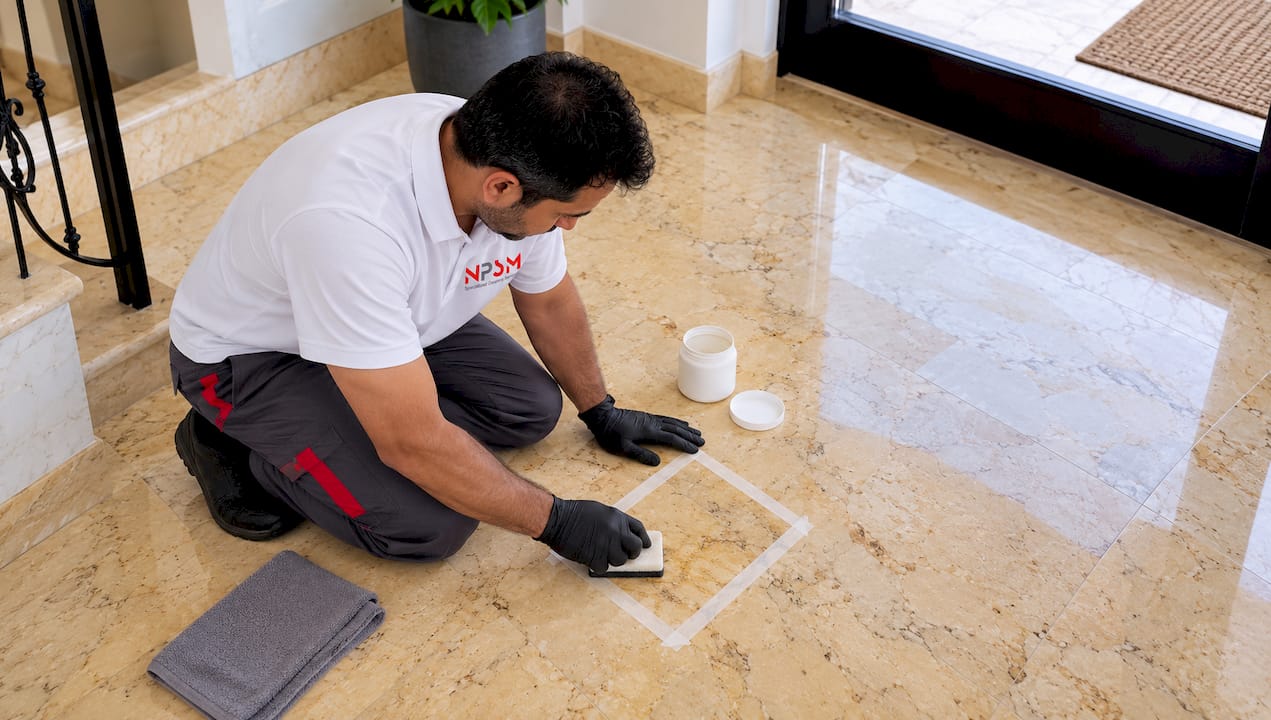
Pro Tip: Always test a small, hidden area before applying any sealer to the full surface. Some stones, particularly dark granites, can temporarily darken with solvent-based products.
Why is sealing natural stone critical for homeowners and property managers?
The practical case for sealing comes down to four concrete benefits that directly affect your property’s value and your daily maintenance load.
-
Stain prevention. Granite absorbs less than 0.4% water by volume, while marble absorbs between 0.5% and 2%. That difference means marble requires more frequent sealing and is far more vulnerable to oil-based stains without protection. Sealing reduces that absorption rate and gives you a cleanup window measured in minutes rather than seconds.
-
Preservation of appearance. Unsealed stone in a kitchen or bathroom accumulates grime inside its pores over time. The surface looks dull and discolored even after cleaning because the contamination is below the surface. Sealing keeps the pores protected so the stone retains its original color and finish longer. You can explore marble surface enhancement options to understand how sealing and polishing work together to maintain that appearance.
-
Easier daily cleaning. Sealed stone does not trap dirt at the pore level. A pH-neutral cleaner and a microfiber mop handle most maintenance. Unsealed stone often requires more aggressive cleaning products that themselves degrade the surface over time.
-
Protection of your investment. Natural stone flooring in Dubai villas and apartments represents a significant capital outlay. Sealing slows wear, reduces the frequency of professional restoration, and extends the period between full refinishing cycles. For property managers overseeing multiple units, that translates directly into lower maintenance budgets.
One nuance worth noting: sealing frequency varies by stone type. Quartzite and marble need more frequent attention than granite. High-traffic areas like entryways and kitchens need resealing sooner than low-traffic bedrooms. Matching your resealing schedule to the actual porosity and use of each surface is more effective than applying a single timeline to your entire property.
How and when should natural stone surfaces be sealed?
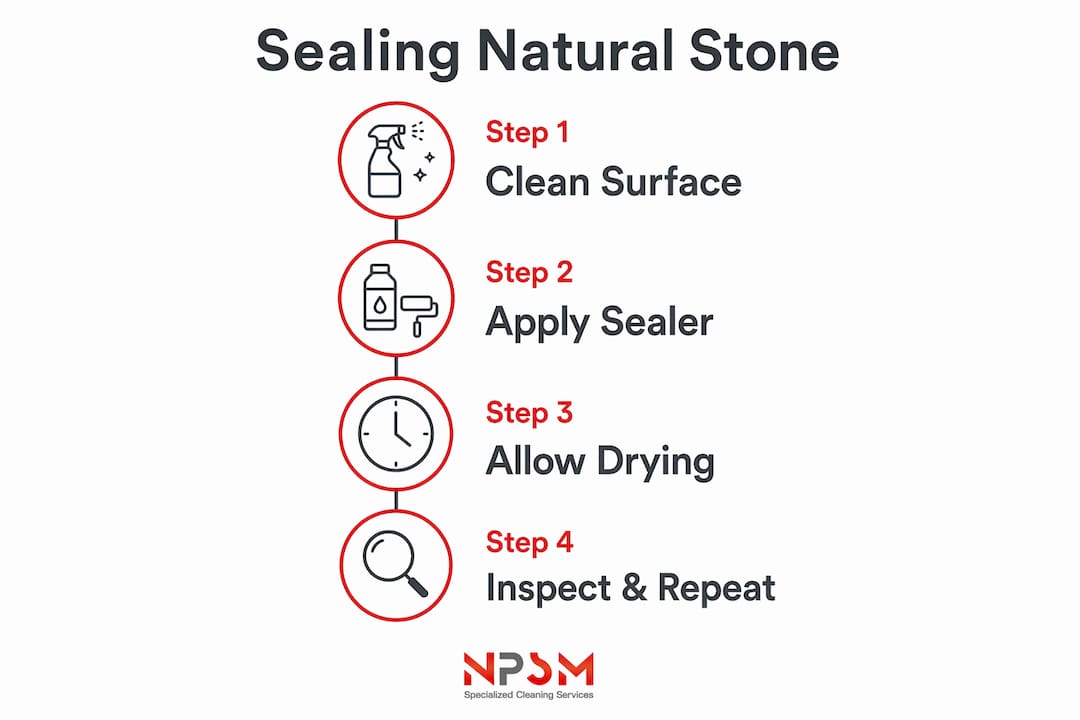
Timing and preparation determine whether a sealer performs as advertised or fails within months. Follow this sequence for reliable results.
-
Clean and dry the stone completely. Any moisture, residue, or cleaning product left on the surface will interfere with sealer penetration. For new installations, allow the stone to dry fully after setting and grouting before applying any sealer. Sealing cut edges onsite is critical for stones like quartzite, where exposed edges absorb moisture rapidly.
-
Seal before grouting. Best practice is to seal tile before grouting, wait 24 hours, complete the grouting, then seal again once the grout has cured. This two-stage approach protects both the stone face and the grout joints from staining during and after installation.
-
Apply multiple initial coats for porous stones. Arizona Tile recommends three to five initial coats of solvent-based impregnating sealer for quartzite, with resealing every six months in high-use areas. Less porous stones like granite typically need one to two coats initially.
-
Allow proper dwell time. Apply the sealer, let it sit for the manufacturer’s recommended dwell period (usually five to fifteen minutes), then wipe off the excess before it dries on the surface. Dried excess sealer leaves a hazy residue that is difficult to remove.
-
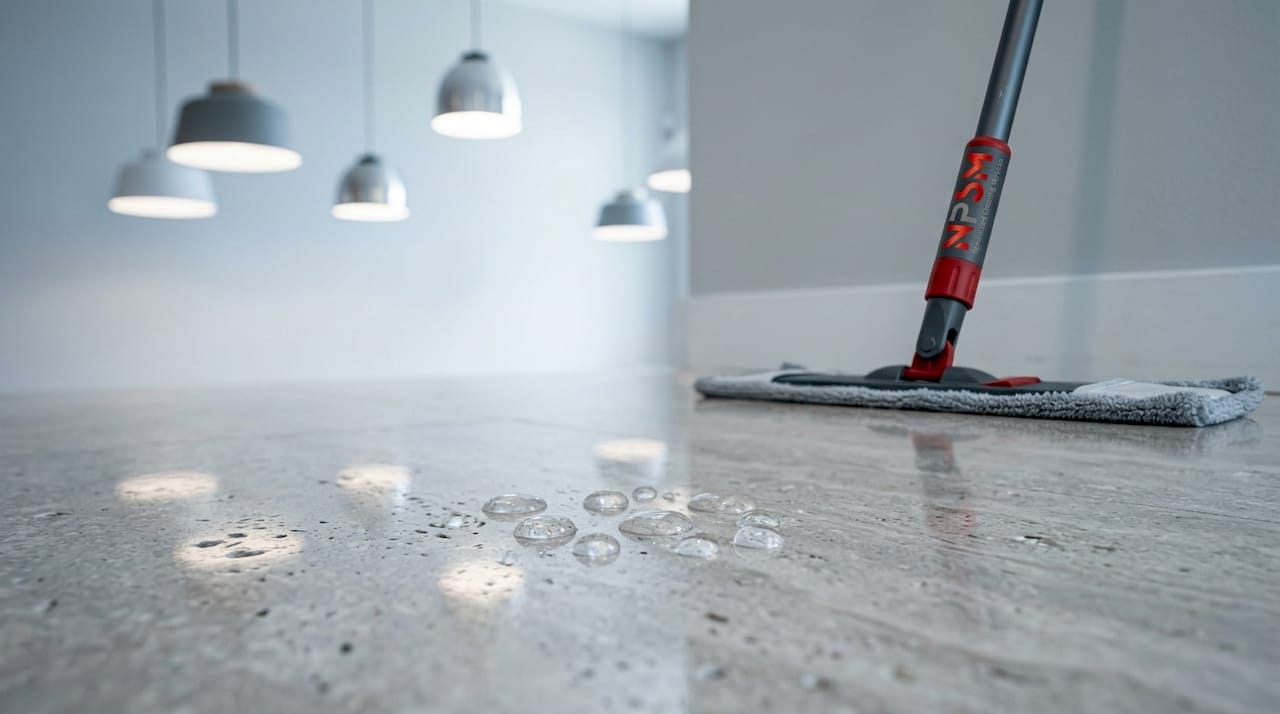
Test before resealing. The water bead test is the simplest diagnostic tool available. When water beads on the surface, the sealer is still effective. When water spreads and absorbs, resealing is overdue.
| Stone type | Initial coats | Resealing frequency |
|---|---|---|
| Granite | 1–2 | Every 2–3 years |
| Marble | 2–3 | Every 1–2 years |
| Quartzite | 3–5 | Every 6–12 months |
| Limestone | 2–3 | Every 1–2 years |
Pro Tip: Run the water bead test annually on each stone surface in your home. Different rooms wear sealers at different rates, so a kitchen countertop may need resealing a full year before a bathroom floor.
Common misconceptions about sealing natural stone
Several persistent myths lead homeowners to either over-rely on sealers or skip them entirely. Both mistakes cost money.
-
“Sealing makes stone waterproof.” It does not. Sealing reduces water absorption but sealed stone still absorbs moisture slowly. Fast spill cleanup remains necessary even on freshly sealed surfaces.
-
“Sealed stone won’t etch.” Etching is a chemical reaction between acid and calcium carbonate minerals. It is not a staining process, so sealers offer no protection against it. Lemon juice on sealed marble still leaves a dull mark.
-
“More sealer means more protection.” Excess sealer that is not absorbed or wiped off dries on the surface and creates a hazy film. More product does not equal more protection.
-
“Any cleaner works on sealed stone.” Alkaline cleaners and bleach degrade penetrating sealers faster than normal wear. Using the wrong cleaner can cut a sealer’s effective lifespan in half.
-
“Topical sealers work on polished marble.” Applying a topical sealer to a polished surface traps moisture and creates visible clouding. Polished marble requires a penetrating sealer only.
Sealing is a stain-prevention strategy, not a damage-prevention guarantee. Understanding that distinction is the single most important thing a homeowner can do before choosing a product or setting a maintenance schedule.
Maintenance and ongoing care after sealing natural stone surfaces
Sealing is not a one-time task. The protection it provides degrades with use, cleaning frequency, and the chemistry of the products you use on the surface.
-
Use pH-neutral cleaners exclusively. Products formulated for natural stone, such as those from Stone Tech or Lithofin, clean effectively without attacking the sealer chemistry. Avoid anything labeled “antibacterial” or “heavy-duty” unless it specifically states compatibility with sealed stone.
-
Avoid bleach, ammonia, and vinegar. These are the three most common sealer killers found under kitchen sinks. They strip the hydrophobic chemistry from penetrating sealers and leave the stone exposed.
-
Perform the water bead test annually. Mark it on your calendar alongside other home maintenance tasks. It takes thirty seconds and tells you exactly where you stand. For granite floor maintenance in Dubai’s climate, annual testing is the minimum standard.
-
Reseal before stains appear, not after. Waiting until you see staining means the sealer has already failed. Schedule resealing based on the stone’s porosity and your usage patterns, not on visible damage.
-
Consider professional application for large or complex projects. DIY sealing works well for countertops and small bathroom floors. For large-format stone floors, outdoor terraces, or commercial properties, professional application delivers more consistent coverage and uses commercial-grade products not available in retail stores.
Pro Tip: In Dubai’s high-humidity environment, bathroom stone floors and shower walls need resealing more frequently than other surfaces. Check these areas every six months rather than annually.
Key takeaways
Sealing natural stone requires the right sealer type, correct application timing, and consistent maintenance to deliver lasting protection against stains and absorption damage.
| Point | Details |
|---|---|
| Sealing reduces porosity, not damage | Sealers slow staining and absorption but do not prevent etching from acidic substances. |
| Penetrating sealers outperform topical ones | Impregnating sealers bond inside pores, last longer, and do not alter stone appearance. |
| Stone type determines frequency | Quartzite needs resealing every six to twelve months; granite can go two to three years. |
| Preparation is half the job | Stone must be fully dry, clean, and cut edges sealed before any sealer is applied. |
| Wrong cleaners destroy sealers | Bleach, ammonia, and vinegar degrade penetrating sealers and shorten their effective life. |
What I’ve learned sealing stone the right way
After working with natural stone surfaces across hundreds of residential and commercial properties in Dubai, the pattern I see most often is not neglect. It is misplaced confidence. Homeowners seal their marble or quartzite once, assume the job is done for years, and then wonder why a red wine spill left a permanent shadow.
The detail that most people miss is the cut edge. When stone is fabricated and installed, the factory-applied sealer on the face does not extend to the freshly cut edges. Those edges are raw, unprotected stone, and they absorb moisture directly into the slab. Sealing those edges onsite, at installation, is a step that even some contractors skip. It is also one of the most common causes of subsurface staining I see in kitchen countertops.
The other thing I would tell any homeowner is to match the sealer to the stone’s actual use, not its location. A marble bathroom floor in a guest bathroom used twice a week needs a different resealing schedule than the same marble in a master bath used daily. Porosity and traffic together determine your maintenance window. Get that calculation right, and sealing becomes a simple, low-cost routine rather than an emergency repair.
— Qadir
Professional stone sealing and polishing services in Dubai
If you want sealing done correctly the first time, NPSM Specialized Cleaning Services LLC provides professional natural stone sealing and polishing across Dubai for villas, apartments, and commercial properties. The team uses commercial-grade penetrating sealers matched to each stone type, applies them with the correct dwell times and coat counts, and handles everything from preparation to final inspection. For marble, granite, quartzite, limestone, and travertine surfaces of any size, professional application removes the guesswork and delivers consistent, long-lasting results. Explore the full range of floor restoration services or request a free quote for your property today.
FAQ
What does sealing natural stone actually do?
Sealing reduces the stone’s porosity so liquids absorb more slowly, giving you time to clean up spills before they stain. It does not make stone waterproof or protect against etching from acidic substances.
How often should natural stone floors be resealed?
Resealing frequency depends on stone type and traffic. Granite typically needs resealing every two to three years, marble every one to two years, and quartzite every six to twelve months in high-use areas.
Can I seal natural stone myself or do I need a professional?
DIY sealing works well for small surfaces like countertops using retail penetrating sealers. Large floors, complex stone types, or commercial properties benefit from professional application for consistent coverage and access to commercial-grade products.
Does sealing prevent etching on marble?
No. Etching is a chemical reaction between acid and the calcium carbonate in marble, and sealers do not block that reaction. Sealing only reduces staining from absorbed liquids, not surface etching from spills like lemon juice or vinegar.
How do I know when my stone needs resealing?
Pour a small amount of water on the surface and watch it for two to three minutes. If the water beads up, the sealer is still working. If it spreads and the stone darkens, resealing is needed.