
TL;DR:
- High-quality floor polishing is characterized by uniform gloss, smooth texture, intact water beading, and absence of operator errors. Regular inspections using simple on-site tests like water droplet, low-angle light, and joint assessments can identify early signs of failure. Proper curing, material-specific finishes, and moisture control are essential for durability across marble, concrete, and wood floors.
Signs of quality floor polishing are defined by four observable indicators: consistent gloss across the entire surface, smooth texture free of rough patches, absence of scratches or etching, and active water beading that confirms intact sealant protection. These are the professional standards that separate a lasting, high-value finish from a job that will fail within months. For property owners and managers across Dubai overseeing marble villas, concrete office lobbies, or hardwood hotel suites, knowing these floor polishing indicators before signing off on any restoration work protects your investment and prevents costly rework.
1. Signs of quality floor polishing: the core visual checklist
A professionally polished floor displays a uniform, high-gloss sheen with no dull patches, streaks, or areas of inconsistent reflectivity. Patchiness is the single most common sign of poor workmanship, and it is visible within minutes of a basic visual inspection under natural light. Run your eye across the floor at a low angle. Any variation in shine level points to uneven grit progression or contamination during the polishing process.
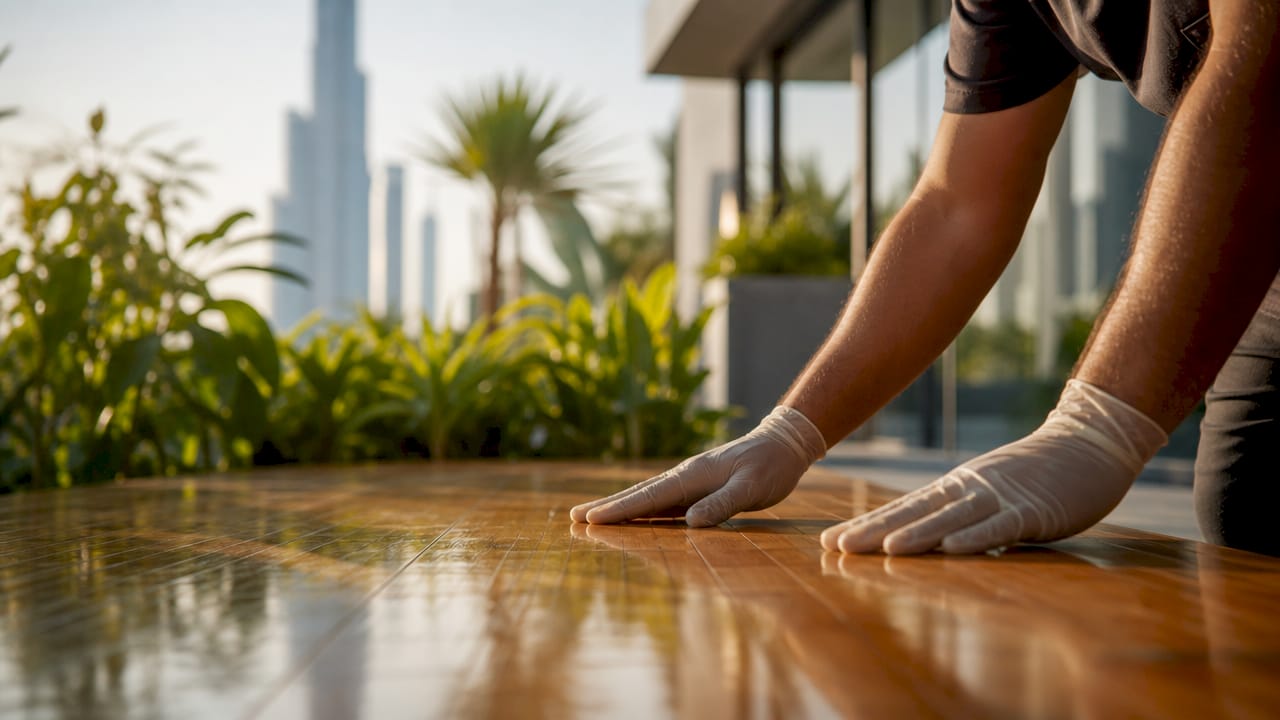
The surface texture should feel consistently smooth underfoot and to the touch. Rough spots, gritty patches, or areas that catch your fingernail indicate incomplete polishing at a coarser grit stage. Dust and grit contamination during polishing causes patchy results and premature finish failure, which is why professional operators use aggressive dust extraction at every grit stage.
Water beading is the most reliable single test for sealant integrity. Loss of water beading is a primary indicator that the sealant layer is exhausted and requires immediate attention. A quality finish repels water droplets into tight, round beads. Flat, spreading water means the protective layer is gone or was never properly applied.
Pro Tip: Inspect the floor under both natural daylight and artificial lighting. Overhead fluorescent lights reveal swirl marks and grinder arcs that daylight can mask. A truly professional finish looks flawless under both.
2. How to distinguish quality from poor polishing results
Poor polishing leaves behind a specific set of defects that are easy to identify once you know what to look for. Patchy gloss, swirl arcs, milky haze, efflorescence near joints, and sealer failure are the defining characteristics of substandard polished concrete. Each defect tells you something specific about where the process broke down.
| Defect | What it signals |
|---|---|
| Patchy or uneven gloss | Inconsistent grit progression or contaminated pads |
| Milky haze or film | Sealer applied over moisture or incompatible products |
| Swirl marks or arc patterns | Improper equipment technique or operator error |
| White salt deposits near joints | Moisture barrier failure and efflorescence |
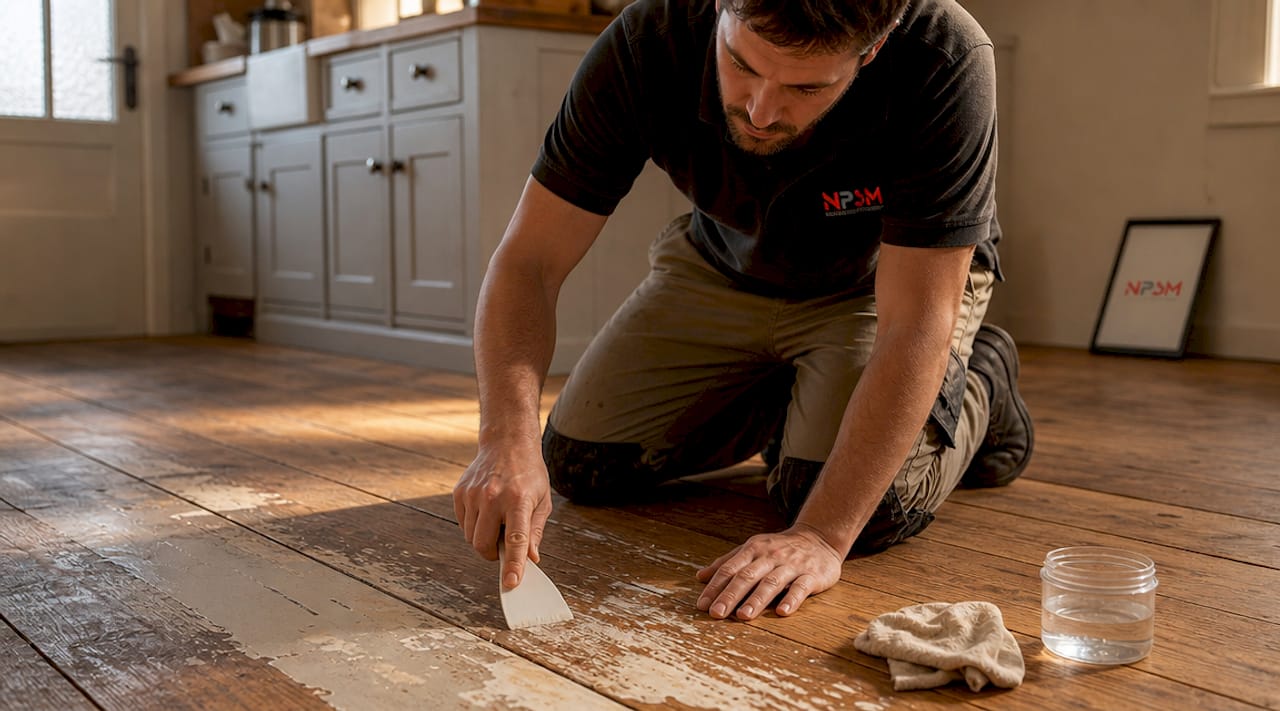
| Flaking or bubbling finish | Sealer applied too thick or surface not properly prepared |
Repeating arc or stripe patterns on a floor surface indicate improper equipment use or technique, not natural wear. This distinction matters because property managers frequently attribute these marks to foot traffic aging, when the damage was actually inflicted during the polishing job itself. A quality finish shows no repeating geometric patterns anywhere on the surface.
Recurring stains that resist normal cleaning after a polish job are another red flag. A properly sealed floor resists most common staining agents. If coffee, water, or cleaning chemicals leave marks that won’t lift, the sealant either failed or was never applied correctly.
3. Maintenance-related signs that reveal long-term polish quality
A high-quality floor finish maintains its original gloss under regular foot traffic without premature dulling in wear lanes. If a polished floor in a hotel corridor or office lobby loses its shine within three to six months of polishing, the finish was either under-coated or improperly cured. Commercial applications require 3 to 4 coats of finish curing 5 to 7 days for full chemical resistance. Shortcuts in this process show up quickly in high-traffic zones.
Scratch resistance is a direct measure of finish quality. High-grade finishes use nano-technology for scratch resistance without compromising ease of cleaning or appearance longevity. A floor that scratches from normal chair movement or foot traffic within weeks of polishing received a low-grade product or an insufficient number of coats.
Ease of cleaning is also a practical quality indicator. A properly sealed and polished floor releases dirt with minimal effort. Floors that require aggressive scrubbing to remove everyday grime have either lost their protective layer or were never sealed to the correct standard.
Pro Tip: Perform a repeat water bead test at the three-month mark after any polishing job. If beading has weakened significantly, the sealant coat was too thin. A quality finish should maintain strong water repellency for at least 12 months under normal residential use.
-
Gloss maintained in traffic lanes after 6 months: quality finish
-
Premature dullness in wear paths within 3 months: under-coated or poorly cured
-
Stains lifting with standard mopping: sealant intact
-
Stains requiring scrubbing or remaining permanent: sealant compromised
-
No new scratches from normal use: finish grade appropriate for traffic level
4. On-site tests property managers can run immediately
You do not need specialist equipment to verify how to recognize floor polishing quality on-site. These five tests take under ten minutes and give you reliable data before signing off on any completed job.
-
Water droplet test. Place a few drops of clean water on the polished surface. Quality sealant causes water to bead into tight, round droplets. Flat spreading indicates sealant failure or absence. Clean, porous surfaces absorb water, while properly sealed surfaces repel it, making this test a direct read on polish condition.
-
Low-angle light inspection. Crouch to floor level and look across the surface toward a light source. Swirl marks, grinder arcs, and uneven gloss become immediately visible at this angle. A quality finish reflects light uniformly with no distortion.
-
Touch test. Run your palm flat across the surface in multiple areas. Any gritty texture, rough patches, or inconsistency in smoothness points to incomplete polishing or contamination during the process.
-
Embedded debris check. Examine the finish closely for dust, grit, or debris trapped within the coating. Contamination embedded in the finish layer signals poor dust control during application and will cause the finish to fail faster.
-
Joint and edge inspection. Check grout lines, expansion joints, and floor edges. These areas are frequently missed or rushed. Milky residue, uneven finish, or visible sealer buildup near joints indicates poor technique. For concrete floors specifically, white salt deposits near joints signal moisture barrier failure that requires professional moisture testing to resolve.
5. Material-specific quality indicators for Dubai’s most common floor types
The signs of a high-quality floor finish vary by material. What looks correct on polished concrete differs from what you should expect on marble or hardwood. Dubai properties commonly feature all three, often within the same building.
Marble floors
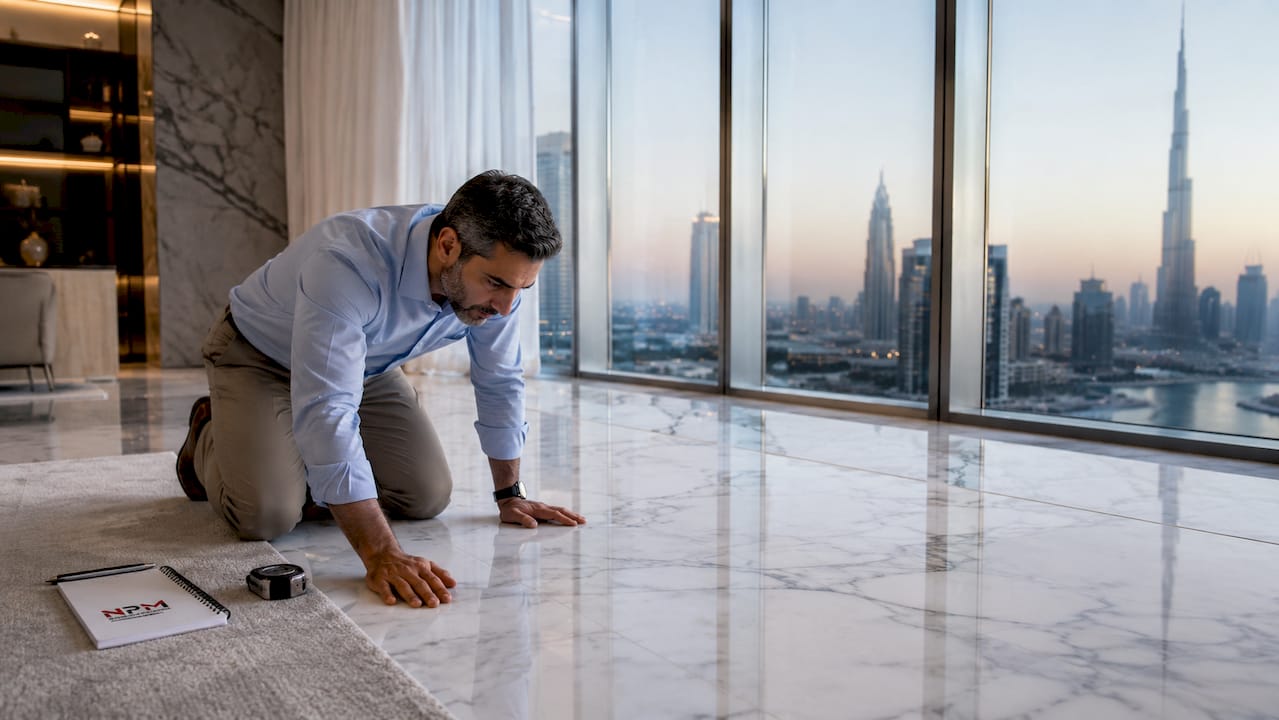
Polished marble should display a mirror-like clarity that reflects objects sharply, not just light generally. Etching, which appears as dull, matte patches caused by acidic contact, is absent on a properly sealed and polished surface. Marble floors showing persistent dullness, visible scratches, or rough patches require professional attention. The difference between marble polishing, grinding, and crystallization matters here because each method produces a different finish depth and durability level.
Concrete floors
Quality polished concrete shows uniform aggregate exposure with no patchiness, haze, or salt deposits. Moisture above 3 pounds per 1,000 square feet in 24 hours is a risk factor for polish failure that requires correction before any sealer is applied. Ignoring moisture issues leads to delamination, cracking, and expensive repairs within months. A professional job always includes moisture testing before and after polishing.
Wood floors
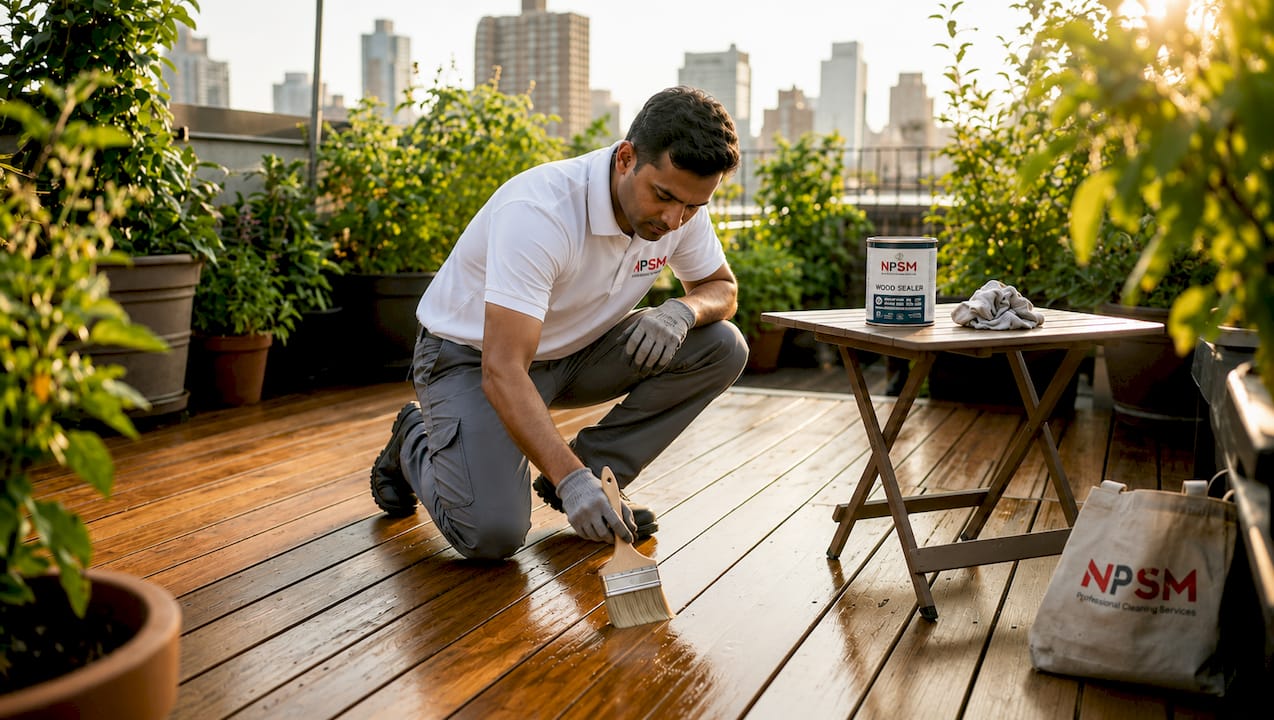
A quality wood floor finish maintains the natural grain color without yellowing or ambering over time. Dull wear lanes running parallel to foot traffic paths indicate finish depletion, not floor damage. The absence of yellowing is a direct indicator of finish quality, as high-grade finishes maintain natural appearance without yellowing through superior lightfastness and abrasion resistance.
| Floor type | Primary quality indicator | Key failure sign |
|---|---|---|
| Marble | Mirror-like clarity, no etching | Dull matte patches, acid marks |
| Polished concrete | Uniform aggregate, no haze | Milky film, salt deposits, swirl arcs |
| Hardwood | Natural color, no yellowing | Dull wear lanes, ambering finish |
Pro Tip: For marble floors in Dubai’s coastal and high-humidity zones, ask your polishing contractor specifically about the crystallization process. Crystallization creates a harder surface layer that resists the humidity-driven etching that standard polishing alone cannot prevent.
Key takeaways
Quality floor polishing is confirmed by uniform gloss, intact water beading, smooth texture, and zero operator error marks across the entire surface.
| Point | Details |
|---|---|
| Water beading is the primary test | Tight, round water droplets confirm sealant integrity; flat spreading means the protective layer has failed. |
| Operator errors are not natural wear | Swirl marks, arc patterns, and repeating grind lines signal poor workmanship, not aging floors. |
| Finish durability requires proper curing | Commercial finishes need 3 to 4 coats and 5 to 7 days of cure time to achieve full scratch and chemical resistance. |
| Material type changes the quality standard | Marble, concrete, and wood each have distinct indicators; apply the correct checklist for each surface. |
| Moisture is the hidden polish killer | Unresolved moisture issues cause delamination and sealer failure within months regardless of finish quality. |
What I’ve learned evaluating floor polishing across Dubai properties
The most common mistake I see property managers make is accepting a polished floor at face value immediately after the job is done. Fresh polish looks good under almost any conditions. The real test comes at the 90-day mark, when traffic wear, cleaning cycles, and Dubai’s humidity have had time to expose any weaknesses in the finish system.
The second mistake is confusing operator damage with natural aging. Property owners often misinterpret operator damage patterns as normal floor aging, but swirl marks and repeating grind patterns are workmanship failures, not wear. Once you know what these marks look like, you cannot unsee them, and you will stop accepting them as normal.
I also want to push back on the idea that burnishing is a substitute for restoration. Burnishing enhances existing finishes but cannot repair damaged ones. If a floor has deep scratches, permanent dullness, or worn-through finish, burnishing will make it temporarily shinier without fixing the underlying problem. That distinction saves property managers from paying for maintenance services that deliver cosmetic improvement while the floor continues to degrade underneath.
The practical advice I give every property manager in Dubai is this: build a simple inspection checklist using the water bead test, the low-angle light check, and a joint inspection, and run it at 30, 90, and 180 days after any polishing job. That schedule catches problems while they are still correctable without full restoration. For maintaining marble, wood, and tile in peak condition, consistent monitoring beats reactive repair every time.
— Qadir
Get a professional floor polishing assessment in Dubai
NPSM Specialized Cleaning Services LLC covers the full range of flooring materials found across Dubai’s residential and commercial properties, including marble, polished concrete, hardwood, vinyl, terrazzo, and natural stone. The team uses diamond polishing systems, professional-grade moisture testing, and multi-coat finishing processes that meet the quality standards described throughout this article. If you have walked through this checklist and found defects in your current floors, the next step is a professional on-site evaluation. Explore the full range of floor polishing services in Dubai or review the 5-step polishing guide for Dubai homes to understand what a professional restoration process should include before you commit to a contractor.
FAQ
What are the main signs of quality floor polishing?
The primary signs are consistent gloss with no patchy or dull areas, smooth texture throughout, active water beading confirming intact sealant, and zero visible scratches, swirl marks, or operator error patterns on the surface.
How does the water bead test work for checking polish quality?
Place a few drops of water on the polished surface. Quality sealant causes water to form tight, round beads. Water that spreads flat indicates the protective sealant layer has failed or was never properly applied.
Can I tell the difference between operator damage and natural floor wear?
Yes. Natural wear appears gradually and uniformly across high-traffic paths. Operator damage shows as repeating geometric patterns like arcs, stripes, or swirl marks that do not follow foot traffic logic and are visible under low-angle lighting.
How long should a professional floor polish last in a Dubai property?
A correctly applied, multi-coat finish on residential floors should maintain strong water repellency and gloss for at least 12 months. Commercial floors in high-traffic environments typically require maintenance polishing every 6 to 12 months depending on traffic volume and cleaning practices.
Does the type of flooring material change what quality signs to look for?
Yes. Marble quality is assessed by mirror-like clarity and absence of etching. Polished concrete quality is measured by uniform aggregate exposure and no milky haze. Hardwood quality shows through natural grain color retention without yellowing or dull wear lanes.